Does Chinese Food Raise Blood Sugar? A Practical Guide to Takeout and What to Order
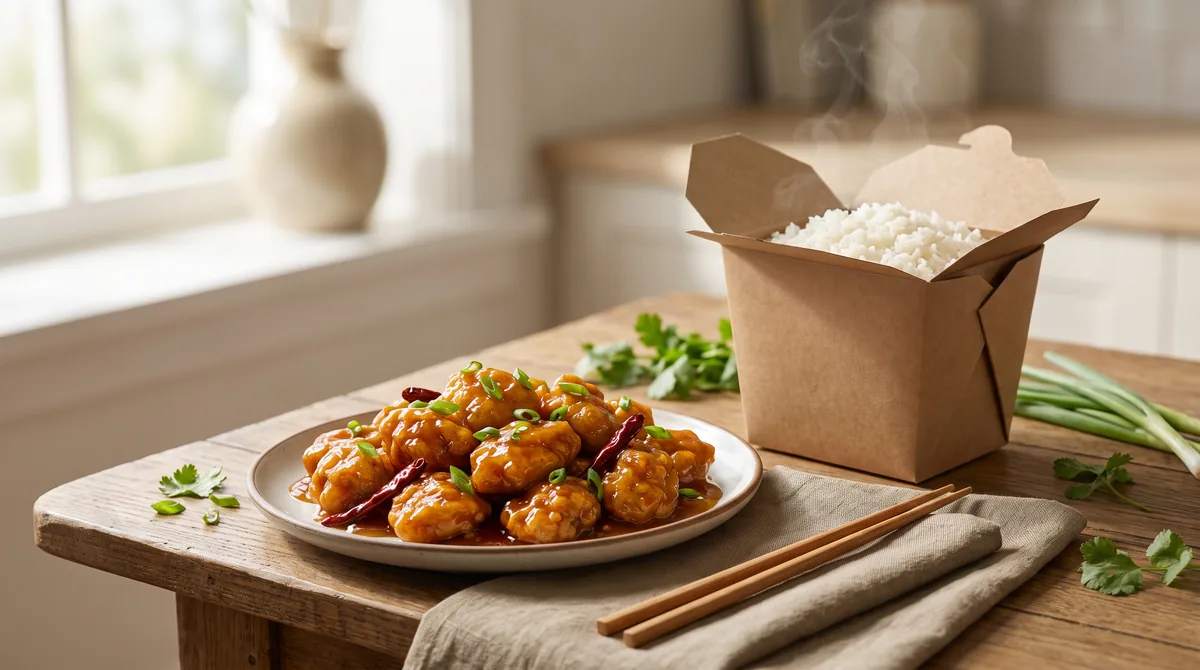
Chinese takeout is one of the highest-glycemic categories of food most people eat regularly. The story is familiar to anyone who has walked out of a takeout dinner and felt exhausted an hour later: a large glucose spike from a bowl of white rice covered in a sugar-thickened sauce, followed by a matching insulin surge and the crash that comes with it. On a continuous glucose monitor, a typical order of orange chicken with fried rice will produce one of the tallest curves of the week.
But this is a category, not a verdict. Real Chinese cooking is enormous — regional cuisines, home cooking, banquet dishes, and Americanized takeout are all different things — and the specific choices inside a menu vary from close to metabolically inert to genuinely severe. This piece walks through what actually drives the glucose response in Chinese food, and how to order in a way that does not sabotage your day.
The mechanism — three ingredients doing most of the damage
The glucose response to a typical Chinese takeout meal is driven by three things stacking on top of each other. The first is white rice, usually served in large portions, cooked to a soft consistency that digests quickly. A cup of white rice contains roughly 45 grams of carbohydrate; a typical takeout portion is closer to two cups. The rice alone is the biggest single contributor to the response.
The second is the sauces. Most classic American-Chinese sauces — sweet and sour, orange, general tso, honey garlic, teriyaki, kung pao (in the American version), plum, and brown gravy — carry substantial added sugar, sometimes several tablespoons per serving. This sugar sits on top of the rice’s glucose load and adds a fast, sharp peak.
The third is the starch used to thicken the sauces themselves. Cornstarch or potato starch, whisked into hot liquid and coating the meat, is a fast-digesting refined carbohydrate that raises glucose in its own right. A dish that looks like “meat with a shiny coating” often has more carbohydrate in the coating than most people realize.
The three combined — a large portion of white rice, a sugar-heavy sauce, and a starch-thickened coating on the protein — is what makes classic takeout hit so hard. Any single one on its own would be manageable; all three together, in the portions typically served, is why most orders spike.
Rice dishes — the biggest single lever
Rice is where the largest glucose gains are available for anyone eating Chinese food regularly. The default in American Chinese restaurants is white long-grain rice; the alternatives, when they exist on the menu, matter a lot.
Brown rice is typically offered as a paid substitute and lowers the glucose response by a meaningful amount — not dramatically, because the total carbohydrate is similar, but the digestion is slower and the peak is lower. Cauliflower rice, when a restaurant offers it, drops the carbohydrate contribution close to zero. Skipping rice entirely and eating the protein and vegetables straight is the largest single-order change that reduces the glucose response.
Fried rice deserves a specific note. The frying and the added oil do not make it lower-glycemic — the rice is still the dominant carbohydrate. The added egg and vegetables help a little because the fat and protein slow gastric emptying, but a plate of fried rice with barbecue pork or chicken is still one of the highest-glucose meals on the menu, similar in curve to sweet-and-sour dishes without the sugar sauce.
The practical hierarchy: no rice > cauliflower rice > brown rice > steamed white rice > fried rice.
Noodle dishes — the same problem in a different shape
Noodle dishes — chow mein, lo mein, dan dan noodles, chow fun, singapore noodles — are white-flour or white-rice noodles, and behave similarly to a plate of pasta. The glucose response is dominated by the noodle carbohydrate, with the sauce contribution depending on how sugar-heavy it is.
Chow mein tends to be lighter on sugar than sweet-and-sour dishes but still substantial in noodle volume. Rice noodles (chow fun, pad-see-ew style) are essentially the same story as rice — high-GI carbohydrate in different shape. Cellophane or glass noodles, made from mung bean starch, digest a bit more slowly than wheat noodles but still contribute a meaningful glucose load in restaurant portions.
The pattern is the same as with rice: the noodle is the dominant contributor, and portion is the biggest lever. A half-portion of noodles with extra vegetables and protein is a different meal, glycemically, than a full plate.
The sugar-heavy sauces — the fastest peak in Chinese food
The classic sugar-sauce dishes — sweet-and-sour pork, sweet-and-sour chicken, orange chicken, general tso’s chicken, sesame chicken, honey walnut shrimp, mongolian beef, peking sauce — are the fastest and sharpest glucose peaks on most menus. The sauce is often 20–40 grams of added sugar per serving, delivered as a syrup that coats a piece of protein that has itself been coated in fried starch. The rice on the side then compounds it.
If you enjoy these dishes, the practical move is to eat the meat and let most of the sauce stay in the container. The flavor is on the coating; the sugar bomb is in the pooled liquid at the bottom. You can also ask for the sauce on the side, which lets you use it as a dip rather than a coating.
Restaurants that offer “steamed” versions of these dishes — steamed chicken with sauce on the side — turn a two-hour crash into a normal meal.
Fried starters and dim sum — check the wrapper
Egg rolls, spring rolls, wontons, potstickers, dumplings, crab rangoon, and scallion pancakes are all wrapper-plus-filling dishes where the wrapper is refined white flour or white rice paper. The frying adds fat and calories but does not slow the wrapper’s digestion in a way that meaningfully changes the glucose response.
Steamed dumplings and steamed shumai are a bit better than fried versions because the wrapper is thinner and the total carbohydrate per piece is lower, but the difference is smaller than the “steamed = healthy” reputation suggests. Two or three steamed dumplings as an appetizer is a reasonable choice; a full order of ten is a substantial carbohydrate load.
Crab rangoon is a specific trap: cream cheese in a fried wonton wrapper, often served with a sugar-heavy dipping sauce. The combination is close to a small dessert.
Soups and vegetable dishes — the friendly categories
Clear broth soups — egg drop soup, hot and sour soup, wonton soup (without eating all the wontons), sizzling rice soup (without eating the rice), and most vegetable-based soups — are close to metabolically neutral. Hot and sour soup in particular has almost no carbohydrate and is a good starter to slow the meal down.
Vegetable dishes — steamed mixed vegetables, garlic broccoli, garlic green beans, bok choy, choy sum, mixed greens with garlic — are excellent on their own and useful as a companion to a smaller portion of a starchy main. Ordering an extra vegetable dish and cutting the rice portion in half is a specific move that changes the meal’s curve substantially.
Tofu dishes vary. Ma po tofu made without a heavy sugar sauce is a moderate choice; sweet-and-sour tofu is a sugar-heavy dish that happens to use tofu instead of meat. Read the description.
The practical shortlist
If you want a mental shortcut for ordering Chinese takeout with blood sugar in mind:
- Almost always reasonable: hot and sour soup, egg drop soup, steamed vegetables with garlic sauce (light), steamed dumplings (2–3), steamed fish with ginger and scallions, moo shu vegetables in lettuce wraps (skip the pancakes), tofu dishes without sugar sauces, beef with broccoli (light on sauce), garlic chicken with vegetables (light on sauce), egg foo young.
- Depends on portion: brown rice (a small portion is fine), chow mein (half a portion works), lo mein (same), most stir-fries where you can control the sauce, kung pao chicken (Americanized version has sugar; the sichuan original has almost none).
- Treat as a treat: fried rice, sweet-and-sour anything, orange chicken, general tso’s, sesame chicken, honey walnut shrimp, mongolian beef, crab rangoon, most dishes with “sweet” or “sesame” or “honey” in the name.
The single most useful move for most people is to order a protein-and-vegetable dish with the sauce on the side, request steamed vegetables, and either skip the rice or take a half portion of brown rice. That one change removes most of the glucose load without giving up the meal.
The bigger picture
Chinese takeout has a reputation as a “problem food” for anyone managing insulin resistance, prediabetes, or type 2 diabetes, and the reputation is largely earned — but not because Chinese food is inherently high-glycemic. The problem is that the American-Chinese takeout format layered three high-glucose ingredients on top of each other and turned it into a default: white rice, sugar sauces, and starch-thickened coatings, in portions that are twice what a person needs.
Real Chinese cooking, especially the regional traditions and home cooking that gave rise to the takeout menu, includes a huge amount of vegetable-forward, protein-and-broth-based, and lightly-seasoned food that is close to what a low-glycemic dietician would recommend. The takeout format flattened that variety into “meat in sugar sauce with rice,” and the glucose curve reflects the format, not the cuisine.
If Chinese takeout is a regular meal for you, the durable move is not to give it up but to shift the order pattern — vegetables, protein, sauce on the side, less rice — and to keep the sugar-sauce dishes as an occasional treat. The result is a normal meal instead of a two-hour crash, from the same restaurant.
If you want to see what your specific takeout order does to your own glucose curve, Logi can scan a menu photo, an image of the plate, or a restaurant description and estimate its glycemic load in seconds — useful for the many Chinese dishes where the name gives no hint about the sauce.
This article is educational. It is not medical advice. Individual responses to any food vary widely; if you have diabetes, insulin resistance, or another metabolic condition, discuss dietary choices with your doctor or a registered dietitian.
Foods in this article
Related recipes

Low-Glycemic Chicken and Cauliflower Rice Soup
A nourishing, blood sugar-friendly soup featuring tender chicken and cauliflower rice in a savory herb-infused broth that won't spike your glucose levels.

Sweet Chilli Glazed Salmon with Cauliflower Rice
Succulent salmon with Asian-inspired glaze served over cauliflower rice - a blood sugar-friendly twist on a weeknight favorite that's ready in 45 minutes.

Low-GI Caponata (Sicilian Sweet-and-Sour Aubergine)
Sicily's beloved sweet-and-sour aubergine stew made blood-sugar-friendly — raisins replace sugar for a gentler glucose curve with rich agrodolce flavor.
Take control of your blood sugar
Scan your meals, track glycemic load, and see your patterns — all in one app.
Start Free Trial →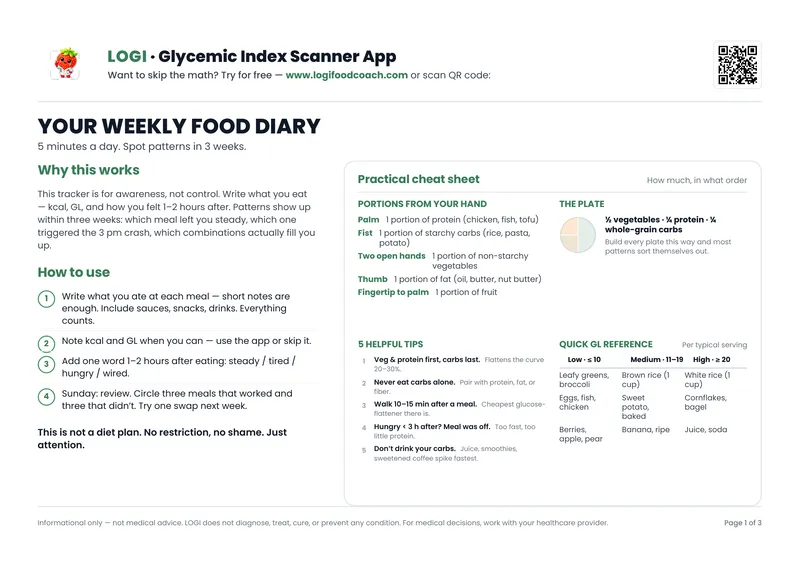
Free PDF — 3 pages
Your Weekly Food Journal
Track meals, glycemic load & mood. Spot patterns in 3 weeks.
No spam. Unsubscribe anytime.