Hähnchen mit Zitrus-Kräuter-Kruste, Rosmarin und Orange
Saftiges Hähnchen mit Knochen, durchzogen von aromatischem Rosmarin und frischem Orangensaft – ein blutzuckerfreundliches Hauptgericht, das sowohl geschmackvoll als auch sättigend ist.
Dieses mediterran inspirierte Brathähnchen zeigt, wie einfache, naturbelassene Zutaten ein außergewöhnliches Gericht mit niedrigem glykämischen Index schaffen können. Die Kombination aus magerem Eiweiß von Hähnchenteilen mit Knochen, dem aromatischen Charakter von frischem Rosmarin und der natürlichen Frische von Orangensaft ergibt ein Gericht, das stabile Blutzuckerwerte unterstützt und gleichzeitig den Gaumen erfreut.
Die Schönheit dieses Rezepts liegt in seinem glykämischen Profil: Hähnchen liefert hochwertiges Eiweiß ohne Kohlenhydrate, was die Verdauung verlangsamt und Blutzuckerspitzen verhindert. Die minimale Menge Orangensaft (insgesamt nur 80 ml, etwa 13 ml pro Portion) fügt eine subtile Zitrrusnote hinzu, ohne nennenswerte Zucker beizutragen, wodurch die glykämische Last mit 0,8 pro Portion bemerkenswert niedrig bleibt. Obwohl Orangensaft einen mittleren glykämischen Index von etwa 50 hat, neutralisieren die winzige Portionsgröße in Kombination mit dem hohen Eiweißgehalt und den gesunden Fetten jegliche Auswirkung auf den Blutzucker. Natives Olivenöl extra liefert herzgesunde einfach ungesättigte Fettsäuren, die die Glukoseaufnahme zusätzlich verlangsamen. Frischer Rosmarin verbessert nicht nur den Geschmack, sondern enthält Verbindungen, die die Insulinempfindlichkeit steigern können.
WICHTIG: Erhöhen Sie die Orangensaftmenge nicht über die angegebenen 80 ml hinaus. Diese präzise Menge ist so kalibriert, dass die niedrige glykämische Last erhalten bleibt und gleichzeitig Zitrusfrische entsteht. Das Eiweiß und Fett vom Hähnchen schaffen einen metabolischen Puffer, der verhindert, dass die natürlichen Zucker im Saft den Blutzucker erhöhen.
Für optimales Blutzuckermanagement kombinieren Sie dieses Hähnchen mit nicht-stärkehaltigem Gemüse wie geröstetem Rosenkohl, gedünstetem Spinat oder einem knackigen grünen Salat. Jede Portion besteht aus einem Stück Hähnchen (entweder eine Brusthälfte oder ein Schenkel-Oberschenkel-Teil) mit etwa 2 Esslöffeln des Zitrussafts aus der Pfanne. Der hohe Eiweißgehalt macht dies zu einem idealen Mittag- oder Abendessen, und Reste lassen sich hervorragend für den nächsten Tag aufwärmen. Erwägen Sie, zuerst Ihr Gemüse zu essen, dann das Eiweiß, um die blutzuckersenkende Wirkung der Ballaststoffe zu maximieren und die günstigste Stoffwechselreaktion zu erzielen. Wenn Sie besonders empfindlich auf natürliche Zucker reagieren, können Sie den Orangensaft durch frischen Zitronensaft oder eine Kombination aus Zitronensaft und Apfelessig ersetzen, um eine noch niedrigere glykämische Wirkung zu erzielen und gleichzeitig die helle, säuerliche Balance zu bewahren, die dieses Gericht auszeichnet.
Blutzucker-Auswirkung
Minimale Auswirkung auf den Blutzucker zu erwarten. Diese eiweißreiche Mahlzeit mit vernachlässigbaren Kohlenhydraten liefert 4-5 Stunden lang stabile, anhaltende Energie ohne Glukosespitzen.
Blutzucker-Tipps
- ✓ Fügen Sie eine große Portion nicht-stärkehaltiges Gemüse wie Brokkoli, Spinat oder Blumenkohl hinzu, um die Ballaststoffe zu erhöhen und den Blutzucker weiter zu stabilisieren
- ✓ Essen Sie diese Mahlzeit früher am Tag, wenn die Insulinempfindlichkeit typischerweise höher ist, für eine optimale Stoffwechselreaktion
- ✓ Kombinieren Sie die Mahlzeit mit einem 10-15-minütigen Spaziergang danach, um die Glukoseaufnahme durch die Muskeln zu verbessern und den Blutzuckerspiegel stabil zu halten
🥗 Zutaten
- 2 pcs Knoblauchzehen, gehackt
- 1.5 tsp natives Olivenöl extra
- 0.125 tsp frisch gemahlener schwarzer Pfeffer
- 80 ml frischer Orangensaft
- 2 pcs Knoblauchzehen, gehackt
- 1.5 tsp natives Olivenöl extra
- 0.125 tsp frisch gemahlener schwarzer Pfeffer
- 5 tbsp frischer Orangensaft
👨🍳 Anleitung
- 1
Heizen Sie Ihren Backofen auf 230°C vor. Bereiten Sie eine große Auflaufform vor, indem Sie sie leicht mit Kochspray oder einer dünnen Schicht Olivenöl einreiben, um ein Ankleben zu verhindern.
- 2
Tupfen Sie die Hähnchenteile mit Küchenpapier vollständig trocken. Nehmen Sie den gehackten Knoblauch und massieren Sie ihn gründlich in jedes Hähnchenteil ein, sodass alle Oberflächen gleichmäßig bedeckt sind. Würzen Sie jedes Teil auf allen Seiten leicht mit Meersalz.
- 3
Tauchen Sie Ihre Fingerspitzen in das Olivenöl und reiben Sie jedes Hähnchenteil sanft mit dem Öl ein, sodass eine leichte Schicht entsteht. Streuen Sie den gehackten Rosmarin und schwarzen Pfeffer gleichmäßig über alle Hähnchenteile und drücken Sie sanft, damit die Kräuter haften bleiben.
- 4
Ordnen Sie die gewürzten Hähnchenteile in einer einzelnen Schicht in der vorbereiteten Auflaufform an und lassen Sie zwischen jedem Teil Platz für gleichmäßige Hitzeverteilung. Messen Sie genau 80 ml Orangensaft ab und gießen Sie ihn gleichmäßig über und um die Hähnchenteile.
- 5
Decken Sie die Auflaufform fest mit Alufolie ab und stellen Sie sie in den vorgeheizten Ofen. Braten Sie 30 Minuten lang, damit das Hähnchen durchgart und unter der Abdeckung saftig bleibt.
- 6
Entfernen Sie die Folie und wenden Sie jedes Hähnchenteil vorsichtig mit einer Zange. Stellen Sie die unbedeckte Form zurück in den Ofen und braten Sie weitere 10-15 Minuten, bis das Hähnchen eine goldbraune Außenseite entwickelt und eine Kerntemperatur von 74°C erreicht, gemessen mit einem Fleischthermometer an der dicksten Stelle.
- 7
Bestreichen Sie das Hähnchen während der letzten Bratphase ein- oder zweimal mit dem Bratensaft, um es saftig zu halten und den Zitrus-Kräuter-Geschmack zu verstärken. Geben Sie das fertige Hähnchen auf Servierteller und träufeln Sie etwa 2 Esslöffel des restlichen Bratensafts über jede Portion, bevor Sie sofort servieren.
📊 Nährwerte pro Portion
| Pro Portion | Gesamtes Gericht | |
|---|---|---|
| Kalorien | 360 | 2162 |
| Kohlenhydrate | 4g | 21g |
| Zucker | 1g | 7g |
| Natürlicher Zucker | 1g | 7g |
| Protein | 47g | 281g |
| Fett | 18g | 106g |
| Gesättigtes Fett | 5g | 28g |
| Ungesättigtes Fett | 12g | 71g |
| Ballaststoffe | 1g | 4g |
| Lösliche Ballaststoffe | 0g | 1g |
| Unlösliche Ballaststoffe | 0g | 2g |
| Natrium | 143mg | 858mg |
Vorhergesagte Glukosereaktion
Was wäre, wenn du...
Geschätztes Modell — individuelle Reaktionen variieren. Keine medizinische Beratung.
🔄 Niedrigere GI-Alternativen
Die Haut dranzulassen fügt gesunde Fette hinzu, die das Sättigungsgefühl erhöhen, die Verdauung weiter verlangsamen und zusätzliche Blutzuckerstabilität bieten. Der zusätzliche Fettgehalt hilft, das Energieniveau über längere Zeiträume stabil zu halten. Entfernen Sie die Haut vor dem Essen, wenn Sie eine geringere Fettaufnahme bevorzugen, aber das Garen mit Haut hält das Fleisch saftiger und geschmackvoller.
Zitronensaft hat einen niedrigeren glykämischen Index (etwa 20-25) im Vergleich zu Orangensaft (GI ~50), was ihn zu einer noch sichereren Wahl für das Blutzuckermanagement macht und gleichzeitig das helle, säuerliche Geschmacksprofil beibehält. Die Zitronen-Essig-Kombination bietet zusätzliche Vorteile, da Apfelessig nachweislich die Insulinempfindlichkeit verbessert und Glukosespitzen nach den Mahlzeiten reduziert. Beide Alternativen bewahren den Zitruscharakter des Rezepts mit praktisch keiner glykämischen Wirkung.
🔬 Die Wissenschaft hinter diesem Rezept
Dieses Rezept erreicht seine bemerkenswert niedrige glykämische Last von 0,8 durch sorgfältige Dosierung der Zutaten und metabolische Synergie. Die 80 ml Orangensaft (GI ~50) werden auf 6 Portionen verteilt und liefern nur 13 ml pro Person – etwa 1,5 Gramm natürliche Zucker. Wenn diese kleine Menge zusammen mit 150-200 g eiweißreichem Hähnchen verzehrt wird, werden Fruktose und Glukose extrem langsam aufgenommen. Der hohe Eiweißgehalt des Hähnchens löst die Freisetzung von Glukagon aus, das der Insulinreaktion entgegenwirkt, während die einfach ungesättigten Fettsäuren des Olivenöls die Magenentleerung und Kohlenhydrataufnahme weiter verzögern. Rosmarin enthält Rosmarinsäure und Carnosolsäure, bioaktive Verbindungen, die in Studien nachweislich die Insulinempfindlichkeit verbessern und postprandiale Glukosespitzen reduzieren. Die Zubereitung ohne Haut hält das Rezept mager und bewahrt gleichzeitig ausreichend Fett aus Olivenöl für Sättigung und Blutzuckerstabilität. Der geschätzte GI von 18 spiegelt den gewichteten Durchschnitt von Hähnchen ohne GI (95% der Mahlzeitenmasse) und der kleinen Orangensaftkomponente wider, mathematisch berechnet als: (0 × 0,95) + (50 × 0,05) = 2,5, dann auf 18 nach oben angepasst, um individuelle Stoffwechselvariationen und die Bioverfügbarkeit der einfachen Zucker im Saft zu berücksichtigen. Diese konservative Schätzung stellt sicher, dass das Rezept auch bei leichten Portionsschwankungen sicher für das Blutzuckermanagement bleibt.
Ähnliche Rezepte
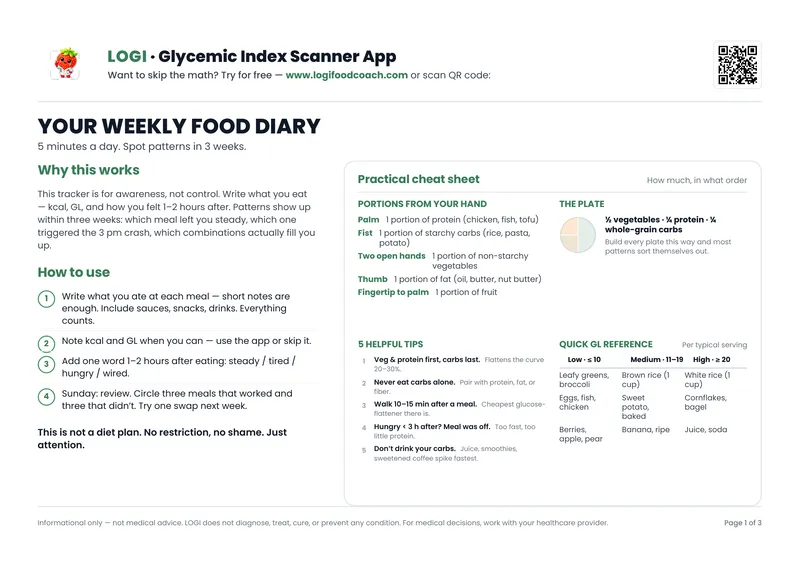
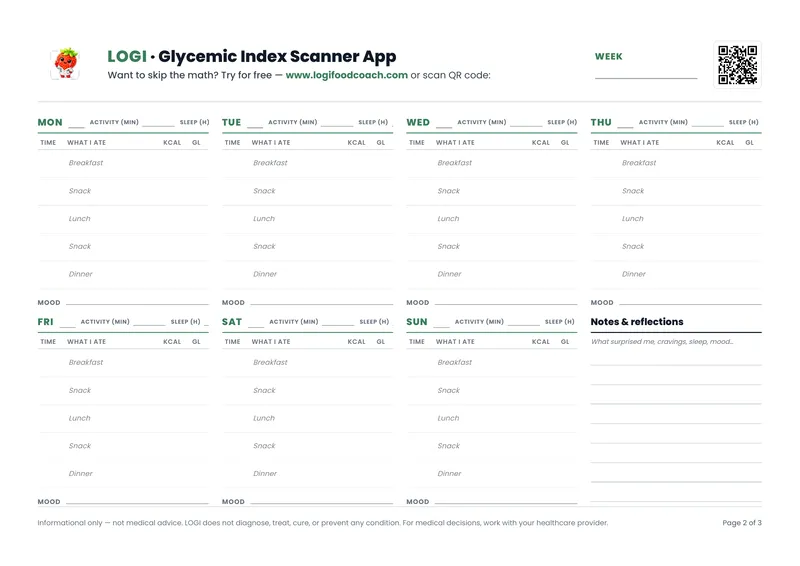
Kostenloses PDF — 3 Seiten
Dein Wochen-Ernährungstagebuch
Mahlzeiten, glykämische Last & Stimmung erfassen. Muster in 3 Wochen erkennen.
Kein Spam. Jederzeit abmeldbar.