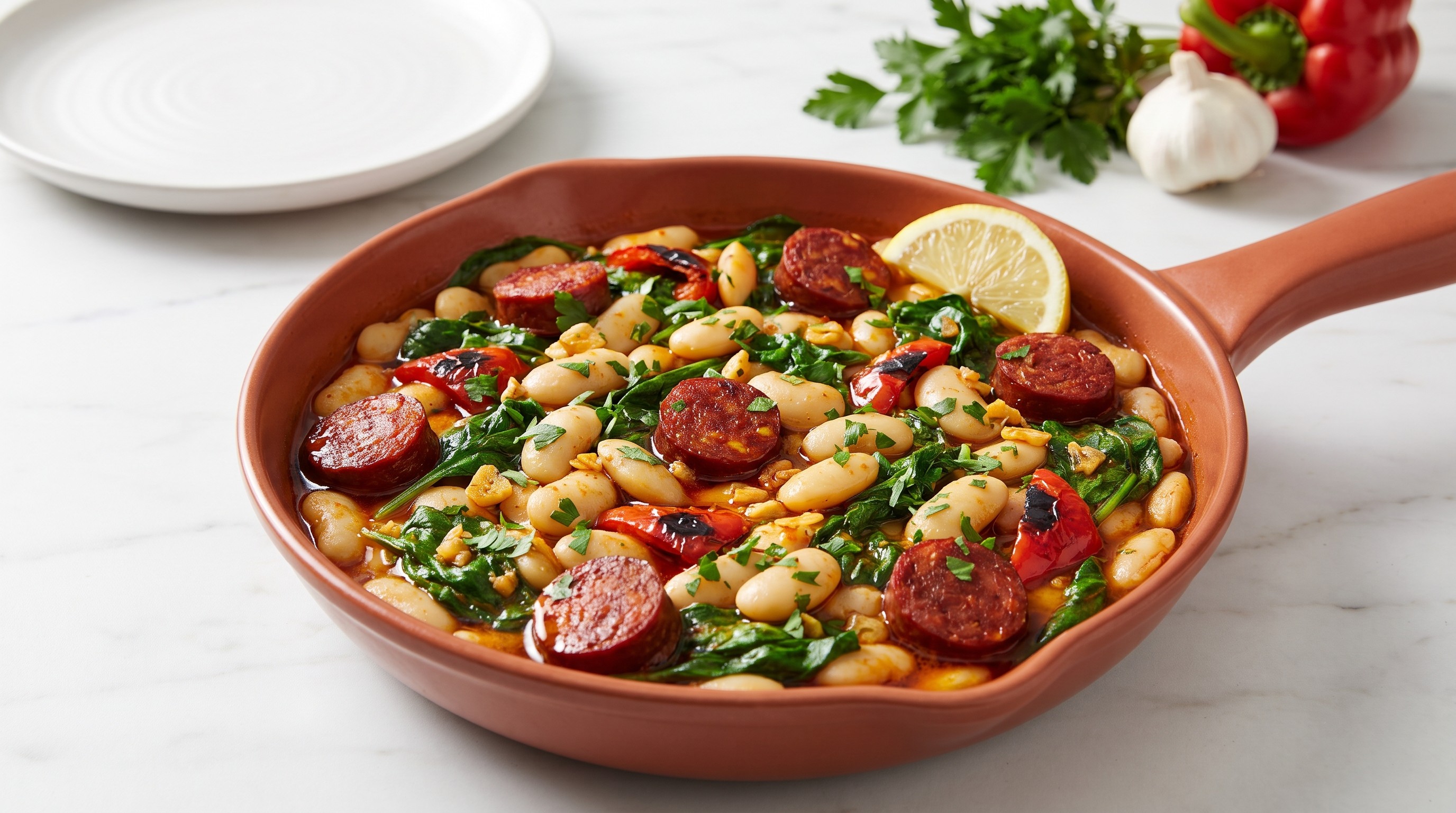
Spanish-Style White Bean and Chorizo Skillet
A smoky one-pan skillet of chorizo and white beans in garlicky tomato sauce — rich in fiber and resistant starch for steady blood sugar.
This rustic Spanish-inspired skillet brings together smoky chorizo, creamy white beans, and vibrant vegetables in a single pan that's as blood-sugar-friendly as it is satisfying. White beans are a standout ingredient for glycemic health: their high resistant starch and soluble fiber content slows glucose absorption significantly, earning them a low GI rating of around 31. The rendered fat from the chorizo and the finishing drizzle of extra virgin olive oil further blunt any glycemic spike by slowing gastric emptying.
The technique matters as much as the ingredients. By browning the chorizo first, you build a deeply savory fond that infuses every element of the dish with smoky paprika flavor — no extra seasoning needed. Bell peppers add natural sweetness without a meaningful glucose load, while a generous handful of spinach wilts into the sauce, contributing magnesium and chromium, two minerals involved in insulin signaling. A bright squeeze of lemon at the table lifts the richness and adds vitamin C, which some research suggests may support post-meal glucose metabolism.
For the best glycemic outcome, consider eating a few bites of the spinach and peppers before digging into the beans and chorizo — consuming vegetables first has been shown to reduce post-meal glucose by up to 30%. This dish pairs beautifully with a simple side salad dressed in vinegar, which further moderates blood sugar response. Ready in 30 minutes with minimal cleanup, it's a weeknight-friendly meal that proves blood sugar management never has to mean sacrificing bold, satisfying flavor.
Blood Sugar Impact
Moderate blood sugar impact despite the low GI of 31, due to a medium-high glycemic load of 21.3 driven by the white beans' starch content. Expect a gradual, sustained rise rather than a sharp spike, with the fiber, protein from chorizo, and olive oil helping to slow glucose absorption.
Blood Sugar Tips
- ✓ Eat the spinach and bell peppers first, then the chorizo, and finish with the beans to slow gastric emptying and blunt the glucose curve.
- ✓ Add a squeeze of the lemon over the dish before eating — the acidity can lower the effective glycemic response by up to 20-30%.
- ✓ Take a 10-15 minute walk after the meal to help your muscles absorb blood glucose more efficiently.
🥗 Ingredients
- 150 g Spanish chorizo
- 1 pcs Red bell pepper
- 3 pcs Garlic
- 400 g White beans
- 200 g Canned diced tomatoes
- 100 g Spinach
- 15 ml Olive oil
- 1 pcs Lemon
- 5.3 oz Spanish chorizo
- 1 pcs Red bell pepper
- 3 pcs Garlic
- 14.1 oz White beans
- 7.1 oz Canned diced tomatoes
- 3.5 oz Spinach
- 1 tbsp Olive oil
- 1 pcs Lemon
👨🍳 Instructions
- 1
Place a large skillet over medium-high heat. Once hot, arrange the chorizo slices in a single layer and cook for about 3 minutes, turning once, until both sides are nicely browned and the fat has rendered into the pan. Transfer the chorizo to a plate and set aside.
- 2
Reduce the heat to medium. Add the diced red bell pepper to the rendered chorizo fat and cook for 3 to 4 minutes, stirring occasionally, until the edges begin to soften and pick up light char marks.
- 3
Add the minced garlic to the pepper and stir continuously for about 1 minute until fragrant and just golden — be careful not to let it burn.
- 4
Pour in the diced tomatoes along with their juices. Stir well, scraping up any browned bits from the bottom of the skillet, and let the mixture come to a gentle simmer.
- 5
Add the white beans and the reserved chorizo to the skillet. Stir to combine everything evenly, then let the mixture simmer uncovered for 7 to 8 minutes, stirring occasionally, until the sauce thickens and the beans are heated through.
- 6
Fold in the fresh spinach in two batches, allowing the first batch to wilt slightly before adding the rest. Cook for about 2 minutes until all the spinach is tender and incorporated into the sauce.
- 7
Remove the skillet from the heat. Taste and adjust seasoning with salt and pepper if needed. Drizzle the extra virgin olive oil over the top.
- 8
Divide between two warm bowls and serve immediately with lemon wedges on the side. Squeeze the lemon generously over each portion just before eating for a bright, fresh finish.
📊 Nutrition Per Serving
| Per Serving | Whole Dish | |
|---|---|---|
| Calories | 762 | 1525 |
| Carbs | 69g | 138g |
| Sugars | 10g | 20g |
| Added Sugars | 0g | 1g |
| Natural Sugars | 10g | 20g |
| Protein | 40g | 81g |
| Fat | 37g | 75g |
| Saturated Fat | 12g | 24g |
| Unsaturated Fat | 24g | 48g |
| Fiber | 19g | 39g |
| Soluble Fiber | 7g | 14g |
| Insoluble Fiber | 13g | 25g |
| Sodium | 1548mg | 3095mg |
Predicted Glucose Response
What if you...
Estimated model — individual responses vary. Not medical advice.
🔄 Lower GI Swaps
White beans (cannellini) have a GI of around 31-33. Black soybeans have a GI of only 16 and are very high in protein and fiber, significantly lowering the glycemic load. Green lentils (GI ~22) and lupini beans (GI ~15) also produce a smaller blood sugar response.
Some commercial chorizo contains added sugars and fillers that raise the glycemic load. Using fresh meat seasoned with chorizo spices (smoked paprika, cumin, garlic) eliminates hidden sugars while preserving the smoky flavor, contributing to a lower overall GL.
Many canned crushed tomatoes contain added sugars that contribute to glycemic load. Fresh tomatoes have a low GI of ~15 and no added sugars. Choosing no-sugar-added versions reduces the carbohydrate content and helps bring the overall GL below 20.
While bell peppers are already low-GI, red and yellow varieties have slightly more sugar than green peppers or zucchini. Zucchini (GI ~15) adds bulk and fiber with minimal carbohydrate impact, helping reduce the dish's overall glycemic load.
🔬 The Science Behind This Recipe
Here's the science explainer for the Spanish-Style White Bean and Chorizo Skillet:
---
Why This Meal Works for Your Blood Sugar
White beans are one of the most blood-sugar-friendly legumes you can eat, and they're the star of this skillet for good reason. They're packed with both soluble fiber and plant-based protein, which work together to slow down the rate at which your body breaks down and absorbs carbohydrates. Think of fiber as a speed bump on the road to your bloodstream — it doesn't stop glucose from getting there, but it ensures it arrives gradually rather than all at once. With an estimated GI of just 31, this dish lands firmly in the low-glycemic category, meaning the carbohydrates it contains are digested slowly and steadily.
The chorizo in this recipe does more than add bold, smoky flavor — its fat and protein content plays a key role in flattening your glucose curve. When you eat fat and protein alongside carbohydrates, your stomach empties more slowly, which means glucose trickles into your bloodstream instead of flooding it. The bell peppers and tomatoes contribute additional fiber and are naturally very low in sugar, adding volume and nutrition without meaningfully raising the glycemic load. Speaking of which, the glycemic load of 21.3 per serving tells you something the GI alone can't: it accounts for *how much* carbohydrate you're actually eating, not just how fast it hits. A moderate glycemic load like this means you're getting sustained energy without the spike-and-crash cycle.
To get the most out of this dish, try eating the vegetables and chorizo first before digging into the beans. A short 10–15 minute walk after your meal can also help your muscles absorb glucose more efficiently. Pair this skillet with a simple green salad dressed in olive oil to add even more fiber and healthy fat to the plate — small strategies that add up to a noticeably smoother blood sugar response.
Related recipes
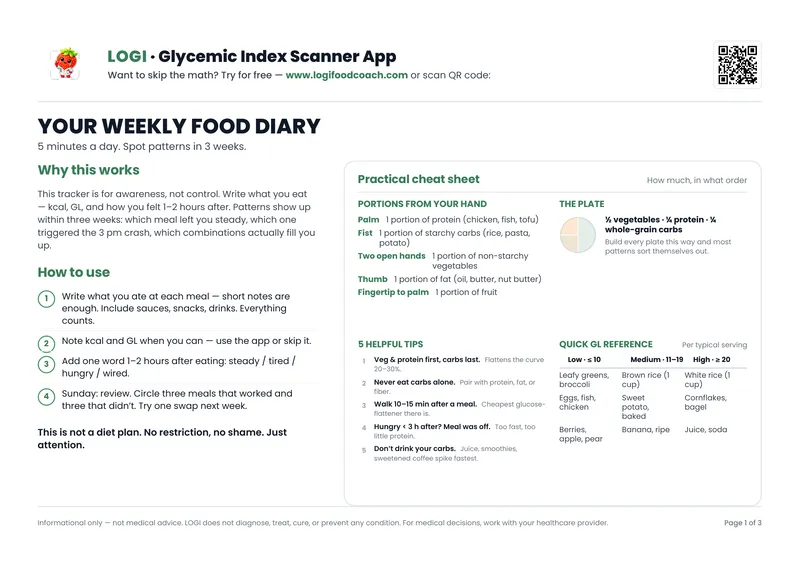
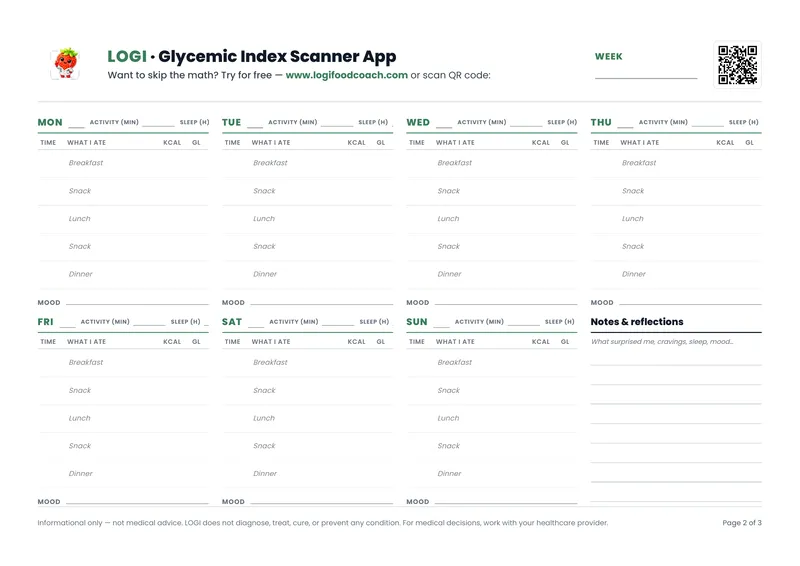
Free PDF — 3 pages
Your Weekly Food Journal
Track meals, glycemic load & mood. Spot patterns in 3 weeks.
No spam. Unsubscribe anytime.