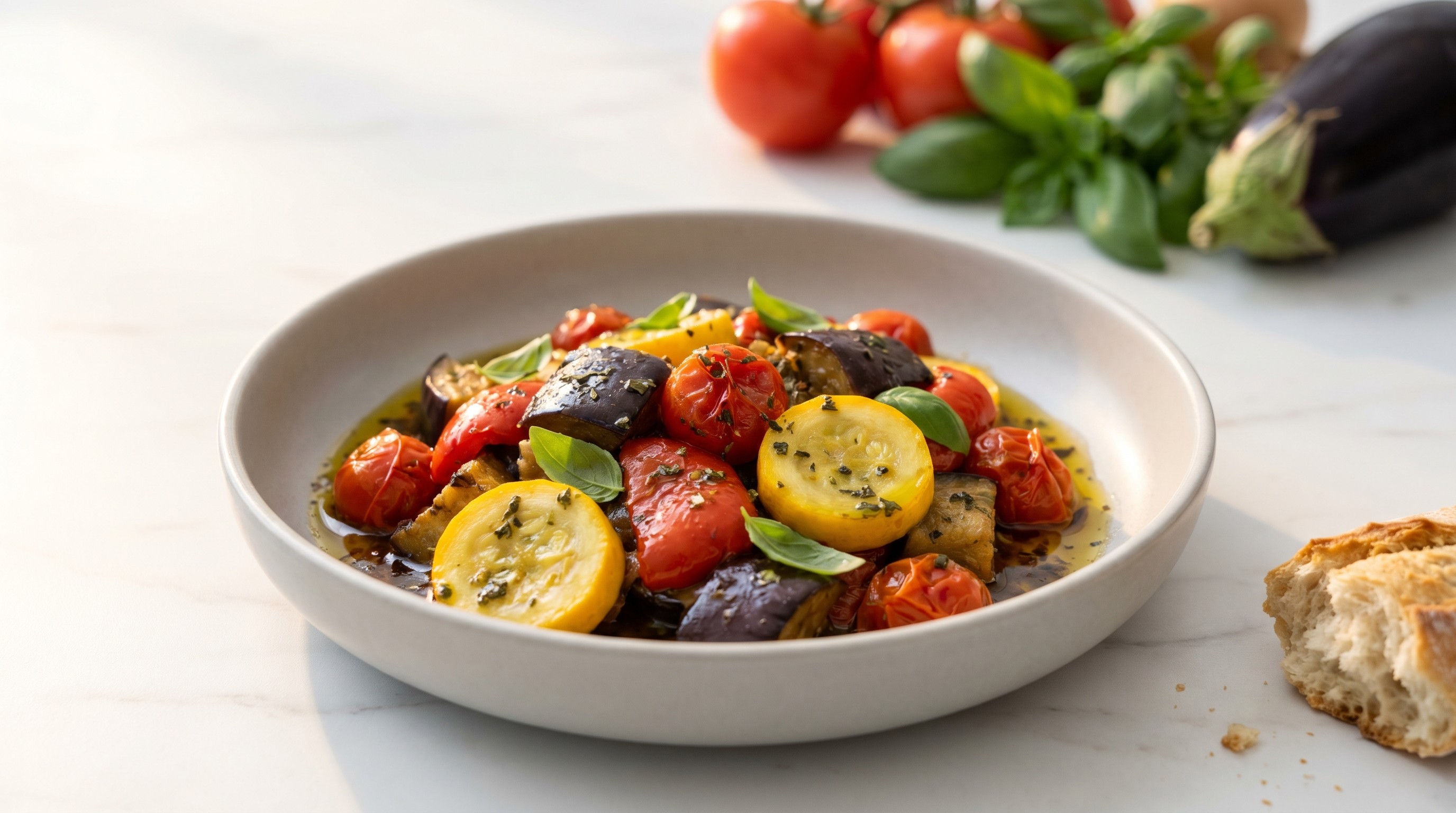
Ratatouille Provençale (French Summer Vegetable Stew)
A slow-simmered Provençal stew of aubergine, courgette, peppers, and tomatoes in olive oil — naturally low-glycemic with a GL of just 4 per serving.
Ratatouille is one of the great gifts of Provençal cooking to anyone managing blood sugar. This vibrant stew is built almost entirely from low-glycemic vegetables — aubergine, courgette, bell peppers, and cherry tomatoes — each cooked in stages to preserve its distinct texture and flavor. The result is a dish where every spoonful delivers a different combination of tender, slightly caramelized vegetables bound together by fruity olive oil and fragrant dried herbs.
From a glycemic perspective, ratatouille is nearly ideal. Every vegetable in this recipe scores well below 55 on the glycemic index, and the generous use of extra-virgin olive oil provides healthy monounsaturated fats that further slow glucose absorption. With nearly 6 grams of fiber per serving and a glycemic load of approximately 4, this dish has minimal impact on blood sugar while delivering an impressive array of micronutrients — lycopene from the tomatoes, potassium from the courgettes, and vitamin C from the peppers.
Serve this as a standalone vegetarian dinner or pair it with grilled fish or chicken breast for added protein, which will further blunt any postprandial glucose response. For optimal blood sugar management, eat the ratatouille first before any starchy side. It also tastes wonderful at room temperature the next day, making it an excellent meal-prep option for steady energy throughout the week.
Blood Sugar Impact
Very low blood sugar impact expected. With a glycemic load of 4.0 and estimated GI of 19, this whole-vegetable stew will produce minimal glucose elevation and provide stable energy for 3-4 hours.
Blood Sugar Tips
- ✓ Serve over a small portion of al dente whole-grain pasta or quinoa rather than white rice or bread to keep the overall glycemic load low.
- ✓ Add a source of protein such as grilled chicken, white beans, or a poached egg to further slow glucose absorption and increase satiety.
- ✓ Drizzle extra virgin olive oil generously — the healthy fats already present help blunt any minor blood sugar rise from the natural sugars in the peppers and tomatoes.
🥗 Ingredients
- 1 pcs Aubergine
- 2 pcs Courgette
- 1 pcs Red bell pepper
- 1 pcs Yellow bell pepper
- 300 g Cherry tomato
- 1 pcs Onion
- 3 pcs Garlic
- 4 tbsp Olive oil
- 1 tsp Dried thyme
- 1 tsp Dried oregano
- 1 tsp Salt
- 0.5 tsp Black pepper
- 15 g Basil
- 1 pcs Aubergine
- 2 pcs Courgette
- 1 pcs Red bell pepper
- 1 pcs Yellow bell pepper
- 10.6 oz Cherry tomato
- 1 pcs Onion
- 3 pcs Garlic
- 4 tbsp Olive oil
- 1 tsp Dried thyme
- 1 tsp Dried oregano
- 1 tsp Salt
- 0.5 tsp Black pepper
- 0.5 oz Basil
👨🍳 Instructions
- 1
Cut the aubergine into 2cm cubes. Toss them with half a teaspoon of salt and spread in a colander set over a bowl. Leave for 10 minutes to draw out excess moisture, then blot thoroughly with kitchen paper. This step is essential — it prevents the aubergine from turning soggy and ensures it caramelises properly.
- 2
While the aubergine drains, prepare the remaining vegetables. Slice the courgettes into 1.5cm rounds. Deseed both bell peppers and cut into 2cm pieces. Halve the cherry tomatoes. Finely dice the onion and thinly slice the garlic cloves.
- 3
Warm 2 tablespoons of olive oil in a large, heavy-bottomed pan or Dutch oven over medium-high heat. When the oil shimmers, add the drained aubergine cubes in a single layer. Cook for 6 to 7 minutes, turning occasionally, until golden brown on the outside and beginning to soften. Transfer to a plate and set aside.
- 4
Pour the remaining 2 tablespoons of olive oil into the same pan and reduce the heat to medium. Add the diced onion and sauté for about 4 minutes until soft and translucent. Stir in the sliced garlic and cook for 1 minute more until fragrant, taking care not to let it colour.
- 5
Add the red and yellow pepper pieces to the pan. Cook for 4 minutes, stirring now and then, until the peppers start to soften at the edges but still have some bite.
- 6
Tip in the courgette rounds, halved cherry tomatoes, dried thyme, dried oregano, remaining half teaspoon of salt, and the black pepper. Stir everything together gently so the herbs and seasoning are evenly distributed.
- 7
Return the reserved aubergine to the pan and fold it in carefully to avoid breaking up the cubes. Reduce the heat to low, cover with a lid, and let the stew simmer gently for 25 minutes. Stir twice during this time. The vegetables should be tender and melting into one another while still holding their shape.
- 8
Remove the pan from the heat and taste for seasoning, adjusting salt if needed. Tear the fresh basil leaves and scatter them generously over the top. Serve warm or allow to cool to room temperature — ratatouille deepens in flavour as it rests and is equally delicious the following day.
📊 Nutrition Per Serving
| Per Serving | Whole Dish | |
|---|---|---|
| Calories | 214 | 857 |
| Carbs | 21g | 82g |
| Sugars | 12g | 49g |
| Natural Sugars | 12g | 49g |
| Protein | 4g | 16g |
| Fat | 14g | 58g |
| Saturated Fat | 2g | 8g |
| Unsaturated Fat | 12g | 49g |
| Fiber | 6g | 25g |
| Soluble Fiber | 1g | 5g |
| Insoluble Fiber | 3g | 10g |
| Sodium | 597mg | 2389mg |
Predicted Glucose Response
What if you...
Estimated model — individual responses vary. Not medical advice.
🔄 Lower GI Swaps
Cherry tomatoes have a moderate glycemic index due to their higher sugar content compared to other tomato varieties. Green or firmer Roma tomatoes have lower sugar concentration, helping keep the already-low GL even lower.
Onions contain moderate natural sugars that can contribute to blood glucose spikes when cooked down and caramelized. Leek greens and spring onion greens have lower sugar content and a lower glycemic impact.
Red bell peppers are fully ripened and contain more sugar than their unripe counterparts. Green bell peppers and other less-sweet pepper varieties have a lower glycemic index due to reduced sugar content.
Like red peppers, yellow bell peppers have higher natural sugar levels than green varieties. Swapping to lower-sugar pepper types reduces the overall glycemic load of the dish.
🔬 The Science Behind This Recipe
Here's the science explainer for the Ratatouille Provençale:
---
Why This Dish Is a Blood Sugar Winner
Ratatouille is one of those rare dishes that's as kind to your blood sugar as it is to your taste buds. With a glycemic load of just 4.0 per serving and an estimated GI of 19, this vegetable stew sits firmly in the "low" category on both scales. But what do those numbers actually mean? The glycemic index tells you how quickly a food raises blood sugar, while glycemic load factors in how much carbohydrate you're actually eating. Since ratatouille is built almost entirely from non-starchy vegetables, you're getting very few blood-sugar-raising carbohydrates per bowl — that's why the glycemic load is so impressively low.
The magic here is in the ingredients themselves. Eggplant and courgettes are rich in soluble fiber, which forms a gel-like barrier in your digestive tract, slowing the absorption of any sugars into your bloodstream. Bell peppers — both the red and yellow varieties — add even more fiber along with a hefty dose of antioxidants, while contributing minimal carbohydrates. Cherry tomatoes bring natural sweetness without a significant sugar load, and their skin provides additional fiber. When these vegetables are slow-cooked together in olive oil, the healthy fats further slow digestion, creating an even gentler blood sugar response.
To get the most from this dish, try eating the ratatouille before any starchier sides like bread or rice — research suggests that eating vegetables and fats first can reduce post-meal glucose spikes by up to 30%. Pair it with a source of protein like grilled fish or chickpeas, and consider a short 10-15 minute walk after your meal to help your muscles use glucose more efficiently. With a glycemic load this low, ratatouille proves that managing blood sugar doesn't mean sacrificing flavor — it's all about choosing ingredients that work with your body, not against it.
Related recipes
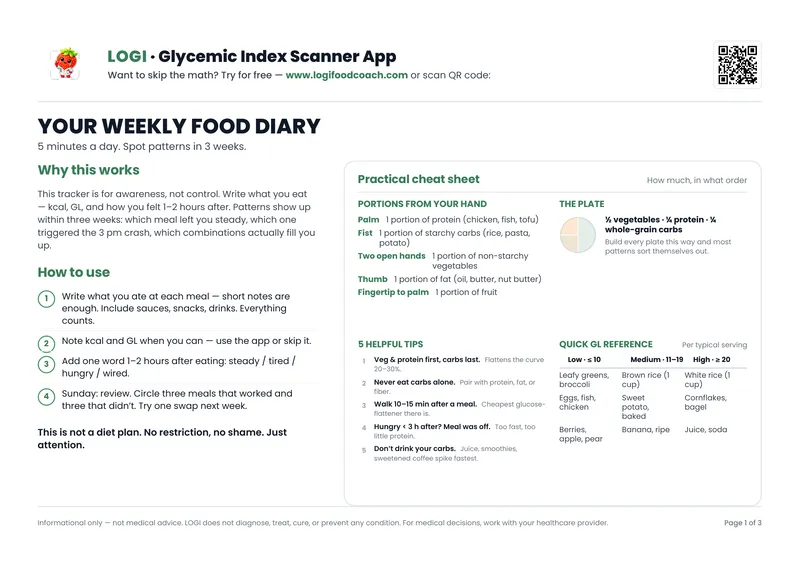
Free PDF — 3 pages
Your Weekly Food Journal
Track meals, glycemic load & mood. Spot patterns in 3 weeks.
No spam. Unsubscribe anytime.