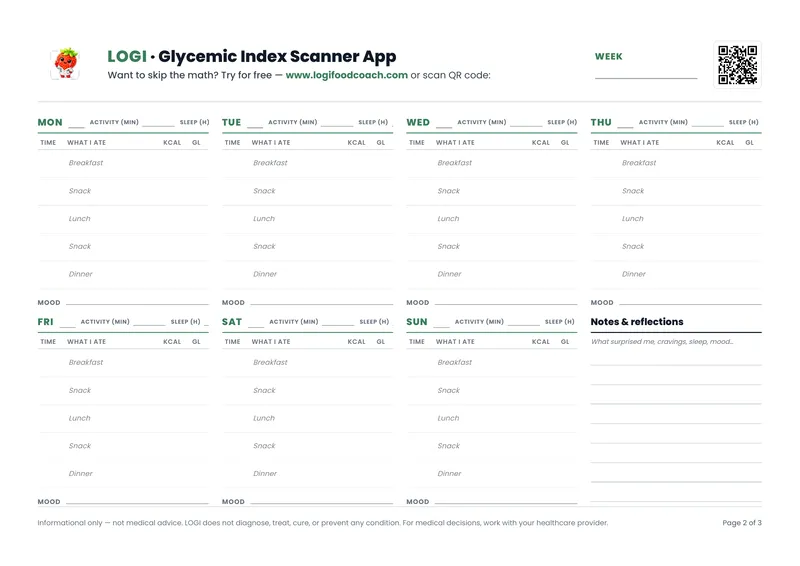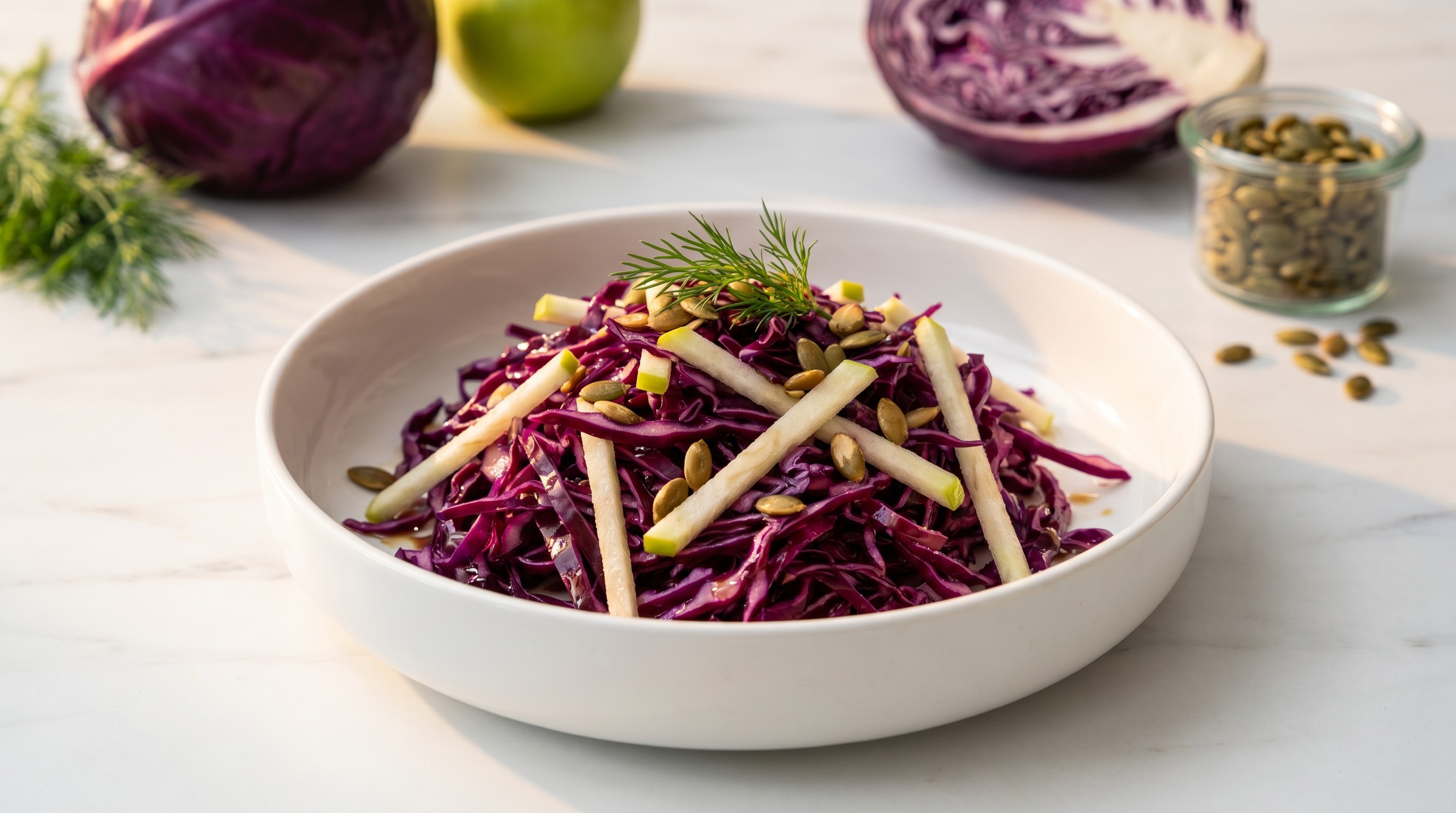
Rödkålssallad (Swedish Red Cabbage Salad with Apple and Seeds)
A crisp Swedish salad of shredded red cabbage, tart apple matchsticks, and toasted pumpkin seeds in a tangy vinaigrette — naturally low-GI and rich in fiber.
Rödkålssallad is a vibrant Swedish raw salad that showcases red cabbage at its crunchy, colorful best. Finely shredded cabbage is briefly massaged with apple cider vinegar and salt, a traditional Scandinavian technique that tenderizes the leaves just enough while preserving their satisfying bite. The result is a salad that feels both fresh and substantial — exactly the kind of vegetable-forward dish that supports steady blood sugar.
From a glycemic perspective, this recipe is a standout. Red cabbage has a very low glycemic index (estimated GI around 15) and is loaded with anthocyanins, the pigments responsible for its deep purple hue. Research suggests anthocyanins may improve insulin sensitivity and reduce post-meal glucose spikes. The apple cider vinegar in the dressing provides an additional benefit: acetic acid has been shown to slow gastric emptying and improve post-meal glycemic response by up to 30%. Paired with healthy fats from olive oil and protein-rich pumpkin seeds, the dressing helps buffer the modest sugars from the apple.
Serve this salad as a starter before a protein-rich main course — eating fibrous vegetables first is one of the simplest strategies for flattening your glucose curve. It also pairs beautifully alongside grilled salmon, roasted chicken, or a hearty lentil soup. The pumpkin seeds add a nutty crunch and a dose of magnesium, a mineral linked to improved insulin function. For the best texture, add them just before eating so they stay perfectly crisp.
Blood Sugar Impact
Very low blood sugar impact expected. The high fiber from red cabbage, healthy fats from olive oil and pumpkin seeds, and the acetic acid in apple cider vinegar all work together to ensure a slow, minimal glucose response with stable energy for 3-4 hours.
Blood Sugar Tips
- ✓ Eat this salad as a starter before any higher-carb course — the fiber and vinegar will blunt the glucose response of foods that follow.
- ✓ Keep the apple unpeeled to maximize fiber content, which further slows sugar absorption.
- ✓ Include a generous portion of pumpkin seeds for added protein and healthy fats that help sustain satiety and keep blood sugar steady.
🥗 Ingredients
- 300 g Red cabbage
- 1 pcs Apple
- 30 g Pumpkin seeds
- 2 tbsp Apple cider vinegar
- 1 tbsp Olive oil
- 1 tsp Dijon mustard
- 0.5 tsp Salt
- 0.25 tsp Black pepper
- 5 g Dill
- 10.6 oz Red cabbage
- 1 pcs Apple
- 1.1 oz Pumpkin seeds
- 2 tbsp Apple cider vinegar
- 1 tbsp Olive oil
- 1 tsp Dijon mustard
- 0.5 tsp Salt
- 0.25 tsp Black pepper
- 0.2 oz Dill
👨🍳 Instructions
- 1
Using a sharp knife or mandoline, shred the red cabbage into the thinnest ribbons you can manage. Transfer the shredded cabbage to a large mixing bowl.
- 2
Drizzle the apple cider vinegar over the cabbage and sprinkle with the salt. Use your hands to toss and gently massage the cabbage for about 30 seconds, working the vinegar into the shreds.
- 3
Set the dressed cabbage aside for 5 minutes. The vinegar and salt will soften the leaves slightly and draw out some liquid, making the cabbage more tender while keeping its crunch.
- 4
While the cabbage rests, prepare the dressing. In a small bowl, whisk together the olive oil, Dijon mustard, and black pepper until smooth and emulsified.
- 5
Core the apple and slice it into thin matchsticks, about the same width as the cabbage shreds. Work quickly or toss the apple pieces with a small squeeze of lemon to prevent browning.
- 6
Pour the mustard dressing over the softened cabbage and toss thoroughly until every strand is evenly coated.
- 7
Add the apple matchsticks and roughly chopped fresh dill to the bowl. Fold everything together gently so the apple and herbs are well distributed throughout the salad.
- 8
Divide the salad between two serving plates and scatter the pumpkin seeds generously over the top just before serving — this keeps them crunchy and adds a satisfying nutty contrast.
📊 Nutrition Per Serving
| Per Serving | Whole Dish | |
|---|---|---|
| Calories | 238 | 475 |
| Carbs | 24g | 48g |
| Sugars | 14g | 27g |
| Natural Sugars | 14g | 27g |
| Protein | 7g | 14g |
| Fat | 15g | 30g |
| Saturated Fat | 2g | 5g |
| Unsaturated Fat | 12g | 24g |
| Fiber | 6g | 12g |
| Soluble Fiber | 1g | 2g |
| Insoluble Fiber | 2g | 4g |
| Sodium | 649mg | 1298mg |
Predicted Glucose Response
What if you...
Estimated model — individual responses vary. Not medical advice.
🔄 Lower GI Swaps
Standard apples have a GI of ~36-40. Slightly underripe pears have a lower GI (~33) due to higher fiber and less sugar conversion. Granny Smith apples are lower in sugar than sweeter varieties. Jicama (GI ~15) adds a similar crunch with minimal blood sugar impact.
Some Dijon mustards contain added sugar or honey that can contribute to glycemic load. Whole grain mustard retains more fiber from the seed hulls and typically has no added sweeteners, resulting in negligible blood sugar impact.
While pumpkin seeds are already low-GI, hemp seeds and walnuts are richer in omega-3 fatty acids and healthy fats that help slow gastric emptying and reduce the overall glycemic response of the meal. Almonds have been shown in studies to lower post-meal blood sugar spikes when eaten alongside carbohydrates.
🔬 The Science Behind This Recipe
Here's the science explainer section:
---
Why This Salad Is a Blood Sugar Friend
This vibrant red cabbage salad is a fantastic example of how whole, minimally processed ingredients naturally support steady blood sugar levels. With a glycemic load of just 5.5 per serving and an estimated GI of 23, this dish lands firmly in the "low" category on both scales. But what do those numbers actually mean? The Glycemic Index tells you how quickly a food raises blood sugar, while Glycemic Load factors in how much you're actually eating — and that's the number that matters most in real life. A small amount of a higher-GI food can still have a low glycemic load, so portion context is everything.
Red cabbage is the star here, and for good reason. It's packed with fiber — both soluble and insoluble — which acts like a speed bump in your digestive system, slowing the rate at which sugars enter your bloodstream. The apple adds natural sweetness along with pectin, a type of soluble fiber that forms a gel-like substance during digestion, further buffering any glucose response. Meanwhile, the apple cider vinegar is a quiet powerhouse: research suggests that the acetic acid in vinegar can slow the breakdown of starches, helping to flatten post-meal blood sugar curves.
The pumpkin seeds and olive oil complete the picture beautifully. Pumpkin seeds contribute plant-based protein and healthy fats, while olive oil adds monounsaturated fats — both of which slow gastric emptying, meaning your body processes the meal more gradually. A practical tip: if you're serving this alongside a higher-carb dish like bread or potatoes, eat the salad first. Starting with fiber and fat-rich foods before carbohydrates is a simple strategy shown to reduce glucose spikes. And a short 10–15 minute walk after eating? That helps your muscles soak up blood sugar naturally. Small habits, big impact.
Related recipes
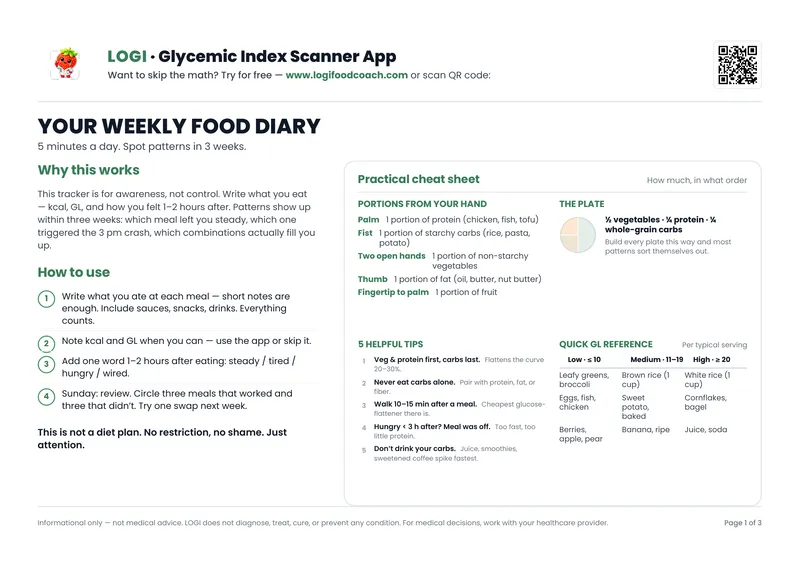
Free PDF — 3 pages
Your Weekly Food Journal
Track meals, glycemic load & mood. Spot patterns in 3 weeks.
No spam. Unsubscribe anytime.