Poulet Basquaise
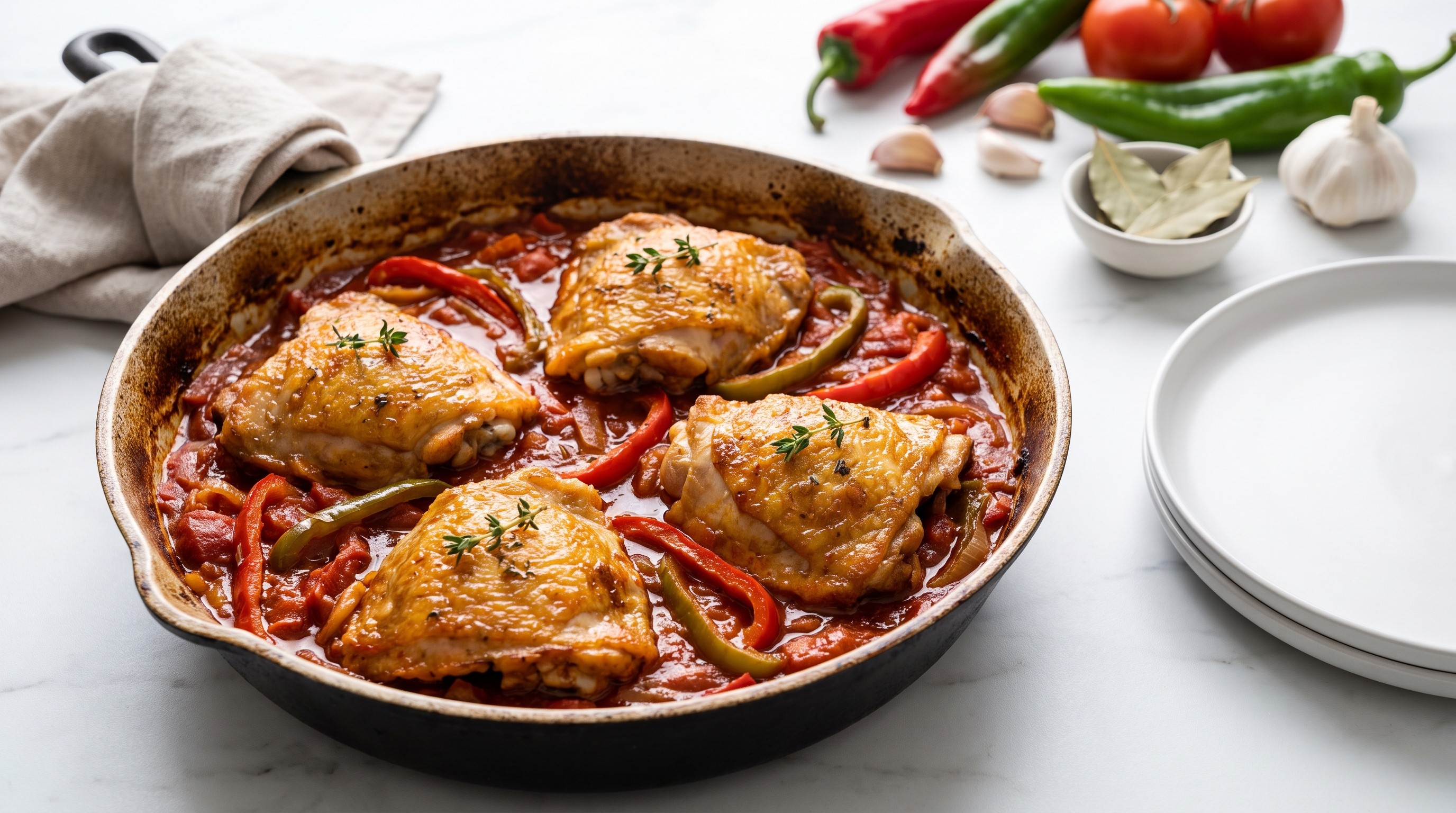
Golden-skinned chicken thighs braised with sweet peppers, tomatoes, and smoked paprika — a naturally low-glycemic Basque classic full of flavor.
Poulet Basquaise is one of those rare dishes that is inherently blood-sugar-friendly without a single substitution. Bone-in chicken thighs deliver slow-digesting protein and satisfying fat, while a generous tangle of bell peppers and tomatoes supplies fiber, vitamin C, and lycopene — all with a glycemic index well below 15. The smoked paprika and garlic add depth that makes the simple ingredient list punch far above its weight.
The technique matters as much as the ingredients. Searing the thighs skin-side down renders subcutaneous fat into the pan, creating a rich cooking medium for the vegetables and eliminating the need for excess oil. When the chicken returns to the sauce, it simmers gently so the collagen-rich meat stays moist and the skin stays crisp above the liquid. A small splash of dry white wine deglazes the fond and adds acidity that balances the sweetness of the peppers without contributing any meaningful sugar.
For the steadiest glucose response, serve this straight from the pan with a side of leafy greens or roasted cauliflower — no bread or rice needed. Eat the vegetables and a few bites of chicken first before finishing the sauce; the fiber and protein prime your digestive system for slower absorption. Leftovers reheat beautifully the next day, and the overnight rest deepens the flavor of the sauce even further.
Blood Sugar Impact
Very low blood sugar impact expected. With a glycemic load of 5.0 and an estimated GI of 22, this protein-and-vegetable-rich dish will produce a gentle, minimal rise in blood glucose, providing stable energy for 3-4 hours.
Blood Sugar Tips
- ✓ Eat the peppers and onions first before the chicken to slow gastric emptying and blunt any minor glucose response.
- ✓ Serve over a small portion of al dente whole grain rice or lentils rather than white rice or bread to keep the overall meal GI low.
- ✓ Take a 10-15 minute walk after eating to further enhance glucose uptake by your muscles.
🥗 Ingredients
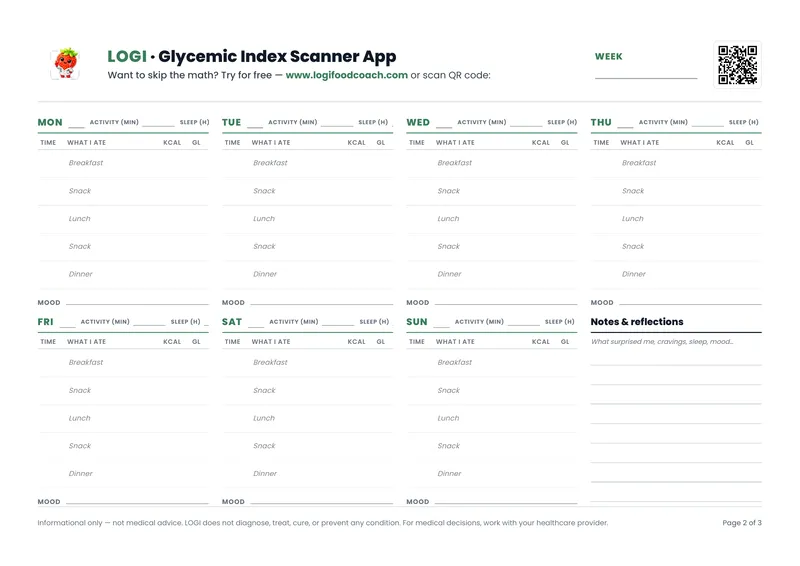
- 4 pcs Chicken thigh
- 1 pcs Red bell pepper
- 1 pcs Green bell pepper
- 1 pcs Onion
- 3 pcs Garlic
- 200 g Canned whole tomato
- 75 ml Dry white wine
- 1.5 tbsp Olive oil
- 1 tsp Smoked paprika
- 4 pcs Fresh thyme
- 0.5 tsp Fine salt
- 0.25 tsp Black pepper
- 4 pcs Chicken thigh
- 1 pcs Red bell pepper
- 1 pcs Green bell pepper
- 1 pcs Onion
- 3 pcs Garlic
- 7.1 oz Canned whole tomato
- 5 tbsp Dry white wine
- 1.5 tbsp Olive oil
- 1 tsp Smoked paprika
- 4 pcs Fresh thyme
- 0.5 tsp Fine salt
- 0.25 tsp Black pepper
👨🍳 Instructions
- 1
Pat the chicken thighs dry with paper towels — this ensures a crisp sear. Sprinkle both sides evenly with the salt and black pepper.
- 2
Warm the olive oil in a wide, heavy-bottomed pan (cast iron works best) over medium-high heat until the oil just begins to shimmer. Lay the thighs skin-side down and press gently to ensure full contact with the pan. Sear undisturbed for about 5 minutes until the skin is deeply golden and lifts away cleanly.
- 3
Flip the thighs and sear the underside for 2 minutes to lightly brown. Transfer the chicken to a clean plate and set aside. Leave all the rendered fat in the pan.
- 4
Reduce the heat to medium. Add the sliced onion and both bell peppers to the pan. Cook for about 8 minutes, stirring occasionally, until the vegetables have softened and picked up some golden colour from the fond.
- 5
Stir in the sliced garlic and smoked paprika. Cook for 1 minute, moving everything around the pan constantly, until the spice is fragrant and coats the vegetables.
- 6
Pour in the white wine and scrape the browned bits from the bottom of the pan with a wooden spoon. Let the wine bubble and reduce by roughly half, about 2 minutes — this cooks off the alcohol and concentrates the flavour.
- 7
Add the hand-crushed tomatoes and thyme sprigs to the pan and stir to combine. Nestle the chicken thighs back in skin-side up, positioning them so the skin sits above the liquid to stay crisp. Bring the sauce to a gentle simmer.
- 8
Cover the pan with a lid set slightly ajar to allow steam to escape. Lower the heat to medium-low and cook for 25 minutes until the sauce has thickened, the peppers are meltingly tender, and the chicken registers 75 °C (165 °F) at the bone. Remove from heat and rest uncovered for 3 minutes, then serve straight from the pan.
📊 Nutrition Per Serving
| Per Serving | Whole Dish | |
|---|---|---|
| Calories | 653 | 1306 |
| Carbs | 23g | 45g |
| Sugars | 11g | 23g |
| Natural Sugars | 11g | 23g |
| Protein | 60g | 119g |
| Fat | 34g | 68g |
| Saturated Fat | 8g | 16g |
| Unsaturated Fat | 25g | 51g |
| Fiber | 6g | 12g |
| Soluble Fiber | 2g | 4g |
| Insoluble Fiber | 4g | 8g |
| Sodium | 937mg | 1873mg |
Predicted Glucose Response
What if you...
Estimated model — individual responses vary. Not medical advice.
🔄 Lower GI Swaps
Canned tomatoes often contain added sugars that raise glycemic load; fresh tomatoes have a lower GI (approximately 15) and no hidden sugars, helping keep blood sugar response minimal.
White wine contains residual sugars (1-4 g per 100 ml) that contribute to glycemic load; white wine vinegar or bone broth with acid provides the same flavor depth with virtually zero sugar and no blood sugar impact.
Standard onions contain approximately 7-8 g carbohydrates per 100 g; shallots used in smaller quantities and spring onion greens deliver similar aromatic depth with roughly 40-50% fewer carbohydrates per serving, marginally reducing glycemic load.
🔬 The Science Behind This Recipe
Why This Recipe Works for Blood Sugar
Poulet Basquaise is a naturally blood sugar-friendly dish, and the secret lies in its ingredient balance. Chicken thigh is the star here — as a pure protein source, it has virtually no impact on blood sugar. Protein slows down digestion, which means any carbohydrates you eat alongside it get absorbed more gradually into your bloodstream. Think of it as a natural speed bump for glucose. When you pair chicken with the vegetables in this dish, you create a meal that keeps your energy steady rather than sending it on a roller coaster ride.
The bell peppers, onion, and garlic bring more than just flavor — they contribute dietary fiber, which acts like a mesh filter in your digestive system, slowing the release of sugar into your blood. Red and green bell peppers are particularly impressive because they're loaded with fiber and water but contain very few carbohydrates. This combination means they add volume and satisfaction to your plate without meaningfully raising blood sugar. Garlic and onion, beyond their aromatic magic, contain compounds that research suggests may support healthy insulin sensitivity over time.
Here's what makes this dish exceptional by the numbers: with a glycemic load of just 5.0 per serving, it falls well into the "low" category. Remember, glycemic load accounts for both the *type* and *amount* of carbohydrates — so it gives you a much more realistic picture than glycemic index alone. A GI of 22 confirms that the small amount of carbs present are the slow-release kind. To get even more from this meal, try eating the peppers and onions first before the chicken, and consider a short 10-15 minute walk after dinner. These simple habits can further smooth out your body's glucose response, helping you feel energized long after the meal is done.
Related recipes
Free PDF — 3 pages
Your Weekly Food Journal
Track meals, glycemic load & mood. Spot patterns in 3 weeks.
No spam. Unsubscribe anytime.