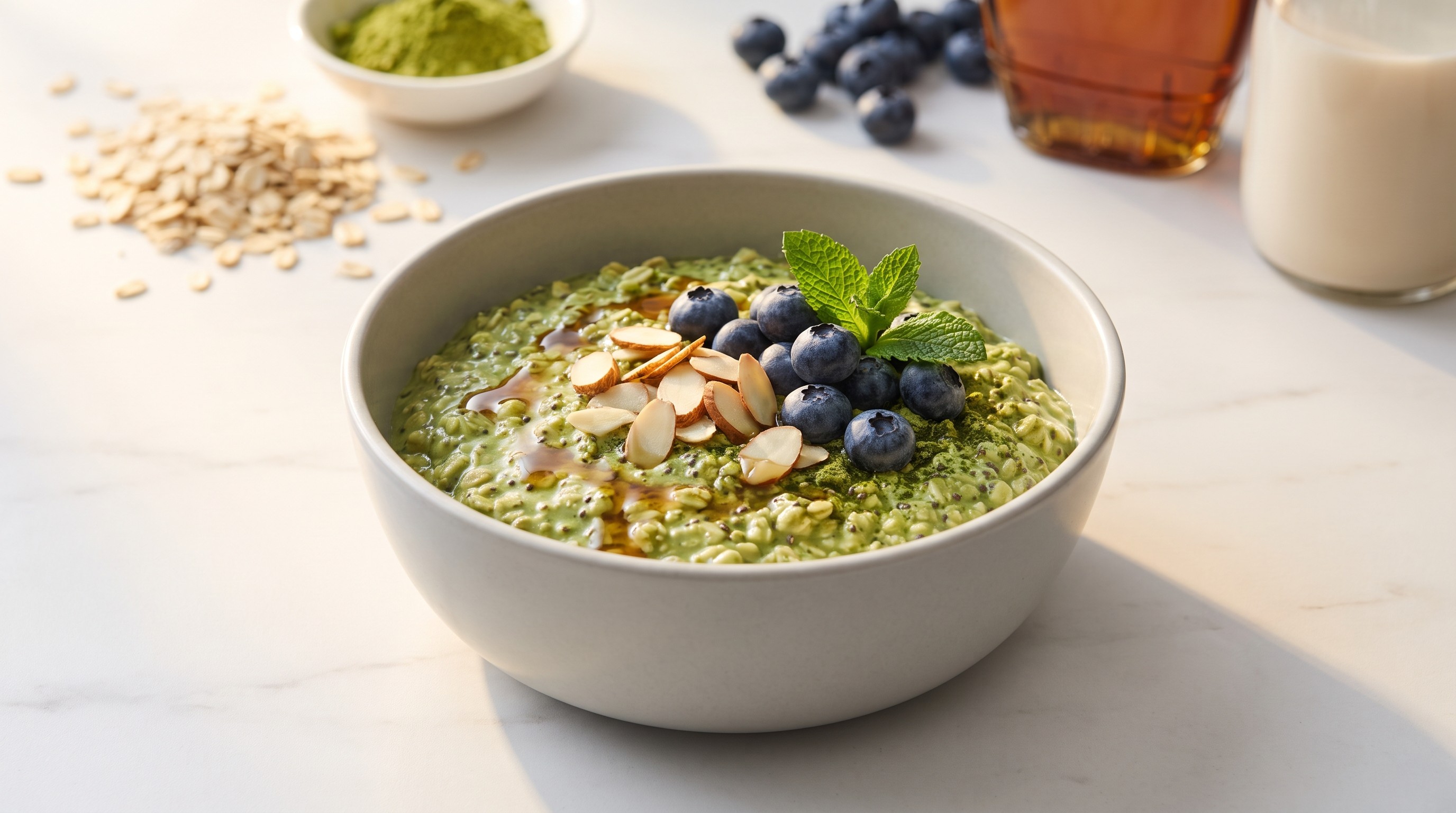
Matcha Overnight Oats
Creamy matcha overnight oats with chia seeds and Greek yogurt — a make-ahead breakfast that keeps blood sugar steady all morning long.
This Japanese-inspired overnight oats recipe combines the antioxidant power of ceremonial-grade matcha with the slow-digesting goodness of rolled oats and chia seeds. The result is a creamy, vibrant green breakfast that you prepare the night before and grab straight from the fridge — no cooking required. Every ingredient earns its place on the low-glycemic roster: rolled oats provide beta-glucan fiber that slows glucose absorption, chia seeds form a gel that further blunts the glycemic response, and full-fat Greek yogurt adds protein and healthy fats that keep you satiated without spiking insulin.
Matcha itself is a blood-sugar ally. Studies suggest that the catechins in green tea — especially EGCG — may improve insulin sensitivity and reduce post-meal glucose spikes. Unlike coffee, matcha delivers a calm, sustained energy lift thanks to L-theanine, making it an ideal morning companion for anyone managing their glycemic load.
The optional maple syrup adds just a touch of sweetness at only one teaspoon per serving, but the recipe works beautifully without it. Fresh berries provide natural sweetness along with fiber and polyphenols, while sliced almonds contribute crunch, healthy monounsaturated fats, and additional protein. For the best blood-sugar outcome, eat the oats slowly and consider pairing them with a small handful of extra nuts or a side of eggs for an even more balanced macronutrient profile.
Blood Sugar Impact
Moderate blood sugar impact due to a glycemic load of 23.5, despite the low GI of 47. The oats, chia seeds, and Greek yogurt provide fiber, fat, and protein that slow glucose absorption, but the maple syrup adds free sugars that can cause a modest spike.
Blood Sugar Tips
- ✓ Reduce or eliminate the maple syrup — swap it for a few extra blueberries or a dash of vanilla extract to lower the glycemic load significantly.
- ✓ Eat the oats slowly and consider having a handful of nuts or a boiled egg alongside to add more protein and fat, further blunting the glucose response.
- ✓ Follow the meal with a 10-15 minute walk to help your muscles absorb glucose and flatten the post-meal blood sugar curve.
🥗 Ingredients
- 80 g Rolled oats
- 240 g Greek yogurt
- 200 ml Almond milk
- 20 g Chia seeds
- 4 g Matcha powder
- 20 g Sliced almonds
- 100 g Blueberries
- 2 tsp Maple syrup
- 2.8 oz Rolled oats
- 8.5 oz Greek yogurt
- 14 tbsp Almond milk
- 0.7 oz Chia seeds
- 0.1 oz Matcha powder
- 0.7 oz Sliced almonds
- 3.5 oz Blueberries
- 2 tsp Maple syrup
👨🍳 Instructions
- 1
Place the matcha powder in a small bowl. Add about 2 tablespoons of the almond milk and whisk vigorously with a small whisk or fork until the matcha dissolves into a smooth, lump-free paste. Matcha is finely ground whole tea leaf and tends to clump in cold liquid, so this concentrated pre-mix step is essential for an even flavor and color.
- 2
In a medium mixing bowl or a wide-mouth jar (at least 750 ml capacity), combine the Greek yogurt, the remaining almond milk, and the maple syrup if using. Add the matcha paste and stir thoroughly until the mixture is uniformly green with no white streaks remaining.
- 3
Add the rolled oats and chia seeds to the matcha-yogurt mixture. Stir well, pressing any floating oats below the surface so they are fully submerged. This ensures even hydration and a consistent creamy texture by morning.
- 4
Cover the bowl tightly with a lid or plastic wrap. Refrigerate for a minimum of 6 hours, or ideally overnight (8 to 12 hours). During this time the chia seeds will absorb liquid and form a thick gel, while the oats soften — both processes that make the starches slower to digest, which benefits your blood sugar response.
- 5
Remove the oats from the refrigerator and give them a good stir. The mixture will have thickened considerably. If you prefer a looser consistency, stir in an extra splash of almond milk, one tablespoon at a time, until you reach your desired texture.
- 6
Divide the matcha oats evenly between two serving bowls or jars. Scatter the sliced almonds over each portion, then arrange the fresh blueberries on top. The almonds and berries are best added just before eating so they stay crunchy and fresh.
- 7
Serve cold, straight from the fridge. For the best blood-sugar response, eat slowly and chew thoroughly — mechanical digestion rate affects how quickly glucose enters your bloodstream. Consider eating a few bites of the almonds first before the oats, as starting with fat and protein can further moderate the glucose curve.
📊 Nutrition Per Serving
| Per Serving | Whole Dish | |
|---|---|---|
| Calories | 399 | 797 |
| Carbs | 50g | 100g |
| Sugars | 14g | 27g |
| Natural Sugars | 14g | 27g |
| Protein | 24g | 48g |
| Fat | 13g | 25g |
| Saturated Fat | 1g | 3g |
| Unsaturated Fat | 11g | 22g |
| Fiber | 11g | 22g |
| Soluble Fiber | 4g | 7g |
| Insoluble Fiber | 7g | 15g |
| Sodium | 83mg | 166mg |
Predicted Glucose Response
What if you...
Estimated model — individual responses vary. Not medical advice.
🔄 Lower GI Swaps
Maple syrup has a moderate GI (~54) and adds significant glycemic load. Monk fruit and allulose have a GI of 0, contributing virtually no blood sugar impact. Yacon syrup has a very low GI (~1) due to its high fructooligosaccharide content.
Rolled oats have a moderate-to-high GI (~55-60) due to their flattened structure which allows faster starch digestion. Steel-cut oats have a lower GI (~42) because their intact structure slows digestion. Barley flakes have one of the lowest GIs among grains (~28) due to high beta-glucan content. Quinoa flakes offer a lower GL with added protein.
Blueberries have a moderate GI (~53). Blackberries and raspberries have a lower GI (~25-32) and higher fiber-to-sugar ratio, resulting in a gentler blood sugar response and reduced overall glycemic load.
While almond milk is already low-GI, unsweetened soy milk (GI ~34) provides more protein which further blunts the blood sugar response of the overall meal. Macadamia milk offers healthy fats that slow gastric emptying and glucose absorption.
🔬 The Science Behind This Recipe
Why This Recipe Works for Your Blood Sugar
Matcha Overnight Oats might sound indulgent, but this recipe is quietly doing some impressive work behind the scenes. With a Glycemic Index (GI) of 47 — well below the "low GI" threshold of 55 — and a moderate Glycemic Load of 23.5, this meal delivers sustained energy without the sharp blood sugar roller coaster that typical breakfast cereals or instant oats can cause. The secret lies in how the ingredients team up. Rolled oats provide slow-digesting starch, but the real magic happens when you soak them overnight with chia seeds. Those tiny seeds absorb liquid and form a gel-like coating rich in soluble fiber, which physically slows down how quickly sugars reach your bloodstream. Think of it as a natural speed bump for glucose absorption.
Greek yogurt and almond milk add the one-two punch that every blood-sugar-friendly meal needs: protein and fat. Greek yogurt packs roughly twice the protein of regular yogurt, and protein signals your body to release less insulin while keeping you fuller for longer. Meanwhile, the healthy fats in almond milk and chia seeds further slow gastric emptying — the rate at which food leaves your stomach — giving your body more time to process glucose gradually. Matcha contributes its own benefit: the antioxidant EGCG has been shown in studies to support healthy glucose metabolism.
Here's a practical tip to maximize this recipe's benefits: if you're eating it alongside fruit or toast, eat the oats first. Research suggests that consuming fiber and protein before carbohydrates can reduce post-meal glucose spikes by up to 30%. A short 10–15 minute walk after breakfast can further help your muscles absorb circulating blood sugar. Remember, Glycemic Load accounts for portion size — not just the type of carbohydrate — so sticking to one serving keeps this meal firmly in blood-sugar-friendly territory.
Related recipes
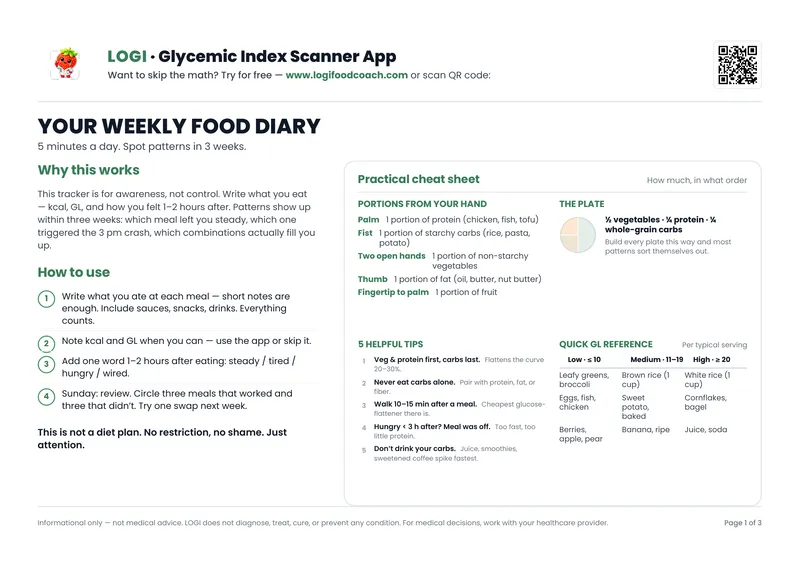
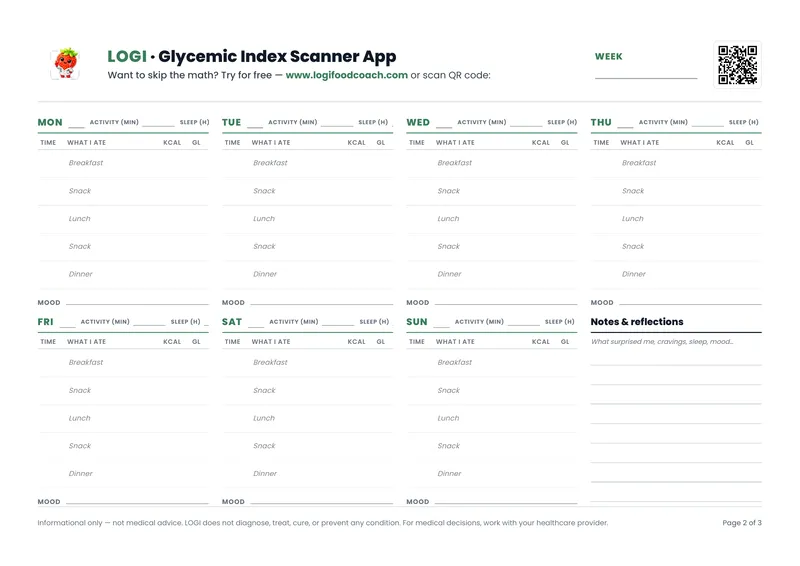
Free PDF — 3 pages
Your Weekly Food Journal
Track meals, glycemic load & mood. Spot patterns in 3 weeks.
No spam. Unsubscribe anytime.