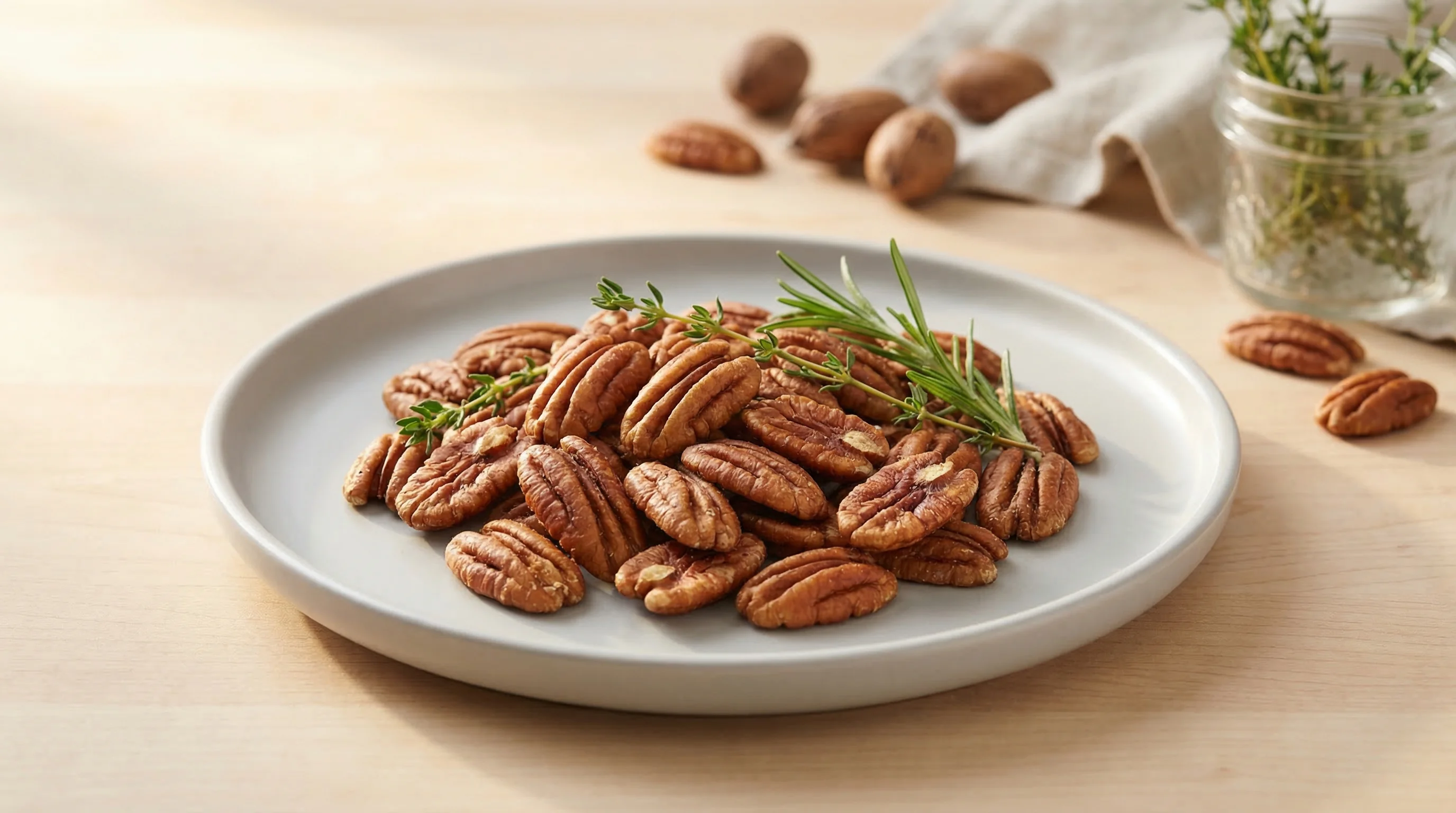
Handful of Pecans
A perfectly portioned pecan snack that delivers healthy fats and fiber with minimal impact on blood sugar—nature's ideal low-glycemic energy boost.
Pecans are an exceptional choice for blood sugar management, ranking among the lowest glycemic foods available with a GI of essentially zero. This simple snack provides sustained energy without the glucose spike associated with carbohydrate-heavy alternatives.
Rich in monounsaturated fats, fiber, and plant-based protein, pecans slow digestion and promote stable blood sugar levels for hours. The healthy fats help improve insulin sensitivity over time, while the fiber content (nearly 3 grams per ounce) further moderates glucose absorption. Pecans also provide magnesium and chromium, minerals that support healthy glucose metabolism.
This portion-controlled snack is ideal between meals or as a pre-workout energy source. The combination of protein, fat, and fiber makes pecans particularly effective at preventing blood sugar crashes. For optimal glycemic control, enjoy pecans on their own or pair with a small amount of fresh berries. Avoid candied or honey-roasted varieties, which add unnecessary sugars that compromise the low-glycemic benefits.
Blood Sugar Impact
Minimal to negligible blood sugar impact. Pecans are extremely low glycemic with high fat and fiber content, providing stable energy for 3-4 hours without causing blood sugar spikes.
Blood Sugar Tips
- ✓ Eat pecans as a snack between meals to prevent blood sugar dips and reduce cravings for higher-glycemic foods
- ✓ Pair with a small amount of protein like cheese for even more sustained energy and satiety
- ✓ Store portions in small containers to avoid overeating, as the calorie density is high despite the excellent glycemic profile
🥗 Ingredients
- 10 pcs pecan halves
- 10 pcs pecan halves
👨🍳 Instructions
- 1
Measure out approximately 10 pecan halves, which equals about one ounce or 28 grams.
- 2
Inspect the pecans to ensure they are fresh with no rancid smell, as the healthy oils in pecans can oxidize over time.
- 3
If desired, lightly toast the pecans in a dry skillet over medium heat for 2-3 minutes to enhance their natural nutty flavor, though this is optional.
- 4
Transfer the pecans to a small bowl or enjoy directly from your hand.
- 5
Eat slowly and mindfully, chewing thoroughly to aid digestion and allow the healthy fats to promote satiety.
- 6
For optimal blood sugar control, consume this snack between meals when you need sustained energy without a glucose spike.
- 7
Store remaining pecans in an airtight container in the refrigerator to preserve freshness and prevent the oils from going rancid.
📊 Nutrition Per Serving
| Per Serving | Whole Dish | |
|---|---|---|
| Calories | 194 | 194 |
| Carbs | 4g | 4g |
| Sugars | 1g | 1g |
| Natural Sugars | 1g | 1g |
| Protein | 3g | 3g |
| Fat | 20g | 20g |
| Saturated Fat | 2g | 2g |
| Unsaturated Fat | 18g | 18g |
| Fiber | 3g | 3g |
| Soluble Fiber | 1g | 1g |
| Insoluble Fiber | 2g | 2g |
Predicted Glucose Response
What if you...
Estimated model — individual responses vary. Not medical advice.
🔄 Lower GI Swaps
While pecans already have a very low glycemic load, macadamia nuts have an even lower carbohydrate content (4g vs 4g per ounce) with more monounsaturated fats that further slow digestion. Walnuts and almonds provide similar low-glycemic benefits with added omega-3s and fiber that help stabilize blood sugar levels even more effectively.
🔬 The Science Behind This Recipe
# Why Pecans Are a Blood Sugar Superstar
Pecans are one of the most blood sugar-friendly snacks you can reach for, with an impressively low glycemic index of just 7 and a glycemic load of only 0.3 per serving. This means they cause virtually no spike in blood glucose, making them an ideal choice for anyone managing their blood sugar levels. The secret lies in their nutritional composition: pecans are packed with healthy fats, fiber, and protein while containing minimal carbohydrates. A one-ounce serving (about a handful) contains roughly 20 grams of fat, 3 grams of fiber, 3 grams of protein, and only 4 grams of carbohydrates—most of which is fiber that doesn't raise blood sugar.
The magic happens because of how your body processes these nutrients. The high fat content, particularly heart-healthy monounsaturated fats, slows down digestion significantly. When you eat pecans, the fats trigger the release of hormones that slow stomach emptying, meaning any small amount of carbohydrate present is absorbed very gradually into your bloodstream. The fiber further contributes to this slow-release effect by forming a gel-like substance in your digestive tract that acts as a barrier to rapid glucose absorption.
Here's a practical tip: eating a small handful of pecans 10-15 minutes before a meal that contains carbohydrates can actually help blunt the blood sugar response to that meal. This "pre-loading" strategy works because the fats and fiber from the nuts are already in your system, ready to slow down the digestion of whatever comes next. Pecans also make an excellent addition to oatmeal, yogurt, or salads, transforming higher-glycemic foods into more balanced, blood sugar-friendly meals.
Related recipes
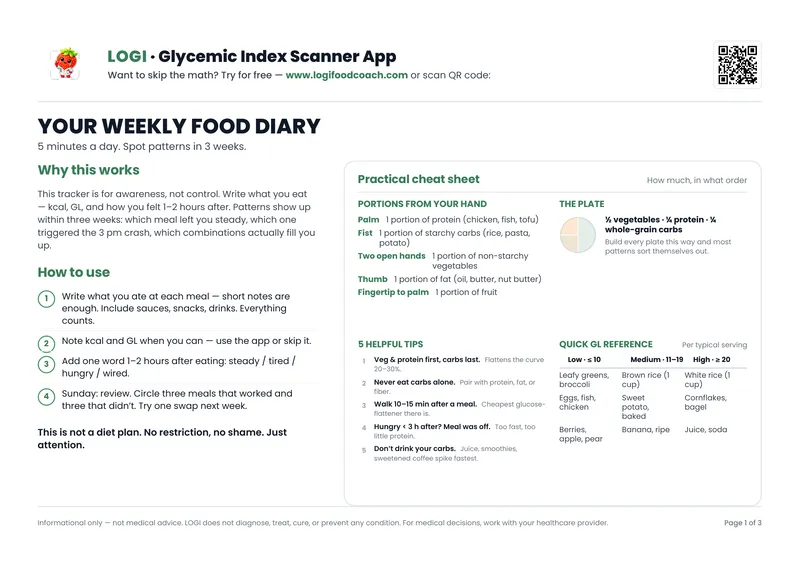
Free PDF — 3 pages
Your Weekly Food Journal
Track meals, glycemic load & mood. Spot patterns in 3 weeks.
No spam. Unsubscribe anytime.