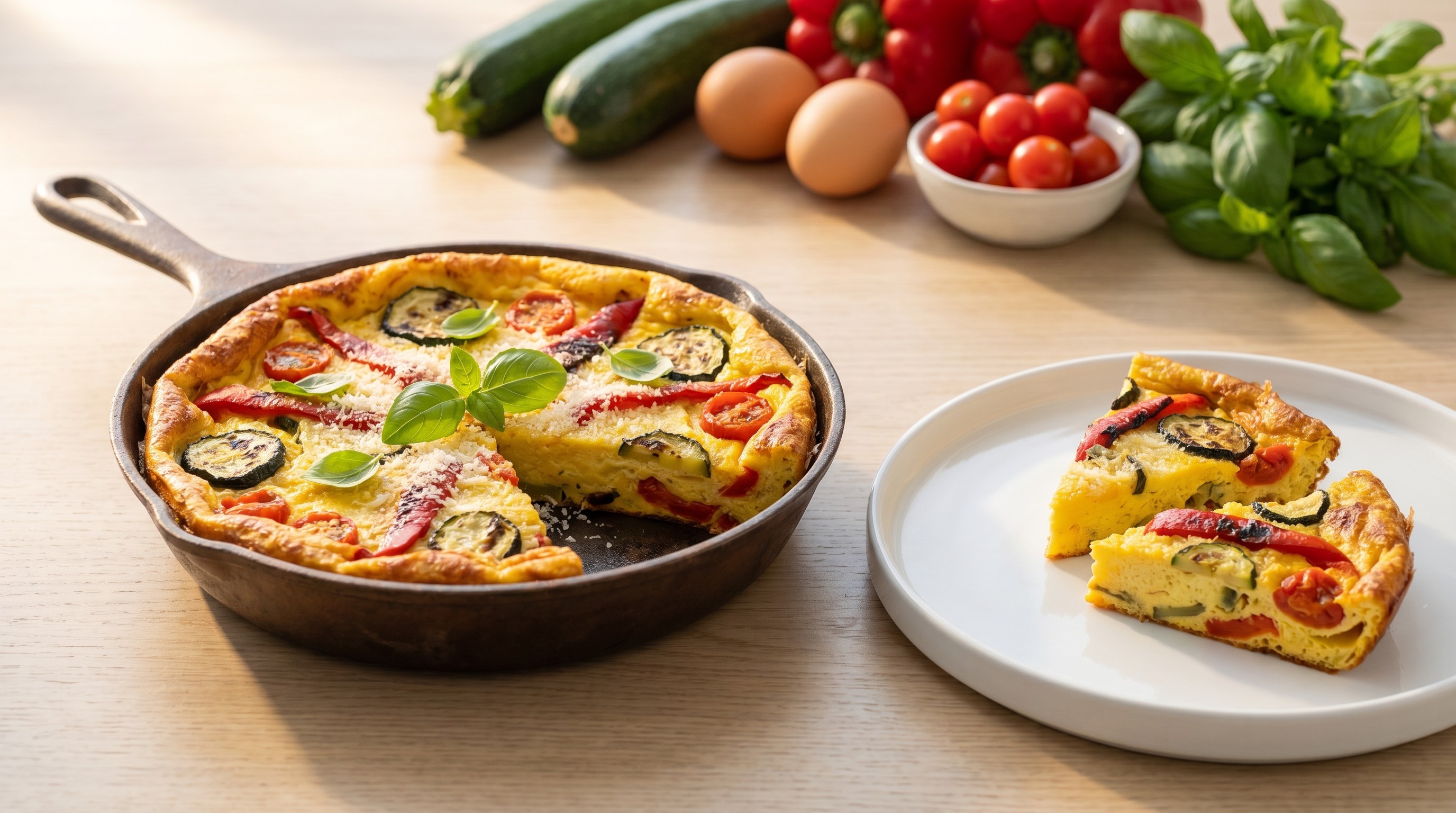
Frittata al Forno con Verdure (Italian Baked Vegetable Frittata)
A golden Italian baked frittata loaded with summer vegetables and Parmesan — high in protein, naturally low-GI, and ready in 35 minutes.
This frittata al forno is one of the most naturally blood-sugar-friendly dishes in Italian cooking. Five eggs provide around 30 grams of protein per serving, which slows gastric emptying and blunts any glucose response from the meal. The vegetables — zucchini, red bell pepper, and cherry tomatoes — are all very low on the glycemic index (GI under 20) and rich in fiber, vitamins, and antioxidants like lycopene and vitamin C.
Unlike a stovetop frittata that demands constant attention, this baked version is almost hands-off. You soften the vegetables briefly on the stove, pour whisked eggs over the top, add a shower of Parmesan, and let the oven do the rest. The result is a set, golden custard studded with tender summer vegetables — satisfying without any starchy fillers.
For optimal blood sugar management, serve the frittata alongside a simple green salad dressed with extra virgin olive oil and lemon. The additional fiber from raw greens further slows digestion, while the monounsaturated fats in olive oil improve insulin sensitivity. This dish works beautifully for breakfast, lunch, or a light dinner. If meal-prepping, frittata slices refrigerate well for up to three days — cold wedges make an excellent low-GI packed lunch. Because the meal is virtually carbohydrate-free, it pairs well with a small portion of sourdough bread (GI ~54) if you want to add a measured carbohydrate component without spiking glucose.
Blood Sugar Impact
Very minimal blood sugar impact expected. With a glycemic load of only 1.8 and an estimated GI of 16, this egg-and-vegetable dish is rich in protein and healthy fats that promote stable blood sugar and sustained energy for 3-4 hours.
Blood Sugar Tips
- ✓ Pair with a side salad dressed in olive oil and vinegar to add extra fiber and further slow any glucose absorption.
- ✓ Enjoy a 10-15 minute walk after eating to enhance glucose uptake by muscles and keep blood sugar flat.
- ✓ If serving with bread or starchy sides, eat the frittata first to leverage the protein and fat as a buffer against any subsequent carbohydrate intake.
🥗 Ingredients
- 5 pcs Egg
- 200 g Zucchini
- 120 g Red bell pepper
- 100 g Cherry tomato
- 30 g Parmesan cheese
- 2 tbsp Extra virgin olive oil
- 1 pcs Garlic
- 0.5 tsp Salt
- 0.25 tsp Black pepper
- 0.5 tsp Dried oregano
- 4 pcs Basil
- 5 pcs Egg
- 7.1 oz Zucchini
- 4.2 oz Red bell pepper
- 3.5 oz Cherry tomato
- 1.1 oz Parmesan cheese
- 2 tbsp Extra virgin olive oil
- 1 pcs Garlic
- 0.5 tsp Salt
- 0.25 tsp Black pepper
- 0.5 tsp Dried oregano
- 4 pcs Basil
👨🍳 Instructions
- 1
Set the oven to 180°C (355°F) with fan assist. Brush a 20 cm (8-inch) oven-safe skillet or baking dish with half the olive oil.
- 2
Place the skillet over medium heat and add the remaining olive oil. Drop in the minced garlic and stir for about 30 seconds until fragrant — be careful not to let it brown.
- 3
Add the zucchini rounds and red pepper strips to the skillet. Sauté for 5 to 6 minutes, stirring occasionally, until the vegetables are tender and beginning to colour at the edges.
- 4
Arrange the sautéed vegetables in an even layer across the bottom of the skillet or transfer them to the prepared baking dish. Distribute the halved cherry tomatoes cut-side up over the vegetables.
- 5
Crack the eggs into a bowl and whisk until smooth. Season with salt, black pepper, and dried oregano, then pour the mixture evenly over the vegetables.
- 6
Scatter the grated Parmesan across the surface of the egg mixture in an even layer.
- 7
Transfer the skillet to the oven and bake for 20 to 22 minutes. The frittata is done when the centre is firmly set, the top is golden, and a toothpick inserted in the middle comes out clean.
- 8
Allow the frittata to rest in the skillet for 5 minutes — this makes slicing easier and lets the residual heat finish setting the custard. Tear fresh basil leaves over the top, slice into wedges, and serve.
📊 Nutrition Per Serving
| Per Serving | Whole Dish | |
|---|---|---|
| Calories | 405 | 810 |
| Carbs | 11g | 21g |
| Sugars | 7g | 15g |
| Natural Sugars | 7g | 15g |
| Protein | 24g | 47g |
| Fat | 30g | 60g |
| Saturated Fat | 8g | 17g |
| Unsaturated Fat | 22g | 43g |
| Fiber | 3g | 6g |
| Soluble Fiber | 0g | 1g |
| Insoluble Fiber | 1g | 1g |
| Sodium | 1001mg | 2002mg |
Predicted Glucose Response
What if you...
Estimated model — individual responses vary. Not medical advice.
🔄 Lower GI Swaps
While parmesan already has a low GI, aged pecorino romano and nutritional yeast provide similar umami depth with slightly more fat and protein per gram, which can further slow gastric emptying and blunt any minor postprandial glucose rise from the overall meal.
Cherry tomatoes have a low GI but still contain natural sugars. Replacing with avocado adds healthy fats that slow glucose absorption, while spinach and mushrooms are virtually zero-GL vegetables rich in fiber and chromium, which supports insulin sensitivity.
Red bell peppers have a slightly higher sugar content than green varieties and other non-starchy vegetables. Broccoli and asparagus have a lower glycemic index and are rich in fiber, helping to reduce the overall glycemic load of the dish.
🔬 The Science Behind This Recipe
Here's the science explainer section:
---
Why This Frittata Loves Your Blood Sugar
This baked vegetable frittata is a fantastic example of how the right combination of ingredients can keep your blood sugar remarkably steady. Eggs are the star here — they're essentially a zero-glycemic food, packed with high-quality protein and healthy fats that slow down digestion and help your body absorb nutrients gradually rather than all at once. Each egg delivers about 6 grams of protein with virtually no carbohydrates, which means they won't trigger the insulin roller coaster that leaves you tired and hungry an hour after eating. Parmesan adds another layer of blood-sugar-friendly fat and protein, acting as an extra buffer against glucose spikes.
The vegetables in this frittata — zucchini, red bell pepper, and cherry tomatoes — are all naturally low in sugar and rich in fiber. That fiber acts like a speed bump in your digestive system, slowing the rate at which any natural sugars enter your bloodstream. Zucchini is particularly impressive: it's over 90% water with minimal carbohydrates, making it one of the most blood-sugar-friendly vegetables you can eat. Red bell peppers, meanwhile, bring a satisfying sweetness without the glucose hit, plus a generous dose of vitamin C.
With a glycemic load of just 1.8 per serving and an estimated GI of 16, this dish sits firmly in "very low" territory. Remember, glycemic load accounts for both the *type* and *amount* of carbohydrates in a real-world portion — and here, there simply aren't many carbs to worry about. To maximize the benefits, try enjoying this frittata alongside a small side salad eaten first, and consider a short 10-15 minute walk after your meal. Both strategies have been shown to further smooth out your body's blood sugar response, keeping your energy levels stable for hours.
Related recipes
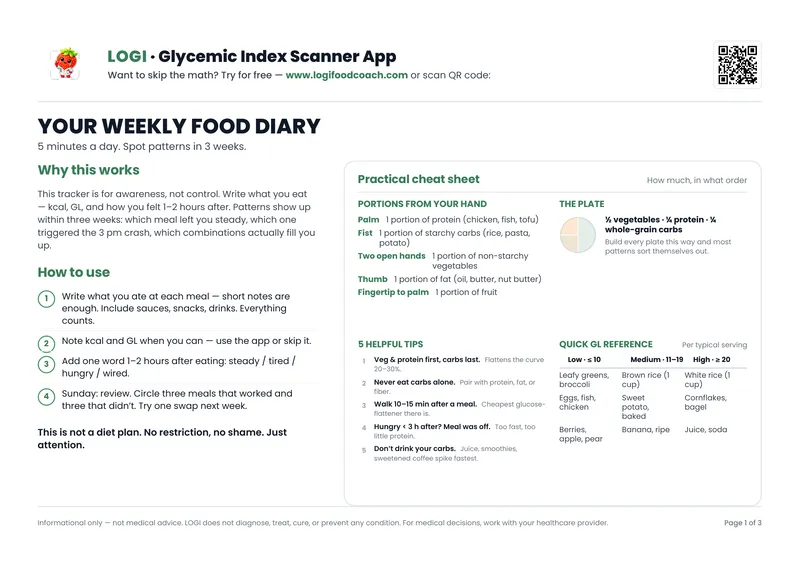
Free PDF — 3 pages
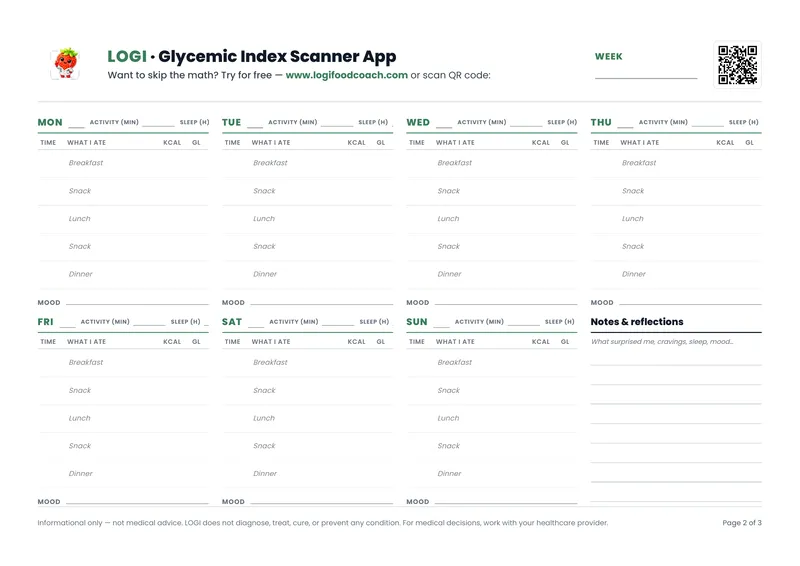
Your Weekly Food Journal
Track meals, glycemic load & mood. Spot patterns in 3 weeks.
No spam. Unsubscribe anytime.