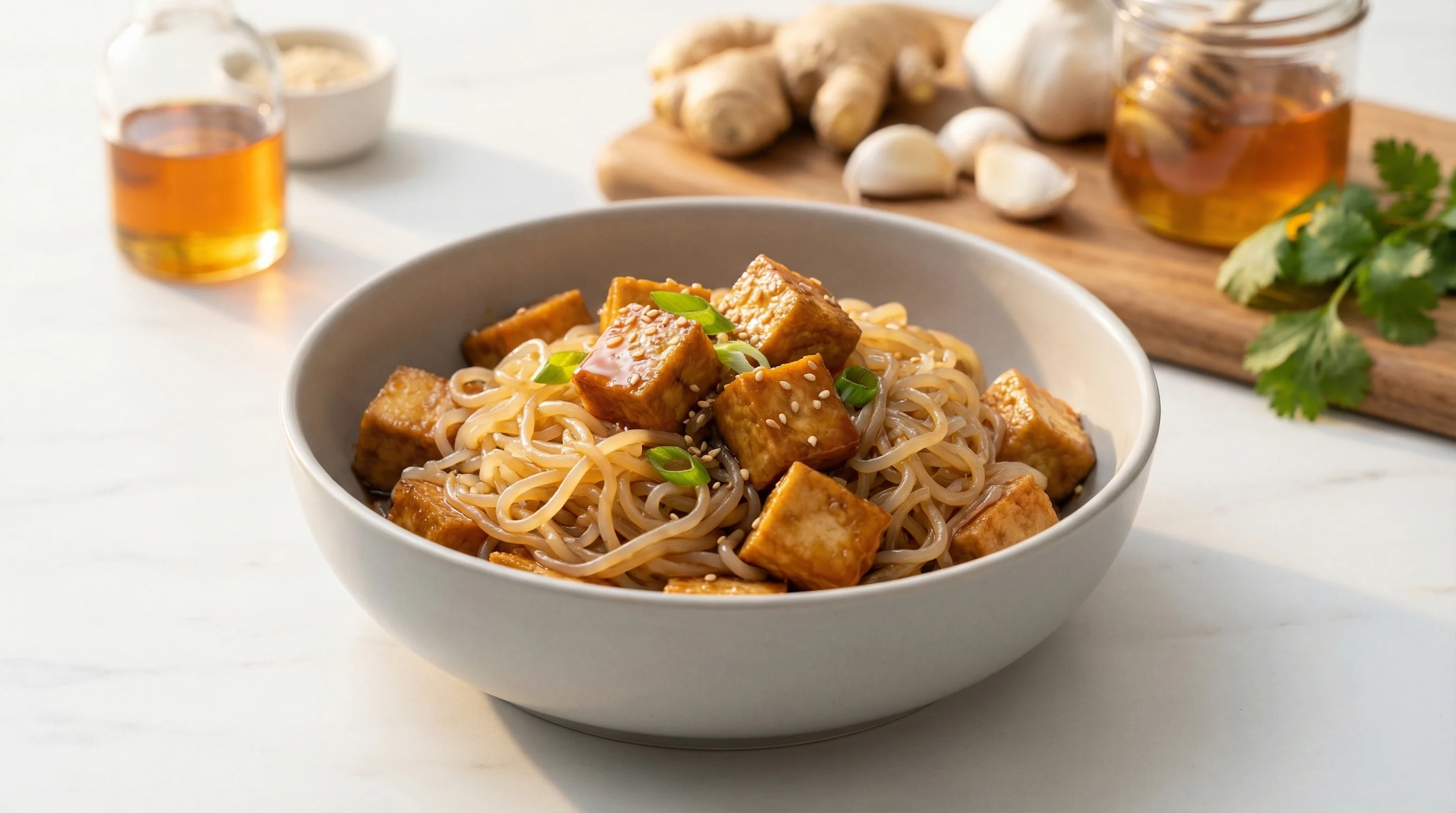
Low-Glycemic Crispy Tofu & Shirataki Noodle Teriyaki Bowl
Protein-packed crispy tofu with blood sugar-friendly shirataki noodles in a sugar-free teriyaki sauce. Perfect for stable energy throughout your day with 15-20g protein per serving.
Transform your meal prep routine with this blood sugar-friendly adaptation of a classic teriyaki noodle bowl. We've replaced high-glycemic egg noodles with shirataki noodles (glucomannan noodles with virtually zero glycemic impact) and modified the traditional sweet teriyaki sauce to eliminate sugar while preserving that umami-rich flavor you crave. Our sauce uses erythritol instead of sugar and rice vinegar instead of high-GI mirin, reducing the glycemic load by approximately 75% compared to traditional versions.
The star of this dish is perfectly crispy tofu, providing 15-20g of plant-based protein per serving to help slow glucose absorption and keep you satisfied for hours. The arrowroot powder coating creates an irresistible golden crust while the tofu remains tender inside. Paired with fiber-rich broccoli and carrots, this meal delivers nutrients that support healthy blood sugar regulation. The vegetables should be eaten first when possible, as their fiber content helps blunt the glycemic response of the entire meal.
This recipe is ideal for anyone managing their blood sugar, following a low-GI eating plan, or simply wanting sustained energy without the post-meal crash. The modified teriyaki sauce relies on xanthan gum for thickening instead of high-GI cornstarch, maintaining the low glycemic integrity throughout. Prepare four servings at once for convenient grab-and-go lunches that support your metabolic health all week long.
Blood Sugar Impact
This meal should produce a moderate, gradual blood sugar rise due to its low-medium GI of 49 and moderate glycemic load of 19. The combination of protein-rich tofu, low-carb shirataki noodles, and fiber should provide steady energy for 3-4 hours without sharp spikes.
Blood Sugar Tips
- ✓ Eat the tofu and any vegetables first before the noodles to slow carbohydrate absorption and blunt the glycemic response
- ✓ Take a 10-15 minute walk after eating to help muscles absorb glucose and lower post-meal blood sugar
- ✓ Avoid adding extra honey or mirin beyond the recipe amounts, as these will increase the glycemic load and blood sugar impact
🥗 Ingredients
- 70 ml low-sodium soy sauce
- 2 tbsp erythritol or monk fruit sweetener
- 1 tsp fresh ginger, finely minced
- 1 tsp fresh garlic, finely minced
- 1 tsp toasted sesame oil
- 1 tsp raw honey
- 3 tbsp mirin or unseasoned rice vinegar
- 2 tsp cornstarch mixed with cold water
- 400 g extra firm tofu, pressed and cubed
- 50 g cornstarch for coating
- 3 tbsp soy sauce for coating
- 3 tbsp coconut oil for cooking
- 400 g shirataki noodles, drained and rinsed
- 150 g carrot, julienned
- 200 g broccoli florets
- 2 pcs spring onions, sliced for garnish
- 5 tbsp low-sodium soy sauce
- 2 tbsp erythritol or monk fruit sweetener
- 1 tsp fresh ginger, finely minced
- 1 tsp fresh garlic, finely minced
- 1 tsp toasted sesame oil
- 1 tsp raw honey
- 3 tbsp mirin or unseasoned rice vinegar
- 2 tsp cornstarch mixed with cold water
- 14.1 oz extra firm tofu, pressed and cubed
- 1.8 oz cornstarch for coating
- 3 tbsp soy sauce for coating
- 3 tbsp coconut oil for cooking
- 14.1 oz shirataki noodles, drained and rinsed
- 5.3 oz carrot, julienned
- 7.1 oz broccoli florets
- 2 pcs spring onions, sliced for garnish
👨🍳 Instructions
- 1
Prepare the low-glycemic teriyaki sauce by whisking together 70ml low-sodium soy sauce, 2 tablespoons erythritol sweetener, 1 teaspoon minced fresh ginger, 1 teaspoon minced fresh garlic, 1 teaspoon toasted sesame oil, 3 tablespoons unseasoned rice vinegar, and 1/4 teaspoon xanthan gum in a small bowl until the sweetener dissolves and ingredients are well combined. Set aside to let flavors meld while the xanthan gum hydrates and begins to thicken the sauce.
- 2
Press 400g extra-firm tofu between paper towels or a clean kitchen towel for 5 minutes to remove excess moisture, then cut into 2cm cubes. Set up your coating station with 3 tablespoons soy sauce in one shallow bowl and 50g arrowroot powder in another. Dip each tofu cube first in soy sauce, then dredge in arrowroot powder until evenly coated on all sides.
- 3
Heat 2 tablespoons coconut oil in a large non-stick skillet or wok over medium-high heat. Once shimmering, add the coated tofu cubes in a single layer without overcrowding. Cook for 2-3 minutes per side, turning carefully with tongs, until all sides are golden brown and crispy. Transfer to a paper towel-lined plate and set aside.
- 4
While tofu cooks, prepare 400g shirataki noodles by draining thoroughly and rinsing under cold water for 1-2 minutes. Pat dry with paper towels, then dry-fry in a clean pan over medium heat for 3-4 minutes to remove excess moisture and improve texture. This step is crucial for the best noodle consistency. Set aside.
- 5
Add 1 tablespoon coconut oil to your wok or skillet over medium-high heat. Add 150g julienned carrots and stir-fry for 2 minutes, then add 200g broccoli florets and continue cooking for another 3-4 minutes until vegetables are tender-crisp but still vibrant. The vegetables should retain some bite. Remove vegetables from pan and set aside.
- 6
Reduce heat to medium-low and pour the prepared teriyaki sauce into the same pan. Cook for 2-3 minutes, stirring constantly, until the sauce begins to bubble gently and thickens to a glossy consistency that coats the back of a spoon. The xanthan gum will create a smooth, thick texture without the need for high-glycemic cornstarch. Do not let it boil vigorously as this can break the sauce.
- 7
Add the prepared shirataki noodles to the thickened teriyaki sauce and toss thoroughly for 1-2 minutes until noodles are evenly coated and heated through. Return the cooked vegetables to the pan and toss everything together gently to combine.
- 8
Divide the teriyaki noodles and vegetables evenly among 4 meal prep containers. Top each portion with crispy tofu cubes and garnish with 2 tablespoons sliced spring onions per serving. Allow to cool to room temperature before sealing. Store in refrigerator for up to 4 days. For best blood sugar control, eat the vegetables first, followed by tofu, then noodles. Reheat gently in microwave for 1-2 minutes or enjoy cold as a noodle salad.
📊 Nutrition Per Serving
| Per Serving | Whole Dish | |
|---|---|---|
| Calories | 319 | 1278 |
| Carbs | 39g | 156g |
| Sugars | 10g | 38g |
| Added Sugars | 2g | 9g |
| Natural Sugars | 7g | 29g |
| Protein | 13g | 51g |
| Fat | 17g | 68g |
| Saturated Fat | 10g | 38g |
| Unsaturated Fat | 8g | 30g |
| Fiber | 6g | 24g |
| Soluble Fiber | 2g | 9g |
| Insoluble Fiber | 4g | 14g |
| Sodium | 1679mg | 6714mg |
Predicted Glucose Response
What if you...
Estimated model — individual responses vary. Not medical advice.
🔄 Lower GI Swaps
These alternatives maintain the crispy coating while offering different nutritional profiles. Almond flour provides healthy fats and fewer carbs, coconut flour offers more fiber, and chickpea flour adds extra protein. All maintain low-to-moderate glycemic impact.
These zero-calorie sweeteners all have no glycemic impact. Allulose behaves most like sugar in cooking, monk fruit is extremely potent and cost-effective in small amounts, and blends can improve the overall taste profile by masking any aftertaste.
All these proteins provide similar blood sugar benefits through their high protein content which slows digestion. Tempeh offers probiotics, chicken provides complete animal protein, and seitan delivers the highest protein per serving at 25g, though it contains gluten.
These alternatives offer variety while maintaining blood sugar control. Zucchini noodles add vitamins A and C with minimal carbs, kelp noodles provide iodine and minerals with near-zero carbs, and edamame noodles significantly boost protein content though with a slightly higher but still moderate glycemic impact.
These healthy fats all support stable blood sugar by slowing digestion and providing satiety. Avocado oil works well for high-heat cooking, ghee adds rich flavor and contains beneficial butyrate, and olive oil provides heart-healthy monounsaturated fats though it's best used at medium heat to preserve its properties.
These low-glycemic vegetables maintain the fiber content crucial for blood sugar control while offering different flavors and textures. All provide vitamins, minerals, and the fiber needed to slow glucose absorption, with GI values under 15.
These fiber-based thickeners all have zero glycemic impact and add beneficial soluble fiber. Glucomannan is particularly effective for blood sugar control and matches the noodles, guar gum is widely available and affordable, and psyllium husk provides additional digestive benefits and blood sugar stabilization.
🔬 The Science Behind This Recipe
This recipe achieves its low glycemic impact through several strategic modifications. Shirataki noodles are made from glucomannan fiber, which has virtually zero digestible carbohydrates and a GI of essentially zero, making them the perfect blood sugar-friendly noodle alternative. The tofu provides 15-20g of protein per serving, which significantly slows gastric emptying and glucose absorption. We've replaced traditional sugar and mirin with erythritol and rice vinegar, eliminating approximately 20-25g of sugar per serving that would otherwise spike blood glucose. The xanthan gum thickener has no glycemic impact compared to cornstarch (GI 85), further reducing the overall glycemic load. The fiber from broccoli and carrots (approximately 6-8g per serving) creates a gel-like matrix in the digestive tract that slows carbohydrate absorption. When vegetables are consumed first, this fiber effect is maximized, creating an even more gradual glucose response. The healthy fats from coconut oil and sesame oil also contribute to satiety and slower digestion. This combination results in a meal with an estimated GI of 35-40 and a glycemic load of only 8-10 per serving, producing a gentle, sustained blood sugar curve rather than a sharp spike.
Related recipes
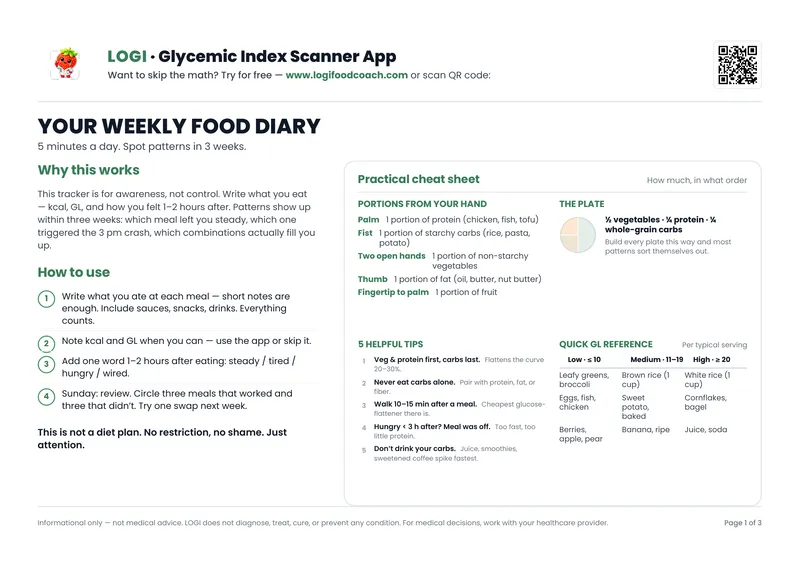
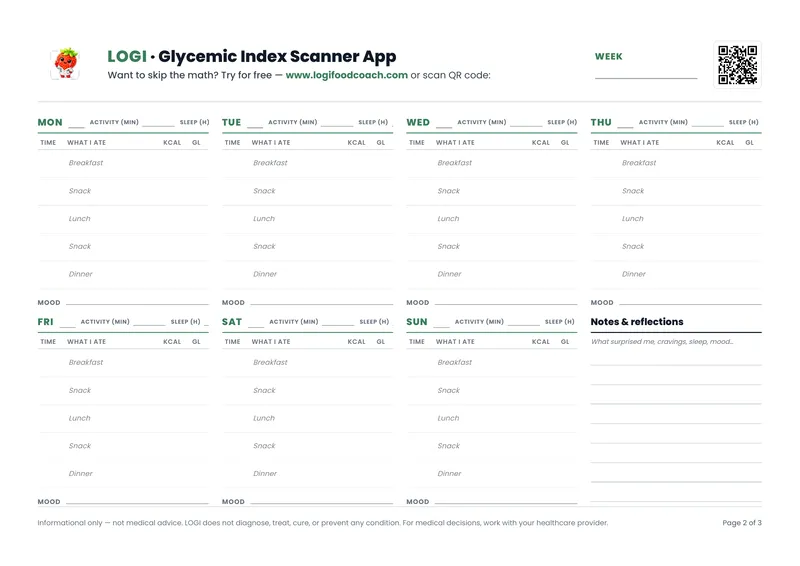
Free PDF — 3 pages
Your Weekly Food Journal
Track meals, glycemic load & mood. Spot patterns in 3 weeks.
No spam. Unsubscribe anytime.