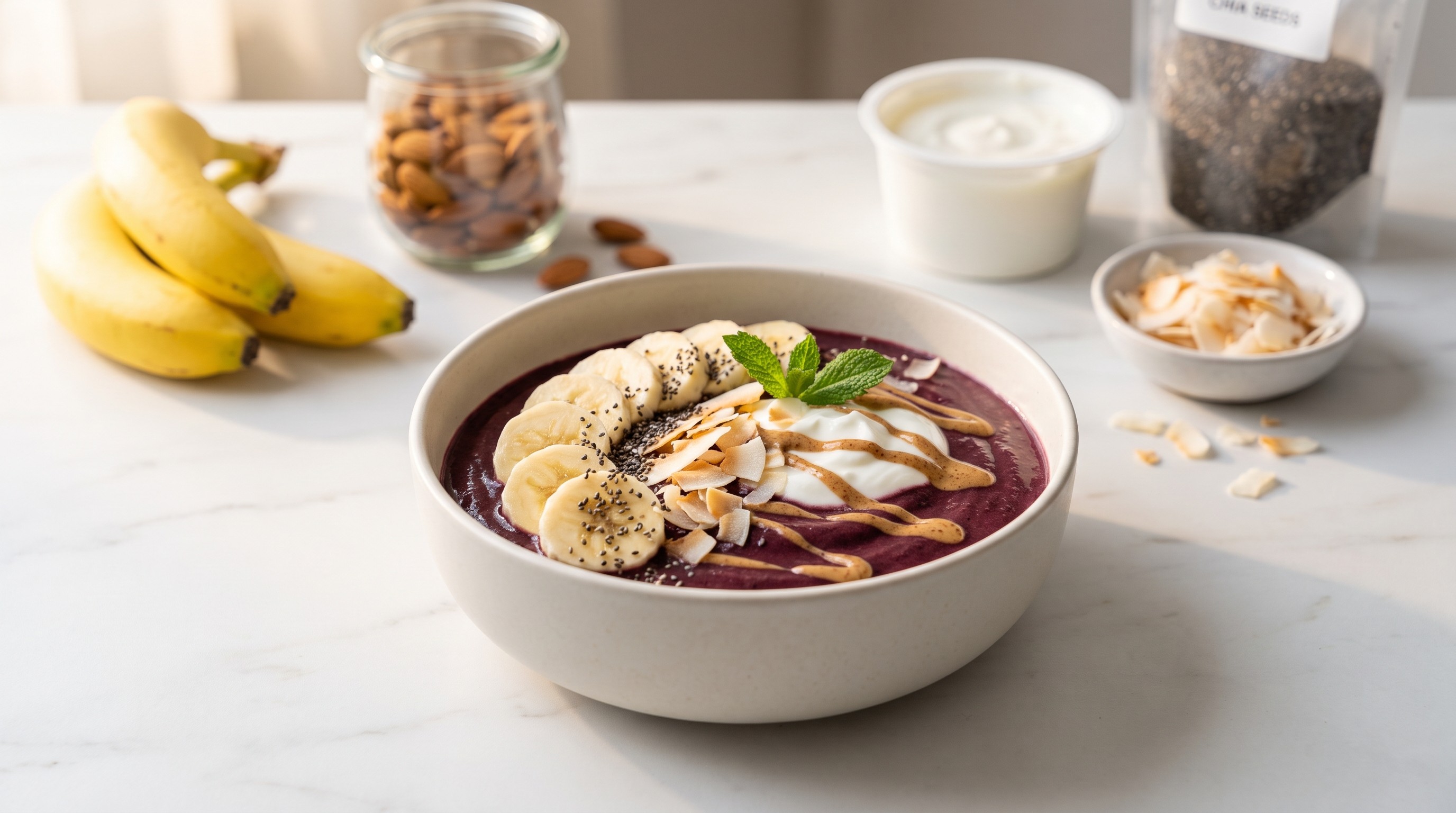
Açaí Breakfast Bowl, Low-Glycemic Style
A thick, creamy açaí bowl loaded with healthy fats, protein and fiber — designed to deliver steady energy without the blood sugar roller coaster.
This low-glycemic açaí bowl proves that a vibrant, Instagram-worthy breakfast can also be a smart choice for blood sugar management. The base combines unsweetened frozen açaí pulp with full-fat Greek yogurt and almond butter, creating a thick, velvety texture reminiscent of soft-serve ice cream. By using only half a small banana — split across two servings — you get just enough natural sweetness while keeping the glycemic load remarkably low.
The real magic is in the toppings. Chia seeds and walnuts add soluble fiber and omega-3 fatty acids, both of which slow glucose absorption and improve insulin sensitivity. Unsweetened coconut provides satisfying richness, while a handful of blueberries delivers antioxidants with minimal sugar impact. For an extra protein boost, stir in a scoop of unflavored whey protein — the added protein further blunts any post-meal glucose spike.
To get the best results for your blood sugar, eat the nut and seed toppings first before working through the creamy base. The fiber and fat create a protective barrier in your digestive tract, slowing the absorption of any carbohydrates that follow. Pair this bowl with a glass of water or unsweetened tea rather than juice, and enjoy it as a complete breakfast — no toast or granola needed.
Blood Sugar Impact
Low impact expected with a GL of 7.6 and estimated GI of 31. The combination of protein (Greek yogurt, whey), healthy fats (almond butter, walnuts), and soluble fiber (chia seeds) will slow glucose absorption, providing stable energy for 3-4 hours.
Blood Sugar Tips
- ✓ Eat the bowl with a spoon rather than drinking it blended — chewing slows intake and reduces the glycemic response compared to a liquid smoothie.
- ✓ Use a half or less of the banana (the highest-GI ingredient) and increase chia seeds or walnuts to further blunt any glucose rise.
- ✓ Take a 10-15 minute walk after eating to enhance muscle glucose uptake and keep blood sugar flat.
🥗 Ingredients
- 200 g Frozen açaí pulp
- 1 pcs Banana
- 200 g Greek yogurt
- 1 tbsp Almond butter
- 50 ml Almond milk
- 1 pcs Whey protein powder
- 1 tbsp Chia seeds
- 1 tbsp Shaved coconut
- 10 g Walnuts
- 6 pcs Blueberries
- 1 tsp Cacao nibs
- 7.1 oz Frozen açaí pulp
- 1 pcs Banana
- 7.1 oz Greek yogurt
- 1 tbsp Almond butter
- 3 tbsp Almond milk
- 1 pcs Whey protein powder
- 1 tbsp Chia seeds
- 1 tbsp Shaved coconut
- 0.4 oz Walnuts
- 6 pcs Blueberries
- 1 tsp Cacao nibs
👨🍳 Instructions
- 1
Remove the frozen açaí pulp packets from the freezer and let them sit at room temperature for 3 to 4 minutes. Break the packets gently with your hands to loosen the pulp — it should still be very cold but no longer rock-solid.
- 2
Peel the banana and cut it in half crosswise. Set one half aside for the topping.
- 3
Place the açaí pulp, one half of the banana, Greek yogurt, almond butter and almond milk into a blender or food processor. If you are adding whey protein powder, include it now.
- 4
Blend on medium speed for 30 to 40 seconds. Stop, scrape down the sides with a spatula, then blend again until the mixture is uniformly thick like soft-serve ice cream. It should not be pourable. If the blend is too stiff, add one extra tablespoon of almond milk and pulse briefly. If too runny, drop in a few ice cubes and blend again.
- 5
Divide the açaí mixture evenly between two chilled bowls. Smooth the surface with the back of a spoon — the texture should be firm enough to hold toppings without sinking.
- 6
Slice the reserved banana half into thin rounds. Arrange the banana slices on top of each bowl along with the blueberries.
- 7
Sprinkle each bowl with chia seeds, shaved coconut, chopped walnuts and cacao nibs if using. Distribute the toppings evenly between the two servings.
- 8
Serve immediately while the base is still thick and frozen. For the best blood sugar response, eat the nuts and seeds first, then work through the creamy base — the fiber and fat slow glucose absorption from the fruit.
📊 Nutrition Per Serving
| Per Serving | Whole Dish | |
|---|---|---|
| Calories | 349 | 699 |
| Carbs | 24g | 48g |
| Sugars | 12g | 23g |
| Natural Sugars | 12g | 23g |
| Protein | 23g | 45g |
| Fat | 19g | 38g |
| Saturated Fat | 5g | 11g |
| Unsaturated Fat | 13g | 26g |
| Fiber | 8g | 17g |
| Soluble Fiber | 3g | 5g |
| Insoluble Fiber | 6g | 12g |
| Sodium | 73mg | 146mg |
Predicted Glucose Response
What if you...
Estimated model — individual responses vary. Not medical advice.
🔄 Lower GI Swaps
Banana has a moderate-to-high GI (51–62) and adds significant sugar. Avocado provides creaminess with virtually zero glycemic impact (GI ~0), while frozen cauliflower rice or zucchini thicken the bowl with minimal effect on blood sugar.
Blueberries have a GI around 53. Blackberries (GI ~25), raspberries (GI ~32), and strawberries (GI ~41) are lower-GI berries with higher fiber-to-sugar ratios, resulting in a lower glycemic load per serving.
Whey protein causes a stronger insulin spike than other protein sources despite similar GI. Casein digests more slowly, producing a gentler blood sugar and insulin response, while hemp protein adds fiber that further blunts glucose absorption.
Shredded coconut has a GI around 42. Hemp seeds (GI ~0) and ground flaxseed (GI ~0) provide healthy fats and soluble fiber that actively slow glucose absorption, lowering the overall glycemic load of the bowl.
🔬 The Science Behind This Recipe
Here's the science explainer section:
---
Why This Bowl Loves Your Blood Sugar
This Açaí Breakfast Bowl earns its low-glycemic badge with a glycemic load of just 7.6 per serving — well within the "low" category. But what does that actually mean? Glycemic load takes into account both *how fast* a food raises blood sugar (its GI) and *how much* carbohydrate you're actually eating. So even though banana on its own has a moderate glycemic index, the small portion used here keeps its real-world impact minimal. It's a perfect example of why the amount of a food matters just as much as its type.
The magic of this bowl is how its ingredients team up to slow glucose absorption. Greek yogurt delivers a solid hit of protein, while almond butter brings healthy fats — both act like a gentle brake on digestion, preventing the rapid blood sugar spike you'd get from fruit alone. Unsweetened açaí purée is naturally rich in fiber and polyphenols, which research suggests can help improve how your body handles glucose. Together, these components create what nutritionists call a "blunting effect," where the combined meal produces a much flatter blood sugar curve than any single ingredient would on its own.
To get even more out of this bowl, try a simple strategy: eat any nuts or seeds on top first, saving the fruit-heavy bites for later. This "food order" approach — fats and protein before carbs — has been shown to reduce post-meal glucose responses. And if you can, a short 10–15 minute walk after breakfast works wonders for helping your muscles soak up that glucose naturally. Small habits, big difference.
Related recipes
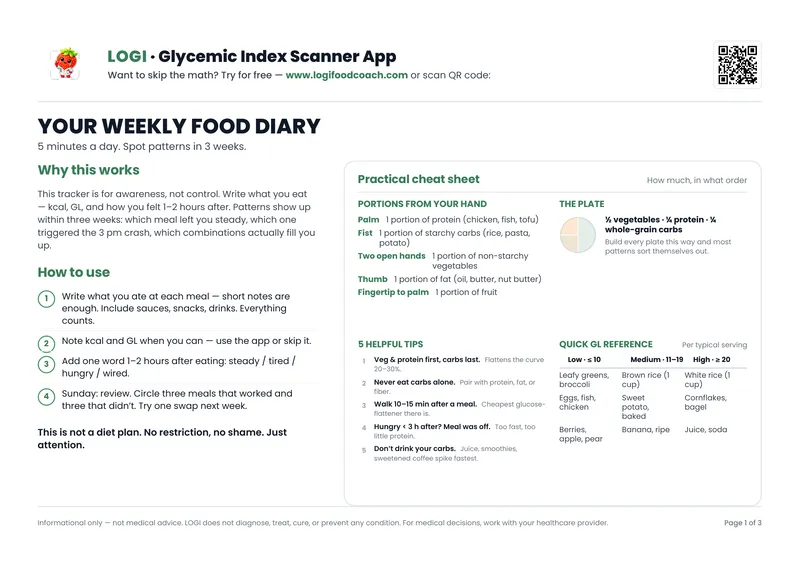
Free PDF — 3 pages
Your Weekly Food Journal
Track meals, glycemic load & mood. Spot patterns in 3 weeks.
No spam. Unsubscribe anytime.