Watermelon Glycemic Index: High GI, Low Glycemic Load — What That Actually Means
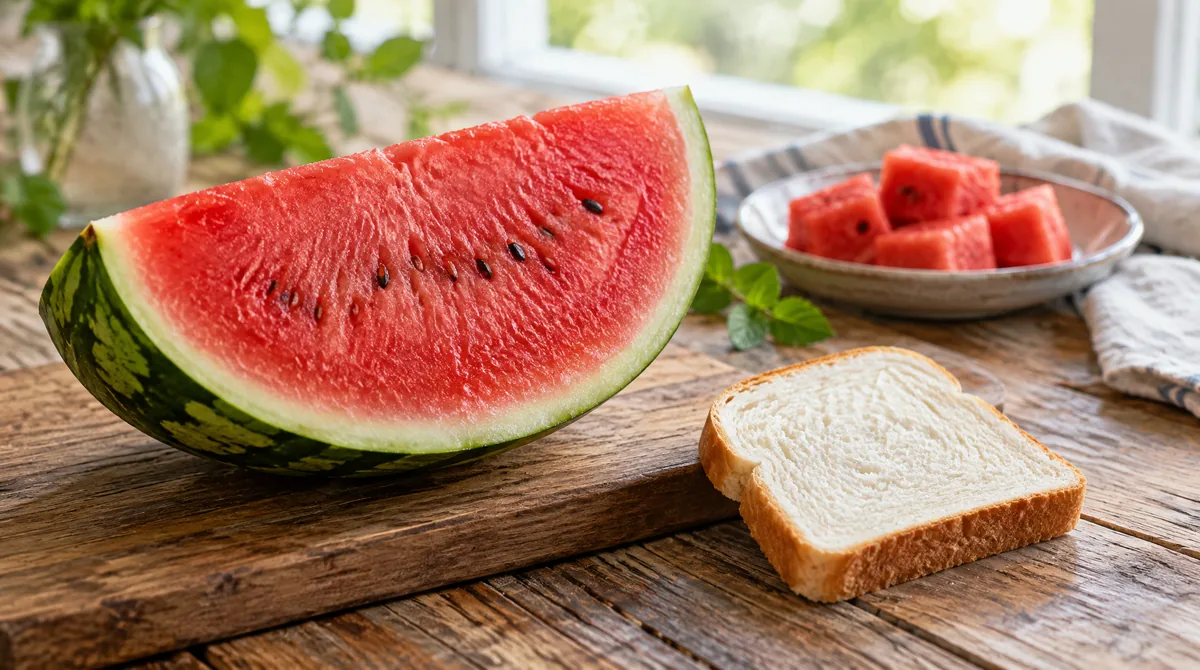
Watermelon is the food that breaks people’s trust in the glycemic index. Look up its GI and you find a number in the seventies — the same neighbourhood as white bread. Look up its glycemic load and you find a number around four, which is as low as food gets. Both numbers are correct. Both are measured the same way they are measured for every other food. And the gap between them is not a rounding problem or a disagreement between labs — it is the single most useful thing the glycemic index can teach you, which is that the glycemic index by itself does not tell you what to eat.
If you have been avoiding melon because a chart put it in the red column, this is the article that gives you the number back.
The two numbers, and why watermelon splits them so far apart
The glycemic index measures how fast the carbohydrate in a food raises blood glucose, compared to pure glucose at 100. It is measured by feeding test subjects a portion of the food containing a fixed 50 grams of available carbohydrate, then tracking blood glucose for two hours.
That fixed 50 grams is the detail that matters, and it is the detail almost every chart leaves out.
Watermelon is roughly 90 percent water. A 120-gram serving — a decent wedge — contains only about 6 grams of available carbohydrate. To get the 50 grams of carbohydrate a GI test requires, a subject has to eat somewhere around a kilogram of watermelon in under fifteen minutes. That is the meal the GI number describes. It is not a meal anyone eats.
The glycemic load corrects for this. It is calculated as (GI × grams of available carbohydrate per serving) ÷ 100, so it accounts for how much carbohydrate is actually on your plate:
- Watermelon: GI around 72–76, roughly 6 g of carbohydrate per 120 g serving → glycemic load ≈ 4
- White bread: GI around 71–75, roughly 14 g of carbohydrate per 30 g slice → glycemic load ≈ 10
Same glycemic index. Two and a half times the glycemic load, for a portion that weighs a quarter as much. A glycemic load under 10 per serving is generally classed as low, 11–19 medium, and 20 or above high. Watermelon sits near the bottom of the low band — not despite its high GI, but because GI and portion size are two separate questions and it only scores badly on the one you do not eat by.
What a normal portion of melon actually does
Published GI values for melons vary more than most foods, because ripeness, variety, and growing conditions all shift the sugar profile. Reported values for watermelon generally fall in a 72 to 80 range, with some datasets reporting the low sixties for less ripe fruit. That variation sounds alarming until you run it through the glycemic load calculation: at 6 grams of carbohydrate per serving, even the highest published GI produces a glycemic load under 5.
Here is how the common melons compare at a realistic 120-gram portion:
| Melon | Typical GI | Carbohydrate per 120 g | Approximate GL |
|---|---|---|---|
| Watermelon | 72–80 | ~6 g | ~4 |
| Cantaloupe / rock melon | 65–70 | ~8 g | ~5 |
| Honeydew | 60–65 | ~9 g | ~6 |
| Green melon (Galia, Piel de Sapo) | 60–65 | ~8–9 g | ~5 |
All four land in the low glycemic load band. Honeydew and green melon carry slightly more sugar per gram than watermelon and score lower on GI, which nets out to roughly the same modest glucose impact. In practice, the differences between melon varieties are smaller than the difference between a 120-gram portion and a 400-gram one.
That is the honest headline: the variable that determines what melon does to your blood sugar is how much of it you eat, not which melon you chose.
Why the glucose response is quicker than the numbers suggest
There is a real effect hiding behind watermelon’s high GI, and it is worth naming rather than waving away.
Watermelon’s carbohydrate is almost entirely simple sugar — mostly fructose, with glucose and sucrose making up the rest — dissolved in water and held in a structure with very little fibre. A 120-gram serving contains well under a gram of fibre. There is no fat, essentially no protein, and no viscous fibre matrix to slow gastric emptying. Whatever sugar is there arrives quickly.
So the shape of the response is fast: a small, early rise rather than a slow one. What the glycemic load tells you is that the rise is small. What the composition tells you is that it is early. For most people eating a normal portion, a small early rise is unremarkable. For someone with significant insulin resistance eating melon alone on an empty stomach — as a mid-afternoon snack, say — the same small rise can feel more noticeable, because there is nothing else in the meal to blunt it.
This is why the practical advice for melon is not “avoid it” and not “eat freely”, but something more specific: melon behaves better as part of a meal than as a standalone snack. Pairing it with a protein or fat source — cottage cheese, Greek yoghurt, a handful of nuts, the classic melon-and-cured-ham combination — slows gastric emptying and flattens the curve, at essentially no cost to the eating experience.
Dried, juiced, and blended melon are a different food
The glycemic load argument for melon rests entirely on its water content. Remove the water and the argument disappears.
- Watermelon juice concentrates the sugar and strips what little fibre there was. A 250 ml glass can carry 20 grams or more of carbohydrate — three to four times a whole-fruit serving — arriving faster. This moves melon out of the low-GL band entirely.
- Dried melon is a confectionery product in most of the places it is sold, often with added sugar. Per 100 grams it bears no useful resemblance to the fresh fruit.
- Blended melon in a smoothie sits somewhere in between. Blending does not remove water, so the carbohydrate load per serving stays similar to whole fruit, but the physical disruption speeds up digestion somewhat, and smoothie portions tend to be much larger than the portion of fruit anyone would eat whole.
The general rule holds across every fruit, and melon is its most extreme case: the more water and structure you remove, the less the fresh-fruit glycemic load number applies.
Where the high-GI reputation causes real harm
Watermelon’s number has been quoted so often in “foods to avoid” lists that it has become a small piece of nutrition folklore, and the cost is not trivial. Melon is roughly 90 percent water, provides potassium, vitamin C, and lycopene, and carries about 30–35 calories per 100 grams. For anyone trying to eat more volume for fewer calories while managing glucose, it is close to an ideal food — and it is one of the few sweet things that a low-glycemic-load diet can accommodate generously.
The pattern here generalizes. Several foods with unremarkable metabolic profiles carry high GI values purely because their carbohydrate is dilute: most melons, carrots, pumpkin, and swede all appear on avoid-lists on the strength of a GI number measured at a portion nobody consumes. Carrots are the other famous case — a GI around 39–47 for raw carrot, but the high-GI myth attached to boiled carrot persists on the same 50-gram-carbohydrate technicality that catches watermelon.
If you take one heuristic from this article, make it this one: when a whole, watery, unprocessed plant food appears on a high-GI list, check its glycemic load before you cut it. The number that misleads is almost always the index; the number that predicts your meal is almost always the load.
Practical guidance
- A reasonable portion is 120–200 grams — one to two cups of cubes, or a single wedge. That range keeps the glycemic load under about 7 even for the sweetest melon.
- Eat it with something else when you can. Protein or fat alongside — yoghurt, cheese, nuts, ham — meaningfully flattens the response and costs nothing.
- Prefer whole fruit to juice, and treat melon juice as you would any other fruit juice: an occasional drink, not a hydration strategy.
- Watch the second helping, not the first. Melon is easy to eat in quantity precisely because it is light. Two large bowls in an afternoon is a genuinely different carbohydrate load from one serving, and it is the portion most people underestimate.
- If you use a continuous glucose monitor, melon is one of the more interesting foods to test on yourself, because published GI values scatter so widely and ripeness varies so much. Your own response to the melon you actually buy is better information than any table.
The bigger picture
Watermelon is the cleanest illustration available of a mistake that runs through most popular glycemic-index advice: treating a laboratory ratio as though it were a property of a meal. The glycemic index is a real, carefully measured number, and it answers a real question — how fast does this food’s carbohydrate become blood glucose? It simply does not answer the question people bring to it, which is what will this do to me at dinner?
Glycemic load answers that one, and for the great majority of whole plant foods the two numbers point in the same direction. Melon is the exception that makes the rule visible. Once you have seen a food score 76 on one scale and 4 on the other, the habit of reading GI charts as a list of permitted and forbidden foods becomes much harder to maintain — which is the correct outcome.
The useful move is to stop asking whether a food is high or low GI, and start asking what a portion of it contributes to the glycemic load of the meal you are actually building. That question has a different answer for a wedge of melon after lunch than for a litre of melon juice, and no single-number label can capture the difference.
Working out glycemic load per portion by hand is tedious enough that most people give up after a week. Logi scans a photo of the plate and estimates the glycemic load of the whole meal — melon, the yoghurt next to it, and everything else — so the portion question gets answered at the table rather than in a spreadsheet.
This article is educational. It is not medical advice. Individual responses to any food vary widely; if you have diabetes, insulin resistance, or another metabolic condition, discuss dietary choices with your doctor or a registered dietitian.
Foods in this article
Related recipes

Grilled White Fish Tacos with Fresh Watermelon-Avocado Salsa
Vibrant low-GI fish tacos featuring grilled cod in crisp lettuce wraps, topped with a refreshing watermelon salsa that won't spike your blood sugar.

Gazpacho Andaluz (Classic Spanish Cold Tomato Soup)
A vibrant, no-cook Andalusian cold soup with an ultra-low glycemic load — raw vegetables and olive oil keep blood sugar perfectly steady.
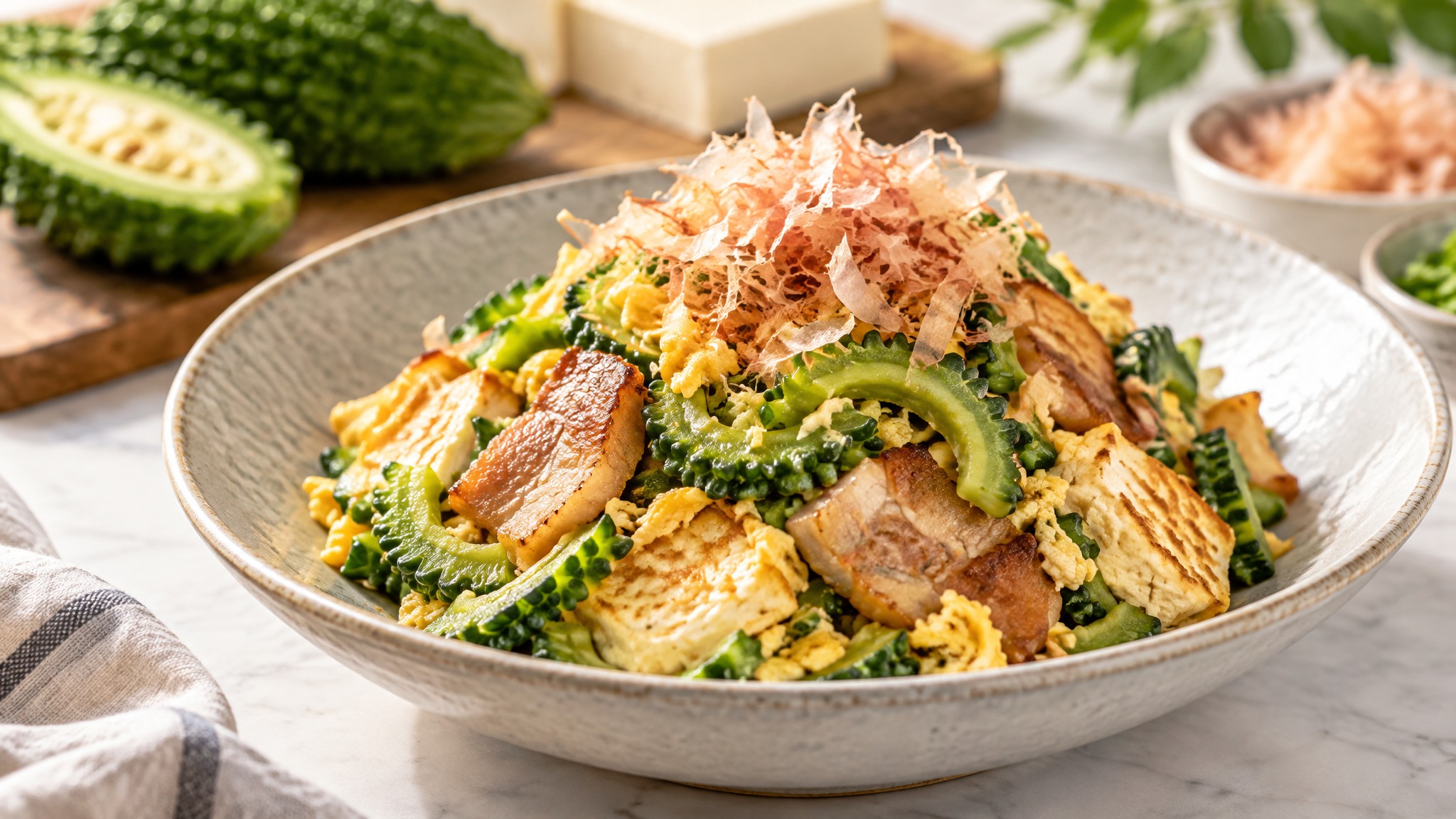
Gōyā Chanpurū (Okinawan Bitter Melon, Tofu and Egg Stir-Fry)
Okinawa's classic gōyā chanpurū: crunchy bitter melon, seared tofu, crisp pork belly and soft egg in one pan. Low-GI by nature, ready in under 30 minutes.
Take control of your blood sugar
Scan your meals, track glycemic load, and see your patterns — all in one app.
Start Free Trial →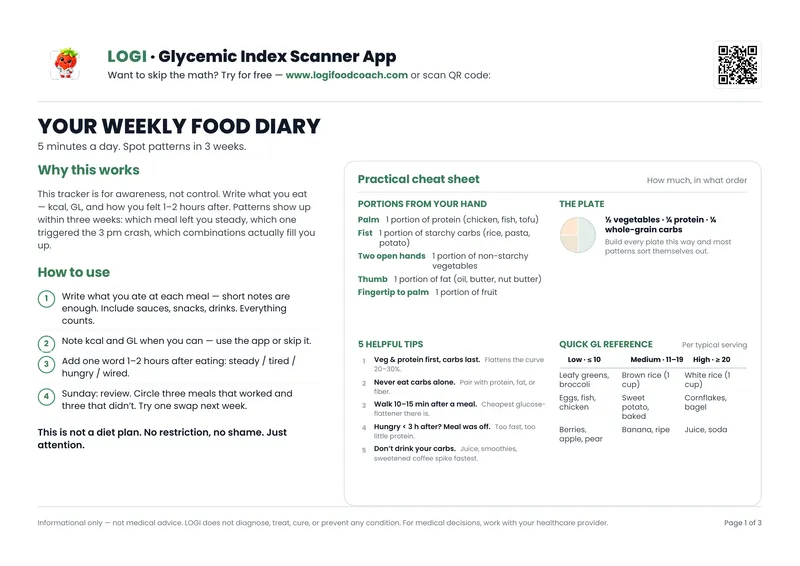
Free PDF — 3 pages
Your Weekly Food Journal
Track meals, glycemic load & mood. Spot patterns in 3 weeks.
No spam. Unsubscribe anytime.