Walking After Meals — A Simple Habit That Changes Your Glucose Curve
Why this one habit shows up everywhere
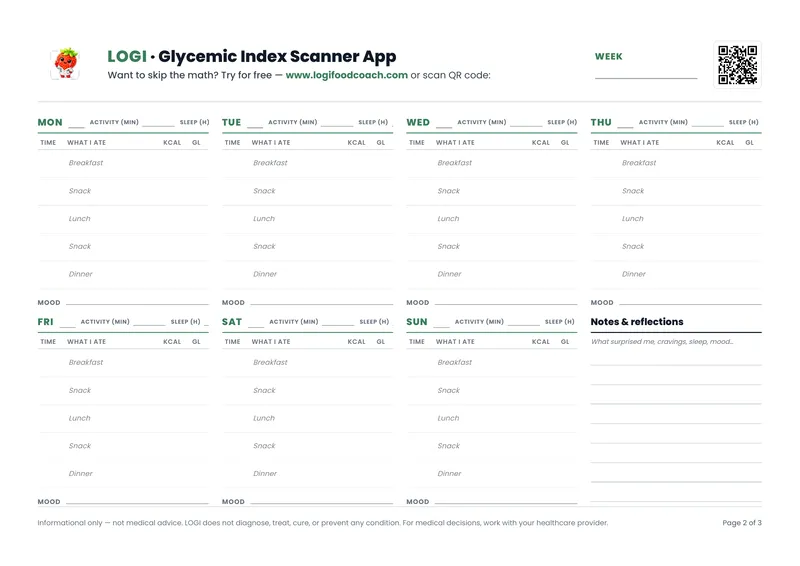
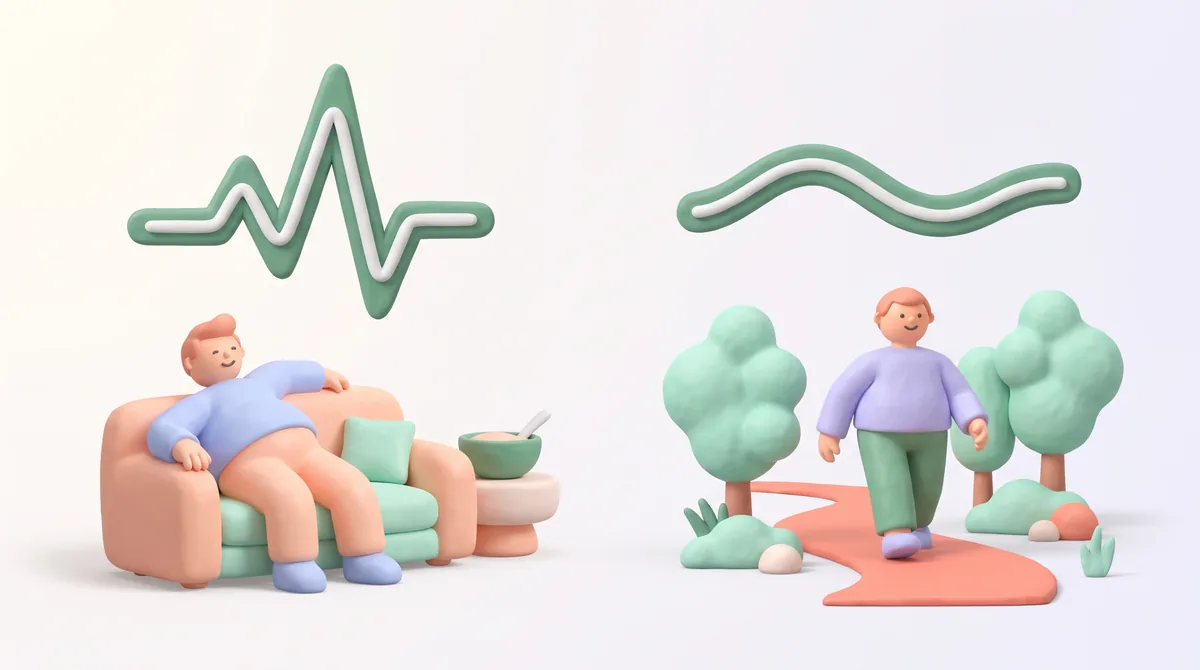
When people first explore low-glycemic eating, they tend to focus on what’s on the plate. That matters. But the same plate eaten in two different ways — sitting still vs. moving gently afterwards — produces two different glucose curves. The food is the same. The response is not.
Walking after meals is one of the rare habits that is free, requires no equipment, takes ten to twenty minutes, and has been studied repeatedly in people with insulin resistance, prediabetes, and type 2 diabetes. It also happens to be one of the most consistently overlooked. Many of us know we “should” move more, but we treat post-meal movement as optional. The research suggests it’s closer to high-leverage.
This is not a weight-loss claim. This is a glucose-curve explanation, with food, movement, and sleep all in the same picture. If weight management is also part of why you’re reading this, understanding how the curve responds to gentle activity is more useful than another diet rule.
What happens in the body when you walk after eating
A carbohydrate-containing meal pushes glucose into the bloodstream within fifteen to ninety minutes. The pancreas releases insulin, which signals muscle and fat cells to take that glucose out of circulation. In insulin resistance, that signal arrives but the cells respond sluggishly. Glucose stays elevated longer. The curve becomes higher and wider.
Skeletal muscle is the largest glucose sink in the body. When muscles contract — even gently, even in a walk that doesn’t feel like exercise — they pull glucose in through a pathway that does not depend on insulin to the same degree. The muscle is essentially doing some of the work insulin would normally do. The post-meal glucose curve flattens. The peak is lower. The area under the curve is smaller.
This is not theoretical. Multiple studies measuring continuous glucose in real participants have shown that a short walk in the first thirty to ninety minutes after eating reduces post-meal glucose meaningfully compared to sitting. The effect is most useful for meals that are higher in carbohydrates and for people whose insulin response is already strained.
How long, how soon, how often
The research is consistent on three points worth holding loosely.
Ten to twenty minutes is enough. Longer is fine. Shorter still helps. The dose-response is real but it isn’t steep — most of the benefit shows up early.
Within thirty to sixty minutes after the meal is the window where the walk does the most work. Glucose typically peaks somewhere in that range. A walk three hours after eating is still good for you in general terms, but the post-meal-curve effect is largely missed.
Daily after the largest meal of the day is a reasonable starting place. After every meal is better. After no meals is where most people are. Moving from “no” to “after dinner” is a meaningful change.
The pace doesn’t need to be brisk. A casual walk — the kind where you can comfortably hold a conversation — is enough. The mechanism is muscle contraction, not heart-rate elevation.
Where this sits in a low-glycemic approach
A low-glycemic eating pattern lowers the post-meal glucose curve by changing what arrives in the bloodstream. A post-meal walk lowers the curve by changing what happens to the glucose once it arrives. They work on the same problem from two angles, and they compound.
The same meal eaten three ways:
A standard carbohydrate-heavy plate, eaten sitting, followed by sitting. The curve is tall and slow to come down.
The same plate, restructured around lower-glycemic versions of the same foods (a swap from white rice to barley, or from white bread to dense rye), eaten sitting, followed by sitting. The curve is lower. The benefit is real but partial.
The lower-glycemic plate, followed by fifteen minutes of walking. The curve is lower still. Often noticeably so on a continuous glucose monitor, if you wear one.
Food and movement aren’t competing for credit. They’re both pulling in the same direction. The same is true of sleep, which we’ll come back to in a moment.
How to actually do this in a real day
This is where most advice fails. People know walking after meals is a good idea. They don’t do it. The friction is usually structural, not motivational.
After breakfast, the window is often closed by commute or by getting children ready. A walk to a bus stop instead of driving to one. A walk around the block before sitting down at a desk. Standing meetings, if your work tolerates them. Not perfect. Better than zero.
After lunch, this is often the easiest meal to walk after. A loop around the office, a walk to a further coffee shop, a walk on a phone call. Ten minutes is enough.
After dinner, this is often the easiest culturally — many traditions already have an evening walk — and it sits in the window before sleep, which has its own benefits.
If you can only manage one walk a day, dinner is usually the highest-leverage meal because it’s typically the largest and most carbohydrate-dense in the modern day, and the glucose curve overnight matters for sleep quality and morning fasting glucose.
Where sleep fits in
It’s worth saying directly. A short walk after eating helps. A consistent seven hours of sleep helps in a different way. Sleeping under six hours raises insulin resistance the next day, increases cravings for high-carbohydrate food, and makes everything harder. You can do everything right at the table and during the walk, and a single short night will push back on it.
This is not a guilt trip. Many people genuinely cannot get seven hours, for reasons that are not about willpower. The point is that the three things — what you eat, how you move after eating, and how you sleep — are linked tightly enough that improving any one of them helps the others. Choosing the one that is most accessible this week is more useful than trying to fix all three at once.
A note on weight
People often ask whether walking after meals helps with weight management. The honest answer is: indirectly and modestly, through the same mechanism. A flatter glucose curve means less insulin staying high for hours. Lower sustained insulin is generally associated with easier fat mobilization, smaller energy crashes, and fewer between-meal cravings. None of this is a substitute for an overall eating pattern that supports you. But over weeks and months, the compound effect is real.
If weight is affecting your mental or physical health, please speak with a doctor or qualified health professional. This article is a piece of education, not a substitute for clinical care.
What to learn from this
A post-meal walk is one of the lowest-cost, best-studied habits available to anyone interested in their glucose response. Ten to twenty minutes, within an hour of eating, at a casual pace. Done after the largest meal of the day is a defensible minimum. Done after every meal is the upper end of useful.
It does not replace food choices. It does not replace sleep. It works with both. The leverage comes from where it sits in the timing — early enough to bend the curve while it’s still rising.
If you only take one thing from this: try it after dinner this week, for five days. Notice how you feel an hour later. If you have a continuous glucose monitor, look at the curve. The numbers usually do the convincing better than any article.
This article is part of a Logi series on understanding the relationship between food, movement, sleep, and blood sugar. It is educational. It is not a substitute for medical advice. If weight, glucose, or any aspect of your health is affecting your wellbeing, please talk to a qualified healthcare professional.
Related recipes

Roasted Sunflower Seeds
A perfectly portioned, nutrient-dense snack that delivers healthy fats, protein, and fiber without spiking blood sugar—ideal for steady energy throughout the day.

Low-Glycemic Green Goddess Power Salad
A nutrient-dense salad featuring lean protein, healthy fats, and fiber-rich vegetables with a creamy herb dressing—perfect for stable blood sugar levels.

Blistered Shishito Peppers with Smoky Garlic Aioli
Quick-charred shishito peppers paired with creamy garlic aioli make a blood sugar-friendly appetizer that's ready in 10 minutes with minimal ingredients.
Take control of your blood sugar
Scan your meals, track glycemic load, and see your patterns — all in one app.
Start Free Trial →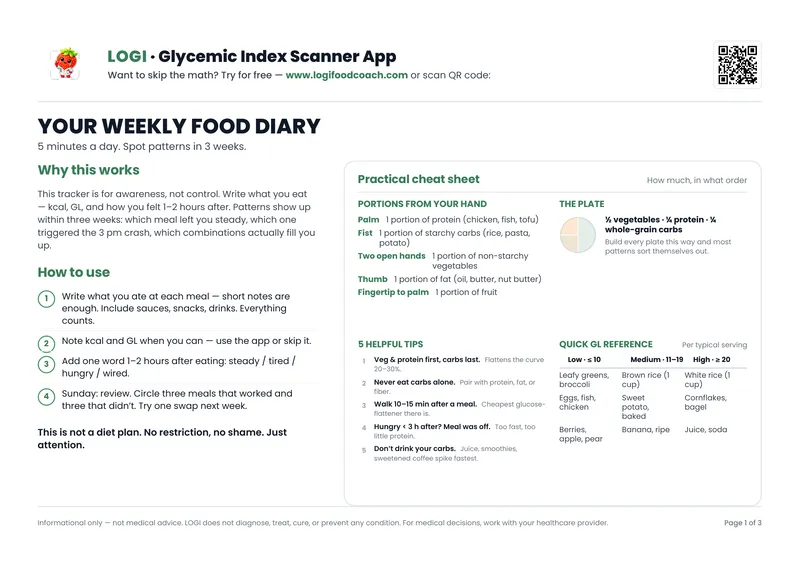
Free PDF — 3 pages
Your Weekly Food Journal
Track meals, glycemic load & mood. Spot patterns in 3 weeks.
No spam. Unsubscribe anytime.