Do Soups Spike Blood Sugar? A Practical Guide to Broth, Bean, Cream, and Noodle Soups
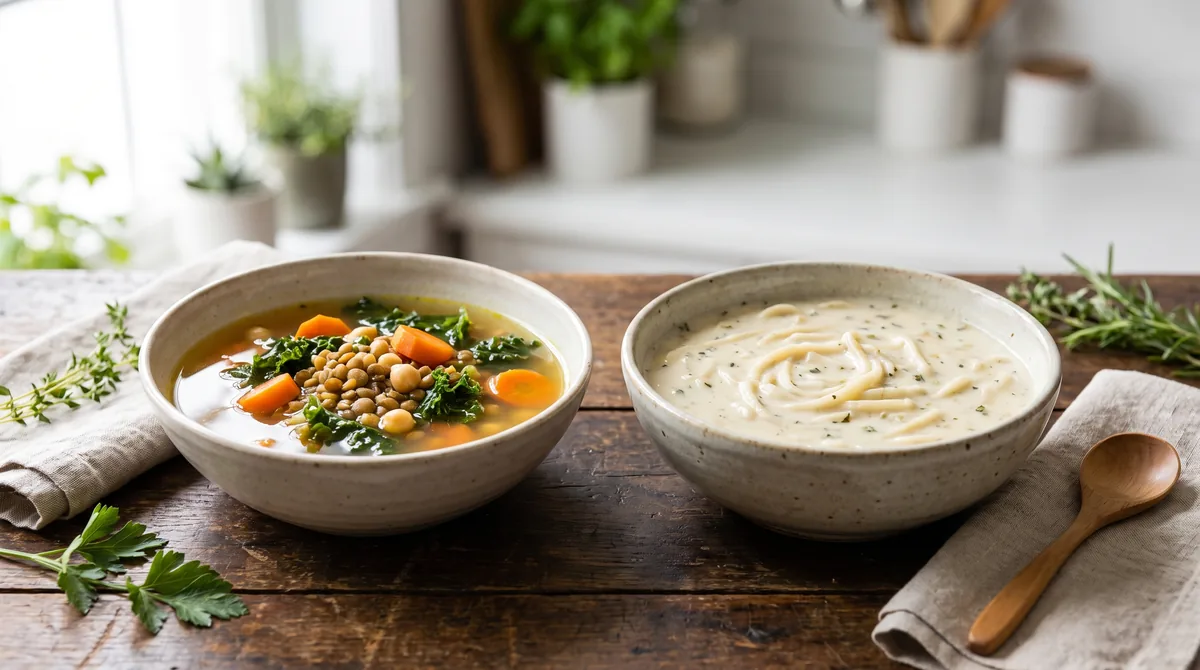
Soup is one of the most underrated tools for managing blood sugar. A well-built vegetable, bean, or broth-based soup can leave your glucose curve almost flat while filling you up more than a solid meal of the same calorie count. The volume and warmth trigger satiety faster, the fiber from vegetables or legumes blunts the response, and the long, slow eating pattern is closer to how the body is designed to handle food than a fast-eaten sandwich.
But soup is also a category that includes cream-of-something concoctions thickened with flour, canned tomato varieties spiked with added sugar, and noodle soups where the actual meal is a bowl of white starch swimming in salty water. The differences between these matter a lot for anyone managing insulin resistance, prediabetes, or type 2 diabetes. This piece walks through the main soup categories, what each does to blood sugar, and how to read a canned soup label without being fooled.
The mechanism — why liquid meals behave slightly differently
A soup is a mixed food in liquid form, and that changes two things about how it hits your bloodstream. First, liquids leave the stomach faster than solids — a gentle head start compared to eating the same ingredients dry. Second, most soups are diluted, so the actual carbohydrate density per bite is lower than the equivalent dry meal. These two effects roughly cancel each other out; the glucose response to a bowl of vegetable soup is usually smaller than the response to the same vegetables served as a stir-fry with a piece of bread, mostly because the total carbohydrate portion has dropped.
The other thing that matters is what the soup is thickened with. A clear broth with vegetables and beans is a low-glycemic meal by construction. A cream soup thickened with a flour-and-butter roux, or a puréed potato-and-leek soup, is a starch delivery vehicle that happens to be hot. And a noodle soup is a bowl of white pasta whose broth adds nothing to the glucose story.
Result: soups sit across the whole GI spectrum. The question is never “is soup good for blood sugar” but “what is in this soup, and how much of it is fast-absorbing carbohydrate?”
Vegetable and broth-based soups — the easy category
Clear broth soups with non-starchy vegetables — minestrone without pasta, chicken soup with vegetables, miso soup, vegetable consommé, cabbage soup, egg drop soup — are close to metabolically inert. The vegetables contribute fiber, the broth contributes nothing to the glucose curve, and the total portion carbohydrate is small. A large bowl of vegetable soup with a piece of hard cheese or a boiled egg on the side is one of the best low-glycemic meals available.
The subtleties: (a) if the recipe includes potatoes, sweet potatoes, corn, or peas, count those as their carb load — a “vegetable soup” heavy on potatoes is a potato soup wearing a costume; (b) miso soup is genuinely near-zero carb aside from any noodles or tofu added; (c) restaurant broth-based soups sometimes carry hidden sugar in the base — worth asking if you eat out often.
For home cooks, the guideline is straightforward: start with a broth, add non-starchy vegetables, add a protein source, and treat any starchy ingredient as a portion to be measured, not a background.
Bean and lentil soups — the positive story
Bean and lentil soups are one of the highest-value categories for blood sugar, and they deserve their own paragraph. Legumes carry fiber and slow-digesting starches that produce one of the flattest glucose curves of any substantial meal — a large bowl of lentil soup, split pea soup, black bean soup, or chickpea-based soup will keep you full for hours and rarely produces a meaningful glucose spike, even at generous portions.
The mechanism is what we covered in the legumes-and-blood-sugar piece: the “second-meal effect” from soluble fiber and slow starch keeps your response to the next meal smaller too, not just to the soup itself. This is a rare metabolic bonus — most foods only affect the meal they are part of.
The one caveat is portion. A bowl of lentil soup with two thick slices of bread ceases to be a low-glycemic meal, because the bread swamps the legumes’ effect. The soup is the star; anything served alongside should be measured on its own carb merits.
Cream soups — the trap
Cream soups are the category where “soup = healthy” assumption breaks down. A traditional cream of mushroom, cream of chicken, cream of broccoli, or clam chowder is usually thickened with a butter-and-flour roux, which means every bowl carries a background load of refined white flour that raises the glucose response independent of anything else in the soup.
Canned cream soups make this worse. The industrial versions typically use modified starches that digest very quickly, plus a surprising amount of added sugar (often listed as “sugar,” “corn syrup,” or a sweetener under another name). A single-serving can of condensed cream of mushroom soup, once reconstituted, can produce a glucose response similar to eating a bowl of pasta.
Practical adjustment: if you want the texture of a cream soup, use puréed cauliflower, blended white beans, or a small amount of cream cheese as the thickener instead of a flour roux — the result is a genuinely low-glycemic bowl. If you buy canned cream soups, read the label: sugar, corn syrup, and modified starches are the ingredients to avoid.
Tomato-based soups — check the label
Tomato soup itself, made from actual tomatoes, is a moderate-carbohydrate soup. Tomatoes have some natural sugars but also acid and fiber that keep the response gentle. A homemade tomato soup with a swirl of cream is a reasonable low-glycemic choice.
Commercial tomato soups are a different animal. Many canned tomato soups contain 12–20 grams of added sugar per serving — more than a small cookie. The added sugar is there because concentrated commercial tomato paste tastes acidic and sharp, and manufacturers correct that with sweetness. Once added, the sugar dominates the glucose curve.
The label check is simple: any tomato soup with more than 4–5 grams of sugar per serving contains added sugar. A whole medium tomato has under 3 grams. Anything higher is a design choice by the manufacturer, and it undoes what the vegetable was doing for you.
Noodle and starch-based soups — carb bombs in disguise
Chicken noodle soup, ramen, pho, wonton soup, pasta e fagioli, matzo ball soup — these are all bowls whose main ingredient is a fast-digesting refined starch (white noodles, rice noodles, matzo dumplings, small pasta). The broth is the background; the actual meal is the noodles.
A standard bowl of chicken noodle soup can contain 40–60 grams of carbohydrate, most of it from white pasta or rice noodles. That is comparable to a plate of pasta and produces a comparable glucose response. This is not “cheating with soup” — it is a pasta meal that happens to have some broth around it.
The practical adjustments are the same ones we recommend for pasta: (a) reduce the noodle portion by half and double the vegetables and protein; (b) prefer bean thread noodles, shirataki (konjac) noodles, or a small portion of buckwheat noodles over refined wheat or rice noodles; (c) for pho and ramen, ask for extra vegetables and less noodle at restaurants where possible; (d) eat the protein and vegetables first, noodles second — the same order-of-eating trick that works for pasta.
Potato and other starchy-vegetable soups
Cream of potato, leek and potato, corn chowder, and butternut squash soups all fall into the same story: the vegetable itself is starchy, so the soup is starchy, regardless of how simple the recipe is. A puréed potato-leek soup is a bowl of mashed potato in liquid form; a butternut squash soup is a bowl of pumpkin-adjacent carbohydrate.
None of these are bad foods, but they should be counted as carb-dominant meals for portion purposes. A small bowl as a starter is fine; a large bowl as a main dish will produce a substantial glucose response. Pairing with a protein source and some fat helps flatten the curve — a bowl of pumpkin soup with a poached egg and pumpkin seeds on top behaves very differently than the same soup eaten alone with bread.
Canned soups — the label rules
The category “canned soup” is not a monolith. Reading three fields on the nutrition label will place any canned soup in one of the categories above:
- Total carbohydrate per serving. Under 15 grams and there is not much room for a spike; over 30 grams and it is a substantial-carb meal.
- Added sugar per serving. Anything above 4–5 grams of sugar means added sugar is present; the higher the number, the more of the response is driven by pure sugar rather than the food itself.
- First few ingredients. If white flour, modified starch, corn syrup, or sugar appear near the top, expect a bigger response than the total-carb number alone suggests. A single “modified corn starch” as the second ingredient is a hint that the product is engineered for texture more than for nutrition.
Servings are the other trap. Many canned soups list “servings per container: 2” or “2.5” — most people eat the whole can. Multiply by that factor before deciding.
The practical shortlist
If you want a mental shortcut for eating soup with insulin resistance in mind:
- Almost always low-glycemic: broth soups with vegetables, bean soups, lentil soups, split pea, cabbage, miso, egg drop, chicken-and-vegetable.
- Depends on preparation: tomato (homemade fine, canned check sugar), mushroom (homemade fine, canned cream check thickener), fish stew, chicken soup (only if the noodles are absent or minor).
- High-carb, treat as a carb meal: noodle soups, ramen, pho, pasta e fagioli with lots of pasta, potato soup, corn chowder, butternut squash, most canned cream soups.
The bigger picture
Soup is a format, not a food group. What the format does well is combine warmth, volume, and slow eating — all of which help satiety and portion control. What it does badly, or rather what canned and restaurant versions can do badly, is hide added sugar, refined starches, and cream-based thickeners inside something that reads as healthy.
For someone managing blood sugar, the practical move is to lean into the soup categories that were low-glycemic by construction — legumes, vegetables in broth, and homemade versions of the classic recipes — and to become skeptical of the canned and restaurant versions where a “healthy” label often means the opposite. A bowl of home-made lentil or vegetable soup, cooked in batches on the weekend and eaten across the week, is one of the cheapest, easiest, and most metabolically friendly meals you can build a diet around.
If you want to see what a specific soup does to your own glucose curve, Logi can scan a label, an image of a bowl, or a homemade recipe and estimate its glycemic load in seconds — useful for the borderline cases where the label is ambiguous and the ingredient list is long.
This article is educational. It is not medical advice. Individual responses to any food vary widely; if you have diabetes, insulin resistance, or another metabolic condition, discuss dietary choices with your doctor or a registered dietitian.
Foods in this article
Related recipes

Low-Glycemic Vietnamese Chicken & Vegetable Noodle Bowl
A vibrant, blood sugar-friendly noodle bowl featuring shirataki noodles, lean chicken, and crisp vegetables tossed in a zesty lime-sesame dressing with fresh herbs.

Hearty White Bean and Vegetable Soup
A nourishing low-glycemic soup packed with fiber-rich white beans, colorful vegetables, and aromatic herbs that keeps blood sugar stable for hours.

Low-Glycemic Thai Coconut Chicken Soup (Tom Kha Gai)
Aromatic Thai soup with tender chicken in creamy coconut broth, naturally low-glycemic and anti-inflammatory. Ready in under an hour for stable blood sugar.
Take control of your blood sugar
Scan your meals, track glycemic load, and see your patterns — all in one app.
Start Free Trial →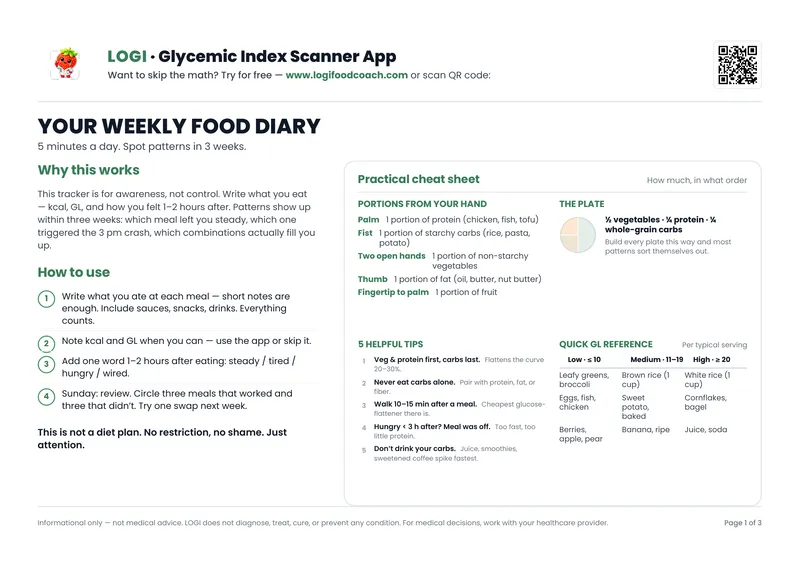
Free PDF — 3 pages
Your Weekly Food Journal
Track meals, glycemic load & mood. Spot patterns in 3 weeks.
No spam. Unsubscribe anytime.