Peach Glycemic Index: One of the Lowest of Any Sweet Fruit — Until It Is Canned
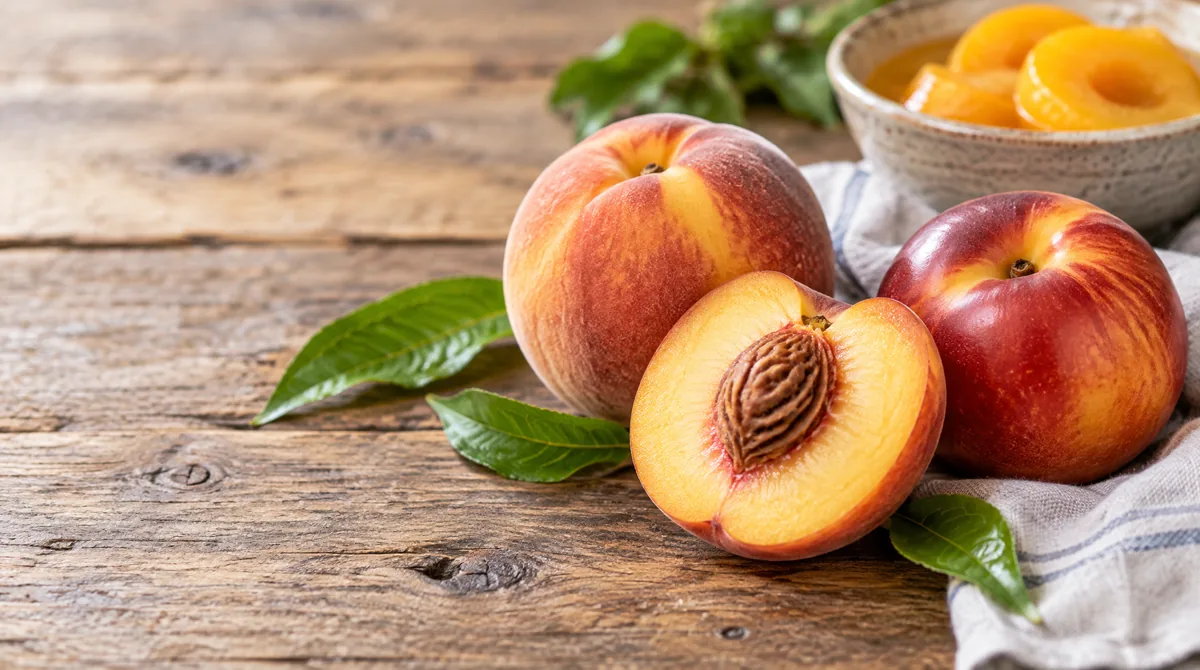
A ripe peach tastes like it should be a problem. It is intensely sweet, it is soft, it drips — every sensory cue that people learn to associate with a blood sugar spike. And yet fresh peaches have a glycemic index around 42, which puts them below apples in some datasets and comfortably inside the low band, and a glycemic load of roughly 5 per serving, which is about as low as a sweet food gets.
Nectarines, which are genetically the same species as peaches with a recessive gene for smooth skin, behave essentially identically. So do most stone fruits. This is one of the areas where the fruit-is-sugar instinct leads people badly astray, and the reasons why are worth understanding, because they generalise to a whole category of food.
The numbers, by form
The form the peach is in matters far more than the variety.
| Form | Typical GI | Carbohydrate per serving | Approximate GL |
|---|---|---|---|
| Fresh peach (1 medium, ~150 g) | ~42 (range 28–56) | ~13 g | ~5 |
| Fresh nectarine (1 medium, ~140 g) | ~43 | ~12 g | ~5 |
| Canned in natural juice (120 g) | ~45–50 | ~12 g | ~5–6 |
| Canned in light syrup (120 g) | ~52 | ~16 g | ~8 |
| Canned in heavy syrup (120 g) | ~58 | ~21 g | ~12 |
| Dried peach (40 g) | ~35 | ~24 g | ~8–9 |
| Peach juice / nectar (250 ml) | ~55–65 | ~28–30 g | ~17–19 |
Two things jump out of that table.
First, fresh stone fruit is genuinely low on both scales simultaneously — unlike watermelon, which is low-load but high-index, peaches are low on the index and low on the load. There is no technicality involved and no caveat needed.
Second, the processing gradient is steep. A peach in heavy syrup carries more than double the glycemic load of the fresh fruit, and peach nectar carries roughly three to four times it. The fruit did not change; sugar was added and fibre was removed. Peach juice in particular is a fundamentally different food from a peach, and the fact that both are called peach on the label is one of the more consequential naming problems in the supermarket.
Note the dried peach row, which surprises people: the GI is lower than fresh, because drying concentrates the fibre alongside the sugar and the sorbitol content slows things further. But the glycemic load is higher, because 40 grams of dried peach is the sugar of roughly three fresh ones in a portion you can eat in thirty seconds. This is the GI-versus-GL distinction doing useful work again — the index says “digested slowly”, the load says “there is a lot of it”.
Why fresh stone fruit behaves so well
Three properties combine, and none of them is dramatic on its own.
Water content. A fresh peach is roughly 88 percent water. As with melons, that dilutes the carbohydrate — a whole medium peach delivers about 13 grams of available carbohydrate, less than a slice of bread.
Fibre, including the skin. A medium peach provides around 2 grams of fibre, a meaningful share of it pectin, a soluble fibre that forms a gel in the gut and slows both gastric emptying and enzyme access — the same class of mechanism as oat beta-glucan, at a smaller dose. Most of the fibre benefit disappears if you peel the fruit, which is one small argument for eating peaches unpeeled when the skin is not too fuzzy for you.
Sugar composition. Peaches contain a mix of sucrose, glucose and fructose, with a relatively high proportion of fructose. Fructose has a low glycemic index because it is metabolised in the liver rather than raising blood glucose directly, which pulls the measured GI of high-fructose fruits down. This is a real effect and it is why most fruits test low. It also comes with the standard caveat: the fructose advantage applies to whole fruit in ordinary quantities, and stops being an advantage in the concentrated doses found in juice and sweetened products, where large fructose loads place a metabolic burden on the liver without the fibre and water that whole fruit brings.
Together these give stone fruit a modest, slow glucose curve at a normal portion — the profile you would want from something that tastes like dessert.
Ripeness, and how much it actually changes
Ripeness genuinely shifts the numbers, which is part of why published GI values for peaches scatter so widely — the range across studies runs from the high twenties to the mid fifties.
As stone fruit ripens, starch converts to sugar and the flesh softens as pectin breaks down. Both changes push the glycemic response upward: more free sugar, less structure to slow it. A firm, barely-ripe peach will produce a flatter response than one that is soft enough to eat over the sink.
The size of the effect is worth keeping in proportion, though. Even at the top of the published range, a very ripe peach has a glycemic load around 6 or 7. Ripeness moves stone fruit around within the low band; it does not move it out. If you like your peaches ripe, eat them ripe — the choice between fresh and canned-in-syrup matters roughly ten times more than the choice between firm and soft.
The canned peach question
Canned peaches deserve a specific answer, because they are a genuinely useful pantry food and the advice on them is usually either uselessly vague or wrong.
The variable is the packing liquid, and it is stated on the label:
- In natural juice or water: close to fresh in glycemic load. A reasonable everyday food. Draining the liquid removes some of the dissolved sugar.
- In light syrup: noticeably sweeter, glycemic load around 8. Fine occasionally; draining helps meaningfully here.
- In heavy syrup: glycemic load around 12 for a modest portion, most of the difference being added sucrose. This is a dessert.
Draining is not a cosmetic step. A substantial share of the added sugar in a syrup-packed can is dissolved in the liquid rather than absorbed into the fruit, so pouring it off removes a real fraction of the carbohydrate. Rinsing removes more.
Canned stone fruit in juice also keeps most of its fibre, which is why it holds up much better than juice does. The processing that ruins fruit for blood sugar purposes is the removal of structure, not heat.
Practical guidance
- One to two medium peaches or nectarines is a sensible portion, landing at a glycemic load of roughly 5–10 — low to low-medium.
- Eat the skin when you can. It carries a meaningful share of the fibre.
- Read the can, not the fruit. In juice or water is a different food from in heavy syrup. Drain either way.
- Treat peach nectar and juice as drinks with sugar in them, because that is what they are — the glycemic load of a glass is roughly three to four fresh peaches with the fibre taken out.
- Pair with protein or fat if you are eating fruit as a standalone snack — sliced peach with cottage cheese, Greek yoghurt, or a few almonds. Stone fruit does not need much help, but a snack of fruit alone is the one context where even low-GL foods are noticeable for people with significant insulin resistance.
- Dried peaches and prunes are concentrated. A small handful is a portion; the bag is not.
The bigger picture
Peaches sit in a category that a lot of blood-sugar advice handles badly: whole fruits that taste sweet and are not a problem. The instinct to treat sweetness as a warning signal is understandable, and it is roughly correct for processed food, where sweetness usually indicates added sugar with nothing else attached. Applied to whole fruit it produces the wrong answer, because in fruit the sugar arrives packaged with water, fibre, and structure that change its behaviour substantially.
The cost of getting this wrong is not just nutritional. Stone fruit, berries, and melon are the foods that make a low-glycemic diet tolerable over months, and people who cut them tend to reintroduce sweetness later in worse forms. A diet that permits two peaches is more durable than one that permits none.
The more useful framing is the same one that applies across this whole topic: ask what a realistic portion of a food contributes to a meal, rather than sorting foods into permitted and forbidden lists on the basis of a single index. For fresh peaches and nectarines, the answer at any normal portion is: very little. For peach nectar, the answer is: a great deal. Both are peaches on the label, and that is exactly why the portion-and-form question is the one worth asking.
If you want to see where fruit actually sits in the glycemic load of your day rather than guessing from a chart, Logi scans a meal or a snack and estimates its glycemic load in seconds — including the difference between the fresh fruit and the tinned version of it.
This article is educational. It is not medical advice. Individual responses to any food vary widely; if you have diabetes, insulin resistance, or another metabolic condition, discuss dietary choices with your doctor or a registered dietitian.
Foods in this article
Related recipes

Low-Glycemic Vanilla Poached Peaches with Almond Extract
Naturally sweet stone fruit gently simmered in a light vanilla syrup with minimal added sugar—a blood sugar-friendly dessert that satisfies cravings without spiking glucose levels.

Caramelized Grilled Stone Fruit with Balsamic Reduction and Greek Yogurt Pairing
Naturally sweet grilled fruit with tangy balsamic glaze—a blood sugar friendly dessert when paired with Greek yogurt, nuts, and monk fruit sweetener instead of sugar.

Low-Glycemic Summer Stone Fruit Crisp with Oat-Almond Topping
A blood sugar-friendly dessert showcasing fresh stone fruits beneath a crunchy whole grain topping. Natural sweetness meets fiber-rich ingredients for balanced indulgence.
Take control of your blood sugar
Scan your meals, track glycemic load, and see your patterns — all in one app.
Start Free Trial →
Free PDF — 3 pages
Your Weekly Food Journal
Track meals, glycemic load & mood. Spot patterns in 3 weeks.
No spam. Unsubscribe anytime.