Guava Glycemic Index: One of the Lowest of Any Sweet Fruit — and Why Ripeness Matters
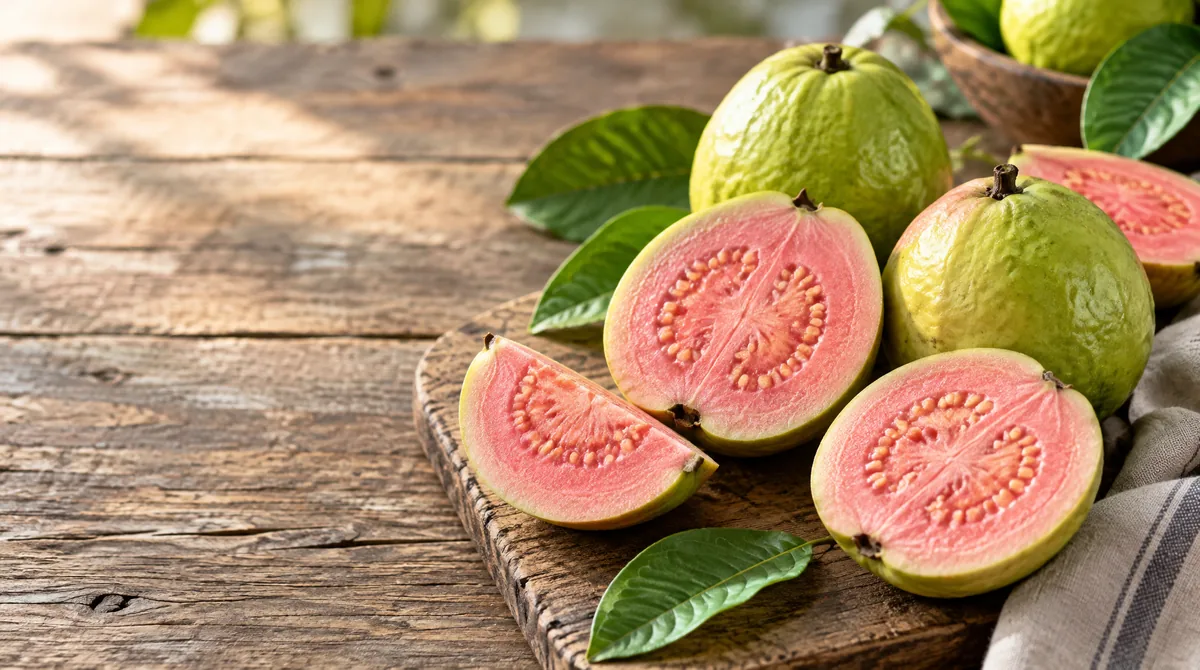
Guava is one of the few fruits that survives contact with a glycemic-index chart with its reputation intact. It tastes sweet, it smells sweeter, and it consistently lands near the bottom of published fruit rankings — below apple, below orange, far below the tropical fruits it usually sits next to at the market.
That is an unusual combination, and it is not a quirk of one dataset. There is a physical reason for it, and understanding the reason tells you exactly which forms of guava keep the advantage and which throw it away.
The number, honestly stated
Published glycemic index values for guava cluster low. Most reported figures fall somewhere in the teens to high twenties, with some datasets reporting into the low thirties for very ripe fruit. Guava has been measured less often than staples like rice or bread, so the spread between sources is wider than usual and any single figure should be treated as approximate rather than exact.
What is not in doubt is the band. Across the sources that have measured it, guava sits in the low category — conventionally a GI of 55 or below — with a comfortable margin, rather than hovering near the boundary.
The glycemic load is lower still. A 100-gram serving of fresh guava carries roughly 8–9 grams of available carbohydrate once its substantial fibre is subtracted. At a GI in the low twenties, that produces a glycemic load in the low single digits — among the lowest of any sweet fruit at a realistic portion.
For comparison at similar portions, mango and ripe banana sit meaningfully higher on both measures, papaya and pineapple sit higher on index though still moderate on load, and apple and pear land closer to guava without quite matching it.
Why fibre, not sugar content, is doing the work
Guava is not low in sugar. Per 100 grams it carries a comparable amount to many fruits that score worse. The difference is what the sugar is packaged in.
Guava is one of the highest-fibre fruits commonly eaten — several times the fibre of an equivalent weight of apple flesh, much of it in the edible seeds and the dense flesh surrounding them. That fibre does three things at once:
- It displaces carbohydrate. A large share of guava’s total carbohydrate is fibre, which is not digested into glucose. The available carbohydrate — the part that counts for glycemic load — is therefore a good deal lower than the total on a nutrition label suggests.
- It slows gastric emptying. Soluble fibre increases the viscosity of stomach contents, so what does get digested arrives more gradually.
- It forces chewing. Guava, especially with its seeds, is genuinely slow to eat. Eating rate is an underrated variable in glucose response, and guava is self-limiting in a way that juice and purée are not.
This is why guava’s answer to “is it good for blood sugar” is a qualified yes that survives scrutiny, while the same question asked of a fruit with similar sugar and less fibre gets a more hedged answer.
Ripeness: the question people actually search for
The most common variant of this question in Spanish-speaking searches asks specifically about ripe guava, and it is a fair question — ripeness genuinely changes fruit.
As guava ripens, starch converts to sugar, the flesh softens, and some of the structural resistance breaks down. The direction of the effect is the same as for every fruit: riper guava will produce a somewhat larger and faster glucose response than firm, less ripe fruit.
The size of that effect is where guava differs from, say, banana. In a banana, ripening moves the fruit across a wide range, because the starch-to-sugar conversion is dramatic and the fruit has little fibre to buffer it. In guava, the fibre content stays high throughout ripening, so the fruit softens and sweetens while its most important protective feature remains in place. Ripe guava is a little higher than unripe; it is not a different band.
Practically: eat guava at whatever ripeness you enjoy. If you are unusually sensitive to glucose swings, slightly firm fruit is marginally better behaved, and the difference is small enough that it should not decide whether you eat the fruit.
Guava juice, nectar, and paste are not guava
Every advantage described above depends on the fibre and the structure. Remove them and nothing carries over.
- Guava juice and nectar. Juicing removes most of the fibre and the seeds — precisely the components responsible for the low glycemic load. Commercial guava nectar is typically diluted and sweetened as well, so it arrives as sugar water with guava flavour. A glass can carry several times the available carbohydrate of a whole fruit, digested far faster.
- Guava paste (goiabada, dulce de guayaba, bocadillo). This is a confectionery product. It is fruit cooked down with a large quantity of added sugar until it sets, and its carbohydrate density is closer to jam or fruit jelly than to fresh fruit. The fresh-fruit numbers have no bearing on it whatsoever.
- Dried guava. Water removed, sugar concentrated per gram, and frequently sweetened further. Portion intuition fails badly on dried fruit — a handful can equal several whole fruits.
- Guava in syrup, canned. The fruit keeps some structure; the syrup does not belong to it. Drain it, and check whether the label counts the syrup in the carbohydrate line.
This is the standard fresh-fruit rule, and guava is one of its sharper examples precisely because its whole-fruit numbers are so good. The better a whole fruit’s glycemic profile, the more there is to lose by processing it.
Guava leaf tea — a separate topic, briefly
Searches around guava and blood sugar frequently drift into guava leaf tea, which is a different subject from the fruit and worth separating rather than ignoring.
Guava leaf extract has been studied for effects on post-meal glucose, and some small trials report measurable results. The evidence base is limited in size and quality, the preparations studied vary considerably, and none of this is settled enough to treat as a therapy. It is an interesting research area, not an action item, and it should not influence anything about how you eat the fruit. If you take glucose-lowering medication, do not add a herbal preparation with claimed glucose effects without talking to your doctor first.
Practical guidance
- A sensible portion is one medium fruit, roughly 100–150 grams. At that size the glycemic load stays in low single digits and there is little reason to ration it further.
- Eat the seeds and the skin if you like them. Both carry fibre, and both are where a good part of guava’s advantage lives.
- Choose whole fruit over any processed form. This matters more for guava than for most fruit, because the gap between the fresh fruit and the paste is enormous.
- Ripeness is a taste decision, not a glucose decision — the difference between ripe and firm guava is small relative to the difference between guava and most other sweet fruit.
- Pair it if you are snacking alone. Any fruit eaten by itself on an empty stomach produces a sharper curve than the same fruit after a meal. Guava’s fibre already blunts this; yoghurt or nuts alongside blunt it further.
- If you use a continuous glucose monitor, guava is a useful fruit to test, because it is one of the cases where the popular assumption — sweet taste means sharp response — is most likely to be wrong on your own data.
The bigger picture
Guava makes a point that most fruit debates miss: sweetness and glucose impact are only loosely related. The tongue registers sugar concentration. The bloodstream registers how much digestible carbohydrate arrives and how quickly it gets through — which depends on fibre, structure, and what else is in the meal. A fruit can taste markedly sweeter than another and behave better, and guava is the clean example.
This is also why “avoid sweet fruit” is among the least useful pieces of advice in circulation for anyone managing insulin resistance. It groups together foods that behave very differently, and it tends to push people away from whole fruit — one of the few categories where fibre, micronutrients, and volume come packaged with the sugar — while leaving processed foods that taste less sweet entirely unexamined.
The more useful question for any fruit is the one this article has been answering: what is left of the original structure, how much available carbohydrate is in the portion in front of you, and is it arriving alone or as part of a meal.
Fruit is where portion estimates go wrong most often, because the same fruit varies so much in size and form. Logi scans a photo of the plate and estimates the glycemic load of the whole meal — the guava, the yoghurt beside it, and everything else — so the portion question gets answered at the table rather than from a chart.
This article is educational. It is not medical advice. Individual responses to any food vary widely; if you have diabetes, insulin resistance, or another metabolic condition, discuss dietary choices with your doctor or a registered dietitian.
Related recipes

Curried Sweet Potato and Red Lentil Soup
A warming, fiber-rich soup that combines sweet potatoes and protein-packed lentils for steady energy and balanced blood sugar throughout your day.
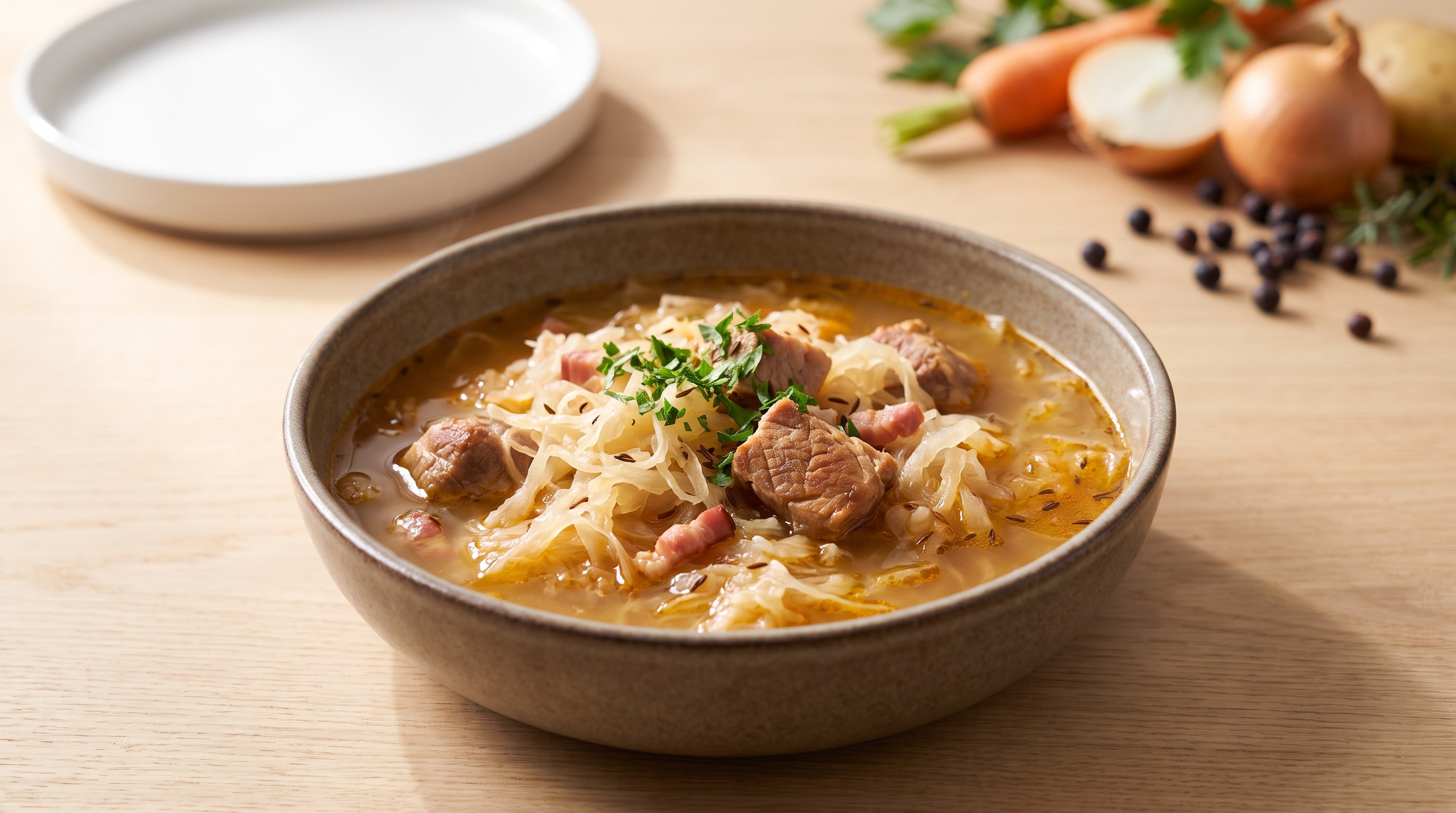
Sauerkrauteintopf (Pork and Sauerkraut Stew)
A hearty German one-pot braise of tender pork, tangy sauerkraut, and smoky speck — naturally low-glycemic with gut-friendly fermented cabbage and zero added starch.

Rödkålssallad (Swedish Red Cabbage Salad with Apple and Seeds)
A crisp Swedish salad of shredded red cabbage, tart apple matchsticks, and toasted pumpkin seeds in a tangy vinaigrette — naturally low-GI and rich in fiber.
Take control of your blood sugar
Scan your meals, track glycemic load, and see your patterns — all in one app.
Start Free Trial →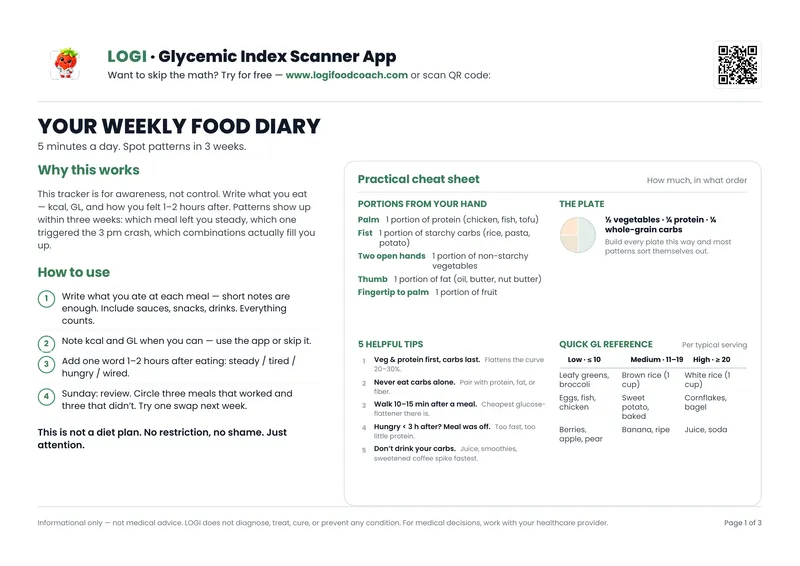
Free PDF — 3 pages
Your Weekly Food Journal
Track meals, glycemic load & mood. Spot patterns in 3 weeks.
No spam. Unsubscribe anytime.