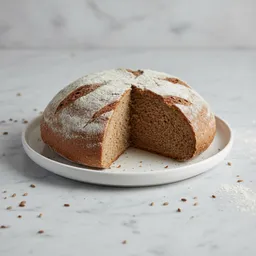
Dense whole grain rye bread
Low GI
GL 6 per typical slice (30 g) · GL 20 per 100 g
- Very high fiber content
- Moderate sodium content
Dense whole grain rye bread has a glycemic index of 50, higher than plain Pumpernickel bread (45). One typical slice (30 g) adds a glycemic load of 6.
Updated Jul 13, 2026 · Sources: Logi Nutrition Team (USDA-derived composition, AI-assisted) · Not medical advice · Report an error
Instead of this
- GL 1 per 100 g This is a dramatic reduction in glycemic load (from 20 to 1), which will significantly minimize the post-meal blood sugar spike.
 Cauliflower bread cubes (cauliflower and eggs)
 - GL 14 per 100 g This provides a similar bread-like experience while lowering both the GI and GL, offering a more stable glucose response.
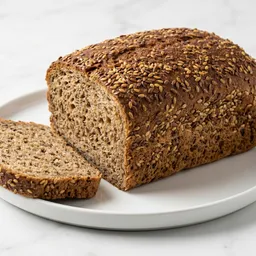 Flaxseed bread
 - GL 8 per 100 g These crackers offer a lower glycemic load (8 vs 20) and a healthier fat profile, which helps slow down the absorption of carbohydrates.
 Almond flour crackers
Forms of Pumpernickel bread

Logi · Manage Insulin Resistance
Lower your blood sugar through smarter food choices
Dense whole grain rye bread is one of the 11,117 foods Logi scores when you photograph a meal — with the portion.


Nutrition Facts (per 100g)
per 100g
| Calories | 210 kcal |
| Carbohydrates | 40 g |
| Sugars (Total) | 2.5 g |
| Natural | 2.5 g |
| Added | 0 g |
| Fiber | 11 g |
| Soluble | 3.3 g |
| Insoluble | 7.7 g |
| Protein | 6 g |
| Fat | 2.5 g |
| Saturated | 0.4 g |
| Unsaturated | 2.1 g |
| Sodium | 400 mg |
Processing Level
Why this score?
- Very high fiber content
- Low added sugars
- Moderate glycemic index
- Moderate sodium content
- Contains gluten
- Moderate glycemic load
Allergens
Low-GI recipes on Logi Food Coach
Frequently Asked Questions
What is the glycemic index of Dense whole grain rye bread?
Dense whole grain rye bread has a glycemic index of 50 (Low). One typical slice (30 g) has a glycemic load of 6; per 100 g the glycemic load is 20.
Is Dense whole grain rye bread good for people with insulin resistance?
Dense whole grain rye bread has a low glycemic index (50), making it a good option for people with insulin resistance. It causes a slow, gradual rise in blood sugar.
Which form of Pumpernickel bread has the lowest glycemic load?
Dense whole grain rye bread has the lowest glycemic load of all forms of Pumpernickel bread in this database (20 per 100 g).
Check Dense whole grain rye bread in the Logi app, with your portion.