Pizza and Blood Sugar — Why the Cheese Is Doing More Than You Think
Pizza and Blood Sugar — Why the Cheese Is Doing More Than You Think
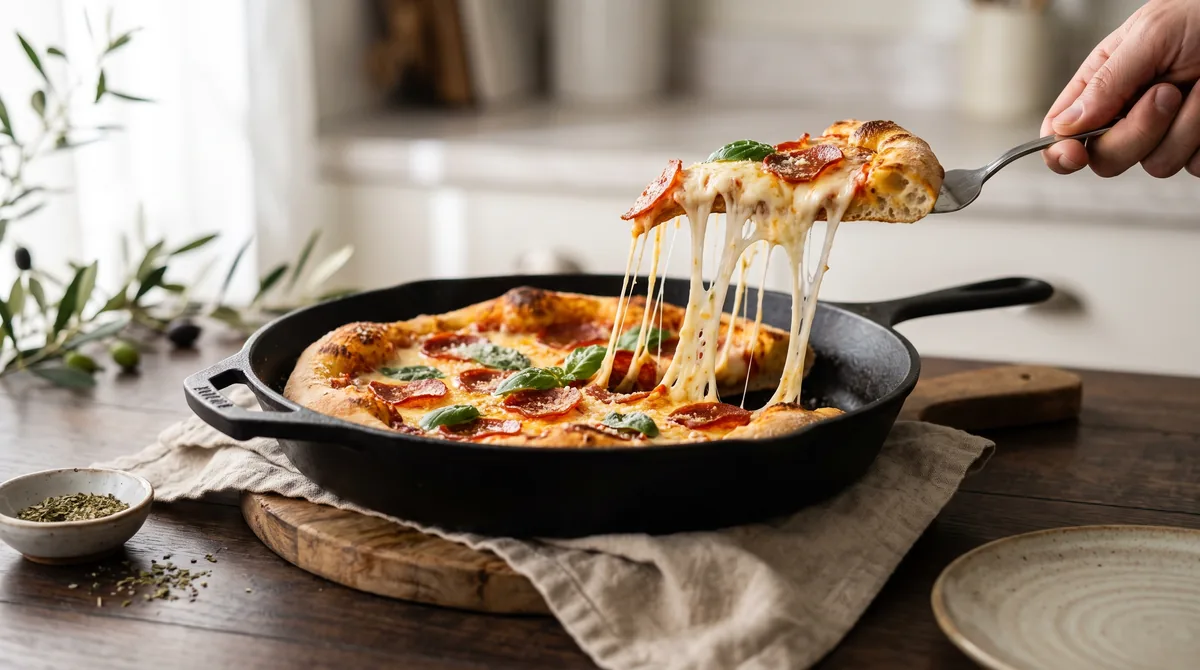
Pizza looks like a blood sugar disaster on paper. The crust is refined white flour, often with added sugar in the dough. The sauce carries a little more sugar. A large slice contains 30–40 grams of carbohydrate. Someone eating three slices for dinner has just consumed the carb equivalent of a bowl of pasta and a half-cup of rice.
Yet people who wear continuous glucose monitors report something odd: pizza does not spike them the way a bagel or a plate of white rice does. The rise is often more modest than expected — and then it lasts and lasts, sometimes creeping up hours after the meal, sometimes still elevated at bedtime. Pizza is not the fast, sharp glucose event that the ingredients predict. It is a slow, prolonged one, and the reason lives in the toppings.
This piece walks through the pizzas people actually order — thin-crust Neapolitan, thick pan pizza, cheese vs loaded, frozen, sourdough, cauliflower crust — what each does to blood sugar, why the “pizza effect” behaves the way it does, and how to eat pizza in a life where glucose matters.
The mechanism — fat and protein rewrite the curve
Three things about pizza matter more than the ingredient list suggests.
Fat slows the stomach. Cheese, olive oil, cured meats, and cooked-in oil all contribute a substantial amount of fat to a pizza slice. Fat delays gastric emptying, which means the carbohydrate in the crust reaches the small intestine more slowly than the same crust eaten alone. Slower delivery means a smaller peak. A slice of pizza and a slice of white bread contain similar carbohydrate; the pizza’s peak is generally lower because the cheese is holding the starch in the stomach.
Protein slows starch digestion further. Cheese carries protein; meat toppings carry more. Protein-plus-carbohydrate meals digest more slowly than carbohydrate alone, and stimulate a stronger insulin response that helps clear glucose out of the blood faster once it does arrive.
But fat lengthens the tail. The same fat that flattens the peak also produces a second effect: prolonged, elevated glucose for hours after the meal. Two mechanisms drive this. First, the stomach keeps releasing carbohydrate into the small intestine slowly for a long time — the total sugar arrives, it just takes four to six hours instead of one. Second, high-fat meals cause temporary insulin resistance, so the body handles that trickling glucose less efficiently. The net effect is what CGM users call the “pizza curve”: a modest peak that will not come down, sometimes rising again three or four hours later.
Put together, pizza is a slow-release starch delivery system wrapped in dairy fat. This is why the glycemic index of pizza tests moderate rather than high, and also why pizza tends to be an evening food that shows up as elevated glucose the next morning. The label on the box says “carbs”; the body reads it as “carbs plus a lot of fat” and reacts accordingly.
Thin-crust Neapolitan — the gentlest version
Traditional Neapolitan-style pizza — thin, wood-fired, a modest ring of crust, a thin layer of sauce, a scattering of mozzarella, maybe a few basil leaves — has less total carbohydrate per slice than any other common style, because the crust is thin and the diameter is smaller. A whole personal-size Neapolitan pizza contains roughly the carbohydrate of two slices of larger American pizza, and the cheese-to-crust ratio is moderate.
The glycemic response tends to be reasonable: a modest rise, a gentle tail, no dramatic peak. Eaten as a first course with a salad and finished with a normal-sized dessert, it fits comfortably into a low-glycemic life.
The version that stops working is the same pizza scaled up. A large 16-inch thin-crust ordered “to share” that a person actually eats most of is a large starch load with a lot of fat, and the pizza curve gets more pronounced with volume.
Thick pan pizza — more crust, larger load
Pan pizza — deep-dish, Detroit-style, thick Sicilian squares — trades some cheese-to-crust ratio for a lot more crust. A slice of thick pan pizza can contain 40–50 grams of carbohydrate on its own, and the crust is often enriched with oil during baking. The glycemic response is bigger in both dimensions: a higher peak and a longer tail.
Practical translation: the same “two slices for dinner” rule that works for a moderate thin-crust pizza is a much larger event on a thick pan pizza. If pan pizza is your preference, portion becomes the main lever — one slice with a substantial salad and a protein side handles glucose considerably better than two slices alone.
Cheese-only vs loaded — protein toppings usually help
Adding vegetables, meat, or extra protein to a pizza is generally a favorable change for glucose, not a worse one. Vegetables add fiber and slow the meal further. Meat and extra cheese add protein, which improves insulin response. A pepperoni-and-mushroom pizza usually produces a gentler curve than the same size plain cheese pizza, even though it has more calories and more fat.
The topping that changes this pattern is fruit — the pineapple on Hawaiian pizza adds fast-digesting sugar to a slice that already has plenty of carbohydrate. It is not disastrous, but if you are watching your curve, a vegetable-and-protein-loaded slice will treat you better than a fruit-topped one.
Sauces and drizzles matter too. A honey drizzle, a sweet barbecue sauce base, or a heavy dose of sweet balsamic glaze can push a moderate slice into a much bigger glucose event. Traditional tomato sauce carries little added sugar and is not the concern; sweetened sauces and finishing drizzles are.
Frozen and delivery pizza — the industrial version
Mass-produced frozen pizzas and standard delivery-chain pizzas usually have several disadvantages at once: enriched flour crusts that digest quickly, sugar added to the dough for browning and shelf appeal, lower cheese-to-crust ratio, and sweetened sauces. The result is a pizza that behaves closer to the ingredient list — a bigger peak than a good pizzeria’s pizza, with the same long fatty tail.
None of this makes frozen pizza forbidden. But if pizza is a weekly staple, upgrading from mass-market to a better version — a pizzeria’s thin crust, a homemade dough with real cheese and vegetables, or one of the higher-quality frozen brands that use simpler dough — usually produces a gentler curve for the same amount of enjoyment.
Sourdough and long-fermented crusts — a real, modest edge
Pizza crust made with sourdough or a long, slow-fermented dough digests noticeably more slowly than crust made with commercial yeast and a quick rise. The fermentation partially breaks down some starch, changes the structure of the dough, and produces organic acids that further slow digestion once the pizza is eaten.
The effect is meaningful but not huge — a well-made sourdough pizza is probably a small step gentler than the same crust made in an hour. It is a nice detail on top of the more important levers (thin crust, moderate portion, real cheese, vegetables), rather than a substitute for them.
Cauliflower crust and other low-carb crusts — genuinely different food
Cauliflower crust, almond-flour crust, and other low-carbohydrate crusts remove most of the starch that drives the glucose response. A pizza on cauliflower crust with cheese and vegetables is closer glycemically to a cheese-and-vegetable casserole than to traditional pizza — the response is small, mostly driven by whatever residual starch the crust contains and the milk sugar in the cheese.
Two honest notes. First, cauliflower crusts vary widely in composition. Some brands add rice flour, corn starch, or tapioca to hold the crust together, which reintroduces most of the starch. Reading the ingredient list matters. Second, for many people the taste and texture are noticeably different from traditional pizza, and it is worth asking whether you actually enjoy the low-carb version or are just tolerating it. A smaller portion of real pizza that you love is a better long-term pattern than reluctant weekly cauliflower crust.
Meal-sequencing and pairing — bigger levers than crust type
The biggest changes you can make to a pizza meal happen at the table.
A large green salad — with olive oil dressing, ideally acidic — eaten before the pizza reliably blunts the peak. The fiber and fat slow gastric emptying further and give the meal a lower total glycemic load. Adding an actual protein side (grilled chicken, a bean salad) has a similar effect.
Water instead of soda matters a lot. A soda alongside pizza adds 25–40 grams of fast sugar to a meal that already carries a slow, prolonged glucose load; the combination is one of the more visible glucose events for many CGM users. Water, sparkling water, or an unsweetened iced tea is a large, cheap improvement.
Sequencing the meal — vegetables and protein first, pizza second — reliably lowers the post-meal peak. This has been shown in studies and is easy to apply in a home kitchen: build the salad, eat some of it, then start on the pizza.
Practical patterns that keep pizza working
- Prefer thin crust over thick. Half the carb load for the same enjoyment.
- Cap portion at two moderate slices (or one thick pan slice), not “however much is left.”
- Load toppings with vegetables and protein, not fruit or sweet sauces.
- Start with a big salad. The single biggest lever most people ignore.
- Water, not soda. The soda usually contributes more to the glucose event than the extra slice would.
- Sourdough or long-fermented crust when available — a real, modest improvement.
- Watch the evening pattern. Pizza’s long tail means dinner-time pizza often shows up as elevated fasting glucose the next morning. Not a reason to avoid pizza; a reason to notice and to keep the portion moderate on days it is on the menu.
The bigger picture
Pizza is a case study in why glycemic thinking has to include what surrounds the starch. A slice of white bread and a slice of pizza have similar carbohydrate; the bread produces a fast peak that clears; the pizza produces a smaller peak that lingers for hours. Neither is automatically better — a fast peak that clears and a slow peak that hangs around have different implications for average daily glucose, insulin exposure, and how you feel later.
What actually moves your response to pizza: the ratio of crust to cheese to vegetables, the size of the portion, what you drink with it, and what you eat first. Get those right and pizza is one of the easier “restaurant carbs” to keep in a low-glycemic life — a food that tests moderate on the glycemic index, satisfies for hours, and does not have to be either avoided or defended.
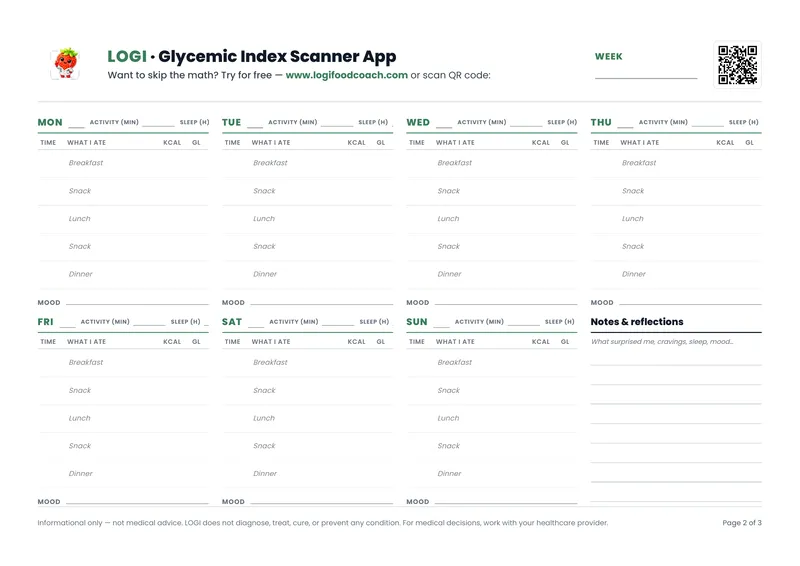
Wondering what your usual pizza order actually does to your glucose? With Logi you photograph the plate and see the estimated glycemic load in about sixty seconds — thin or thick, plain or loaded. Two weeks free. Download Logi.
This article is general nutrition education, not medical advice. If you are managing diabetes, insulin resistance, or another condition, discuss dietary changes with your doctor or a registered dietitian.
Take control of your blood sugar
Scan your meals, track glycemic load, and see your patterns — all in one app.
开始免费试用 →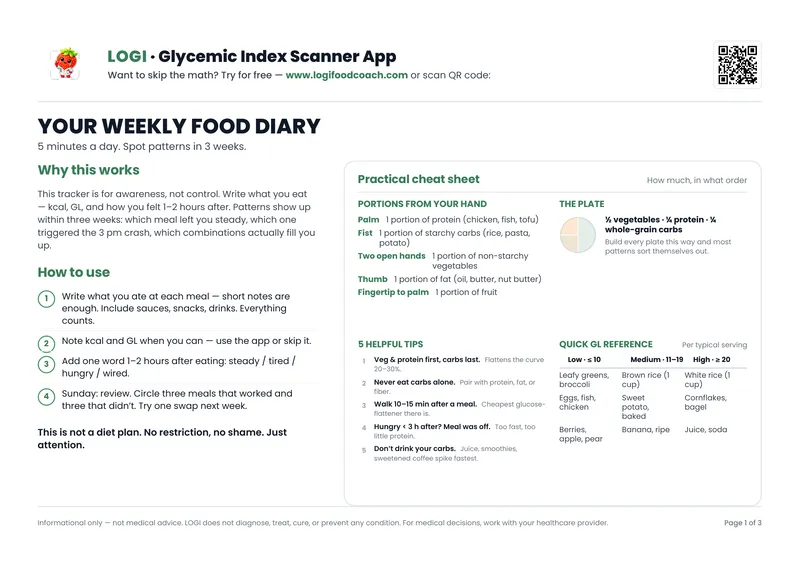
免费PDF — 3页
每周饮食日志
记录饮食、升糖负荷与心情。3周内发现规律。
无垃圾邮件。随时取消订阅。