Why Am I Not Losing Weight Even Though I'm Eating Less? The Insulin Resistance Connection
You have been doing what the advice says. Smaller portions. Fewer snacks. A salad instead of the sandwich. You walk in the evening when you can. Six weeks in, the scale has moved maybe a pound, and it came back on a rainy weekend. Your friend eats what looks like twice as much as you and is a size smaller.
This article is about one specific answer to that question. Not the only answer — stress, sleep, thyroid issues, and medications all matter. But there is a reason the “eat less, move more” advice fails for a specific group of people: roughly one in three adults has some degree of insulin resistance, most of them undiagnosed, and insulin resistance makes the “calories in, calories out” model quietly inaccurate at the body-composition level.
Here is what is actually happening and what to do about it.
The part of the weight-loss story most articles leave out
Most diet advice treats the body as a calorimeter: calories go in through food, calories go out through activity, the difference sits on the scale. That model is not wrong — it is just incomplete. The body does not only count calories; it also decides what to do with them.
That decision is mostly made by one hormone: insulin.
Every time you eat carbohydrates, and to a smaller extent protein, your pancreas releases insulin. Insulin has two jobs relevant to weight:
- It tells your muscles and liver to absorb sugar from the blood. Good.
- It tells your fat cells to store energy and stop releasing it. Neutral, most of the time.
When insulin is high, you are in “storage mode”. When insulin is low, you are in “release mode” and can burn stored fat. In a healthy person, insulin spikes after a meal and drops back to baseline in 2–3 hours. You spend most of the day in release mode.
In a person with insulin resistance, the same meal produces more insulin — because the cells have become less responsive — and insulin stays high for longer. You spend most of the day in storage mode. The salad at lunch does not cause much trouble, but the oatmeal at breakfast, the pasta at dinner, and the snack in the afternoon keep insulin elevated for twelve or fourteen hours out of sixteen. Fat release is blocked for most of the day.
This is the mechanism that makes “eating less” stop working. You cut calories, but your body is not allowed to use its own fat stores because insulin is still in storage mode.
Five signs the problem is insulin, not willpower
None of these prove insulin resistance on their own. Together, they strongly suggest it.
-
You are losing weight on your limbs but not your abdomen. IR drives preferential fat storage around the waist. A shrinking face and arms with a stable waist is a classic pattern.
-
You get intensely hungry 2–3 hours after meals, especially after carbs. High insulin overshoots, blood sugar dips, and the brain demands more fuel. This is not weakness; it is a predictable reactive-hypoglycemia response.
-
You feel tired in the afternoon, especially after lunch. The 2pm or 3pm crash is often a glucose curve event — a steep rise and fall that leaves you drained for an hour.
-
Your cravings are specifically for sweets or starches, not fat. The cell is starved of glucose even though your blood is full of it. The body asks for fast-release carbs.
-
You have a family history of Type 2 diabetes, PCOS, or gestational diabetes. IR has a strong genetic component. If it runs in your family, your starting sensitivity is lower.
If four or five of these apply to you, the weight-loss plateau is probably not a portion problem. It is a hormone problem.
What actually moves the needle when insulin is the issue
The good news is that insulin resistance is reversible for most people, especially when caught before it progresses to prediabetes or Type 2 diabetes. The interventions are known — they are just almost never the first things anyone tells you.
Shift the composition of meals, not only the size
Cutting a 500-calorie bowl of cereal down to 300 calories of cereal does almost nothing for insulin. Swapping the same 300 calories for eggs, avocado, and berries can drop the insulin response by more than half. A “smaller meal” made of refined carbs still spikes insulin; a “normal-size meal” made of protein, fat, fiber, and low-glycemic carbs does not.
The lever here is glycemic load — the combination of how fast a food raises blood sugar and how much of it you ate. Glycemic load is not the same as glycemic index. A watermelon has a high glycemic index but a glycemic load of about 4 for a normal slice — because most of its weight is water. White bread has both a high index and a high load. You want the load number, not the index number.
Change the timing, not only the food
Two meals on most days is easier on insulin than three meals with snacks. A 12-hour overnight fasting window — say, dinner at 7pm, breakfast at 7am — gives insulin time to drop and fat release to happen. You do not need to skip breakfast or adopt an aggressive intermittent fasting schedule; you need to stop grazing.
A single snack between meals, especially a carb snack, restarts the insulin clock.
Walk after meals, not only before
A ten-minute walk immediately after your largest meal reduces the post-meal glucose peak by 10–20% in most people. That is a bigger intervention on insulin than thirty minutes of walking at another time of day. If you have ten minutes, put them after dinner, not before.
Sleep and stress are not “wellness” — they are insulin interventions
One night of bad sleep measurably reduces insulin sensitivity the next day. Chronic stress raises cortisol, which raises blood sugar, which raises insulin. These are not optional. If you are eating carefully and still not losing weight, look at your sleep window before you look at your plate again.
How to actually find out if this is your problem
Three approaches, in order of cost and precision:
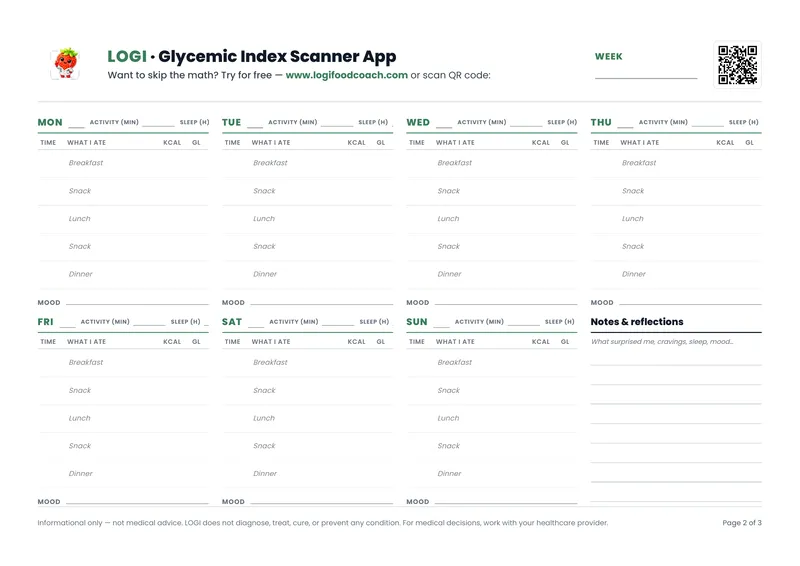
Free and self-diagnostic. Track what you eat for two weeks and notice the pattern of when you get hungry, tired, or crave sweets. If the pattern repeats 2–3 hours after carb-heavy meals, you are likely responding like an insulin-resistant person — even without a lab confirmation. A photo-based food tracker that shows glycemic load and a predicted blood sugar curve makes this much easier; you can see which meals push you into reactive territory before you feel it.
Blood test. Ask your doctor for a fasting insulin, fasting glucose, and HbA1c. The HOMA-IR score (calculated from fasting insulin and fasting glucose) is a cheap, widely available proxy. A HOMA-IR above 2.0 is a reasonable threshold to take seriously. Many primary care doctors do not order fasting insulin by default — you may need to ask for it explicitly.
Continuous glucose monitor (CGM). For two weeks, wear a CGM patch (available over-the-counter in many countries now). You will see your own curves, which meals spike you, and how long your insulin stays elevated. It is the most honest feedback loop available but costs more than a simple blood test.
The short version
If you are eating less and the scale is not moving, the missing variable is usually not willpower. It is what the meals are doing to your insulin.
Fix the meals — composition and timing, not just size — and the scale usually starts moving within 4–6 weeks. If it does not, get a fasting insulin test.
If you suspect insulin resistance, talk to a doctor. This article is educational and not medical advice. If you have been diagnosed with diabetes or are on blood-sugar-affecting medication, changes to your diet should be made with your physician.
Take control of your blood sugar
Scan your meals, track glycemic load, and see your patterns — all in one app.
เริ่มทดลองฟรี →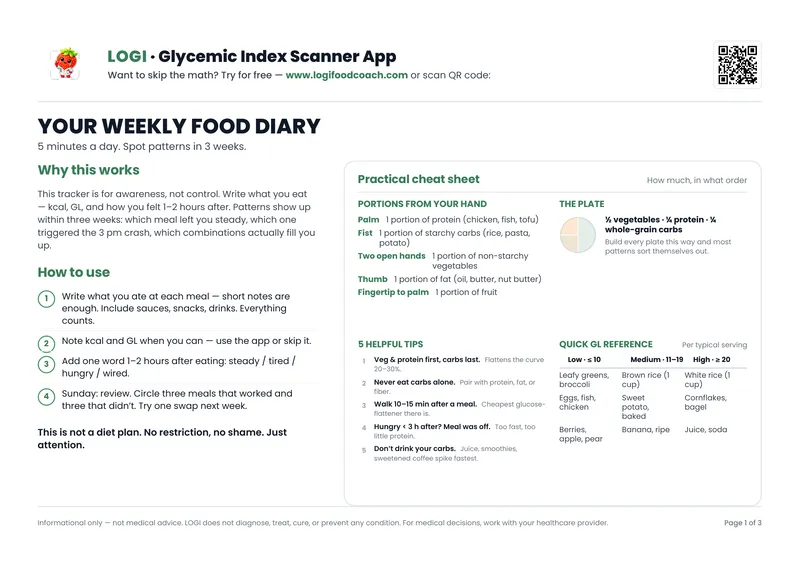
PDF ฟรี — 3 หน้า
สมุดบันทึกอาหารประจำสัปดาห์
บันทึกมื้ออาหาร ค่า GL และอารมณ์ พบรูปแบบใน 3 สัปดาห์
ไม่มีสแปม ยกเลิกได้ทุกเมื่อ