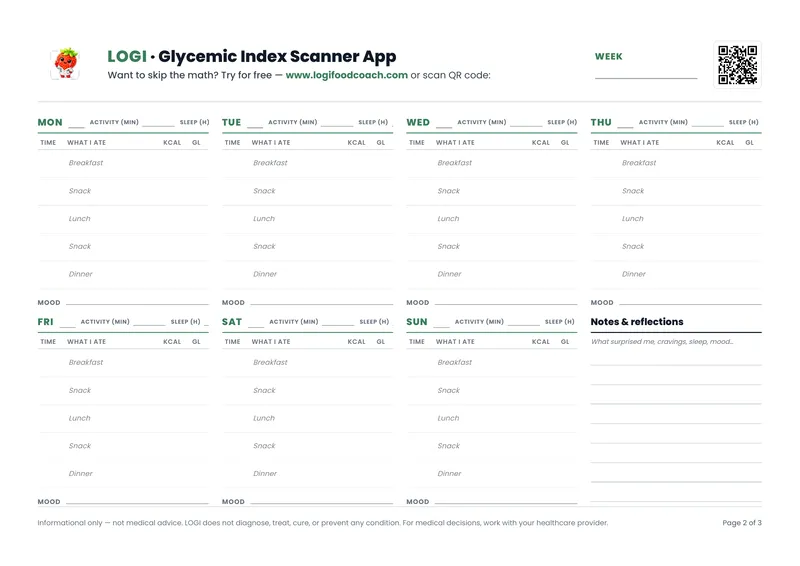
Low-GI Eastern European Foods: A Practical Guide for Blood Sugar Control
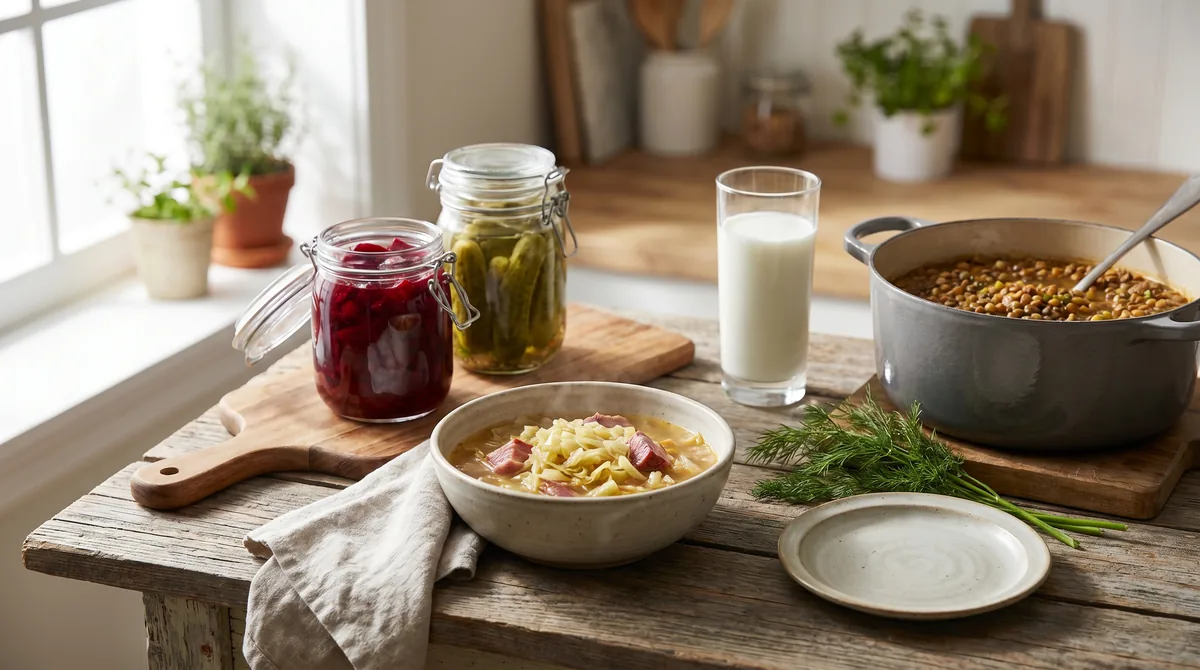
Low-GI Eastern European Foods: A Practical Guide for Blood Sugar Control
Eastern European cuisine has a reputation for being heavy and starchy. Pierogi, mămăligă, white bread, dumplings, sweetened compotes — all of these come up in conversations about traditional cooking from Poland, Romania, Bulgaria, Hungary, the Balkans, and the Czech and Slovak Republics. The stereotype is not entirely wrong. Many regional staples are high in fast carbohydrates and can spike blood sugar.
But the same cuisines also include some of the most blood-sugar-friendly foods in Europe. Fermented vegetables, lentil and bean stews, cabbage dishes, kefir and farmer’s cheese, beets, cucumbers, sour soups, smoked fish — these are everyday foods in the region, and most of them have a low glycemic index (GI) and a low glycemic load (GL).
This guide covers the most common Eastern European ingredients and dishes, ranked by glycemic impact. It explains which foods are safe to eat freely, which need pairing or portion control, and which are better limited if you have insulin resistance, prediabetes, or PCOS. All GI and GL values are based on published research and standard portion sizes.
What “low-glycemic” means in practice
Glycemic index (GI) measures how fast a carbohydrate raises blood sugar compared to pure glucose. Glycemic load (GL) adjusts that number for the typical portion size. A food can have a high GI but a low GL if you eat only a small amount.
For day-to-day blood sugar management, GL is the more useful number:
- GL 0–10 per serving — low impact. Safe to eat freely.
- GL 11–19 per serving — moderate impact. Pair with protein, fat, or fiber.
- GL 20+ per serving — high impact. Limit, or use a small portion within a balanced meal.
A bowl of cabbage soup with smoked pork (GL ~4) affects blood sugar very differently from a plate of pierogi with potato filling and sweetened sour cream (GL ~28). Both are traditional. Both belong in the cuisine. Only one fits a low-GI day without adjustment.
Naturally low-glycemic Eastern European foods
Cabbage and sauerkraut
GI: under 15. GL per 1 cup serving: 1–2.
Cabbage is the backbone of Eastern European cooking. Sour cabbage soup (kapuśniak in Polish, ciorbă de varză in Romanian, kapustnica in Slovak), stuffed cabbage rolls (sarma, gołąbki, sarmale), simple braised cabbage with caraway — all of these are low-glycemic by default. The carbohydrate content per serving is small, and the fiber slows what little there is.
Sauerkraut adds a second benefit. The fermentation process converts most of the sugar in fresh cabbage into lactic acid. The remaining product is almost zero net carbohydrate per serving, and the live cultures support gut health, which a growing body of research links to better insulin sensitivity. A side of sauerkraut next to a moderate-carb meal can blunt the post-meal glucose spike.
Practical use: include a side of sauerkraut or fresh cabbage salad with most main meals. Aim for at least one cabbage-based dish per week.
Beets
GI: 64 raw or boiled. GL per typical 1/2 cup serving: about 5.
Beets often get flagged as “high GI.” That number applies to a large portion eaten alone. The realistic glycemic load of a small side of beets — boiled, roasted, or in beet salad with horseradish or walnuts — stays in the low range. Beets also deliver dietary nitrates, which support healthy blood pressure, and betalain pigments, which have antioxidant activity.
Practical use: small side portions are fine. Pair with protein (smoked mackerel, hard cheese, eggs) and a fat source (walnut oil, sour cream). Avoid sweetened beet preparations like beet kvass with added sugar.
Cucumbers and ogórki kiszone (fermented cucumbers)
GI: under 15. GL per serving: under 2.
Fresh cucumber and traditional Polish-style fermented cucumbers are essentially zero-glycemic. They add volume, crunch, and probiotics. The brine itself is sometimes used as a hangover or rehydration drink in Poland and Hungary, and it carries the same probiotic benefit as the cucumbers.
Practical use: keep fermented cucumbers in the fridge as a default side or snack. The salt content can be high, so portion size matters for blood pressure but not for glucose.
Lentils and beans
GI: 21–32 depending on type. GL per typical 1 cup cooked serving: 5–9.
Brown lentils, red lentils, white beans, kidney beans, and broad beans (bób, bob) appear across the region. Polish bigos sometimes uses beans alongside cabbage and meat. Romanian fasole bătută is a mashed white bean spread with caramelized onion. Hungarian bableves is a thick bean soup. Bulgarian bob chorba is a simple bean stew.
All of these are low-glycemic and high in fiber and plant protein. A standard serving delivers 12–18 grams of fiber and 12–18 grams of protein, which keeps glucose stable for 3–4 hours after the meal.
Practical use: aim for two to three lentil or bean meals per week. They are inexpensive, store well, and reheat without quality loss.
Kefir, twaróg, and farmer’s cheese
GI: 11–28. GL per serving: 1–4.
Fermented dairy is widespread across the region. Polish kefir, Hungarian túró, Czech tvaroh, Russian-style farmer’s cheese — these are all low-glycemic protein sources. A typical serving of kefir delivers about 10 grams of protein and live bacterial cultures. Farmer’s cheese delivers 14 grams of protein per 100 grams with under 4 grams of carbohydrate.
A note on dairy and insulin: dairy proteins, especially whey, are mildly insulinogenic, meaning they trigger insulin release even though glucose stays low. For most people with insulin resistance, this is not a problem when consumed in normal amounts. If you track post-meal glucose and notice no spike, dairy is working for you.
Practical use: kefir as a breakfast base or evening snack. Twaróg or tvaroh on rye bread or with vegetables. Skip flavored, sweetened versions, which often contain 15+ grams of added sugar per serving.
Smoked fish
GI: 0. GL per serving: 0.
Smoked mackerel, smoked herring, and smoked trout are common in Polish, Czech, Hungarian, and Baltic-adjacent cuisines. Zero carbohydrates, high protein, and rich in long-chain omega-3 fatty acids, which independently support insulin sensitivity.
Practical use: a 100-gram portion of smoked mackerel as a protein anchor for breakfast, lunch, or a flexible dinner. Keep added oils moderate — the fish is naturally fatty enough.
Mushrooms
GI: under 15. GL per serving: under 2.
Mushroom soups (zupa grzybowa, polévka z hub), mushroom-stuffed cabbage, and mushroom-pierogi fillings appear across the region. Mushrooms themselves are essentially zero-glycemic and add umami depth, which means meals stay satisfying with less starchy filler.
Practical use: use mushrooms to bulk out meat dishes, soups, and grain bowls. The carb savings come from displacing starch, not from anything inherent to the mushroom.
Sour soups (borscht, ciorbă, shchi)
GI: low. GL per serving: 3–8 depending on starch additions.
The borscht family — Polish barszcz, Ukrainian borshch, Romanian ciorbă, Bulgarian tarator (cold cucumber yogurt soup), Russian shchi — are typically built on broth, beets or cabbage, vinegar or fermented liquid, and small amounts of root vegetables. The glycemic load stays low as long as starchy additions like potato or pasta are kept to a small side rather than piled into the bowl.
Practical use: order or prepare borscht-family soups as starters. Add a protein source (smoked meat, beans, hard-boiled egg) to make it a full meal.
Moderate-GI foods to portion or pair
Buckwheat (kasha gryczana)
GI: 45–54. GL per typical 1 cup cooked serving: 13.
Buckwheat is the most blood-sugar-friendly of the regional grains. It outperforms white rice, white bread, and most pasta on glycemic impact. The protein content is also higher than most grains, around 6 grams per cooked cup, and includes a complete amino acid profile. Polish kasha gryczana, Russian grechka, and Czech pohanka are all the same ingredient.
Practical use: a 1/2 cup cooked serving as a side, paired with protein and fat. A full bowl as a main can push GL into the 20+ range — manage portions.
Sourdough rye bread
GI: 53–58. GL per slice: 8–11.
True sourdough rye, fermented with wild yeast and lactic acid bacteria over many hours, has a meaningfully lower glycemic impact than commercial rye. The fermentation breaks down some of the starch and adds organic acids that slow glucose absorption. A single slice of dense, dark sourdough rye with butter and a slice of cheese keeps blood sugar stable for most people.
Be aware that “rye bread” sold in supermarkets across Eastern Europe is often a soft, mostly-wheat loaf with a small percentage of rye flour and added molasses for color. That product behaves more like white bread (GI 70+).
Practical use: choose dense, sour-smelling, dark sourdough rye. One slice with high-protein toppings (twaróg, smoked fish, hard cheese) is a low-GI meal. Two slices with sweet jam is not.
Potatoes
GI: 78–96 depending on variety and preparation. GL per 1 medium potato: 11–17.
Potatoes are the most glucose-spiking traditional food in the region. Mashed potatoes, fries, gnocchi-style ziemniaczane kluski, and potato pancakes (placki ziemniaczane, latkes) all hit blood sugar fast. Boiled and cooled potatoes (potato salad) are slightly better because some of the starch retrogrades into a less digestible form, lowering effective GL by 20–30%.
Practical use: portion control is the key lever. A small side of cooled potato salad with vinegar dressing fits a low-GI day. A plate of fresh mashed potatoes does not. If potatoes are unavoidable, pair them with vinegar-based sides (sauerkraut, fermented cucumbers) and a high-protein main.
Polenta and mămăligă
GI: 68. GL per typical serving: 18–22.
Romanian mămăligă, Italian polenta, and Bulgarian kachamak are the same ingredient — coarsely ground cornmeal cooked into a porridge. The glycemic impact is similar to mashed potatoes. The traditional pairing with cheese (brânză, sirene, telemea) and sour cream slightly slows the glucose response, but the underlying starch load remains high.
Practical use: small portion, paired with high-fat cheese and a vegetable side. Treat as an occasional comfort food rather than a daily staple.
High-GI traditional foods to limit
Pierogi, knedle, and dumplings with sweet or starchy fillings
GL per typical serving: 25–35.
Pierogi with potato and farmer’s cheese (ruskie), knedle with sweet plum filling, čevapi-adjacent bread accompaniments — these combine a wheat dough wrapper with a starchy or sugary filling, which compounds the glycemic load. A standard serving of six to eight pierogi can deliver as much glucose impact as drinking a sweetened soft drink.
Practical use: the lowest-impact versions use a meat or sauerkraut filling, a thinner dough, and are eaten as a small portion (3–4 pieces) alongside a green salad and a protein side. Frequent indulgence as a main meal works against blood sugar goals.
White bread, sweet pastries, and kompot
White wheat bread, sweet yeast pastries (drożdżówki, kolaches, baklava, kifli with sweet filling), and sweetened fruit compotes (kompot z owoców) are high-GI by construction. There is no glycemic version of a yeast bun with chocolate filling that fits a low-GI plate.
Practical use: treat as occasional. When eaten, pair with a high-protein, high-fat meal earlier in the same window to flatten the curve. Replace sweetened kompot with unsweetened tea or sparkling water with lemon.
Sweetened condensed dairy and fruit preserves
Sweetened condensed milk (kajmak in some traditions), fruit jams cooked with sugar, and traditional fruit-and-sugar preserves all carry high added sugar. Even small spoonfuls add 8–15 grams of fast carbohydrate.
Practical use: use unsweetened versions or all-fruit preserves with no added sugar. A spoonful of berry preserve in plain kefir is a different product from a spoonful of sugar-cooked plum jam on white bread.
Sample low-GI day from Eastern European staples
Breakfast. Plain kefir (1 cup) with a small portion of cooked buckwheat (1/3 cup), a handful of walnuts, and fresh berries. GL: about 9.
Lunch. Sour cabbage soup with smoked meat or beans, one slice of dense sourdough rye with butter, side of fermented cucumbers. GL: about 11.
Snack. A wedge of farmer’s cheese on a few rye crackers, with sliced cucumber. GL: about 5.
Dinner. Stuffed cabbage rolls (sarma) with a small side of beet salad with walnut oil. Skip the white bread. GL: about 9.
Total daily GL: about 34. This is well within the range associated with stable blood sugar in published research on low-GI diets, while keeping the meals recognizably traditional.
Practical swaps
A few small substitutions move most traditional Eastern European meals into low-GI territory:
- White wheat bread → dense sourdough rye, one slice not two.
- Mashed potatoes → cooled potato salad with vinegar, half the portion.
- Pierogi as a main → pierogi with sauerkraut filling as a small side, paired with a salad and a protein.
- Sweetened kompot → unsweetened herbal tea or sparkling water with lemon.
- Commercial flavored yogurt → plain kefir or twaróg with fresh fruit.
- Polenta as a main → small polenta side with cheese, alongside a vegetable-heavy main.
How to use this guide
Eastern European cuisine has more low-GI options than its reputation suggests. The challenge is that the most visible foods — bread, pierogi, mămăligă, dumplings, sweet pastries — are also the most glucose-spiking. Building a low-GI diet from this region means leaning on the cabbage dishes, the bean and lentil soups, the fermented vegetables and dairy, the smoked fish, and using buckwheat and dense sourdough rye as moderate-carb anchors.
If you have insulin resistance, prediabetes, or PCOS, the practical question is not whether to eat traditional food. It is which traditional foods, in what portions, and paired with what. The framework of GI and GL gives you a reliable answer for any specific meal.
For day-to-day decisions, the easiest approach is to track glycemic load per meal and per day. Logi does this automatically when you photograph or describe a meal — it analyzes the dish, reports GL per serving, and suggests pairings or swaps that keep the glucose curve stable. Available on iOS and Android.
Take control of your blood sugar
Scan your meals, track glycemic load, and see your patterns — all in one app.
เริ่มทดลองฟรี →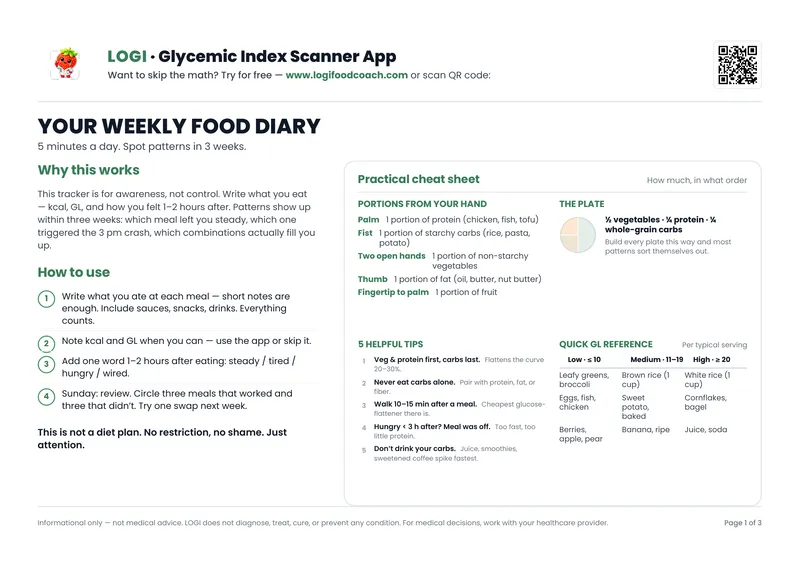
PDF ฟรี — 3 หน้า
สมุดบันทึกอาหารประจำสัปดาห์
บันทึกมื้ออาหาร ค่า GL และอารมณ์ พบรูปแบบใน 3 สัปดาห์
ไม่มีสแปม ยกเลิกได้ทุกเมื่อ