Low-Glycemic Japanese Foods: A Complete Guide for Blood Sugar Stability
Low-Glycemic Japanese Foods: A Complete Guide for Blood Sugar Stability
The traditional Japanese diet is one of the most studied in the world. Researchers have documented its links to longevity, low rates of type 2 diabetes, and stable blood sugar in long-living regions like Okinawa. But not every food on a Japanese table is low-glycemic. Some are excellent for blood sugar control. Others spike glucose quickly, especially when eaten alone.
This guide covers the most common Japanese ingredients and dishes, ranked by glycemic index (GI) and glycemic load (GL). It explains which are safe to eat freely, which need pairing, and which are better limited if you have insulin resistance or prediabetes. All values are based on published research and standard portion sizes.
What “low-glycemic” means in practice
Glycemic index (GI) measures how fast a carbohydrate raises blood sugar compared to pure glucose. Glycemic load (GL) adjusts that number for the typical portion size. A food can have a high GI but a low GL if you eat only a small amount.
For day-to-day blood sugar management, GL is the more useful number:
- GL 0–10 per serving — low impact. Safe to eat freely.
- GL 11–19 per serving — moderate impact. Pair with protein, fat, or fiber.
- GL 20+ per serving — high impact. Limit, or use as a small portion within a balanced meal.
The same logic applies to Japanese foods. A small bowl of white rice (GL ~25) hits blood sugar harder than a piece of grilled mackerel and a pile of greens (GL ~2 combined).
Naturally low-glycemic Japanese foods
Edamame (young soybeans)
GI: 18. GL per 1 cup serving: about 4.
Edamame is one of the lowest-glycemic legumes in any cuisine. A serving delivers about 17 grams of protein and 8 grams of fiber. The fiber slows digestion further, which keeps post-meal glucose stable. Edamame works as a snack, a side, or as the protein base of a salad. Steamed and salted is the simplest way to prepare it.
Tofu (silken, firm, and aburaage)
GI: very low (≤15). GL per 100g serving: ~1.
Tofu is essentially carbohydrate-free. Silken tofu has about 5 grams of protein per 100g. Firm tofu has 8 grams. Aburaage (deep-fried tofu pouches) adds fat and a meaty texture. None of these spike blood sugar. Tofu is one of the most flexible low-GI proteins in the Japanese repertoire.
Miso paste
GI: low. GL per tablespoon: ~1.
Miso is fermented soybean paste. It is rich in umami and probiotic bacteria. The carbohydrate content per typical serving (one tablespoon in soup) is small enough that GL is negligible. Some studies suggest fermented foods like miso may improve insulin sensitivity, though the evidence is still developing.
A practical note: instant miso soup packets often contain added sugar or starch thickeners. Read the label. Traditional homemade miso soup with dashi and tofu is the cleanest choice.
Fish (salmon, mackerel, sardines, tuna)
GI: 0. GL: 0.
Fish contains no carbohydrates. Fatty fish like salmon, mackerel, and sardines are also rich in omega-3 fatty acids, which research links to improved insulin sensitivity. A standard serving of grilled or simmered fish (about 100g) provides 20–25 grams of protein with no impact on blood sugar.
In Japanese cuisine, fish is often the centerpiece of a meal. This works well for blood sugar because it slows the digestion of any rice or noodles eaten alongside it.
Seaweed (nori, wakame, kombu, hijiki)
GI: very low. GL per typical serving: ~1–2.
Seaweed is high in soluble fiber, iodine, and minerals. The carbohydrate that is present is largely indigestible. A sheet of nori, a tablespoon of wakame in soup, or a small portion of hijiki salad has minimal blood sugar impact.
Note: seasoned hijiki dishes sometimes include sugar in the simmering liquid. A small amount is usually fine, but check ingredient lists for prepared versions.
Daikon radish, cucumber, and Japanese pickles (tsukemono)
GI: low. GL per serving: ~1–3.
Daikon, cucumber, and most pickled vegetables have very low carbohydrate content. They add volume and flavor to a meal without raising glucose. Salt-fermented tsukemono (rice bran pickles, salt cucumbers) are the lowest in added sugar. Sweet pickles like umeboshi paste or sweetened ginger should be eaten in small amounts.
Konjac (shirataki noodles, konnyaku)
GI: very low. GL per serving: 0–1.
Konjac is made from the root of the konnyaku plant. It is almost pure soluble fiber with negligible digestible carbohydrate. Shirataki noodles can replace ramen or udon in a stir-fry or soup with no glucose response. The texture is different from wheat noodles, but the calorie and carbohydrate savings are large.
Matcha and green tea
GI: 0. GL: 0.
Both matcha and brewed green tea contain no carbohydrates when unsweetened. Several studies suggest the catechins in green tea may improve insulin sensitivity over time. Matcha latte made with unsweetened almond milk or water is a low-GL alternative to coffee with sugar.
The caveat: many cafe matcha drinks contain added sugar or sweetened condensed milk. A real Japanese-style matcha bowl (whisked powder in hot water) has zero added sugar.
Natto
GI: low. GL per serving: ~2.
Natto is fermented whole soybeans. It has a strong flavor and texture that takes some getting used to, but nutritionally it is excellent for blood sugar. A serving (about 50g) provides 8 grams of protein, 3 grams of fiber, and the enzyme nattokinase. Often eaten with brown rice for breakfast in Japan.
Moderate-glycemic foods to pair carefully
Soba noodles (buckwheat)
GI: 46. GL per serving (1 cup cooked): ~17.
Pure buckwheat soba is one of the lower-GI noodles in Asian cuisine. The problem is that many commercial soba noodles are mostly wheat with only a small percentage of buckwheat. True 100% buckwheat soba (juwari) is closer to GI 35.
Pairing soba with protein (grilled fish, tofu, shrimp) and fiber (seaweed, vegetables, edamame) keeps the meal in the moderate range. A cold soba salad with edamame, cucumber, and sesame dressing can have a total GL under 15.
Brown rice (genmai)
GI: 50–55. GL per 1 cup cooked: ~16.
Brown rice has a lower GI than white rice, but the difference is smaller than most people assume. The bran layer slows digestion, but cooked rice is still a concentrated carbohydrate source.
Three strategies reduce the impact:
- Eat half the typical portion (half cup cooked = GL ~8).
- Pair with fish, tofu, or beans for slower digestion.
- Cool the cooked rice and reheat. Cooling forms resistant starch, which lowers GI by about 10–15%.
Sweet potato (satsumaimo)
GI: 44–55. GL per medium sweet potato: ~12.
Japanese sweet potato (satsumaimo) has a lower GI than white potato. Roasted or steamed, it is a satisfying side. The skin contains additional fiber that helps moderate the response. A half-portion paired with protein keeps the meal balanced.
Kabocha squash
GI: 55. GL per 1 cup cubed: ~7.
Kabocha is sweeter and starchier than zucchini, but the typical serving is small. Simmered kabocha (kabocha no nimono) often contains added sugar in the dashi-soy sauce mixture. A homemade version with just dashi and a light tamari can keep the GL low.
Mirin and cooking sake
Mirin is a sweet rice wine used in many Japanese sauces. It contains about 8–9 grams of sugar per tablespoon. A small amount used to deglaze a pan or thin a sauce contributes only a few grams of carbohydrate per serving. Frequent use across multiple dishes adds up.
Higher-glycemic foods that need attention
White rice (hakumai)
GI: 73. GL per 1 cup cooked: ~25.
White rice is the staple of most Japanese meals and the largest single contributor to blood sugar response. The good news is that traditional Japanese meal structure helps. White rice is almost always eaten with fish or another protein, miso soup, vegetables, and pickles. This combination slows digestion compared to eating rice alone.
Practical adjustments for blood sugar control:
- Halve the rice portion.
- Mix white rice with brown rice or barley (mugi) for lower GI.
- Add vinegar to cool sushi rice, which lowers GI by 15–20%.
- Always pair rice with protein and non-starchy vegetables.
Sushi rice (sumeshi)
GI: 67–80. GL per 6 pieces of nigiri: ~30.
Sushi rice is short-grain white rice mixed with vinegar, sugar, and salt. The added sugar and starchy variety raise the response. The vinegar provides some moderation, but a typical sushi meal can deliver 40–60 grams of carbohydrate.
Lower-impact choices at a sushi restaurant:
- Sashimi (fish without rice) for the lowest GL.
- Hand rolls (temaki) with extra fish and a single sheet of nori, smaller rice portion.
- Avoid sweetened rolls (eel sauce, spicy mayo with sugar, tempura rolls).
- Order edamame and miso soup first to slow rice absorption.
Mochi and rice cakes
GI: 80–90. GL per piece: ~15.
Mochi is pounded glutinous rice. The dense, sticky texture means the starch is highly available for fast digestion. Sweet mochi desserts like daifuku add sugar on top of an already high GI. These are best limited to occasional small portions.
Ramen noodles
GI: 50–60 (wheat). GL per bowl: ~20–30.
Standard ramen noodles are alkaline-treated wheat, similar to udon. The GL per bowl is high because portions are large. Adding a soft-boiled egg, extra vegetables, and a fattier broth (tonkotsu rather than thin shoyu) slows the response. Half-portion ramen with double protein is a workable adjustment.
Tempura
GI: variable. GL per typical serving: ~15–25.
Tempura batter is wheat flour. The deep-frying adds fat, which slows digestion, but the flour coating still contributes carbohydrate. Vegetable tempura on a bed of rice can deliver a high total GL. Tempura on its own as a small portion alongside salad and protein is more manageable.
A practical low-glycemic Japanese plate
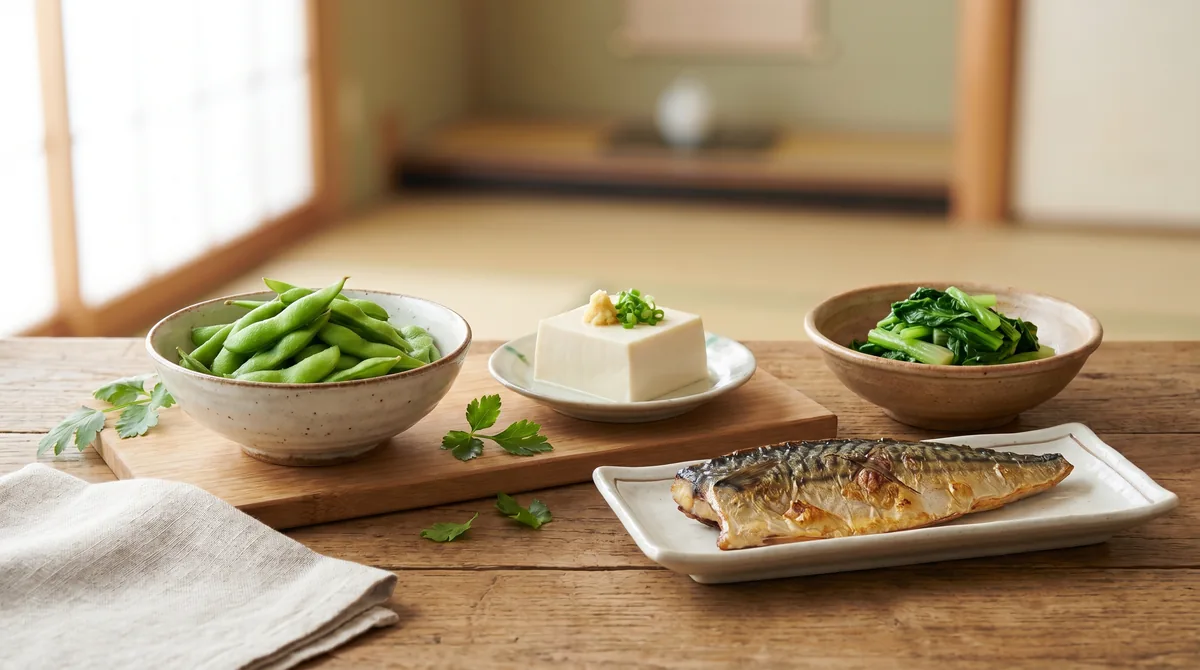
A balanced low-GL Japanese meal might look like:
- 100g grilled mackerel (GL: 0, protein: 22g)
- 1 cup steamed edamame (GL: 4, protein: 17g, fiber: 8g)
- 1 small bowl miso soup with tofu and wakame (GL: 2)
- 1 small portion (half cup) brown rice (GL: 8)
- Cucumber and daikon pickles (GL: 2)
- Green tea (GL: 0)
Total GL: about 16. Total protein: ~45g. This meal would keep blood sugar stable for most people with insulin resistance or prediabetes. The fish provides omega-3 and slow-digesting protein. The edamame adds fiber. The miso and pickles add umami and probiotics. The small rice portion provides energy without dominating the glucose response.
Foods to substitute when blood sugar is a priority
| Standard | Lower-GL substitute |
|---|---|
| White rice (1 cup) | Half cup brown rice + half cup cauliflower rice |
| Soba noodles (wheat blend) | 100% buckwheat soba, or shirataki |
| Sushi (8 pieces) | Sashimi (8 pieces) + edamame + miso soup |
| Mochi dessert | Mochi made with allulose, or a small piece of dark chocolate |
| Sweetened mirin sauce | Tamari + a few drops of rice vinegar |
| Ramen (full bowl) | Half-portion ramen + extra egg + extra vegetables |
| Tempura on rice | Grilled fish + steamed vegetables + small rice portion |
Tracking your response with Logi
Individual blood sugar responses to the same food vary. Two people can eat identical portions of brown rice and see different glucose curves. The most reliable way to know how a Japanese meal affects you personally is to log it and observe.
Logi lets you photograph or describe a meal, see its estimated glycemic load and macronutrient breakdown, and predict the three-hour glucose response. Over time, the app builds a picture of which foods and combinations work for your body. You can save your favorite low-GL Japanese meals as templates and reuse them in your meal plans.
For people in Japan or eating Japanese food regularly, the database includes entries for kabocha, daikon, satsumaimo, hijiki, natto, soba, and other regional ingredients in their original names and English equivalents.
Summary
The traditional Japanese diet is structurally well-suited to blood sugar stability when rice portions are moderate. The combination of fish, soy, vegetables, seaweed, and fermented foods provides protein and fiber that slow carbohydrate absorption. Most of the foods in a washoku meal — miso, tofu, fish, edamame, seaweed, vegetables — are naturally low-glycemic.
The main considerations are portion size of white rice, sushi rice, and mochi, and the hidden sugar in commercial sauces and prepared dishes. With a half-portion of rice, more fish and vegetables, and fermented sides, a Japanese meal can land at GL 10–18 — well within the range that keeps post-meal glucose stable.
If you have insulin resistance or prediabetes, a Japanese-style approach to meals offers a sustainable framework: protein at every meal, generous vegetables, modest carbohydrate, and umami flavors that reduce the need for added sugar. Logging a few weeks of meals will show you exactly which combinations work for your body.
About Logi: Logi is an AI nutrition app for blood sugar control. It tracks glycemic load, predicts post-meal glucose response, and helps users build sustainable low-glycemic eating habits. Available on iOS and Android in 35 languages.
Take control of your blood sugar
Scan your meals, track glycemic load, and see your patterns — all in one app.
Começar Teste Gratuito →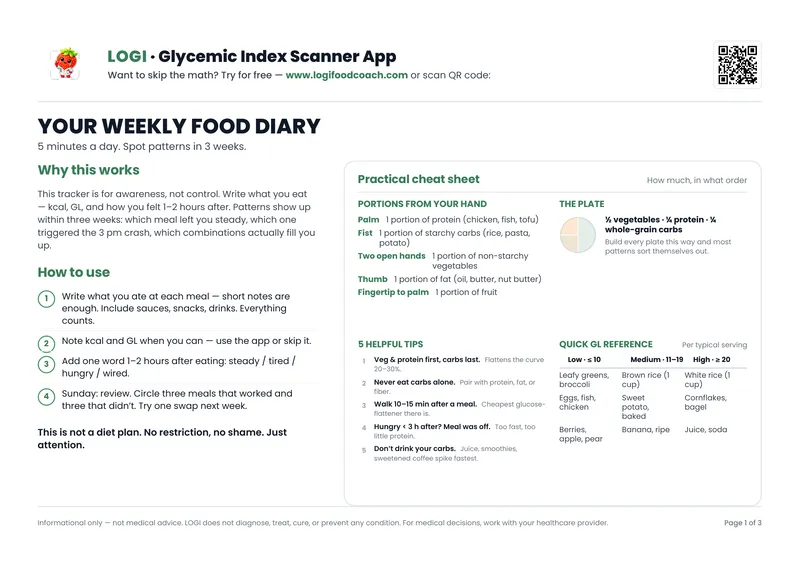
PDF grátis — 3 páginas
O teu diário alimentar semanal
Regista refeições, carga glicémica e humor. Descobre padrões em 3 semanas.
Sem spam. Cancela quando quiseres.