Sałatka z trzech rodzajów fasoli z ziołowym vinaigrette o niskim indeksie glikemicznym
Bogata w błonnik mieszanka fasoli w pikantnym vinaigrette, która stabilizuje poziom cukru we krwi i dostarcza wspaniałego smaku na letnie spotkania.
Ta odświeżona sałatka z trzech rodzajów fasoli przekształca klasyczną potrawę na przyjęcia w potęgę przyjazną poziomowi cukru we krwi. Łącząc bogatą w białko fasolę czerwoną, kremową fasolę cannellini i chrupiącą fasolkę szparagową, danie to dostarcza trwałej energii bez skoku glukozy. Sekret tkwi w naszym zmodyfikowanym sosie — drastycznie zmniejszyliśmy ilość dodanego cukru, jednocześnie wzmacniając smak octem jabłkowym, musztardą dijon i świeżymi ziołami.
Fasola jest wyjątkowa dla kontroli glikemii, oferując zarówno błonnik rozpuszczalny, który spowalnia wchłanianie glukozy, jak i skrobię oporną, która karmi korzystne bakterie jelitowe. Połączenie trzech rodzajów fasoli dostarcza około 8-10 gramów błonnika na porcję, pomagając kontrolować odpowiedź cukru we krwi. Świeża pietruszka dodaje nie tylko koloru, ale i przeciwutleniaczy, podczas gdy czerwona cebula dostarcza kwercetynę, związek badany pod kątem potencjalnego działania zwiększającego wrażliwość na insulinę.
Dla optymalnego zarządzania poziomem cukru we krwi, jedz tę sałatkę jako część zbilansowanego posiłku, a nie samodzielnie. Zdrowe tłuszcze z oliwy z oliwek spowalniają trawienie, podczas gdy białko i błonnik działają synergicznie, zapobiegając szybkiemu wzrostowi glukozy. Ta sałatka faktycznie poprawia się po marynowaniu, co czyni ją idealną do przygotowania z wyprzedzeniem — smaki pogłębiają się, a korzyści glikemiczne pozostają nienaruszone. Podawaj schłodzoną obok grillowanych białek jako kompletny, przyjazny dla diabetyków posiłek, który dowodzi, że zdrowe jedzenie nigdy nie oznacza rezygnacji ze smaku. Każda porcja o pojemności 1 szklanki zapewnia ładunek glikemiczny wynoszący zaledwie 6,5, gwarantując stabilny poziom cukru we krwi przez całe popołudnie.
Wpływ na cukier we krwi
Ten posiłek będzie miał niski do umiarkowanego wpływ na poziom cukru we krwi ze względu na niski ładunek glikemiczny wynoszący 6,5 i umiarkowany IG wynoszący 50. Wysoka zawartość błonnika z fasoli spowolni wchłanianie glukozy, zapewniając stabilną energię przez 3-4 godziny bez znaczących skoków.
Porady o cukrze
- ✓ Zjedz tę sałatkę jako przystawkę przed jakimikolwiek pokarmami bogatszymi w węglowodany, aby wykorzystać błonnik i białko dla lepszej ogólnej kontroli glukozy w posiłku
- ✓ Dodaj chude źródło białka, takie jak grillowany kurczak lub ryba, aby dodatkowo spowolnić trawienie i zwiększyć uczucie sytości
- ✓ Wybierz się na 10-15 minutowy spacer po jedzeniu, aby pomóc mięśniom wchłonąć glukozę i złagodzić jakikolwiek niewielki wzrost poziomu cukru we krwi
🥗 Składniki
- 15 oz fasola kidney, odsączona i przepłukana
- 1.5 cup mrożona fasolka szparagowa, rozmrożona
- 0.25 cup czerwona cebula, drobno pokrojona w kostkę
- 0.25 cup świeża natka pietruszki, posiekana
- 0.25 cup ocet jabłkowy
- 0.25 cup oliwa z oliwek extra virgin
- 1 tbsp słodzik granulowany lub cukier
- 1 tsp drobna sól morska
- 0.25 tsp świeżo zmielony czarny pieprz
- 1 tsp musztarda dijon
- 15 oz fasola kidney, odsączona i przepłukana
- 1.5 cup mrożona fasolka szparagowa, rozmrożona
- 0.25 cup czerwona cebula, drobno pokrojona w kostkę
- 0.25 cup świeża natka pietruszki, posiekana
- 0.25 cup ocet jabłkowy
- 0.25 cup oliwa z oliwek extra virgin
- 1 tbsp słodzik granulowany lub cukier
- 1 tsp drobna sól morska
- 0.25 tsp świeżo zmielony czarny pieprz
- 1 tsp musztarda dijon
👨🍳 Instrukcje
- 1
Otwórz obie puszki fasoli czerwonej i fasoli cannellini. Przełóż do drobnego sitka i dokładnie przepłucz pod zimną bieżącą wodą przez 30 sekund, aby usunąć nadmiar sodu i skrobi. Całkowicie odsącz i przełóż do dużej miski.
- 2
Jeśli używasz mrożonej fasolki szparagowej, umieść ją w durszlaku i spłucz zimną wodą, aż całkowicie się rozmrozi, lub zostaw w temperaturze pokojowej na 20 minut. Osusz ręcznikiem papierowym, aby usunąć nadmiar wilgoci, następnie dodaj do miski z pozostałą fasolą.
- 3
Obierz i pokrój czerwoną cebulę w cienkie plasterki, następnie zanurz plasterki w małej misce wypełnionej lodowatą wodą. Namocz przez 5 minut, aby złagodzić ostry smak i poprawić strawność. Dobrze odsącz, osusz i drobno posiekaj. Dodaj do mieszanki fasoli.
- 4
Opłucz świeżą pietruszkę pod zimną wodą i струś do sucha. Oderwij listki od łodyg i grubo posiekaj, aż otrzymasz około 1/4 szklanki. Dodaj posiekaną pietruszkę do miski z fasolą i cebulą.
- 5
W oddzielnej małej misce lub słoiku z pokrywką połącz ocet jabłkowy, oliwę z oliwek, słodzik (erytrytol, stewia, słodzik z owoców mniszka lub pomiń całkowicie dla najlepszej kontroli cukru we krwi), 1 łyżeczkę soli, 1/2 łyżeczki czarnego pieprzu i 1 łyżkę musztardy dijon. Ubijaj energicznie przez 30 sekund, aż sos będzie całkowicie wymieszany i lekko zgęstnieje, lub wstrząśnij w zamkniętym słoiku, aż się dobrze połączy.
- 6
Wlej przygotowany sos na mieszankę fasoli. Używając dużej łyżki lub szpatułki, delikatnie wymieszaj wszystko, aż wszystkie składniki będą równomiernie pokryte vinaigrette. Uważaj, aby nie rozgnieść fasoli.
- 7
Przykryj miskę szczelnie folią spożywczą lub przełóż do szczelnego pojemnika. Wstaw do lodówki na co najmniej 30 minut i maksymalnie 24 godziny, aby smaki się połączyły, a fasola wchłonęła sos. Dobrze wymieszaj przed podaniem, spróbuj i w razie potrzeby dopraw. Podawaj schłodzone jako dodatek lub lekki lunch w parze z chudym białkiem dla optymalnej równowagi poziomu cukru we krwi. Każda porcja to 1 szklanka.
📊 Wartości odżywcze na porcję
| Na porcję | Całe danie | |
|---|---|---|
| Kalorie | 227 | 1133 |
| Węglowodany | 24g | 122g |
| Cukry | 4g | 22g |
| Cukry dodane | 2g | 12g |
| Cukry naturalne | 2g | 10g |
| Białko | 8g | 41g |
| Tłuszcz | 11g | 57g |
| Tłuszcz nasycony | 2g | 8g |
| Tłuszcze nienasycone | 10g | 49g |
| Błonnik | 7g | 37g |
| Błonnik nierozpuszczalny | 0g | 1g |
| Sód | 483mg | 2414mg |
Przewidywana odpowiedź glukozowa
A gdybyś...
Model szacunkowy — indywidualne reakcje mogą się różnić. To nie porada medyczna.
🔄 Zamienniki o niższym IG
Zwykły cukier dodaje niepotrzebne proste węglowodany, które mogą podnieść poziom cukru we krwi. Chociaż 1 łyżka podzielona na 5 porcji to niewiele (mniej niż 1 łyżeczka na porcję), użycie słodzików o zerowym indeksie glikemicznym lub całkowite pominięcie słodzika sprawia, że ten przepis jest optymalnie przyjazny dla poziomu cukru we krwi. Erytrytol zapewnia najbliższą cukrowi konsystencję bez żadnego wpływu glikemicznego, podczas gdy stewia i słodzik z owoców mniszka oferują intensywną słodycz bez kalorii. Pikantny ocet i wytrawna musztarda w sosie zapewniają wystarczający smak, że wiele osób woli tę sałatkę całkowicie bez słodzika.
🔬 Nauka za tym przepisem
Fasola należy do najbardziej przyjaznych dla poziomu cukru we krwi produktów spożywczych, z indeksem glikemicznym zazwyczaj między 20-40. Jej wyjątkowa zawartość błonnika — zarówno rozpuszczalnego, jak i nierozpuszczalnego — tworzy żelową strukturę w przewodzie pokarmowym, która fizycznie spowalnia wchłanianie glukozy do krwiobiegu. To połączenie trzech rodzajów fasoli dostarcza około 8-10 gramów błonnika na porcję, co według badań może zmniejszyć skoki cukru we krwi po posiłku nawet o 30%. Dodatkowo fasola zawiera skrobię oporną, rodzaj węglowodanu, który opiera się trawieniu w jelicie cienkim i zamiast tego fermentuje w okrężnicy, wytwarzając krótkołańcuchowe kwasy tłuszczowe, które poprawiają wrażliwość na insulinę. Ocet jabłkowy w sosie dostarcza kwas octowy, który według wielu badań poprawia odpowiedź insulinową i zmniejsza wpływ glikemiczny posiłków o 20-30%, gdy jest spożywany z pokarmami zawierającymi węglowodany. Oliwa z oliwek dostarcza jednonienasyconych tłuszczów, które dodatkowo spowalniają opróżnianie żołądka, wydłużając czas, w którym składniki odżywcze są wchłaniane i zapobiegając szybkiemu wzrostowi glukozy. Używając erytrytolu, stewii lub słodzika z owoców mniszka zamiast cukru, ten przepis eliminuje niepotrzebne proste węglowodany, zachowując tradycyjny słodko-pikantny profil smakowy. Rezultatem jest danie o ładunku glikemicznym wynoszącym zaledwie 6,5 na porcję — sklasyfikowanym jako niski — co oznacza, że będzie miało minimalny wpływ na poziom cukru we krwi, jednocześnie dostarczając trwałej energii na 3-4 godziny.
Podobne przepisy
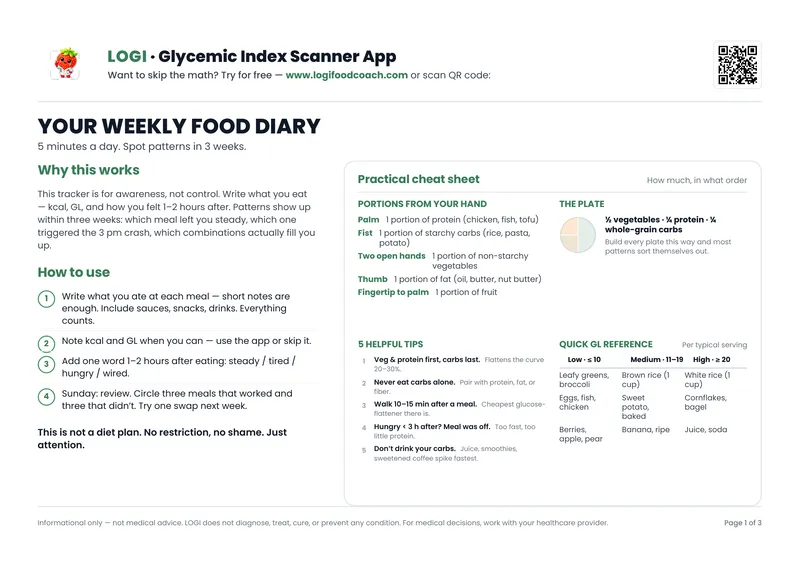
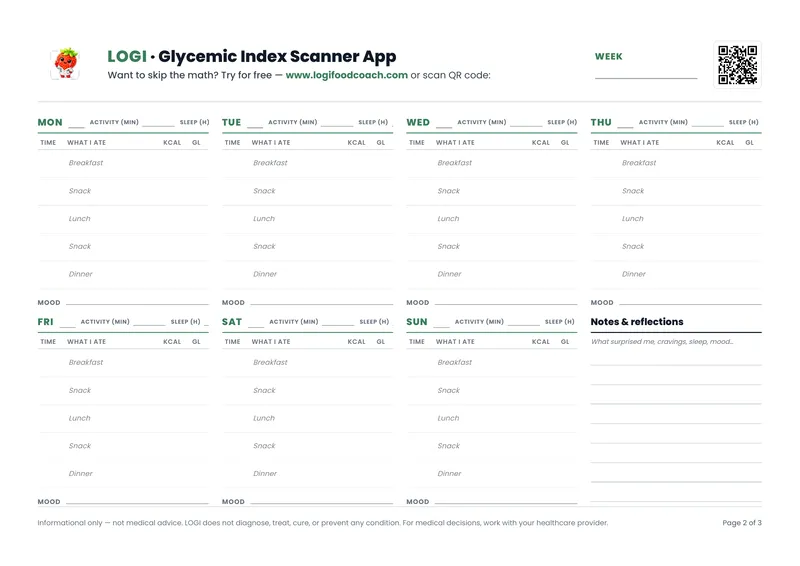
Darmowy PDF — 3 strony
Tygodniowy dziennik jedzenia
Notuj posiłki, ładunek glikemiczny i samopoczucie. Wzorce widać po 3 tygodniach.
Zero spamu. Wypisz się kiedy chcesz.