Pasta and Blood Sugar — Why Al Dente Matters More Than the Label
Pasta and Blood Sugar — Why Al Dente Matters More Than the Label
Pasta occupies a strange place in the blood sugar conversation. It is made from refined wheat flour, which should put it in the same category as white bread — a fast carb that spikes glucose. Yet in glycemic-index research, ordinary white spaghetti consistently tests lower than white bread, lower than most breakfast cereals, and lower than many foods sold as “healthy.”
People who track their glucose often discover this by accident. A bowl of spaghetti with olive oil and chicken produces a curve noticeably calmer than the sandwich they had for lunch. The flour is nearly identical. So what is going on?
The answer is structure — how the starch is physically packed, how long it was cooked, and what arrives on the plate with it. This piece walks through the pasta shapes and types people actually eat — white durum pasta, whole-wheat, legume pasta, fresh egg pasta, gnocchi, and Asian noodles — what each one does to blood sugar and why, and how to cook and serve pasta if you are watching your curve.
The mechanism — why pasta behaves better than its ingredients suggest
Three structural facts separate pasta from bread, even when both start as wheat flour.
The protein matrix. Good dried pasta is made from durum wheat semolina, a hard, high-protein wheat. During extrusion, the gluten proteins form a dense network that physically wraps around the starch granules. Digestive enzymes have to work through that protein wall before they can reach the starch. In bread, by contrast, the starch is aerated, gelatinized, and fully exposed. Same flour family, completely different accessibility.
Density. Pasta is compact. Bread is a foam. A food’s surface area determines how fast enzymes can attack it, and a dense extruded noodle presents far less surface than an airy slice of bread. This is also why thick shapes (rigatoni, penne) tend to digest slightly slower than thin ones (angel hair, vermicelli).
Cooking time. This is the lever most people have never heard of. Starch must gelatinize — absorb water and swell — before enzymes can break it down quickly. The longer pasta boils, the more the starch gelatinizes, and the faster it converts to glucose in your gut. Pasta cooked al dente, firm to the bite, produces a meaningfully gentler glucose response than the same pasta boiled soft. Overcooked pasta moves toward bread-like behavior.
Put together: white spaghetti cooked al dente generally lands in the low-to-medium glycemic range, while soft-boiled pasta drifts toward medium and beyond. The label on the box does not tell you this. The timer does.
White durum pasta — better than its reputation
Ordinary dried pasta — spaghetti, penne, fusilli made from durum semolina — is the baseline. Cooked al dente, its glycemic index is low to medium; the compact protein-starch matrix does most of the work.
Two caveats keep it from being a free pass.
First, portion. Pasta is carbohydrate-dense, and restaurant portions are routinely two to three times what glycemic testing assumes. The index may be moderate, but the glycemic load of a heaping plate is high. A fist-sized portion of cooked pasta as part of a mixed meal is a very different event from a mountain of it eaten alone.
Second, cooking. Al dente is not a chef’s affectation — it is the glycemic instruction. Follow the shorter end of the package time, and taste early.
Cheap pasta made from soft wheat flour rather than durum semolina behaves worse: less protein matrix, faster digestion. If the ingredient list says “durum wheat semolina” and the noodle holds its bite, you have the better version.
Whole-wheat pasta — a smaller upgrade than you expect
Whole-wheat pasta adds bran and germ, so it carries more fiber and slightly more protein. That helps — but less than the marketing implies. The flour is still finely milled, so the starch inside is just as accessible once the fiber is dealt with. Most testing puts whole-wheat pasta only modestly below regular pasta, and some brands test almost identically.
The honest summary: whole-wheat pasta is a reasonable default if you like the taste, and the extra fiber has benefits beyond glucose. But swapping white pasta for whole-wheat while keeping a double portion and boiling it soft achieves close to nothing. Cooking time and portion matter more than the color of the noodle.
Legume pasta — the biggest structural change on the shelf
Pasta made from chickpeas, red lentils, or edamame is a genuinely different food. Legume flours bring substantially more protein and fiber per serving, and legume starch itself digests more slowly than wheat starch. The result is a lower glycemic impact and — just as useful — real satiety: a plate of lentil pasta holds most people for hours in a way wheat pasta does not.
The trade-offs are texture and price. Legume pasta is less forgiving to cook (it goes from firm to mushy quickly) and the flavor is earthier. A practical pattern many people settle on: legume pasta for weeknight bowls drowned in sauce and vegetables, where texture matters less, and good durum pasta al dente for the dishes where pasta is the point.
If you have insulin resistance, prediabetes, or PCOS and pasta is a staple in your house, this is the single most effective swap in the category.
Fresh egg pasta — softer, faster
Fresh pasta — tagliatelle, fettuccine, the sheets in lasagna — is made from softer flour and eggs, cooks in two minutes, and lacks the dense extruded structure of dried durum pasta. It digests faster. The egg adds a little protein and fat, which helps, but the overall glucose response tends to run higher than dried pasta cooked al dente.
Fresh pasta usually appears in richer dishes — with ragù, cream, butter — and that context slows things down again. As an occasional dish eaten in an Italian portion (a first course, not a trough), it is fine. As a daily staple eaten in large portions, dried al dente durum pasta is the steadier choice.
Gnocchi — a potato in pasta clothing
Gnocchi looks like pasta and is served like pasta, but it is mostly cooked potato bound with flour. Cooked, mashed potato is one of the fastest-digesting starches there is, and gnocchi inherits that behavior: the glycemic response runs high, closer to mashed potatoes than to spaghetti.
That does not make gnocchi forbidden. It makes it a different decision. Treat gnocchi the way you would treat a potato side dish: modest portion, plenty of protein and vegetables alongside, ideally not on a day when the rest of your meals were also starch-heavy.
Asian noodles — a category of their own
“Noodles” covers several different starches, and they do not behave alike.
Rice noodles (pho, pad thai, vermicelli) are made from rice flour with no gluten matrix to slow digestion. They generally run higher than wheat pasta — often into the high-glycemic range, especially the thin varieties. The saving grace is context: a bowl of pho arrives with protein, herbs, and broth, which softens the curve considerably compared to the noodles alone.
Wheat noodles (ramen, udon) sit closer to soft-cooked pasta — medium and up, since they are typically boiled soft. Instant versions add fat and salt without slowing the starch much; we covered those in the instant noodles piece.
Soba made with a high buckwheat share is the standout: buckwheat brings more protein and slower-digesting starch, putting genuine soba toward the gentler end of the noodle world. Check the label — many commercial soba noodles are mostly wheat with a token buckwheat percentage.
Shirataki (konjac) noodles are nearly pure soluble fiber and water, with almost no digestible carbohydrate. Glycemically they are close to invisible. Texture is divisive, but as a noodle base for people who want volume without glucose, nothing else comes close.
The leftover trick — cold pasta is slower pasta
When cooked starch cools, part of it retrogrades into resistant starch — a form that digestive enzymes largely cannot break down, so it never becomes blood glucose. Pasta salad eaten cold, or yesterday’s pasta reheated, produces a measurably gentler response than the same pasta fresh from the pot. Reheating does not undo the effect; some of the resistant starch survives.
Practical translation: cook once, eat twice. The second serving is the kinder one.
How to build a pasta meal that keeps the curve flat
The pattern that works, whatever the noodle:
- Cook al dente. The cheapest glycemic intervention in the category.
- Keep the pasta to a fist-sized portion and make up the plate volume with vegetables and protein.
- Add fat and acid. Olive oil slows gastric emptying; tomato sauce, lemon, or vinegar-dressed salad alongside slows starch digestion further.
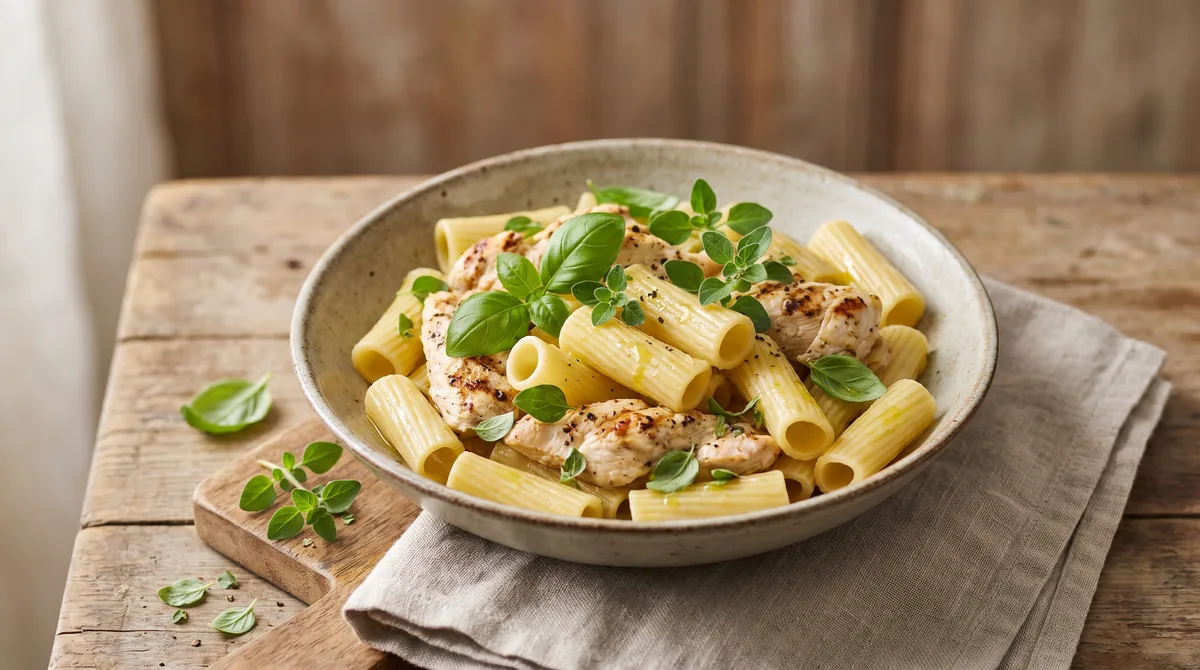
- Protein is non-negotiable. Chicken, fish, beans, or cheese turn pasta from a glucose event into a meal.
- Eat the salad first, pasta after. Meal-sequencing — vegetables and protein before starch — reliably blunts the post-meal peak.
- Prefer thick shapes over thin, dried durum over fresh, legume pasta when it fits the dish.
A bowl built this way — al dente penne, a generous ladle of vegetable-heavy sauce, grilled chicken or white beans, olive oil, a side salad eaten first — is one of the most blood-sugar-friendly ways to eat wheat that exists. The same noodles, boiled soft, doubled in portion, and eaten plain, are a different food entirely.
The bigger picture
Pasta is a good example of why food rules fail and structure wins. “Refined carbs are bad” predicts that pasta should be among the worst offenders; the glucose data says otherwise, because density, protein matrix, and cooking time matter more than the refinement label. Meanwhile “whole grain is good” predicts whole-wheat pasta should be a major upgrade; the data says the upgrade is modest.
What actually moves your curve: the firmness of the noodle, the size of the portion, and what shares the plate. Get those three right and pasta is one of the easiest starches to keep in a low-glycemic life — which, given how much joy a proper plate of pasta carries, is very good news.
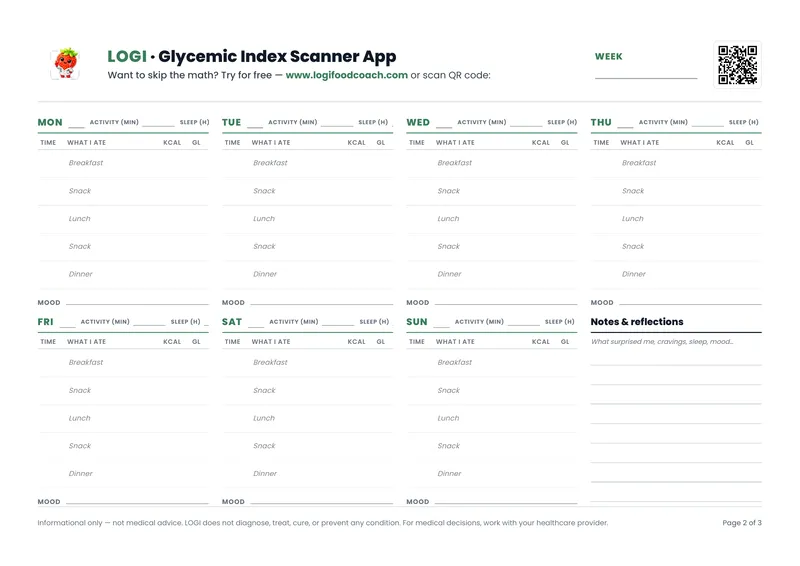
Wondering what your favorite pasta dish actually does to your glucose? With Logi you photograph the plate and see the estimated glycemic load in about sixty seconds — al dente or not. Two weeks free. Download Logi.
This article is general nutrition education, not medical advice. If you are managing diabetes, insulin resistance, or another condition, discuss dietary changes with your doctor or a registered dietitian.
Take control of your blood sugar
Scan your meals, track glycemic load, and see your patterns — all in one app.
Mula Percubaan Percuma →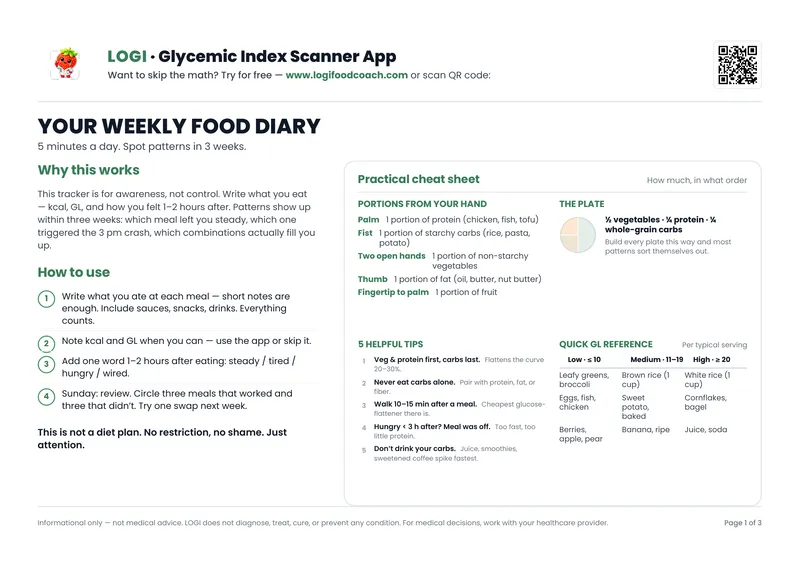
PDF percuma — 3 halaman
Jurnal makanan mingguan anda
Rekod makanan, beban glisemik & mood. Kenal pasti corak dalam 3 minggu.
Tiada spam. Nyahlanggan bila-bila masa.