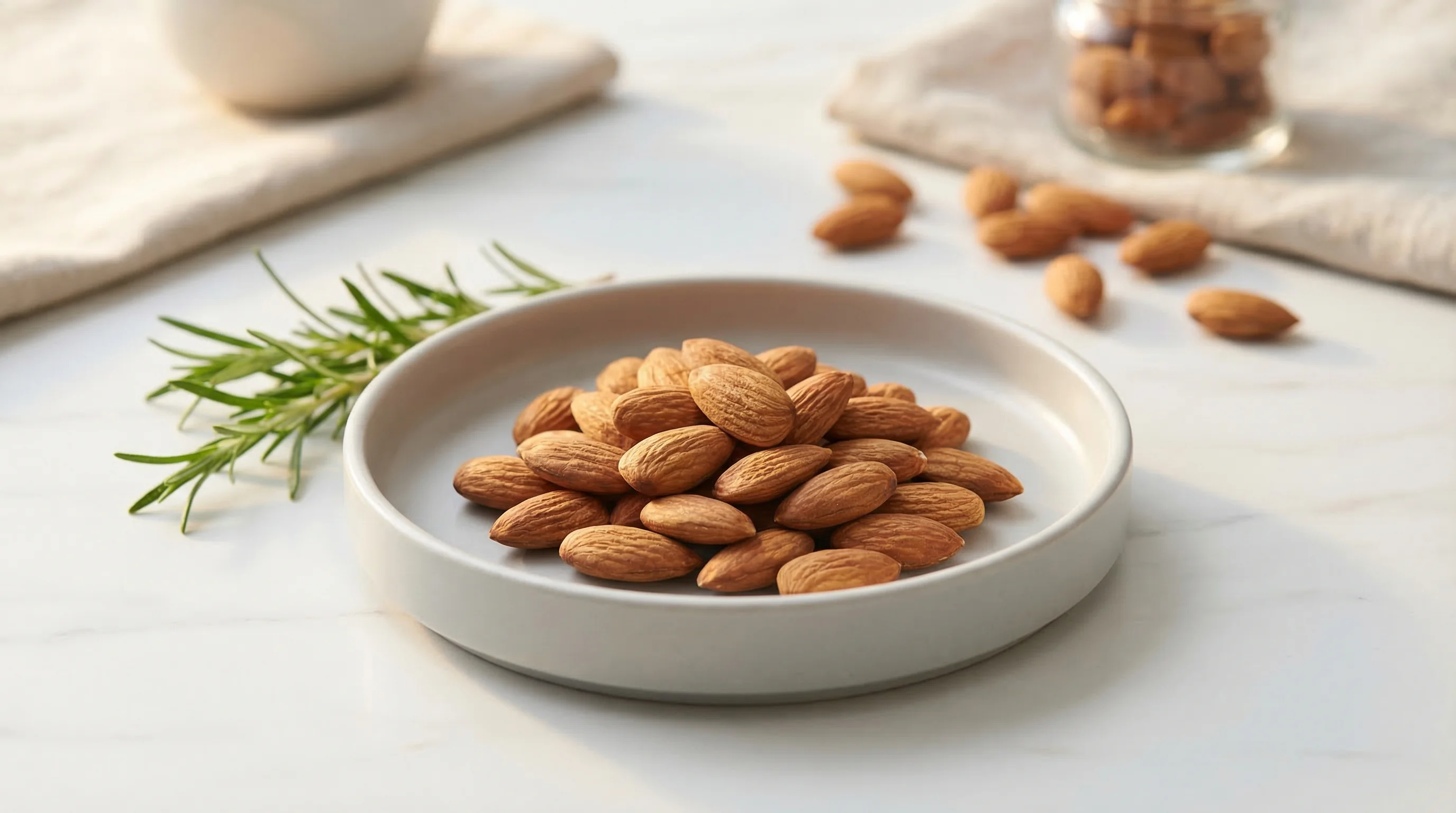
Handful of Almonds
A perfectly portioned snack of raw almonds that provides sustained energy without spiking blood sugar—ideal for managing glucose levels between meals.
This simple yet powerful snack harnesses the natural benefits of almonds for optimal blood sugar management. With a glycemic index of just 0, almonds are one of the best choices for maintaining stable glucose levels throughout the day. Their unique combination of healthy fats, protein, and fiber slows digestion and prevents the rapid blood sugar spikes associated with typical snacks.
Almonds are rich in magnesium, a mineral that plays a crucial role in insulin sensitivity and glucose metabolism. Studies show that regular almond consumption can improve long-term blood sugar control and reduce the risk of type 2 diabetes. The healthy monounsaturated fats in almonds also promote satiety, helping you feel fuller longer and reducing cravings for high-glycemic foods.
For maximum blood sugar benefits, enjoy this snack mid-morning or mid-afternoon when energy dips occur. Pair with a small piece of low-GI fruit like berries or an apple for added nutrients, or enjoy after a meal to help blunt the glycemic response of other foods. The portion size of approximately 23 almonds (about 1 ounce) provides around 160 calories and 6 grams of protein—perfect for sustained energy without overindulging.
혈당 영향
Minimal to negligible blood sugar impact. Almonds are low-carb, high in healthy fats, fiber, and protein, providing stable energy for 3-4 hours without causing blood sugar spikes.
혈당 팁
- ✓ Eat almonds as a mid-morning or mid-afternoon snack to prevent blood sugar dips between meals
- ✓ Pair with a small piece of fruit if desired, as the fat and fiber will slow sugar absorption
- ✓ Stay hydrated while eating nuts to aid digestion and help you feel satisfied with a smaller portion
🥗 재료
- 23 pcs raw almonds
- 23 pcs raw almonds
👨🍳 조리법
- 1
Count out approximately 23 raw almonds, which equals about one ounce or a small handful.
- 2
Place the almonds in a small bowl or container for easy portion control.
- 3
If desired, lightly toast the almonds in a dry skillet over medium heat for 2-3 minutes to enhance flavor, though raw almonds provide maximum nutritional benefits.
- 4
Eat the almonds slowly, chewing thoroughly to aid digestion and promote satiety.
- 5
For optimal blood sugar management, consume this snack between meals when you need sustained energy, or pair with a low-GI fruit like berries or a small apple.
- 6
Store remaining almonds in an airtight container in a cool, dry place to maintain freshness and prevent rancidity.
- 7
Consider eating vegetables or protein before consuming any carbohydrates at your next meal to further stabilize blood sugar levels throughout the day.
📊 1인분 영양 정보
| 1인분당 | 전체 요리 | |
|---|---|---|
| 칼로리 | 162 | 162 |
| 탄수화물 | 6g | 6g |
| 당류 | 1g | 1g |
| 천연 당류 | 1g | 1g |
| 단백질 | 6g | 6g |
| 지방 | 14g | 14g |
| 포화 지방 | 1g | 1g |
| 불포화 지방 | 12g | 12g |
| 식이섬유 | 4g | 4g |
| 수용성 식이섬유 | 1g | 1g |
| 불용성 식이섬유 | 3g | 3g |
| 나트륨 | 0mg | 0mg |
예측 혈당 반응
만약 당신이...
추정 모델 — 개인차가 있습니다. 의학적 조언이 아닙니다.
🔄 낮은 GI 대체품
While almonds already have an excellent low glycemic impact (GL 0.3), macadamia nuts, pecans, and walnuts have virtually zero glycemic load and higher fat-to-carb ratios, resulting in even more stable blood sugar levels with minimal glucose response
🔬 이 레시피의 과학
The Science Behind Your Blood Sugar-Friendly Snack
Almonds are a powerhouse for blood sugar management, with an impressively low glycemic index of just 5 and a glycemic load of 0.3 per serving. The secret lies in their unique nutritional composition: almonds contain very few digestible carbohydrates (only about 2-3 grams per ounce), while packing in healthy fats, protein, and fiber. This combination means your body absorbs what little carbohydrate they contain extremely slowly, resulting in virtually no impact on your blood glucose levels. The monounsaturated fats in almonds actually slow gastric emptying—the rate at which food leaves your stomach—which further helps prevent any rapid rise in blood sugar.
What makes almonds particularly valuable is their ability to improve how your body handles blood sugar from other foods. Studies show that eating almonds alongside higher-carb foods can reduce the overall glycemic response of your meal. The fiber (about 3.5 grams per ounce) and protein (6 grams per ounce) work together to blunt glucose spikes and keep you feeling satisfied longer. This is why a handful of almonds makes an excellent pre-meal snack—it can actually help moderate the blood sugar impact of what you eat next.
For maximum benefit, enjoy almonds with their skins intact, as the brown skin contains additional fiber and polyphenols that support metabolic health. Pair them with a piece of fruit to add healthy fat and protein to the fruit's natural sugars, or eat a small handful 15-20 minutes before a meal to help stabilize your post-meal glucose response. Remember, while almonds are incredibly blood-sugar friendly, portion control still matters—stick to about 1 ounce (roughly 23 almonds) to keep calories in check while reaping all the metabolic benefits.
관련 레시피
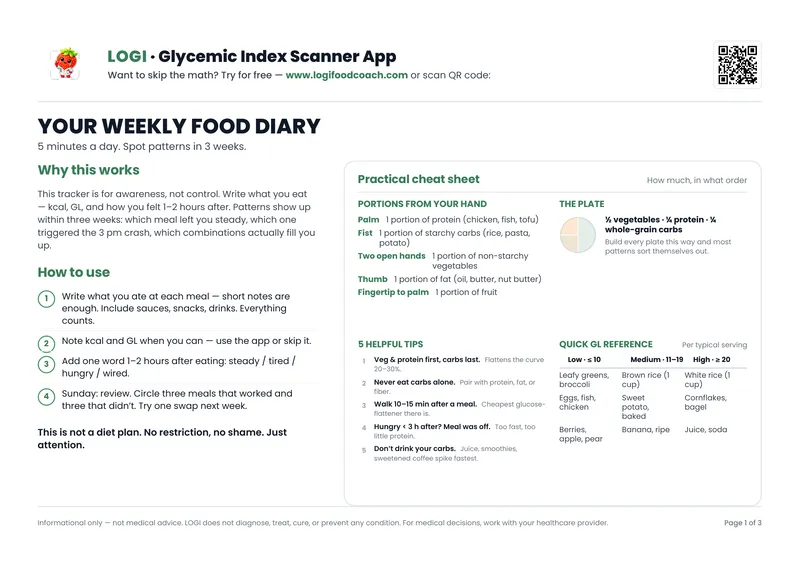
무료 PDF — 3페이지
주간 식단 일지
식사, 혈당 부하, 기분을 기록하세요. 3주 만에 패턴이 보입니다.
스팸 없음. 언제든 구독 취소.