Riso integrale saltato con indice glicemico moderato e straccetti di frittata alle erbe
Un vivace saltato di ispirazione asiatica con riso basmati integrale dal sapore di nocciola, verdure croccanti e delicate strisce di frittata al coriandolo per un controllo stabile della glicemia.
Questo colorato saltato trasforma l'umile riso basmati integrale in un piatto potente e amico della glicemia che mantiene stabile lo zucchero nel sangue per ore. Il riso basmati integrale ha un indice glicemico moderato (50-55) significativamente più basso del riso bianco (IG 41-75), grazie allo strato di crusca intatto che rallenta l'assorbimento del glucosio. Anche se non è classificato come strettamente a basso IG, rappresenta una delle migliori scelte di riso per la gestione della glicemia. Le verdure ricche di fibre—funghi shiitake, carote e peperoni rossi—aggiungono volume e nutrienti moderando ulteriormente la risposta glicemica. Le strisce di frittata al coriandolo ricche di proteine non sono solo belle da vedere; sono strategicamente importanti per la gestione della glicemia. Mangiare proteine insieme ai carboidrati riduce significativamente i picchi di glucosio dopo i pasti rallentando la digestione e migliorando la sensibilità all'insulina. Lo zenzero e l'aglio aromatici forniscono composti antinfiammatori che supportano la salute metabolica, mentre i semi di sesamo contribuiscono con grassi sani e proteine aggiuntive. Per un controllo glicemico ottimale, mangia prima le verdure e la frittata, poi goditi il riso. Questa tecnica di sequenziamento alimentare può ridurre i picchi glicemici fino al 73% secondo studi recenti. Ogni porzione contiene circa 3/4 di tazza di riso integrale cotto (circa 150g), che mantiene il carico glicemico moderato a 12,4 per porzione. La combinazione di carboidrati complessi, proteine magre, grassi sani e fibre abbondanti rende questo piatto ideale per pranzo o cena, fornendo energia sostenuta senza cali. Ogni porzione fornisce circa 15-18g di proteine e 6-8g di fibre, creando un pasto bilanciato che soddisfa la fame supportando livelli di glucosio stabili durante la giornata.
Impatto sulla glicemia
Questo pasto dovrebbe produrre un aumento graduale e moderato della glicemia con energia sostenuta per 3-4 ore grazie al riso basmati integrale a basso IG, alle verdure ad alto contenuto di fibre e alle proteine delle uova. Il carico glicemico di 12,4 indica un impatto complessivo lieve che dovrebbe evitare picchi bruschi.
Consigli glicemia
- ✓ Mangia prima le verdure e le strisce di uova prima del riso per rallentare l'assorbimento del glucosio attraverso fibre e proteine
- ✓ Considera una passeggiata di 10-15 minuti dopo aver mangiato per aiutare i muscoli ad assorbire il glucosio e attenuare l'aumento della glicemia dopo il pasto
- ✓ Assicurati un adeguato controllo delle porzioni con il riso (circa 100-150g cotto) e riempi almeno metà del piatto con le verdure saltate
🥗 Ingredienti
- 200 g riso basmati integrale
- 1 tbsp olio di colza
- 1 pcs peperone rosso, affettato finemente
- 3 pcs uova grandi, sbattute
- 2 tbsp latte scremato
- 2 tsp salsa di soia a basso contenuto di sodio
- 1 tsp olio di sesamo tostato
- 2 tbsp marmellata di peperoncino
- 1 tbsp semi di sesamo, tostati
- 7.1 oz riso basmati integrale
- 1 tbsp olio di colza
- 1.1 oz zenzero fresco, grattugiato
- 5.3 oz funghi shiitake, affettati
- 1 pcs peperone rosso, affettato finemente
- 3 pcs uova grandi, sbattute
- 2 tbsp latte scremato
- 2 tsp salsa di soia a basso contenuto di sodio
- 1 tsp olio di sesamo tostato
- 2 tbsp marmellata di peperoncino
- 1 tbsp semi di sesamo, tostati
👨🍳 Istruzioni
- 1
Sciacqua accuratamente il riso basmati integrale sotto acqua fredda finché l'acqua non scorre limpida. Cuoci secondo le istruzioni sulla confezione (tipicamente 25-30 minuti in acqua bollente), poi scola bene e metti da parte. Sciacquare rimuove l'amido in eccesso e aiuta a ottenere una risposta glicemica più bassa.
- 2
Mentre il riso cuoce, prepara tutte le verdure: grattugia lo zenzero, trita finemente l'aglio, affetta i cipollotti per il lungo in strisce sottili, affetta i funghi shiitake, taglia le carote a fiammifero sottili e affetta il peperone rosso a strisce sottili. Avere tutto pronto assicura una cottura rapida e uniforme.
- 3
In una ciotola piccola, sbatti insieme 3 uova grandi (circa 150g totali), 2 cucchiai di coriandolo fresco tritato e un pizzico di pepe nero fino a quando sono ben amalgamati. Metti da parte per la frittata.
- 4
Scalda 2 cucchiaini di olio di colza in un wok grande o padella a fuoco alto finché non brilla. Aggiungi lo zenzero grattugiato e l'aglio tritato, mescolando costantemente per 1 minuto finché non sono profumati ma non dorati. Gli aromi infonderanno l'olio di sapore.
- 5
Aggiungi tutte le verdure preparate—cipollotti, funghi shiitake, bastoncini di carota e strisce di peperone rosso—al wok caldo. Salta a fuoco alto per 3-4 minuti, mescolando frequentemente, finché le verdure sono tenere ma croccanti e leggermente carbonizzate sui bordi. Tienile in movimento per evitare che brucino mantenendo la loro croccantezza. Trasferisci le verdure su un piatto e metti da parte.
- 6
Scalda il restante cucchiaino di olio di colza in una piccola padella antiaderente a fuoco medio-basso. Versa il composto di uova, mescola una volta delicatamente, poi lascia cuocere indisturbato per 2-3 minuti finché non è quasi rappreso con solo un leggero movimento sulla superficie.
- 7
Gira con attenzione la frittata usando un piatto grande o una spatola, e cuoci l'altro lato per 1-2 minuti finché non è completamente rappresa e leggermente dorata. Trasferisci su un tagliere e affetta in strisce sottili o nastri. Metti da parte per guarnire.
- 8
Riporta il wok a fuoco medio-alto e aggiungi il riso integrale cotto. Versa 2 cucchiai di salsa di soia a basso contenuto di sodio, 1 cucchiaino di olio di sesamo tostato e 1 cucchiaio di marmellata di peperoncino senza zucchero. Mescola tutto insieme per 2-3 minuti finché il riso non è ben riscaldato e ben rivestito con i condimenti.
- 9
Aggiungi le verdure cotte al wok con il riso e mescola insieme per 1 minuto per amalgamare e scaldare. Assaggia e aggiusta il condimento se necessario con salsa di soia aggiuntiva o pepe nero.
- 10
Dividi il riso saltato e le verdure tra quattro ciotole, assicurandoti che ogni porzione contenga circa 3/4 di tazza (150g) di riso cotto. Guarnisci ogni porzione con gli straccetti di frittata, una spolverata di semi di sesamo tostati (circa 1 cucchiaino per porzione) e foglie di coriandolo fresco. Per un controllo ottimale della glicemia, incoraggia i commensali a mangiare prima la frittata ricca di proteine e le verdure ricche di fibre, seguite dal riso.
📊 Nutrizione per porzione
| Per porzione | Piatto intero | |
|---|---|---|
| Calorie | 245 | 978 |
| Carboidrati | 30g | 120g |
| Zuccheri | 11g | 45g |
| Zuccheri aggiunti | 6g | 22g |
| Zuccheri naturali | 6g | 23g |
| Proteine | 9g | 36g |
| Grassi | 11g | 42g |
| Grassi saturi | 2g | 8g |
| Grassi insaturi | 9g | 34g |
| Fibre | 5g | 18g |
| Fibra solubile | 1g | 3g |
| Fibra insolubile | 2g | 8g |
| Sodio | 266mg | 1062mg |
Risposta glicemica prevista
E se tu...
Modello stimato — le risposte individuali variano. Non è un consiglio medico.
🔄 Alternative a basso IG
Anche se il riso basmati integrale ha un IG moderato ed è migliore del riso bianco, queste alternative forniscono un impatto glicemico ancora più basso per chi richiede un controllo più rigoroso della glicemia o cerca di ridurre l'assunzione di carboidrati.
Le carote hanno un IG moderato di 35-40 quando cotte. Queste sostituzioni di verdure a basso IG forniscono consistenza e colore simili avendo praticamente nessun impatto sui livelli di zucchero nel sangue.
Queste alternative forniscono lo stesso sapore umami e profondità salata della salsa di soia accogliendo restrizioni dietetiche come sensibilità al glutine o allergie alla soia, senza differenze nell'impatto glicemico.
Se la marmellata di peperoncino senza zucchero non è disponibile, queste alternative forniscono il calore piccante e la complessità di sapore senza aggiungere zucchero o impattare significativamente il profilo glicemico del piatto.
🔬 La scienza dietro questa ricetta
Il riso basmati integrale ha un indice glicemico moderato di 41-55, rendendolo una scelta migliore del riso bianco (IG 41-75) ma non strettamente a basso IG. Lo strato di crusca intatto contiene fibre che rallentano l'assorbimento del glucosio, riducendo i picchi glicemici. La combinazione strategica di proteine dalle uova e fibre dalle verdure modera ulteriormente la risposta glicemica attraverso due meccanismi: le proteine rallentano lo svuotamento gastrico e migliorano la sensibilità all'insulina, mentre le fibre formano un gel nel tratto digestivo che ritarda l'assorbimento dei carboidrati. Il sequenziamento alimentare—mangiare proteine e verdure prima dei carboidrati—può ridurre i picchi di glucosio dopo i pasti fino al 73% preparando il sistema digestivo e rallentando la velocità con cui il glucosio entra nel flusso sanguigno. Il carico glicemico moderato di 12,4 per porzione indica che questo pasto produrrà un aumento graduale e sostenuto della glicemia piuttosto che un picco brusco, fornendo energia costante per 3-4 ore. L'aggiunta di grassi sani dall'olio e dai semi di sesamo rallenta ulteriormente la digestione, mentre zenzero e aglio forniscono composti antinfiammatori che supportano la sensibilità all'insulina e la salute metabolica.
Ricette correlate
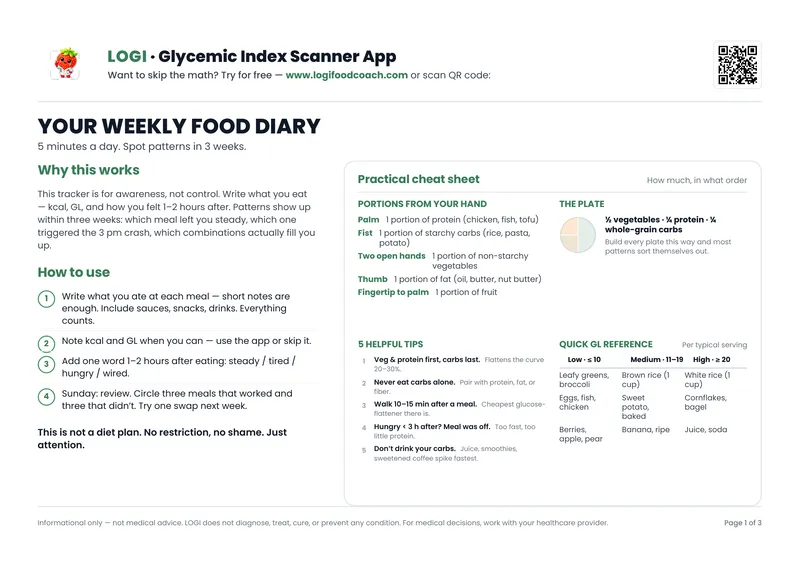
PDF gratuito — 3 pagine
Il tuo diario alimentare settimanale
Registra pasti, carico glicemico e umore. Individua schemi in 3 settimane.
Niente spam. Cancellati quando vuoi.