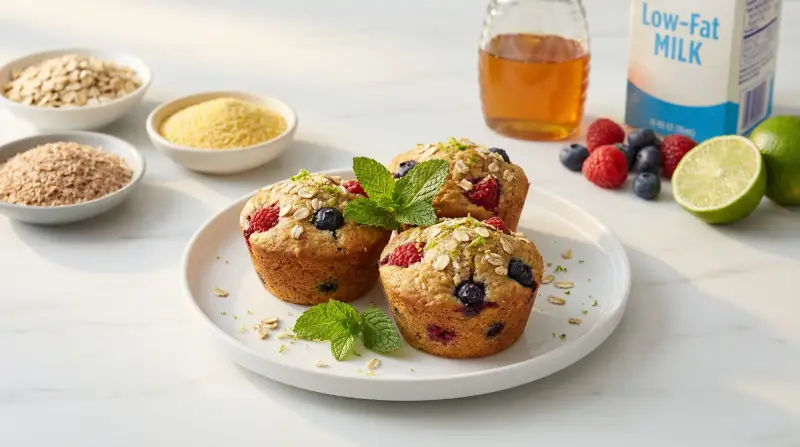
Low-Glycemic Three-Grain Berry Muffins with Lime
Fiber-rich breakfast muffins with oats, cornmeal, and wheat bran plus fresh raspberries. Minimal honey (swap with erythritol for lower GI). GL 16.9, estimated GI 58—moderate impact.
These nutrient-dense muffins are specifically designed to support stable blood sugar levels throughout your morning. By combining three whole grains—rolled oats, stone-ground cornmeal, and wheat bran—we've created a fiber powerhouse that slows glucose absorption and keeps you satisfied for hours.
The secret to their low-glycemic profile lies in the synergy of ingredients. Rolled oats provide soluble fiber that forms a gel in your digestive system, moderating sugar release. Wheat bran adds insoluble fiber for digestive health, while cornmeal contributes resistant starch. Fresh raspberries are among the lowest-sugar fruits, offering just 5g of natural sugars per serving along with additional fiber. The bright lime zest enhances flavor without adding any glycemic load.
For optimal blood sugar management, pair these muffins with a protein source like Greek yogurt or a handful of almonds. The healthy fats from canola oil also help slow carbohydrate absorption. While we've minimized the honey compared to traditional muffin recipes, you can further reduce it to 1/3 cup if you're particularly sensitive to sweeteners, or swap it entirely with erythritol or stevia-based sweeteners for an even lower glycemic impact. The all-purpose flour is kept to a minimum (just 0.75 cup for 12 muffins) while the fiber-rich grains—oats, wheat bran, and cornmeal—make up the bulk of the dry ingredients, ensuring the overall glycemic load remains moderate. These muffins freeze beautifully, making them perfect for meal prep—just thaw one the night before for a grab-and-go breakfast that supports your metabolic health.
Blood Sugar Impact
Moderate blood sugar impact with a glycemic load of 16.9 and GI of 58. The combination of whole grains (oats, wheat bran, cornmeal) provides fiber that will slow glucose absorption, resulting in a gradual rise over 1-2 hours rather than a sharp spike.
Blood Sugar Tips
- ✓ Pair the muffin with a protein source like Greek yogurt, nuts, or eggs to further slow carbohydrate absorption and reduce the overall glycemic response
- ✓ Eat the muffin as part of a meal rather than alone as a snack, and consider having it after some protein or healthy fats to blunt the blood sugar rise
- ✓ Take a 10-15 minute walk after eating to help muscles absorb glucose and lower post-meal blood sugar levels
🥗 Ingredients
- 0.5 cup rolled oats
- 1 cup 1 percent low-fat milk or plain soy milk
- 0.75 cup all-purpose flour
- 0.5 cup coarse-ground cornmeal
- 0.25 cup wheat bran
- 1 tbsp baking powder
- 0.25 tsp salt
- 0.5 cup honey
- 3.5 tbsp canola oil
- 2 tsp fresh lime zest
- 1 pcs egg, lightly beaten
- 0.67 cup fresh raspberries
- 0.5 cup rolled oats
- 1 cup 1 percent low-fat milk or plain soy milk
- 0.75 cup all-purpose flour
- 0.5 cup coarse-ground cornmeal
- 0.25 cup wheat bran
- 1 tbsp baking powder
- 0.25 tsp salt
- 0.5 cup honey
- 3.5 tbsp canola oil
- 2 tsp fresh lime zest
- 1 pcs egg, lightly beaten
- 0.67 cup fresh raspberries
👨🍳 Instructions
- 1
Preheat your oven to 400°F (200°C). Prepare a standard 12-cup muffin tin by lining each cup with paper or foil liners. This prevents sticking and makes cleanup easier.
- 2
Place the rolled oats and milk in a large microwave-safe mixing bowl. Microwave on high power for approximately 3 minutes, stirring once halfway through, until the oats become creamy and fully softened. Allow this mixture to cool slightly while you prepare the dry ingredients.
- 3
In a separate large mixing bowl, whisk together the all-purpose flour, cornmeal, wheat bran, baking powder, and salt until thoroughly combined. This ensures even distribution of the leavening agent throughout your muffins.
- 4
To the cooled oat mixture, add the honey, canola oil, freshly grated lime zest, and lightly beaten egg. Stir these wet ingredients together until just combined—the mixture should look slightly lumpy rather than perfectly smooth, which helps create tender muffins.
- 5
Pour the wet ingredients into the bowl with the dry ingredients. Using a spatula or wooden spoon, fold everything together with gentle strokes until the flour is just moistened. Be careful not to overmix, as this can result in tough, dense muffins.
- 6
Carefully fold the fresh raspberries into the batter using a gentle motion to avoid crushing the delicate berries. Distribute them evenly throughout the mixture.
- 7
Divide the batter evenly among the prepared muffin cups, filling each approximately two-thirds full. This allows room for the muffins to rise without overflowing.
- 8
Bake in the preheated oven for 16 to 18 minutes, or until the muffin tops turn golden brown and a toothpick inserted into the center of a muffin comes out clean or with just a few moist crumbs. Transfer the muffins to a wire cooling rack and allow them to cool for at least 10 minutes before serving. Store leftovers in an airtight container for up to 3 days, or freeze for up to 3 months.
📊 Nutrition Per Serving
| Per Serving | Whole Dish | |
|---|---|---|
| Calories | 165 | 1974 |
| Carbs | 28g | 330g |
| Sugars | 13g | 157g |
| Natural Sugars | 13g | 157g |
| Protein | 3g | 40g |
| Fat | 5g | 64g |
| Saturated Fat | 1g | 8g |
| Unsaturated Fat | 5g | 56g |
| Fiber | 2g | 24g |
| Soluble Fiber | 1g | 6g |
| Insoluble Fiber | 1g | 12g |
| Sodium | 193mg | 2314mg |
Predicted Glucose Response
What if you...
Estimated model — individual responses vary. Not medical advice.
🔄 Lower GI Swaps
Honey has a GI of 55-58 and contributes significantly to the recipe's glycemic load. Erythritol has zero glycemic impact (GI 0) and provides sweetness without affecting blood sugar, lowering the estimated GI from 58 to approximately 52 and the GL from 16.9 to around 14. Alternatively, reducing honey to 1/3 cup decreases the GL to approximately 15 while maintaining some natural sweetness.
All-purpose flour has a GI of approximately 70, which elevates the overall glycemic response. Almond flour (GI ~0) and coconut flour (GI ~45) are both lower-glycemic alternatives that add protein, healthy fats, and additional fiber, potentially lowering the recipe's estimated GI to 50-52. Whole wheat pastry flour (GI ~55-60) offers more fiber than all-purpose flour while maintaining similar baking properties, reducing the GI by 5-10 points.
While low-fat milk has a relatively low GI (30-35), it contains lactose which contributes to glycemic load. Unsweetened almond milk and cashew milk have minimal carbohydrates (1-2g per cup versus 12g in dairy milk) and virtually no glycemic impact, further reducing the overall GL by approximately 1-2 points per serving while maintaining the liquid content needed for proper batter consistency.
🔬 The Science Behind This Recipe
The moderate glycemic response of these muffins (GL 16.9, estimated GI 58) comes from the strategic balance of fiber-rich whole grains and minimal refined flour. Rolled oats contain beta-glucan, a soluble fiber that forms a viscous gel in your digestive tract, physically slowing the movement of food and delaying glucose absorption into your bloodstream. This results in a gradual blood sugar rise over 1-2 hours rather than a sharp spike. Wheat bran contributes insoluble fiber that adds bulk and further moderates digestion speed, while stone-ground cornmeal provides resistant starch—a type of carbohydrate that resists digestion in the small intestine and behaves more like fiber. The all-purpose flour (0.75 cup across 12 servings, or just 1 tablespoon per muffin) is kept minimal to limit high-GI impact. Fresh raspberries add only 5g natural sugars per serving while contributing additional fiber and polyphenols that may improve insulin sensitivity. The 0.5 cup honey (approximately 2 teaspoons per muffin) does contribute to the glycemic load, but when combined with the fiber matrix and healthy fats from canola oil, the overall glucose response remains moderate. For individuals requiring stricter blood sugar control, substituting honey with erythritol (which has zero glycemic impact) can lower the estimated GI to approximately 52 and the GL to around 14, moving the recipe firmly into the low-glycemic category. The protein from milk and egg, plus the fat from oil, further blunt the glucose curve by slowing gastric emptying. This multi-grain approach demonstrates how combining different fiber types with strategic ingredient ratios can create baked goods that support stable blood sugar levels while still delivering satisfying taste and texture.
Related recipes
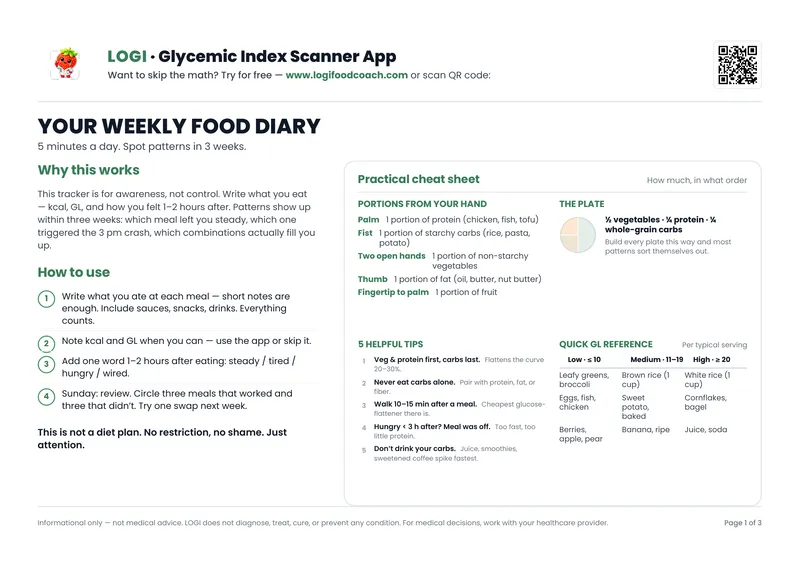
Free PDF — 3 pages
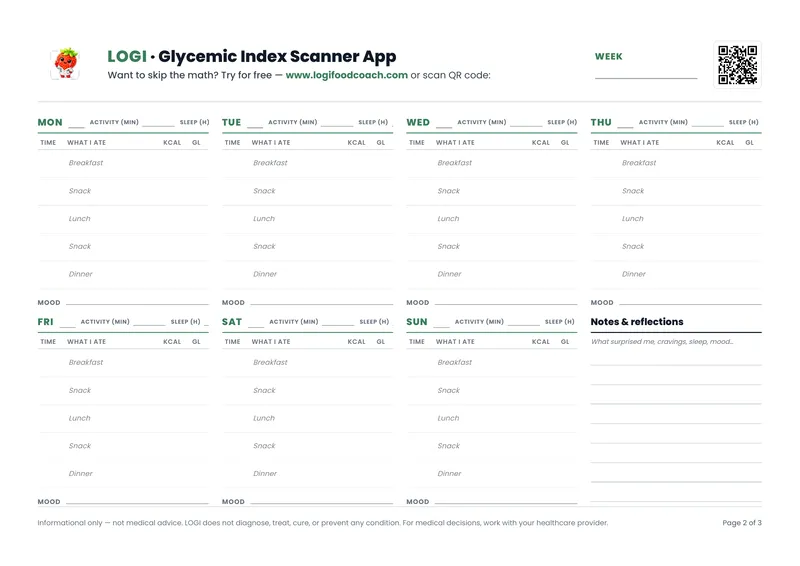
Your Weekly Food Journal
Track meals, glycemic load & mood. Spot patterns in 3 weeks.
No spam. Unsubscribe anytime.