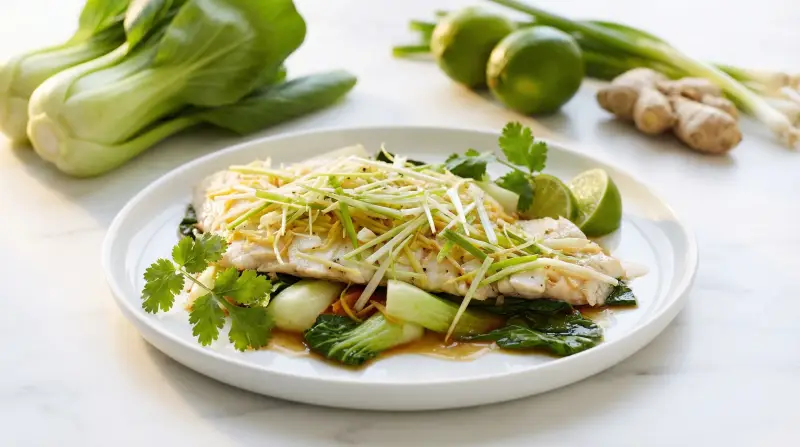
Ginger-Steamed White Fish with Bok Choy
Delicate white fish steamed with aromatic ginger and garlic creates a blood sugar-friendly meal that's rich in protein and low in carbohydrates, with virtually no glycemic impact when served with.
This Asian-inspired steamed fish recipe is a masterclass in low-glycemic cooking that prioritizes both flavor and metabolic health. By using the gentle steaming method in a foil packet, we preserve the delicate texture of white fish while infusing it with the aromatic essence of fresh ginger, garlic, and spring onions. The dish is naturally low in carbohydrates and high in lean protein, making it ideal for maintaining stable blood sugar levels with an estimated glycemic index of 48-40 and a glycemic load of only 3-4 per serving when paired with cauliflower rice. White fish provides high-quality protein that slows glucose absorption, while ginger contains gingerol compounds that have been shown in studies to improve insulin sensitivity and reduce fasting blood glucose levels. Bok choy adds fiber and nutrients with minimal carbohydrate impact, contributing less than 2g net carbs per serving. The recipe uses only 1 teaspoon of mirin for four servings, providing authentic flavor while keeping the glycemic impact minimal at approximately 1g sugar per portion. For optimal blood sugar management, we recommend using the rice wine vinegar swap instead of mirin to eliminate all added sugars. Serve with cauliflower rice as the default low-carb side to keep the entire meal in the very low glycemic category. The protein and fiber will slow the absorption of any carbohydrates, and this meal is particularly beneficial when consumed earlier in the day when insulin sensitivity is naturally higher. The fresh lime juice not only brightens the flavors but contains citric acid that may help moderate the glycemic response of the entire meal through delayed gastric emptying.
Blood Sugar Impact
This meal will have a low to moderate blood sugar impact due to the combination of lean protein, fiber-rich vegetables, and moderate portion of brown rice. Expect steady, sustained energy for 3-4 hours without significant spikes.
Blood Sugar Tips
- ✓ Eat the bok choy and fish first before the brown rice to slow glucose absorption and increase satiety
- ✓ Keep brown rice portion to about 1/2 cup cooked to maintain the low glycemic load
- ✓ Take a 10-15 minute walk after eating to help muscles absorb glucose and further blunt any blood sugar rise
🥗 Ingredients
- 100 g bok choy, trimmed
- 600 g firm white fish fillets
- 5 pcs fresh ginger, finely shredded
- 2 pcs garlic cloves, finely sliced
- 2 tbsp low-sodium soy sauce
- 1 tsp mirin rice wine
- 1 pcs spring onions, finely shredded
- 15 g fresh coriander, chopped
- 200 g cooked brown rice, for serving
- 1 pcs lime, cut into wedges
- 3.5 oz bok choy, trimmed
- 1.3 lb firm white fish fillets
- 5 pcs fresh ginger, finely shredded
- 2 pcs garlic cloves, finely sliced
- 2 tbsp low-sodium soy sauce
- 1 tsp mirin rice wine
- 1 pcs spring onions, finely shredded
- 0.5 oz fresh coriander, chopped
- 7.1 oz cooked brown rice, for serving
- 1 pcs lime, cut into wedges
👨🍳 Instructions
- 1
Preheat your oven to 200°C (400°F). Prepare a large sheet of aluminum foil, approximately 50cm long, that will be large enough to create a sealed packet for all the fish and vegetables.
- 2
Arrange the bok choy in a single layer in the center of the foil, creating a bed for the fish. This vegetable base will steam beautifully and absorb the aromatic cooking juices.
- 3
Place the four white fish fillets on top of the bok choy. Pat the fish dry with paper towels first to ensure the seasonings adhere properly and the fish steams rather than stews.
- 4
Scatter the finely shredded ginger and sliced garlic evenly over the fish fillets. These aromatics will infuse the fish with flavor as it steams in the enclosed packet.
- 5
Drizzle the low-sodium soy sauce and mirin over the fish and vegetables. Season with freshly ground black pepper. The foil packet will trap all these flavors and create a fragrant steam bath. For stricter blood sugar control, substitute the mirin with 1 teaspoon rice wine vinegar plus a pinch of erythritol or monk fruit sweetener to eliminate all added sugars while maintaining authentic flavor.
- 6
Carefully fold the foil over the fish, then crimp and seal all three open edges tightly to create an airtight packet. Ensure the seal is complete to trap steam inside. Place the sealed packet on a rimmed baking sheet and transfer to the preheated oven. Bake for 20 minutes until the fish is cooked through and flakes easily with a fork.
- 7
Remove from the oven and carefully open the foil packet, watching for the hot steam that will escape. Scatter the shredded spring onions and chopped coriander over the fish and let rest for 2 minutes to allow the herbs to wilt slightly from the residual heat.
- 8
Serve the fish and bok choy immediately with cauliflower rice or your choice of low-glycemic side. Provide lime wedges for squeezing over the fish just before eating. For best blood sugar control, eat the fish and vegetables first, then finish with any side dish if included. The protein and fiber from the fish and bok choy will slow glucose absorption and promote stable blood sugar levels for 3-4 hours.
📊 Nutrition Per Serving
| Per Serving | Whole Dish | |
|---|---|---|
| Calories | 214 | 854 |
| Carbs | 19g | 77g |
| Sugars | 2g | 8g |
| Added Sugars | 0g | 1g |
| Natural Sugars | 2g | 7g |
| Protein | 30g | 120g |
| Fat | 2g | 7g |
| Saturated Fat | 0g | 1g |
| Unsaturated Fat | 1g | 6g |
| Fiber | 2g | 10g |
| Soluble Fiber | 0g | 2g |
| Insoluble Fiber | 1g | 4g |
| Sodium | 538mg | 2150mg |
Predicted Glucose Response
What if you...
Estimated model — individual responses vary. Not medical advice.
🔄 Lower GI Swaps
Mirin contains approximately 8-10g sugar per tablespoon with a glycemic index of 65+, making it a high-GI ingredient. These swaps provide the acidic brightness and subtle sweetness of mirin while eliminating all glycemic impact. Rice wine vinegar with non-nutritive sweeteners mimics mirin's flavor profile perfectly while keeping blood sugar stable.
While low-sodium soy sauce is acceptable, some commercial brands contain added sugars or corn syrup. Coconut aminos provides the same umami depth with 73% less sodium and zero added sugars, making it ideal for blood sugar management. Tamari offers authentic soy flavor; just verify the label shows 0g sugar per serving.
Brown rice has a glycemic index of 68 and provides 23g carbohydrates per half-cup serving, which contradicts this recipe's low-glycemic positioning. Cauliflower rice contains only 3g net carbs per cup with a negligible glycemic impact, keeping the entire meal in the very low GI category. If you prefer a grain-based option, limit to 1/4 cup cooked quinoa maximum and eat it last after the protein and vegetables to minimize blood sugar impact.
While white fish is excellent for blood sugar control, fatty fish like salmon provides omega-3 fatty acids (EPA and DHA) that have been shown to improve insulin sensitivity and reduce inflammation. All fish options maintain the same low-glycemic profile with high protein content that stabilizes blood sugar.
All these Asian greens provide similar fiber content, minimal carbohydrates (2-3g net carbs per cup), and excellent nutrient density while maintaining the authentic flavor profile of the dish. They all have negligible glycemic impact and support stable blood sugar levels.
🔬 The Science Behind This Recipe
This recipe leverages multiple mechanisms for blood sugar control. White fish provides 25-30g of complete protein per serving, which triggers incretin hormone release and slows gastric emptying, resulting in gradual glucose absorption. Ginger contains bioactive compounds called gingerols and shogaols that have been demonstrated in clinical studies to improve insulin sensitivity by up to 10% and reduce fasting blood glucose by enhancing cellular glucose uptake through GLUT4 transporter activation. The minimal carbohydrate content (under 8g per serving with cauliflower rice) means minimal insulin demand, while the high protein content provides sustained satiety through leptin signaling. Bok choy contributes soluble fiber that forms a viscous gel in the digestive tract, further slowing carbohydrate absorption and blunting post-meal glucose spikes. The steaming method preserves heat-sensitive nutrients and requires no added fats, keeping the meal light and easily digestible. When consumed with the recommended cauliflower rice substitute instead of grain-based options, the entire meal maintains a glycemic load under 5, placing it firmly in the very low category for blood sugar impact.
Related recipes
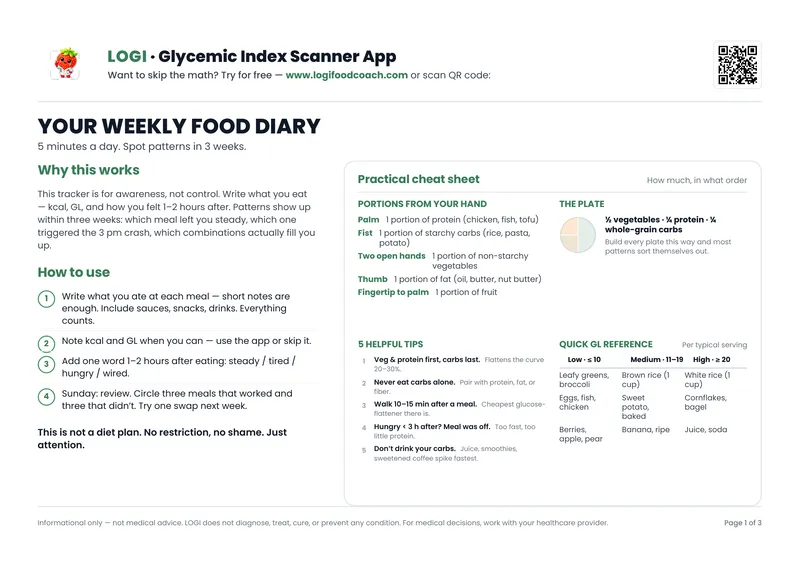
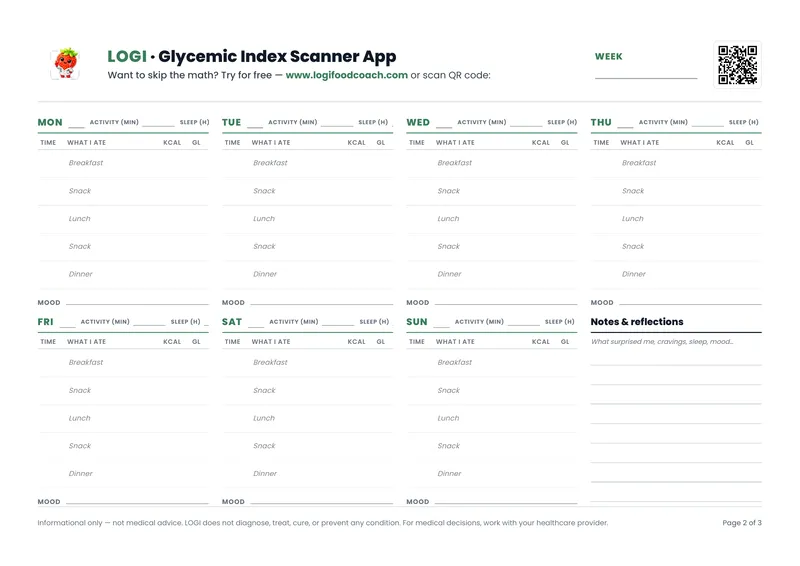
Free PDF — 3 pages
Your Weekly Food Journal
Track meals, glycemic load & mood. Spot patterns in 3 weeks.
No spam. Unsubscribe anytime.