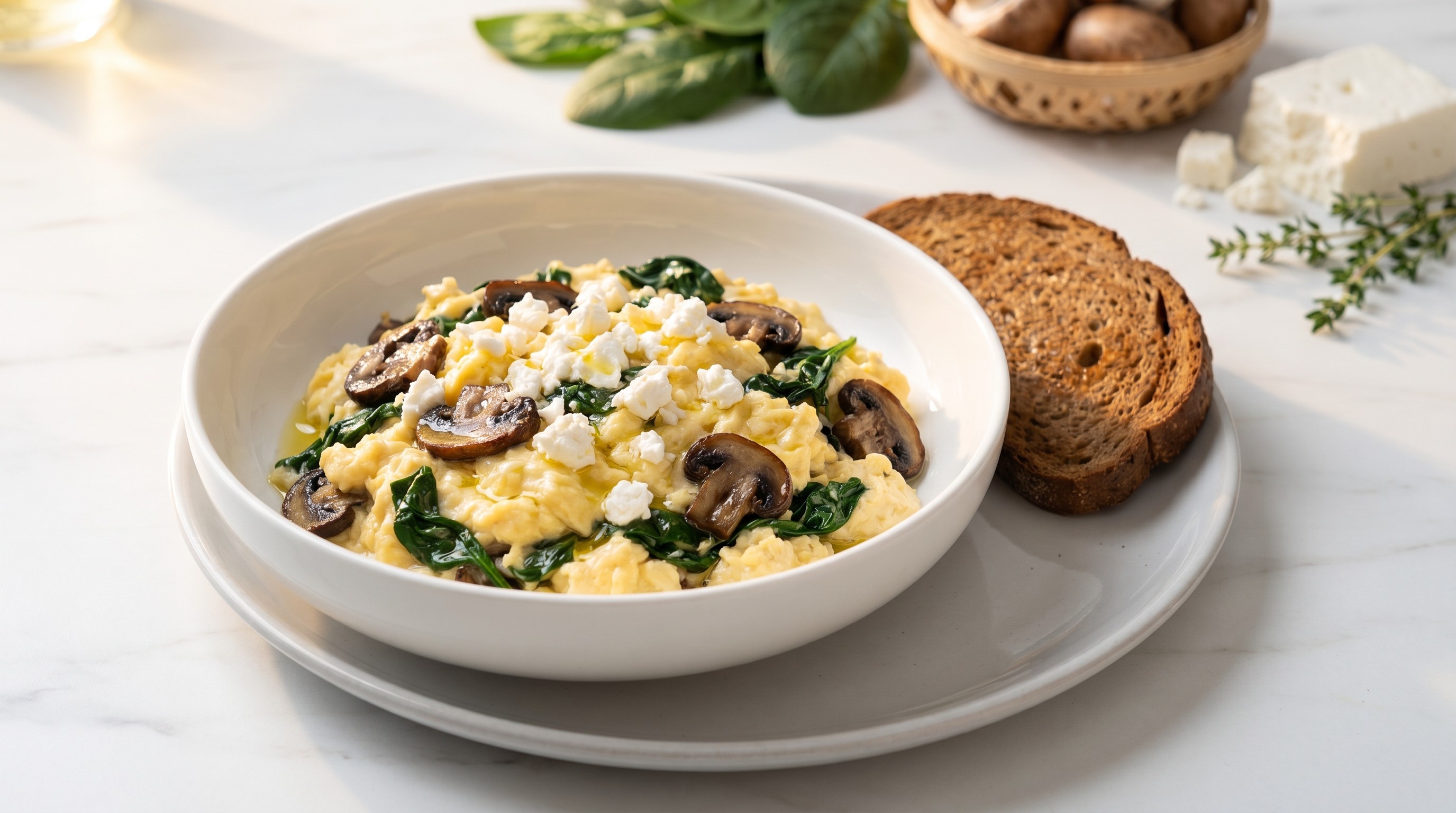
Spinach and Mushroom Egg Scramble
Protein-rich eggs scrambled with golden cremini mushrooms and wilted spinach — a low-GI breakfast that keeps blood sugar steady all morning.
This quick scramble is one of the smartest breakfasts you can make for blood sugar stability. Eggs deliver high-quality protein and healthy fats with virtually zero glycemic impact, while cremini mushrooms and baby spinach contribute fiber, potassium, and magnesium — minerals that support insulin sensitivity. Together, they create a meal that digests slowly and avoids the glucose spike-and-crash pattern so common with carb-heavy morning options.
The technique matters as much as the ingredients. Letting the mushrooms sear undisturbed builds deep, savory flavor through the Maillard reaction, which means you get satisfaction without reaching for toast or hash browns. The eggs are cooked gently and pulled from heat while still slightly glossy, producing soft, creamy curds rather than dry, rubbery ones. A scattering of crumbled feta at the end adds a bright, salty contrast that makes the dish feel restaurant-worthy.
For optimal glucose management, eat this scramble on its own or alongside a slice of dense, seeded dark rye bread (GI ~45), which is far gentler on blood sugar than white toast. Pair with black coffee or unsweetened tea rather than juice. If you want to extend the meal further, a small handful of walnuts or a quarter avocado adds more healthy fats to further flatten the glucose curve.
Blood Sugar Impact
Minimal blood sugar impact expected. This high-protein, high-fat, very low-carb meal with a glycemic load of 2.0 and GI of 21 should produce a flat glucose response and provide stable energy for 3-4 hours.
Blood Sugar Tips
- ✓ Eat the spinach and mushrooms first before the eggs to further blunt any minor glucose response.
- ✓ Add an extra handful of leafy greens or a side of avocado to increase fiber and healthy fats for even more sustained satiety.
- ✓ Enjoy a short 10-15 minute walk after eating to enhance insulin sensitivity and glucose uptake.
🥗 Ingredients
- 1 tbsp Olive oil
- 100 g Cremini mushroom
- 1 pcs Garlic
- 60 g Baby spinach
- 3 pcs Egg
- 0.25 tsp Salt
- 0.25 tsp Black pepper
- 30 g Feta cheese
- 1 tbsp Olive oil
- 3.5 oz Cremini mushroom
- 1 pcs Garlic
- 2.1 oz Baby spinach
- 3 pcs Egg
- 0.25 tsp Salt
- 0.25 tsp Black pepper
- 1.1 oz Feta cheese
👨🍳 Instructions
- 1
Place a non-stick skillet over medium heat and add the olive oil. Let it warm for about 30 seconds until the oil shimmers slightly but does not smoke.
- 2
Spread the sliced cremini mushrooms across the pan in a single layer, ensuring they are not overlapping. Let them cook without stirring for 3 to 4 minutes until the undersides develop a deep golden-brown sear.
- 3
Flip or stir the mushrooms, then add the minced garlic. Cook together for about 30 seconds, stirring constantly, until the garlic is fragrant and just beginning to turn golden.
- 4
Toss the baby spinach into the pan in handfuls, turning it through the mushrooms with tongs or a spatula. Cook for 1 to 2 minutes until the spinach is fully wilted and any released liquid has evaporated from the pan.
- 5
While the spinach wilts, crack the eggs into a small bowl. Add a pinch of salt and pepper, then beat lightly with a fork until the yolks and whites are just combined — do not over-beat.
- 6
Pour the beaten eggs evenly over the vegetables in the pan. Allow them to sit for about 10 seconds until the edges begin to set, then use a spatula to gently push the cooked edges toward the centre, letting the uncooked egg flow into the cleared space.
- 7
Continue folding and scraping gently every 10 to 15 seconds for 2 to 3 minutes. Remove the pan from the heat while the eggs still look slightly glossy and underdone — the residual heat will finish setting them into soft, creamy curds.
- 8
Transfer the scramble to a warmed plate immediately. Scatter the crumbled feta over the top if using, finish with a final grind of black pepper, and serve straight away.
📊 Nutrition Per Serving
| Per Serving | Whole Dish | |
|---|---|---|
| Calories | 460 | 460 |
| Carbs | 9g | 9g |
| Sugars | 4g | 4g |
| Natural Sugars | 4g | 4g |
| Protein | 28g | 28g |
| Fat | 36g | 36g |
| Saturated Fat | 11g | 11g |
| Unsaturated Fat | 25g | 25g |
| Fiber | 3g | 3g |
| Soluble Fiber | 0g | 0g |
| Insoluble Fiber | 1g | 1g |
| Sodium | 1123mg | 1123mg |
Predicted Glucose Response
What if you...
Estimated model — individual responses vary. Not medical advice.
🔄 Lower GI Swaps
Maitake mushrooms contain bioactive compounds shown to support glucose metabolism and improve insulin sensitivity, offering a functional upgrade over standard cremini mushrooms for blood sugar management.
Omega-3 enriched and pastured eggs have a higher omega-3 fatty acid content, which may help improve insulin sensitivity and reduce inflammatory markers associated with blood sugar dysregulation.
Aged parmesan has a higher protein-to-carb ratio and is used in smaller quantities, while cottage cheese is higher in protein and lower in fat, both helping to slow glucose absorption and improve the overall glycemic response of the meal.
Cold-pressed extra-virgin olive oil is richer in polyphenols like oleocanthal, which have been shown to improve insulin sensitivity and reduce post-meal blood sugar spikes. Avocado oil similarly provides monounsaturated fats that slow gastric emptying and blunt glucose response.
Kale and Swiss chard are higher in fiber and contain more chromium and magnesium—key minerals involved in insulin signaling and glucose metabolism—offering a slight edge over spinach for blood sugar regulation.
🔬 The Science Behind This Recipe
Why This Recipe Works for Steady Blood Sugar
This Spinach and Mushroom Egg Scramble is a fantastic example of how whole, unprocessed ingredients naturally keep blood sugar steady. With a glycemic load of just 2.0 and an estimated GI of 21, this dish barely registers on the glucose scale — and the reason comes down to what's on the plate. Eggs are the star here: they contain virtually no carbohydrates, instead delivering high-quality protein and healthy fats that slow digestion and help your body absorb nutrients gradually. When you eat protein and fat together, your stomach takes longer to empty, which means any glucose that does enter your bloodstream arrives slowly and steadily rather than in a sudden rush.
The vegetables in this recipe — spinach and cremini mushrooms — are naturally very low in carbohydrates while being rich in fiber. Spinach provides both soluble and insoluble fiber, which acts like a gentle brake on digestion. Mushrooms contribute additional fiber along with important minerals like chromium, which plays a supporting role in how your body processes glucose. Cooking these vegetables in olive oil adds heart-healthy monounsaturated fats, which further slow the absorption of any sugars present. It's worth remembering that glycemic load accounts for both the *type* and *amount* of carbohydrates in a serving — and since this dish is so low in total carbs, the load stays remarkably small.
To get the most from this meal, consider enjoying it as part of a balanced plate. If you're adding toast or fruit on the side, eat the egg scramble first — research suggests that eating protein and vegetables before carbohydrates can significantly reduce post-meal glucose spikes. A short 10–15 minute walk after eating can also help your muscles absorb glucose more efficiently, keeping your energy levels stable throughout the morning.
Related recipes
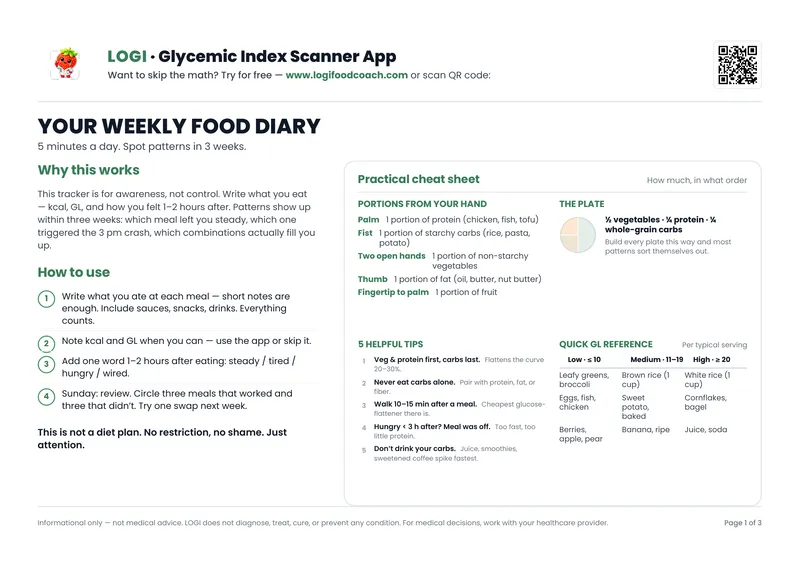
Free PDF — 3 pages
Your Weekly Food Journal
Track meals, glycemic load & mood. Spot patterns in 3 weeks.
No spam. Unsubscribe anytime.