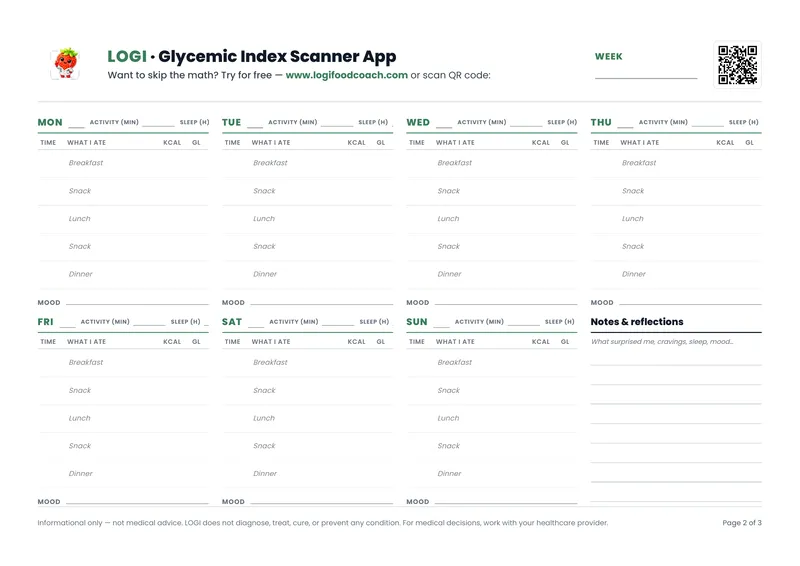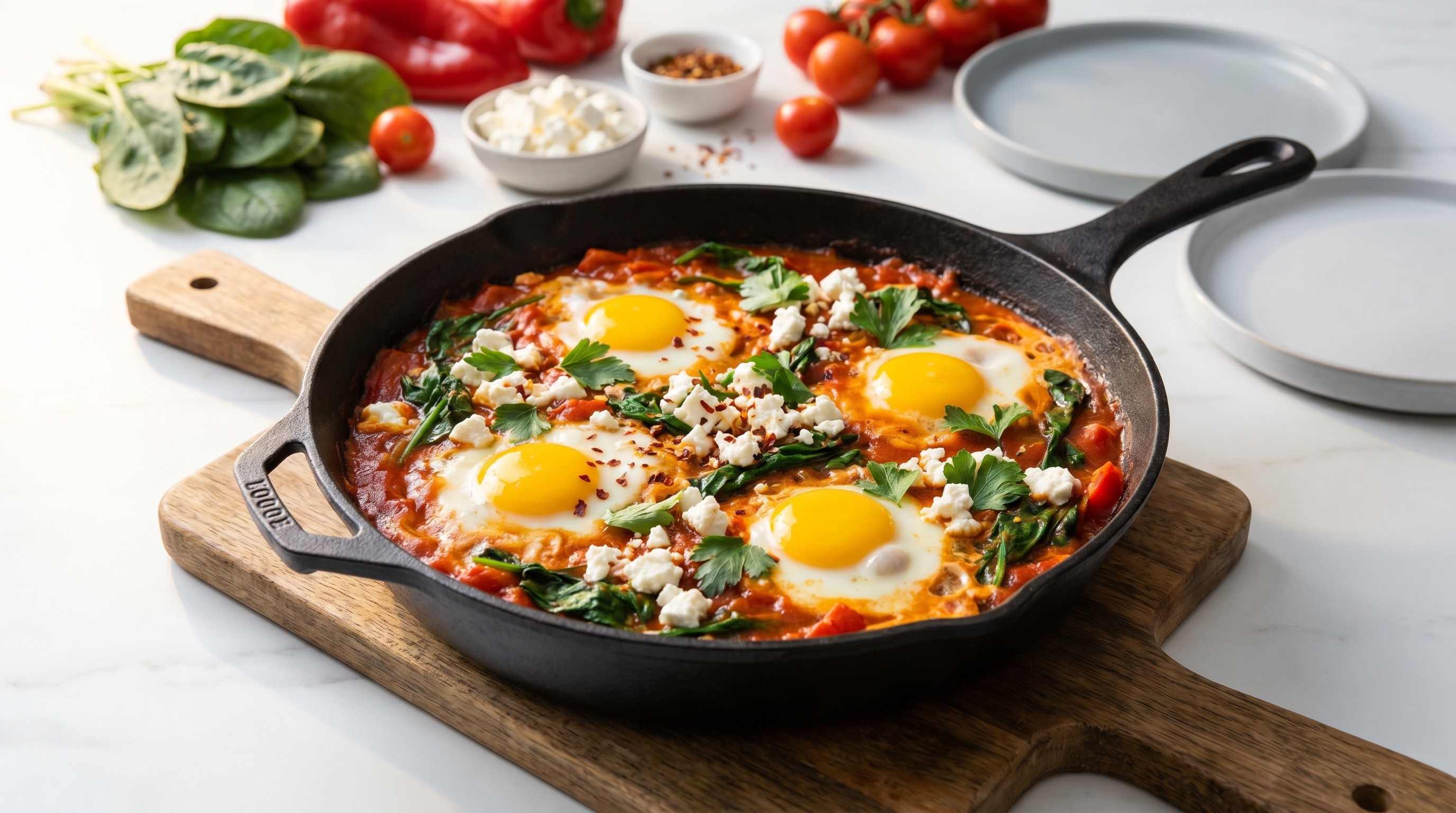
Shakshuka with Feta and Spinach
Eggs poached in spiced tomato-pepper sauce with wilted spinach and crumbled feta — a high-protein, near-zero glycemic load breakfast ready in under 30 minutes.
Shakshuka is one of the most blood-sugar-friendly breakfasts you can make. The base is a slow-simmered sauce of crushed tomatoes, sweet bell pepper, and onion, seasoned with smoky paprika and earthy cumin. Tomatoes carry a glycemic index of only 15 and a glycemic load close to zero per serving, while eggs contribute pure protein and fat with no carbohydrates at all. Together they create a dish that nourishes without triggering an insulin spike.
A generous handful of baby spinach wilts directly into the sauce, adding iron and magnesium — two minerals closely linked to improved insulin sensitivity. Crumbled feta on top provides salty richness and additional fat, which further slows gastric emptying and blunts any residual glucose response from the vegetables. The entire dish is cooked in a single skillet with no flour, no bread, and no added sugar.
For optimal blood sugar management, eat the vegetable-rich sauce first before breaking into the egg yolks. If you want to add a side, choose a slice of genuine sourdough or a piece of seeded low-GI bread rather than white toast. Pair with black coffee or unsweetened tea to keep the meal's glycemic impact as low as possible. This shakshuka also works beautifully as a quick dinner — protein-forward evening meals support overnight blood sugar stability.
Blood Sugar Impact
Very low blood sugar impact expected. With a glycemic load of 6.4 and estimated GI of 25, this protein-and-vegetable-rich dish should produce a gentle, sustained rise in blood glucose with stable energy for 3-4 hours.
Blood Sugar Tips
- ✓ Eat the spinach and peppers first before scooping up the eggs and sauce to further blunt any glucose response.
- ✓ Serve with a slice of dense sourdough or seed bread rather than white bread to keep the overall meal GI low.
- ✓ Add a tablespoon of extra feta or a side of avocado — the additional fat and protein will slow gastric emptying and further flatten the blood sugar curve.
🥗 Ingredients
- 1 tbsp Olive oil
- 1 pcs Onion
- 1 pcs Red bell pepper
- 3 pcs Garlic
- 1 tsp Ground cumin
- 1 tsp Smoked paprika
- 0.5 tsp Dried chili flakes
- 400 g Whole peeled tomatoes
- 80 g Baby spinach
- 4 pcs Egg
- 50 g Feta cheese
- 10 g Flat-leaf parsley
- 1 tsp Salt
- 0.5 tsp Black pepper
- 1 tbsp Olive oil
- 1 pcs Onion
- 1 pcs Red bell pepper
- 3 pcs Garlic
- 1 tsp Ground cumin
- 1 tsp Smoked paprika
- 0.5 tsp Dried chili flakes
- 14.1 oz Whole peeled tomatoes
- 2.8 oz Baby spinach
- 4 pcs Egg
- 1.8 oz Feta cheese
- 0.4 oz Flat-leaf parsley
- 1 tsp Salt
- 0.5 tsp Black pepper
👨🍳 Instructions
- 1
Place a wide skillet with a lid over medium heat and add the olive oil. Once the oil shimmers, tip in the diced onion and red bell pepper. Let them cook for 6 to 7 minutes, stirring now and then, until the vegetables soften and pick up light golden colour at the edges.
- 2
Push the vegetables to one side and add the minced garlic, ground cumin, smoked paprika, and chili flakes to the clearing. Stir the spices into the oil for about 60 seconds until they become deeply fragrant, then mix everything together.
- 3
Pour in the canned tomatoes and crush them roughly with a wooden spoon or your hands as they go in. Season with salt and black pepper. Let the sauce bubble gently, uncovered, for about 5 minutes until it reduces slightly and thickens enough to hold its shape when stirred.
- 4
Scatter the baby spinach over the sauce in handfuls. Fold it in gently with a spatula for 1 to 2 minutes until every leaf has wilted and is evenly distributed through the tomato base.
- 5
Use the back of a spoon to press four shallow wells into the sauce, spacing them evenly apart. Crack one egg into each well, taking care not to break the yolks.
- 6
Cover the skillet with its lid and reduce the heat to medium-low. Cook for 5 to 7 minutes. Check at the 5-minute mark — the whites should be fully opaque and set while the yolks remain soft and runny.
- 7
Remove the lid and scatter the crumbled feta and torn parsley evenly over the top. The residual heat will soften the cheese slightly.
- 8
Serve immediately straight from the skillet. For the best blood sugar response, spoon the vegetable sauce onto your plate first and eat a few bites before breaking into the eggs.
📊 Nutrition Per Serving
| Per Serving | Whole Dish | |
|---|---|---|
| Calories | 374 | 749 |
| Carbs | 26g | 52g |
| Sugars | 13g | 27g |
| Natural Sugars | 13g | 27g |
| Protein | 21g | 43g |
| Fat | 22g | 45g |
| Saturated Fat | 8g | 16g |
| Unsaturated Fat | 14g | 29g |
| Fiber | 7g | 15g |
| Soluble Fiber | 1g | 2g |
| Insoluble Fiber | 2g | 4g |
| Sodium | 1660mg | 3321mg |
Predicted Glucose Response
What if you...
Estimated model — individual responses vary. Not medical advice.
🔄 Lower GI Swaps
Canned tomatoes often contain added sugars and have a slightly higher GI than fresh tomatoes. Fresh tomatoes have a lower glycemic index (GI ~15) and provide more fiber, which slows glucose absorption.
Onions have moderate sugar content that caramelizes during cooking, raising effective GI. Using smaller amounts of shallots or scallion greens reduces the overall sugar load while maintaining flavor.
Red bell peppers are sweeter and have more natural sugars than green peppers or zucchini. Green bell peppers and zucchini have a lower glycemic index (GI ~15) and add bulk with minimal blood sugar impact.
While spinach is already low-GI, kale and Swiss chard have slightly more fiber per serving, which further helps moderate post-meal blood sugar response and slows glucose absorption.
🔬 The Science Behind This Recipe
Here's the science explainer section:
---
Why This Recipe Works for Blood Sugar
Shakshuka is a naturally blood sugar-friendly meal, and the numbers tell the story: with a glycemic load of just 6.4 per serving and an estimated GI of 25, this dish lands firmly in the "low" category for both measures. But what does that actually mean? Glycemic load takes into account not just *how quickly* a food raises blood sugar (that's the GI), but also *how much* carbohydrate you're actually eating in a real-world portion. A glycemic load under 10 is considered low, so at 6.4, this shakshuka gives your body a gentle, steady stream of energy rather than a sharp spike and crash.
The ingredients here work as a team to slow down glucose absorption. Olive oil provides healthy fats that act like a brake on digestion — when carbohydrates are eaten alongside fat, your stomach empties more slowly, which means sugar enters your bloodstream at a more measured pace. The onions, bell pepper, and spinach contribute fiber, which forms a gel-like barrier in your gut that further slows carbohydrate breakdown. Meanwhile, the eggs and feta deliver protein, which triggers hormones that help your body manage its blood sugar response more effectively.
To get the most out of this meal, try a simple trick: eat a few bites of the vegetables first before digging into any bread you might serve alongside. This "veggie-first" approach has been shown to reduce post-meal glucose spikes. Pairing shakshuka with a short 10-15 minute walk after eating can further smooth out your blood sugar response. And if you do add bread, choose a dense sourdough or whole grain — the protein and fat already in the dish will help buffer any additional carbohydrates.
Related recipes
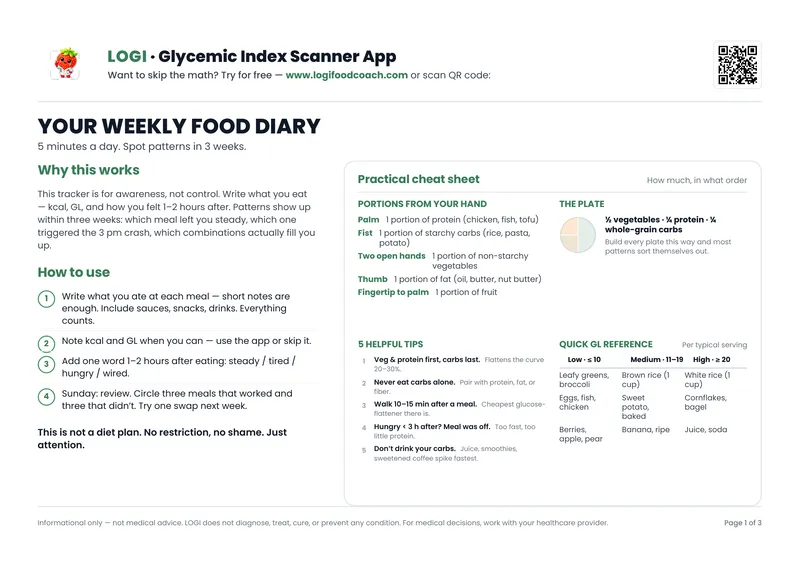
Free PDF — 3 pages
Your Weekly Food Journal
Track meals, glycemic load & mood. Spot patterns in 3 weeks.
No spam. Unsubscribe anytime.