Open-Faced Danish Smørrebrød — Low-Glycemic Rye Sandwiches
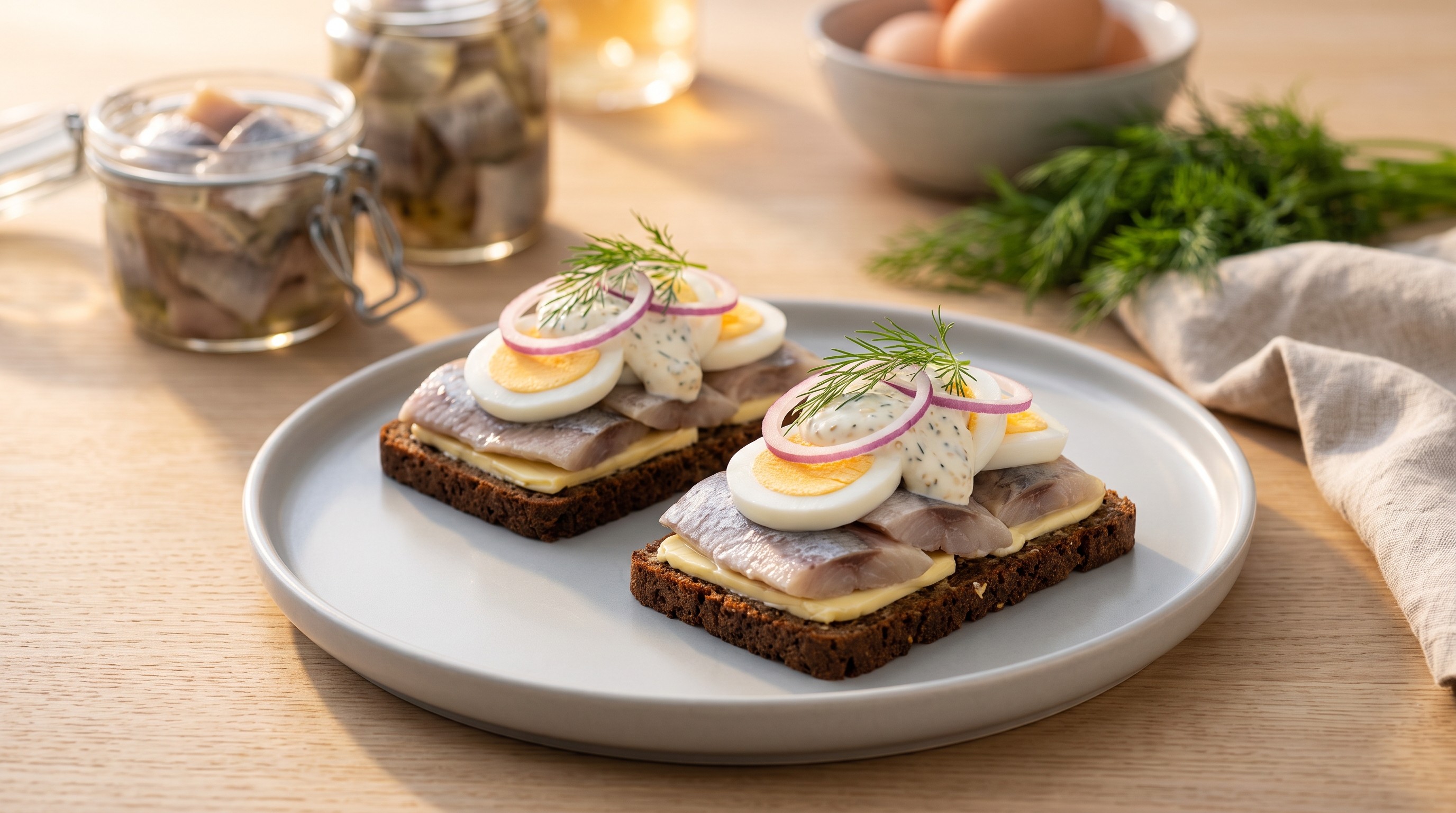
Classic Danish smørrebrød on dense sourdough rugbrød — naturally low-GI rye topped with herring, egg, roast beef, and tangy cucumber salad.
Smørrebrød is Denmark's proudest lunch tradition, and it turns out to be a near-perfect low-glycemic meal straight out of the gate. The foundation is rugbrød — an ultra-dense, whole-kernel sourdough rye bread with a glycemic index around 46, far below ordinary sandwich bread. Its tight crumb and high fibre content slow glucose absorption dramatically, while the lactic acid from sourdough fermentation further blunts the blood sugar response. A thin seal of butter adds a layer of fat that slows gastric emptying even more.
Each open-faced sandwich delivers a generous portion of protein and healthy fats. The herring-and-egg version provides omega-3 fatty acids alongside complete protein, while the roast beef slice brings iron and B-vitamins with virtually zero carbohydrate impact. Both toppings sit on a base of just 60 grams of bread — a controlled portion that keeps total carbohydrate load modest. The pickled vegetables and mustard-spiked yogurt contribute acetic acid and probiotics, both shown to moderate postprandial glucose.
For the best blood sugar outcome, start with a few bites of the cucumber-dill salad before tackling the sandwiches — the vinegar dressing and raw vegetable fibre prime your digestive system. Pair with a cup of unsweetened tea or sparkling water. This is a meal designed by a culture that values restraint and quality over volume, and it rewards you with steady, sustained energy all afternoon.
Blood Sugar Impact
Low glycemic impact expected, with a GI of 38 and moderate glycemic load of 14.6. The combination of dense rye bread, protein-rich herring, roast beef, and egg will promote slow, steady glucose absorption and sustained energy for 3-4 hours.
Blood Sugar Tips
- ✓ Start with the protein-rich toppings (herring, roast beef, egg) before eating the rye bread to slow gastric emptying and blunt the glucose response.
- ✓ Keep portions to one or two open-faced slices — while rye bread is low-GI, the glycemic load scales with quantity.
- ✓ Follow the meal with a 10-15 minute walk to enhance glucose uptake by muscles and further flatten any post-meal rise.
🥗 Ingredients
- 2 pcs Danish rugbrød
- 2 tsp Salted butter
- 100 g Pickled herring
- 1 pcs Egg
- 2 tbsp Greek yogurt
- 2 tsp Dijon mustard
- 2 tbsp Dill
- 30 g Red onion
- 1 tsp Capers
- 80 g Roast beef
- 1 tbsp Mayonnaise
- 1 tsp Prepared horseradish
- 2 tbsp Crispy fried onions
- 2 tbsp Pickled red cabbage
- 1 tbsp Chives
- 0.5 pcs English cucumber
- 1 tbsp White wine vinegar
- 1 tsp Black pepper
- 1 tsp Salt
- 2 pcs Danish rugbrød
- 2 tsp Salted butter
- 3.5 oz Pickled herring
- 1 pcs Egg
- 2 tbsp Greek yogurt
- 2 tsp Dijon mustard
- 2 tbsp Dill
- 1.1 oz Red onion
- 1 tsp Capers
- 2.8 oz Roast beef
- 1 tbsp Mayonnaise
- 1 tsp Prepared horseradish
- 2 tbsp Crispy fried onions
- 2 tbsp Pickled red cabbage
- 1 tbsp Chives
- 0.5 pcs English cucumber
- 1 tbsp White wine vinegar
- 1 tsp Black pepper
- 1 tsp Salt
👨🍳 Instructions
- 1
Prepare the cucumber-dill salad first, as it benefits from resting. In a small bowl, whisk together the white wine vinegar, 1 teaspoon of Dijon mustard, and a pinch of salt until combined. Slice the cucumber as thinly as possible — a mandoline is ideal. Toss the cucumber slices and 1 tablespoon of chopped dill into the dressing, grind over a generous amount of black pepper, and set aside at room temperature. Twenty minutes is good; up to an hour is even better.
- 2
If you need to cook the egg, bring a small saucepan of water to a rapid boil. Gently lower the egg in and boil for exactly 9 minutes. Transfer to a bowl of cold running water, let it cool completely, then peel and slice into even rounds.
- 3
Prepare the two sauces. In one small dish, stir together the Greek yogurt (or sour cream) with 1 teaspoon of Dijon mustard until smooth. In another, mix the mayonnaise with the prepared horseradish. Set both aside.
- 4
Butter the rugbrød. Using room-temperature butter, spread a thin, even layer across each slice — edge to edge, leaving no bare spots. This is the traditional Danish moisture barrier that prevents toppings from soaking into the dense rye. Do not skip this step.
- 5
Build the herring and egg smørrebrød (sild og æg). Lay 2–3 pieces of drained pickled herring across one buttered slice. Arrange the sliced hard-boiled egg on top, then drizzle with a spoonful of the mustard-yogurt sauce. Scatter thin rings of red onion, a generous pinch of fresh dill, and a few capers if using.
- 6
Build the roast beef smørrebrød (dyrlægens natmad). Lay the thinly sliced rare roast beef across the second buttered slice in soft, loose folds — resist the urge to flatten it. Spread the horseradish mayonnaise over the top of the beef, not underneath. Spoon the pickled red cabbage into the centre of the sandwich.
- 7
Finish the roast beef slice just before serving: scatter the crispy fried onions over the top (they lose their crunch quickly) and sprinkle with chopped chives.
- 8
Plate one of each smørrebrød per person with the cucumber-dill salad alongside. For the best blood sugar response, take a few bites of the vinegar-dressed cucumber salad before starting the sandwiches — the fibre and acetic acid help prime your system. Eat with a knife and fork, as Danish tradition demands.
📊 Nutrition Per Serving
| Per Serving | Whole Dish | |
|---|---|---|
| Calories | 484 | 969 |
| Carbs | 38g | 76g |
| Sugars | 9g | 19g |
| Added Sugars | 3g | 7g |
| Natural Sugars | 6g | 12g |
| Protein | 28g | 56g |
| Fat | 24g | 49g |
| Saturated Fat | 7g | 15g |
| Unsaturated Fat | 17g | 34g |
| Fiber | 7g | 13g |
| Soluble Fiber | 2g | 4g |
| Insoluble Fiber | 5g | 9g |
| Sodium | 1448mg | 2897mg |
Predicted Glucose Response
What if you...
Estimated model — individual responses vary. Not medical advice.
🔄 Lower GI Swaps
Traditional Danish rye bread has a moderate GI (~45-55). Sprouted grain bread (GI ~36) and authentic pumpernickel made with whole rye kernels and long fermentation (GI ~41) have lower glycemic impact due to intact grain structure and organic acids that slow glucose absorption. Halving the bread and adding a lettuce base reduces the glycemic load significantly.
Fried onions are typically coated in flour or starch before frying, which raises their GI considerably. Raw pickled shallots add crunch and tang with negligible glycemic impact, while pumpkin seeds provide texture with virtually zero effect on blood sugar and added protein and healthy fats that help blunt glucose response.
Commercial mayonnaise often contains added sugar and refined seed oils. Avocado provides healthy monounsaturated fats that slow gastric emptying and improve postprandial glucose response (GL essentially 0). Full-fat sour cream and olive oil-mustard blends similarly contribute fat and protein without adding to glycemic load.
While yellow onion has a low GI, when cooked it caramelizes and concentrates natural sugars, slightly raising glycemic impact. Raw red onion, spring onions, or vinegar-pickled pearl onions retain more fiber structure and the acetic acid in pickled versions has been shown to reduce postprandial blood glucose by up to 20-30%.
🔬 The Science Behind This Recipe
Why This Recipe Works for Your Blood Sugar
Danish rye bread is the star here, and it's a world apart from typical white or even whole wheat bread. True Danish rugbrød is made from whole rye kernels and cracked rye, which are packed with soluble fiber. This fiber forms a gel-like barrier in your digestive system, dramatically slowing the rate at which carbohydrates break down into glucose. That's why this bread scores a glycemic index of just 38 — well below the 70+ you'd see from a standard white sandwich roll. But here's what really matters: the glycemic load per serving lands at 14.6, which falls in the moderate range. Glycemic load accounts for how much carbohydrate you're actually eating, not just how fast it hits your bloodstream. A thin slice of dense rye delivers far fewer total carbs than a fluffy white bun, so the real-world impact on your blood sugar is even gentler than the GI alone suggests.
The toppings on smørrebrød aren't just delicious — they're doing important metabolic work. Pickled herring delivers protein and omega-3 fats, while the egg adds another layer of protein and healthy fat. Greek yogurt contributes both protein and probiotics. When you eat protein and fat alongside carbohydrates, they slow gastric emptying — essentially putting the brakes on how quickly food leaves your stomach. This means glucose trickles into your bloodstream gradually rather than flooding in all at once. The butter on the rye serves the same purpose, creating a fat barrier that further blunts any glucose response.
To get the most from this meal, consider a short 10-15 minute walk afterward — even gentle movement helps your muscles absorb glucose more efficiently. And if you're serving this alongside a salad or vegetables, eat those first. Starting with fiber and protein before your carbohydrates is one of the simplest, most effective strategies for keeping your blood sugar steady throughout the meal.
Related recipes
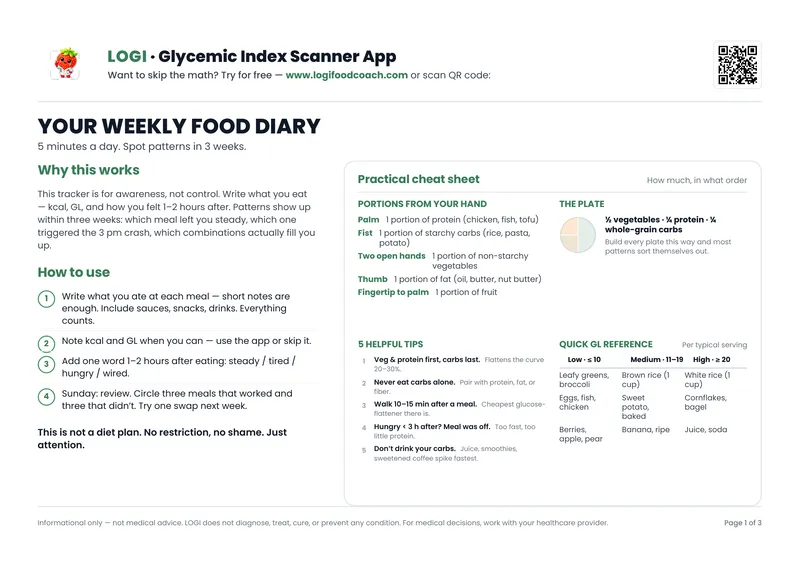
Free PDF — 3 pages
Your Weekly Food Journal
Track meals, glycemic load & mood. Spot patterns in 3 weeks.
No spam. Unsubscribe anytime.