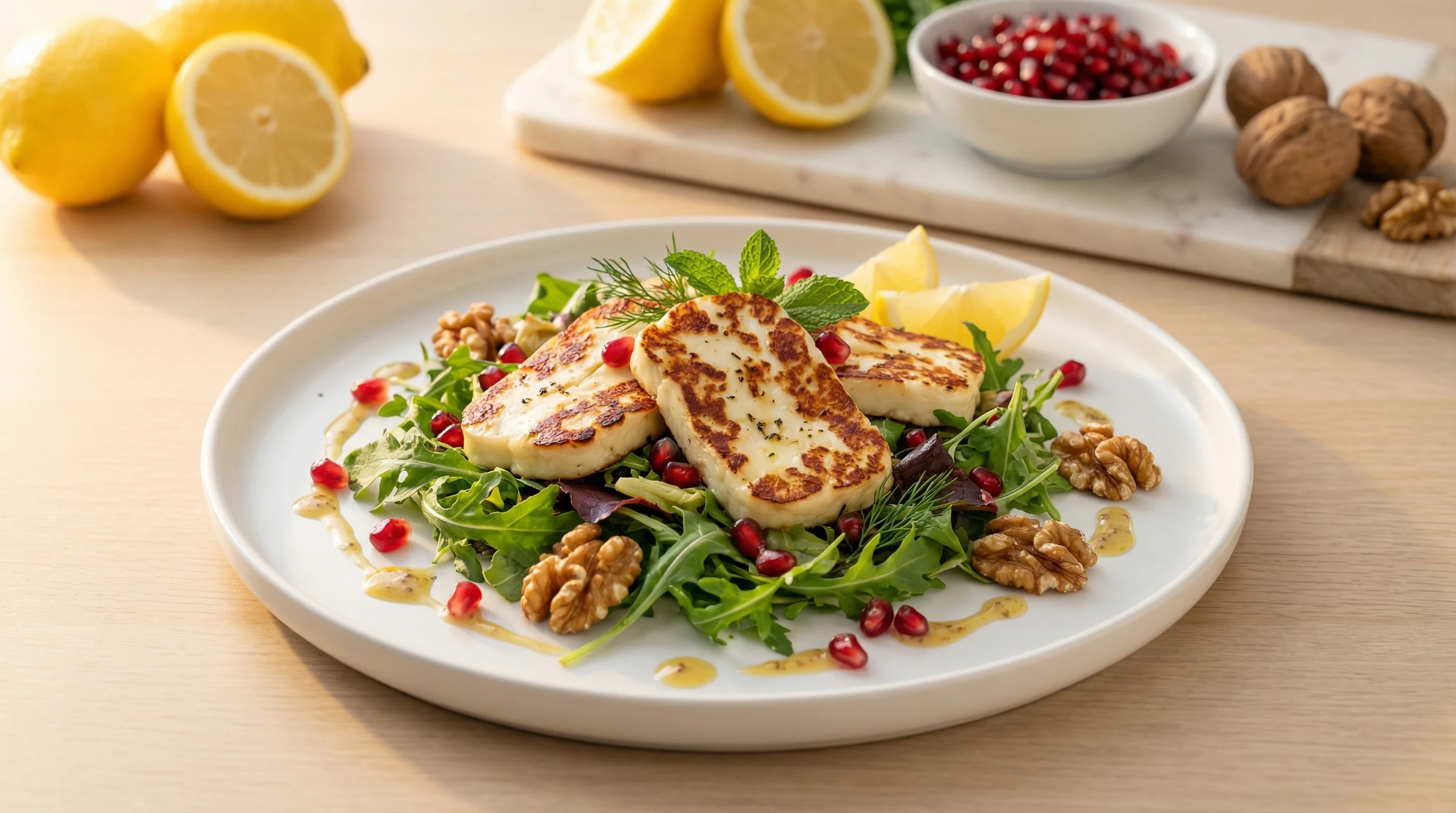
Mediterranean Grilled Halloumi Salad with Pomegranate and Walnuts
Golden grilled halloumi meets peppery greens, jewel-like pomegranate seeds, and toasted walnuts in this blood sugar-friendly Mediterranean salad with tangy mustard dressing.
This stunning low-glycemic salad brings together the best of Mediterranean cuisine while keeping your blood sugar stable throughout the afternoon. The star ingredient, halloumi cheese, provides satisfying protein and healthy fats that slow glucose absorption, while its high melting point allows for beautiful caramelization without losing structure. Each bite delivers a symphony of textures: crispy-edged cheese, crunchy walnuts rich in omega-3 fatty acids, and bursts of tart-sweet pomegranate that add antioxidants without spiking blood sugar.
The foundation of peppery arugula and tender mixed greens provides fiber and phytonutrients that further moderate the glycemic response. We've replaced traditional honey-based dressings with a bright lemon-mustard vinaigrette sweetened with erythritol, a zero-glycemic sweetener that won't affect your blood glucose levels. The extra virgin olive oil contributes heart-healthy monounsaturated fats and helps your body absorb fat-soluble vitamins from the greens.
This recipe exemplifies the glycemic-friendly eating strategy of combining protein, healthy fats, and fiber-rich vegetables in one meal. The absence of high-GI starches means stable energy without the post-meal crash. Enjoy this as a complete light lunch or pair it with grilled fish or chicken for a more substantial dinner. The warm cheese slightly wilts the greens, creating an appealing contrast with the cool, crisp pomegranate seeds.
Blood Sugar Impact
Minimal blood sugar impact expected due to the extremely low glycemic load of 2.1 and GI of 9. This meal should provide stable, sustained energy for 4-5 hours without causing any significant glucose spike, thanks to the high fat content from halloumi, walnuts, and olive oil combined with fiber-rich greens.
Blood Sugar Tips
- ✓ Eat the greens and vegetables first before the halloumi cheese to maximize fiber's blood sugar-blunting effect
- ✓ Add a tablespoon of apple cider vinegar to the dressing to further improve insulin sensitivity
- ✓ Enjoy this meal earlier in the day when insulin sensitivity is naturally higher, though the low glycemic load makes timing less critical
🥗 Ingredients
- 30 g halloumi cheese, sliced 5mm thick
- 25 g fresh arugula leaves
- 20 g fresh lemon
- 17 g pomegranate arils
- 15 g raw walnut halves
- 10 ml extra virgin olive oil, divided
- 10 g mixed salad greens
- 10 g Dijon mustard
- 3 g erythritol sweetener
- 1 g sea salt or kosher salt
- 0.3 g freshly ground black pepper
- 1.1 oz halloumi cheese, sliced 5mm thick
- 0.9 oz fresh arugula leaves
- 0.7 oz fresh lemon
- 0.6 oz pomegranate arils
- 0.5 oz raw walnut halves
- 2 tsp extra virgin olive oil, divided
- 0.4 oz mixed salad greens
- 0.4 oz Dijon mustard
- 0.1 oz erythritol sweetener
- 0.0 oz sea salt or kosher salt
- 0.0 oz freshly ground black pepper
👨🍳 Instructions
- 1
Prepare the halloumi by slicing it into uniform strips about 5mm thick. Lightly brush one side of each slice with approximately 5ml of the olive oil. Preheat a grill pan or heavy-bottomed skillet over medium-high heat until it's thoroughly hot and ready for searing.
- 2
Place the oiled halloumi slices onto the preheated cooking surface with the brushed side down. Let them sear without moving for 2-3 minutes until you see attractive grill marks forming and the edges turn golden brown. Carefully flip each piece and cook the opposite side for another 2-3 minutes until equally caramelized. Transfer to a plate and set aside.
- 3
While the cheese is grilling, toast the walnut halves in a separate dry skillet over medium heat. Stir them frequently for 2-3 minutes, watching closely to prevent burning. Remove from heat when they become fragrant and develop a slightly deeper color. The toasting enhances their nutty flavor and adds crunch.
- 4
Prepare the vinaigrette by combining the remaining 5ml olive oil, Dijon mustard, and juice squeezed from the fresh lemon in a small bowl or jar. Add the erythritol if you prefer a hint of sweetness without affecting blood sugar. Whisk vigorously until the mixture becomes smooth and emulsified, then season with salt and freshly ground black pepper to taste.
- 5
Build your salad by spreading the arugula and mixed greens across a serving plate, creating an attractive base layer. Arrange the warm grilled halloumi slices on top of the greens in an appealing pattern.
- 6
Scatter the pomegranate arils evenly across the salad, allowing their ruby color to create visual interest. Distribute the toasted walnuts throughout, ensuring each bite will have a mix of textures. Drizzle the prepared vinaigrette over the entire composition just before serving. The residual warmth from the cheese will gently wilt the greens while the dressing brings all the flavors together. Serve immediately for optimal texture and temperature contrast.
📊 Nutrition Per Serving
| Per Serving | Whole Dish | |
|---|---|---|
| Calories | 318 | 318 |
| Carbs | 13g | 13g |
| Sugars | 4g | 4g |
| Natural Sugars | 4g | 4g |
| Protein | 11g | 11g |
| Fat | 28g | 28g |
| Saturated Fat | 7g | 7g |
| Unsaturated Fat | 21g | 21g |
| Fiber | 3g | 3g |
| Soluble Fiber | 1g | 1g |
| Insoluble Fiber | 2g | 2g |
| Sodium | 762mg | 762mg |
Predicted Glucose Response
What if you...
Estimated model — individual responses vary. Not medical advice.
🔄 Lower GI Swaps
While pomegranate seeds have a moderate glycemic index of 35, berries like blueberries (GI 25), blackberries (GI 25), and raspberries (GI 25) have lower GI values and higher fiber content, resulting in an even gentler blood sugar response while maintaining the fruity sweetness and antioxidant benefits.
While walnuts are already excellent with a GI near zero, pecans and macadamia nuts have slightly higher fat content and lower carbohydrate ratios, making them even more blood-sugar stable. Almonds provide additional fiber and protein for sustained energy without glucose spikes.
Arugula is already low-glycemic, but spinach, kale, and watercress have virtually zero glycemic impact while offering higher concentrations of magnesium and chromium, minerals that support healthy insulin function and glucose metabolism.
Replacing generic mixed greens with specific low-starch leafy greens ensures minimal carbohydrate content and maximum nutrient density, with these options providing negligible glycemic load while adding volume and satiety to help prevent blood sugar fluctuations.
🔬 The Science Behind This Recipe
# The Science Behind This Blood Sugar-Friendly Salad
This Mediterranean salad is a masterclass in blood sugar management, with an impressively low glycemic load of just 2.1 and a GI of 9. The secret lies in its strategic combination of protein, healthy fats, and fiber-rich vegetables that work together to keep your glucose levels steady.
Halloumi cheese is the star player here, providing substantial protein (about 7 grams per ounce) and fat that dramatically slow down digestion and glucose absorption. When you eat protein and fat together with any carbohydrates, your stomach empties more gradually, preventing the rapid blood sugar spikes that come from eating carbs alone. The arugula base adds volume and fiber with virtually no impact on blood sugar—leafy greens have such minimal carbohydrate content that they're considered "free foods" for glucose management. Meanwhile, the walnuts contribute additional healthy omega-3 fats and protein, plus they're one of the few foods that may actually improve insulin sensitivity over time.
Here's a practical tip to maximize this meal's benefits: eat your salad components in order, starting with the arugula and finishing with the pomegranate seeds (which contain natural sugars). This "food sequencing" approach can reduce post-meal glucose spikes by up to 73% according to recent research. The pomegranate seeds, while containing some natural sugars, are buffered by the fiber, protein, and fats you've already consumed, meaning their impact is minimal. Consider taking a 10-minute walk after eating to further enhance glucose uptake by your muscles. This combination of strategic ingredients and smart eating habits makes this salad an excellent choice for anyone looking to maintain stable energy levels throughout the day.
Related recipes
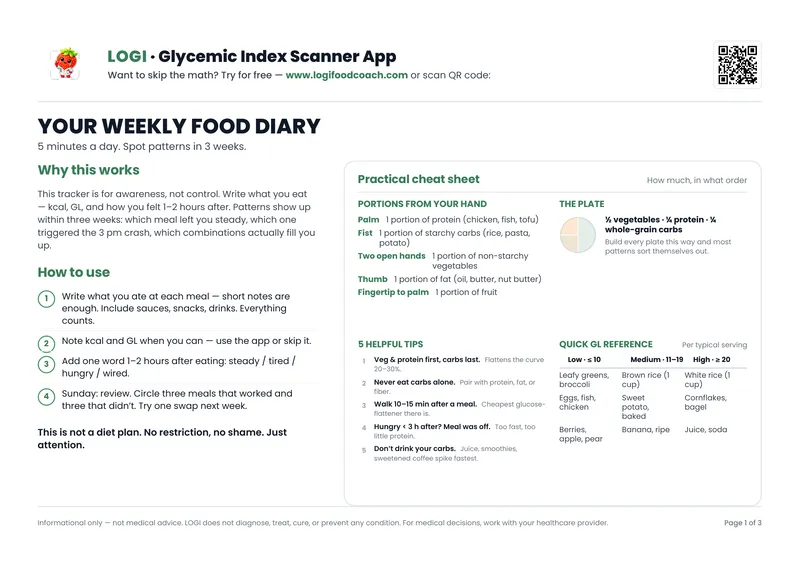
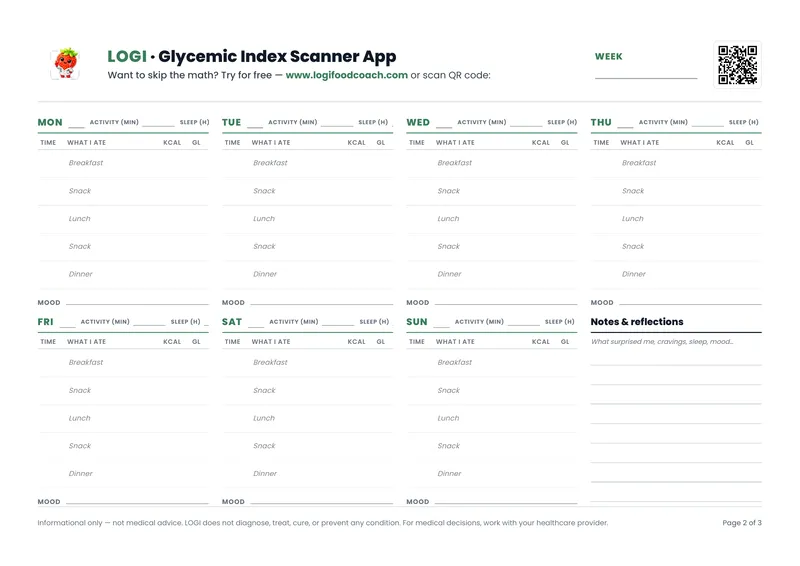
Free PDF — 3 pages
Your Weekly Food Journal
Track meals, glycemic load & mood. Spot patterns in 3 weeks.
No spam. Unsubscribe anytime.