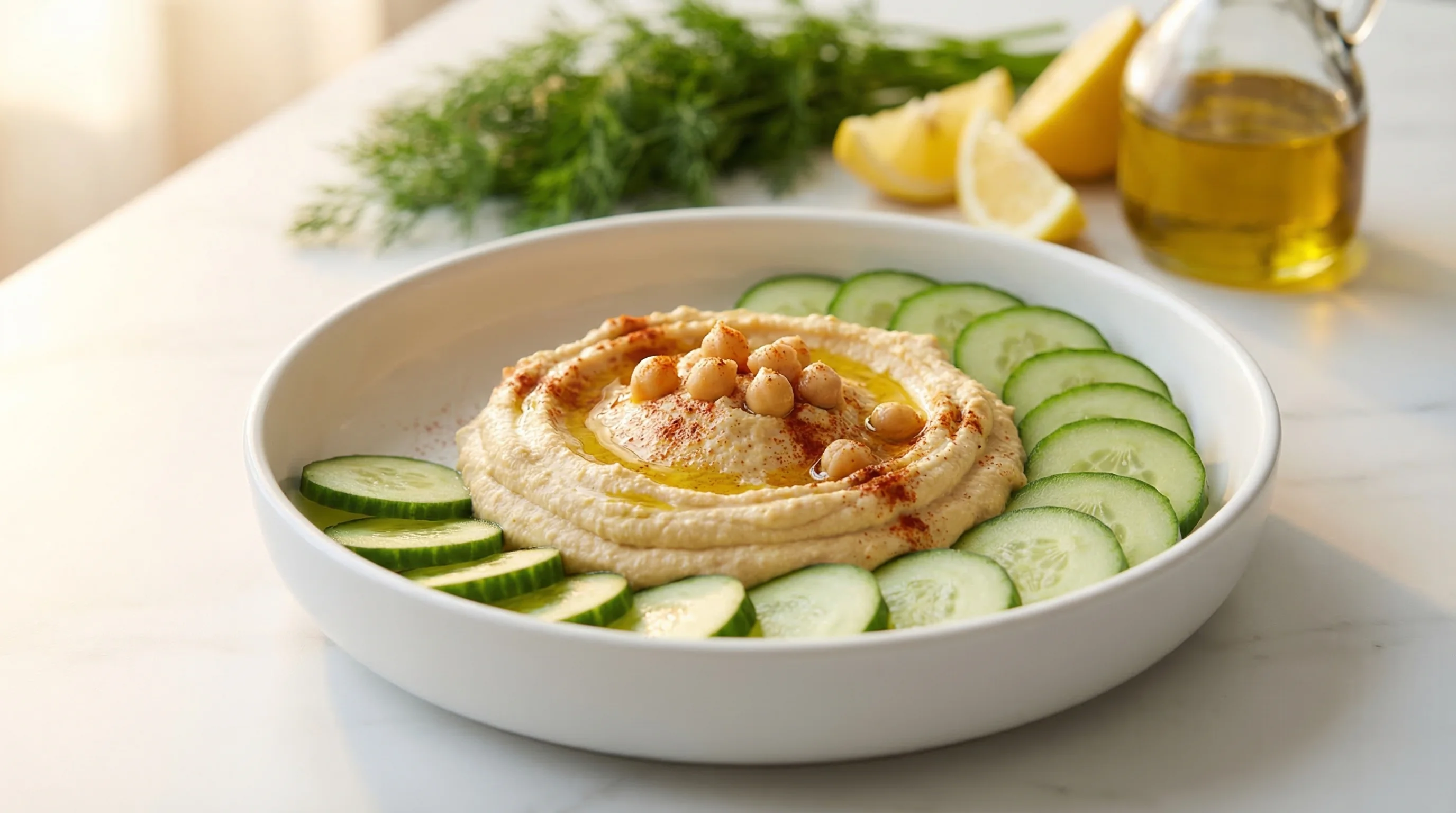
Hummus with Cucumber Slices
A blood sugar-friendly snack combining protein-rich hummus with hydrating cucumber for sustained energy without glucose spikes.
This simple yet powerful snack is a cornerstone of low-glycemic eating. Hummus, made from chickpeas, delivers plant-based protein and fiber that slow glucose absorption, while its healthy fats from tahini and olive oil further moderate blood sugar response. The combination has a glycemic index around 6-10, making it one of the most diabetes-friendly snacks available.
Cucumbers add volume and hydration with virtually zero glycemic impact, creating a satisfying crunch that makes this snack feel substantial. The high water and fiber content in cucumbers also aids digestion and helps you feel full longer. This pairing exemplifies the principle of combining complex carbohydrates with protein and healthy fats—a strategy that prevents the rapid blood sugar spikes associated with simple carbs eaten alone.
Perfect as a mid-morning or afternoon snack, this combination provides steady energy for 2-3 hours. The chickpeas in hummus also contain resistant starch, which feeds beneficial gut bacteria and may improve insulin sensitivity over time. For optimal blood sugar management, enjoy this snack between meals rather than immediately after a carbohydrate-heavy dish, and consider eating the cucumber slices first to take advantage of the fiber's glucose-blunting effects.
Blood Sugar Impact
Minimal blood sugar impact expected. The very low glycemic load of 3.4 and GI of 14, combined with the protein and fiber in hummus, will result in stable, sustained energy without significant glucose spikes.
Blood Sugar Tips
- ✓ Eat this as a mid-morning or afternoon snack to maintain steady blood sugar between meals
- ✓ Pair with a small handful of nuts or seeds to add healthy fats for even more sustained energy
- ✓ Use this as a pre-meal appetizer to help blunt the glycemic response of your main course
🥗 Ingredients
- 0.5 cup hummus
- 1 pcs cucumber
- 0.5 cup hummus
- 1 pcs cucumber
👨🍳 Instructions
- 1
Rinse the cucumber thoroughly under cold running water to remove any surface dirt or residue.
- 2
Pat the cucumber dry with a clean kitchen towel or paper towel.
- 3
Using a sharp knife, trim off both ends of the cucumber and discard them.
- 4
Slice the cucumber crosswise into rounds approximately 1/4-inch thick, creating uniform pieces for consistent dipping.
- 5
Arrange the cucumber slices on a serving plate in a circular pattern or fan shape.
- 6
Spoon the hummus into a small bowl and place it in the center of the plate or alongside the cucumber slices.
- 7
For optimal blood sugar management, eat a few cucumber slices first to prime your digestive system with fiber, then dip remaining slices into the hummus and enjoy immediately.
- 8
Store any leftover cucumber slices in an airtight container in the refrigerator for up to 2 days, and refrigerate unused hummus according to package directions.
📊 Nutrition Per Serving
| Per Serving | Whole Dish | |
|---|---|---|
| Calories | 229 | 229 |
| Carbs | 24g | 24g |
| Sugars | 4g | 4g |
| Natural Sugars | 4g | 4g |
| Protein | 11g | 11g |
| Fat | 12g | 12g |
| Saturated Fat | 2g | 2g |
| Unsaturated Fat | 10g | 10g |
| Fiber | 8g | 8g |
| Soluble Fiber | 3g | 3g |
| Insoluble Fiber | 6g | 6g |
| Sodium | 292mg | 292mg |
Predicted Glucose Response
What if you...
Estimated model — individual responses vary. Not medical advice.
🔄 Lower GI Swaps
These legume alternatives have lower glycemic impact than chickpea-based hummus due to higher protein and fiber ratios, resulting in slower glucose absorption and better blood sugar stability
While cucumber is already very low-glycemic, these alternatives provide even more fiber and crunch with virtually zero glycemic load, plus additional nutrients that support glucose metabolism
🔬 The Science Behind This Recipe
Why This Works for Blood Sugar
This simple snack is a blood sugar superstar, with a glycemic load of just 3.4 and an estimated GI of 14—both exceptionally low. The magic lies in hummus's unique nutritional profile. Made primarily from chickpeas, hummus delivers a powerful combination of plant-based protein (about 2 grams per 2-tablespoon serving) and fiber (roughly 2 grams), which work together to slow carbohydrate digestion and absorption. When carbs enter your bloodstream gradually rather than all at once, your pancreas doesn't need to release a flood of insulin, keeping your blood sugar stable and steady. The tahini (sesame seed paste) in hummus adds healthy fats that further slow digestion, creating an even gentler glucose response.
Cucumbers are the perfect vehicle for hummus because they're almost entirely water and fiber with minimal carbohydrates—about 4 grams per cup. This means you can eat a satisfying volume without adding significant glucose load. The fiber in cucumber skins also contributes to that feeling of fullness while supporting digestive health. Together, this combination provides sustained energy without the crash that follows high-glycemic snacks like crackers or pretzels.
For maximum blood sugar benefits, enjoy this snack between meals when you need energy, or pair it with your main meal by eating it first. Starting with vegetables and protein-rich foods before any starches on your plate can reduce the overall glucose spike of your meal by up to 73% according to recent research. Consider adding a 10-minute walk after eating to help your muscles absorb glucose more efficiently, further smoothing out your blood sugar curve.
Related recipes

Free PDF — 3 pages
Your Weekly Food Journal
Track meals, glycemic load & mood. Spot patterns in 3 weeks.
No spam. Unsubscribe anytime.
