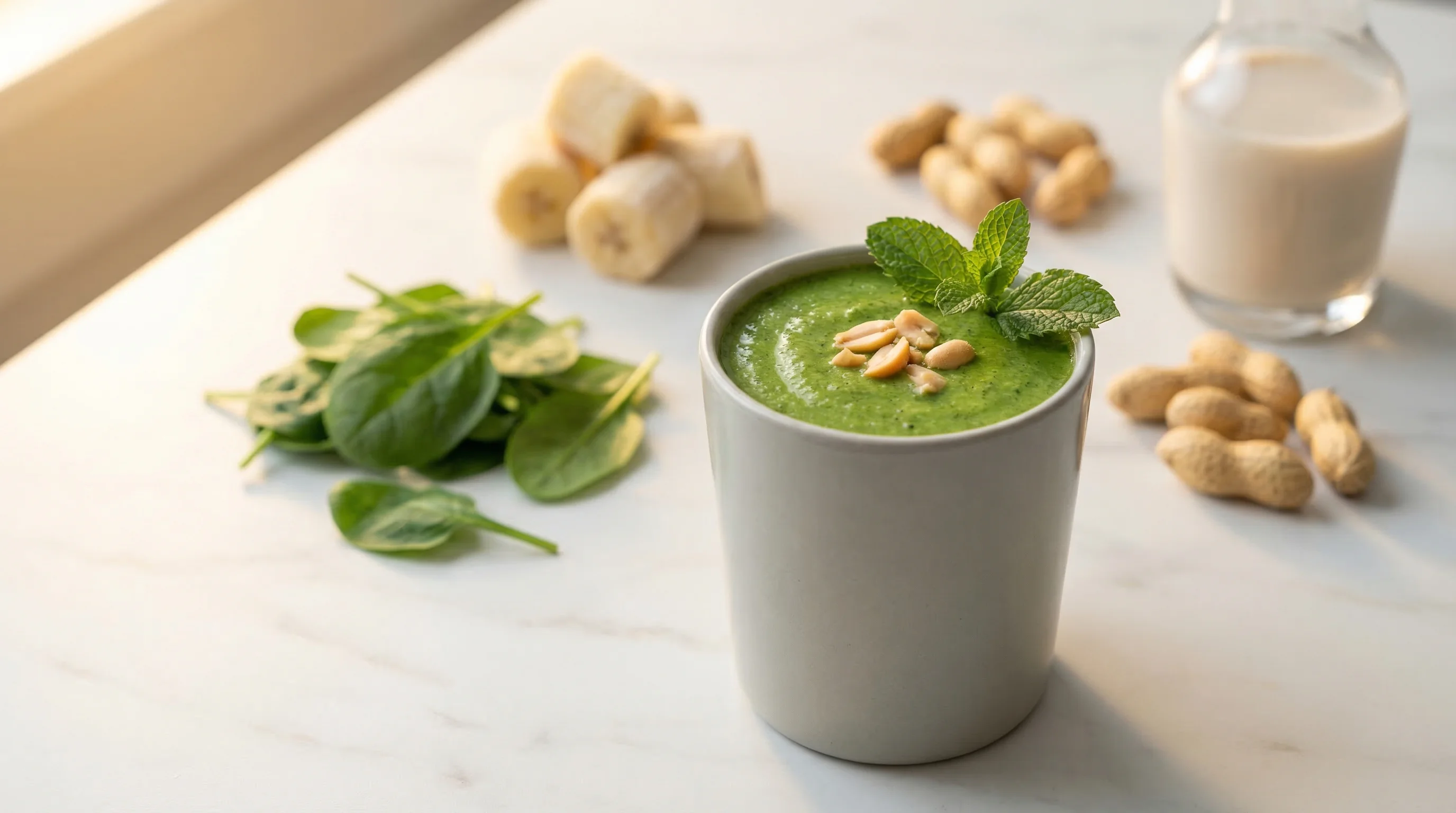
Low-Glycemic Green Power Smoothie
A blood sugar-friendly breakfast blend with protein-rich peanuts and fiber-packed spinach that keeps you energized without the glucose spike.
This nutrient-dense green smoothie is specifically designed to support stable blood sugar levels throughout your morning. Unlike typical fruit-heavy smoothies that can cause rapid glucose spikes, this recipe balances natural sugars with protein, healthy fats, and fiber to slow digestion and promote sustained energy.
The combination of fresh spinach provides essential minerals and virtually zero glycemic impact, while raw peanuts deliver plant-based protein and monounsaturated fats that further moderate the absorption of carbohydrates. We've kept the banana to half a serving to maintain that creamy texture and natural sweetness while significantly reducing the overall glycemic load. The unsweetened milk adds calcium and additional protein without added sugars.
For optimal blood sugar management, consume this smoothie as part of a complete breakfast rather than alone, and consider drinking it slowly over 15-20 minutes. The fiber from spinach and protein from peanuts work synergistically to create a gentle, sustained release of energy that won't leave you crashing mid-morning. This makes it an excellent choice for anyone managing diabetes, prediabetes, or simply seeking more stable energy levels throughout the day.
Blood Sugar Impact
This smoothie should cause a moderate, gradual rise in blood sugar due to its low-medium GI of 47 and moderate glycemic load of 14.1. The combination of protein from peanuts and milk, plus fiber from spinach, helps slow sugar absorption from the banana, providing steady energy for 2-3 hours.
Blood Sugar Tips
- ✓ Add the peanuts or a tablespoon of peanut butter first and blend briefly to create texture, making the smoothie less liquid and slower to digest
- ✓ Drink it slowly over 15-20 minutes rather than gulping it down quickly to avoid rapid blood sugar spikes
- ✓ Consider having this smoothie after light physical activity or pair it with a 10-minute walk afterward to help muscles absorb the glucose more efficiently
🥗 Ingredients
- 2 cup fresh baby spinach, packed
- 0.5 pcs ripe banana, frozen in chunks
- 240 ml unsweetened almond milk or low-fat milk
- 2 tbsp raw unsalted peanuts
- 2 cup fresh baby spinach, packed
- 0.5 pcs ripe banana, frozen in chunks
- 1.0 cups unsweetened almond milk or low-fat milk
- 2 tbsp raw unsalted peanuts
👨🍳 Instructions
- 1
Place the fresh baby spinach in your blender container first, packing it down gently to make room for the other ingredients.
- 2
Add the frozen banana chunks on top of the spinach. Using frozen banana creates a thicker, creamier texture without needing ice or additional sweeteners.
- 3
Measure and add the raw peanuts to the blender. These provide essential protein and healthy fats that help stabilize your blood sugar response.
- 4
Pour in the unsweetened milk, ensuring it covers most of the solid ingredients to facilitate smooth blending.
- 5
Secure the blender lid and begin blending on low speed for 10-15 seconds, then gradually increase to high speed.
- 6
Blend on high for 45-60 seconds until the mixture is completely smooth and no chunks of spinach or peanuts remain. The smoothie should have a vibrant green color and creamy consistency.
- 7
Pour into a glass and consume slowly over 15-20 minutes, ideally alongside a source of additional protein like Greek yogurt or a boiled egg for optimal blood sugar stability.
- 8
For best glycemic control, drink this smoothie as part of your breakfast rather than as a standalone meal, and consider eating any vegetables or protein foods first before finishing the smoothie.
📊 Nutrition Per Serving
| Per Serving | Whole Dish | |
|---|---|---|
| Calories | 316 | 316 |
| Carbs | 30g | 30g |
| Sugars | 20g | 20g |
| Natural Sugars | 20g | 20g |
| Protein | 15g | 15g |
| Fat | 17g | 17g |
| Saturated Fat | 6g | 6g |
| Unsaturated Fat | 11g | 11g |
| Fiber | 4g | 4g |
| Soluble Fiber | 2g | 2g |
| Insoluble Fiber | 3g | 3g |
| Sodium | 154mg | 154mg |
Predicted Glucose Response
What if you...
Estimated model — individual responses vary. Not medical advice.
🔄 Lower GI Swaps
Bananas have a moderate glycemic index (51-55) and can spike blood sugar. Avocado has virtually no impact on blood sugar (GI near 0), berries have a low GI (25-40), and zucchini is extremely low-glycemic, all providing creaminess without the glucose spike.
Regular milk contains lactose with a GI of 46 and adds to glycemic load. Unsweetened plant-based milks have minimal carbohydrates and a negligible glycemic impact, reducing the overall GL of the smoothie significantly.
While peanuts are already low-glycemic (GI 14), almonds (GI 0), walnuts (GI 15), and macadamias (GI near 0) have even lower glycemic impact and provide healthy fats that further slow glucose absorption and improve blood sugar stability.
🔬 The Science Behind This Recipe
Why This Smoothie Keeps Your Blood Sugar Steady
This Green Power Smoothie is a masterclass in blood sugar management, thanks to its smart combination of fiber, protein, and healthy fats. While bananas often get a bad reputation for their natural sugars, this recipe demonstrates how pairing matters more than individual ingredients. The spinach provides soluble fiber that literally slows down digestion, creating a barrier that prevents rapid sugar absorption in your intestines. Meanwhile, the peanuts contribute both protein (about 7 grams per ounce) and monounsaturated fats that further delay gastric emptying—essentially giving your body more time to process the banana's carbohydrates gradually rather than flooding your bloodstream all at once.
The milk adds another layer of blood sugar protection through its protein content, which triggers a slower insulin response compared to carbohydrates alone. This trio of fiber, protein, and fat transforms what could be a high-glycemic drink into a moderate one with a GI of just 47. The glycemic load of 14.1 is equally important here—it accounts for the actual portion size, not just how quickly the carbs are absorbed. This means you're getting a reasonable amount of carbohydrates that won't overwhelm your system, even if you're watching your blood sugar carefully.
For maximum benefit, drink this smoothie alongside or after a handful of nuts, or enjoy it as a post-breakfast snack rather than on an empty stomach. The existing fat and protein will work even better when there's already some food in your digestive system. You can also add a 10-minute walk after drinking it—muscle activity helps shuttle glucose into cells without requiring extra insulin, giving your pancreas a break while keeping energy levels stable throughout your morning.
Related recipes
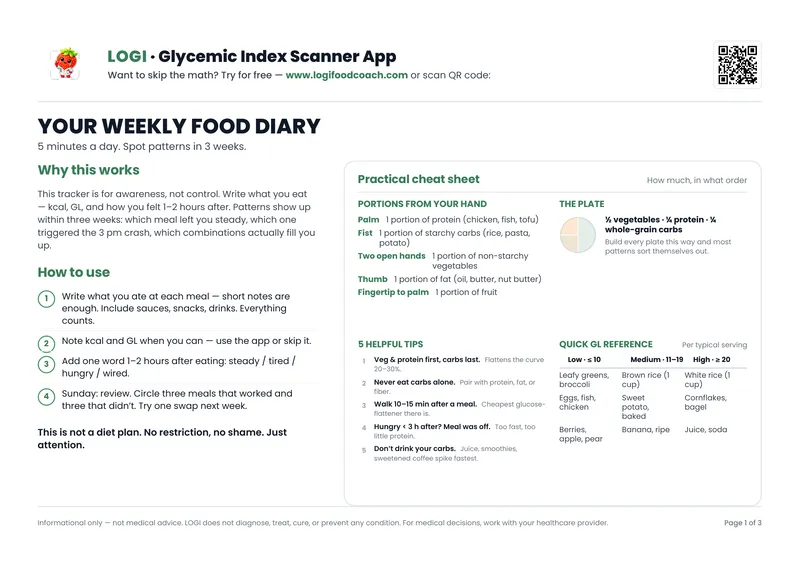
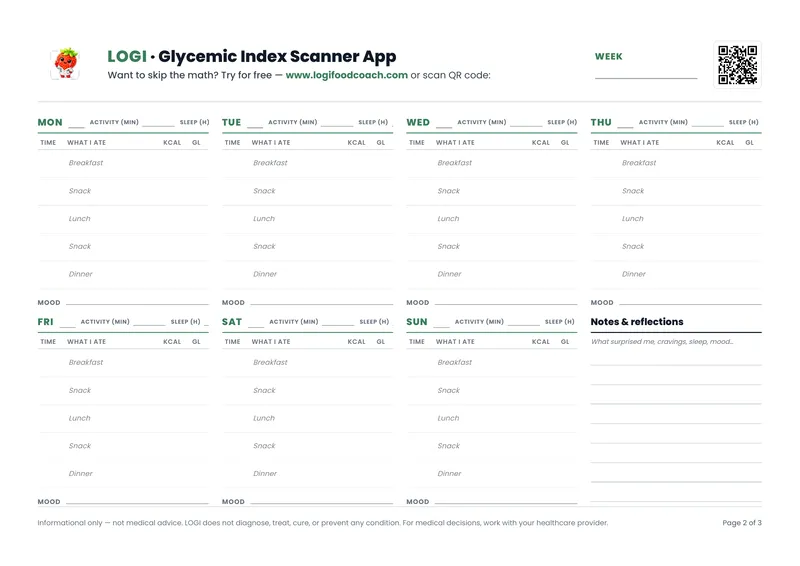
Free PDF — 3 pages
Your Weekly Food Journal
Track meals, glycemic load & mood. Spot patterns in 3 weeks.
No spam. Unsubscribe anytime.