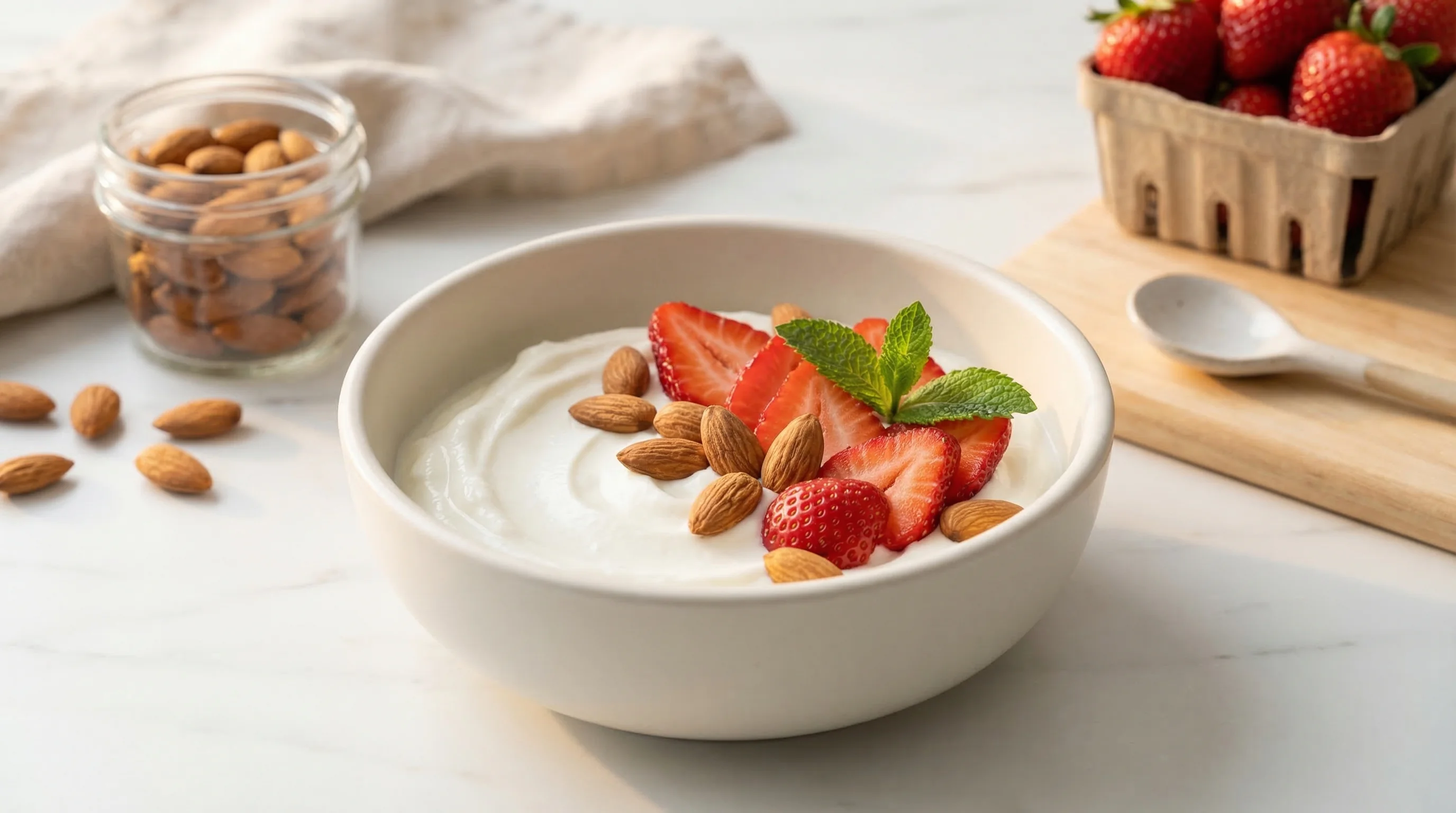
Greek Yogurt with Strawberries & Almonds
A perfectly balanced low-glycemic breakfast combining creamy Greek yogurt, fresh strawberries, and crunchy almonds for sustained energy without blood sugar spikes.
This simple yet sophisticated breakfast bowl is a masterclass in blood sugar management. Greek yogurt serves as the protein-rich foundation, delivering probiotics and keeping you satisfied for hours while minimizing glucose response. Its high protein content (nearly double that of regular yogurt) slows digestion and helps stabilize blood sugar levels throughout the morning.
Fresh strawberries add natural sweetness with a remarkably low glycemic index of just 40, making them one of the best fruit choices for glycemic control. Their fiber content and antioxidants further support metabolic health. The almonds provide healthy fats, additional protein, and magnesium—a mineral crucial for insulin sensitivity. This combination of protein, healthy fats, and fiber creates the ideal macronutrient balance to prevent blood sugar spikes.
For optimal glycemic control, choose plain, unsweetened Greek yogurt and full-fat varieties when possible, as the fat content further slows glucose absorption. This breakfast is best enjoyed in the morning when insulin sensitivity is naturally higher, and the protein will help regulate your appetite and blood sugar throughout the day. The entire bowl clocks in with a low glycemic load, making it an excellent choice for anyone managing diabetes, prediabetes, or simply seeking sustained energy without the mid-morning crash.
Blood Sugar Impact
Minimal blood sugar impact due to the low glycemic load and high protein content from Greek yogurt. Expect stable, sustained energy for 3-4 hours with minimal glucose spike.
Blood Sugar Tips
- ✓ Eat the almonds first to slow digestion and further blunt any blood sugar response from the fruit
- ✓ Choose full-fat Greek yogurt over low-fat versions for better satiety and slower glucose absorption
- ✓ Add a sprinkle of cinnamon which may help improve insulin sensitivity and glucose metabolism
🥗 Ingredients
- 170 g plain Greek yogurt
- 75 g fresh strawberries
- 15 g raw almonds
- 6.0 oz plain Greek yogurt
- 2.6 oz fresh strawberries
- 0.5 oz raw almonds
👨🍳 Instructions
- 1
Select a medium-sized serving bowl and measure out 170 grams (about 3/4 cup) of plain Greek yogurt.
- 2
Spoon the Greek yogurt into the bowl, creating a smooth, even base for your toppings.
- 3
Rinse the fresh strawberries under cool water and pat them dry with a clean kitchen towel.
- 4
Remove the green tops from the strawberries and slice them into quarters or thin rounds, depending on your preference.
- 5
Arrange the sliced strawberries evenly over the surface of the yogurt, distributing them for visual appeal and balanced flavor in every bite.
- 6
Roughly chop or crush the almonds into smaller pieces to release their oils and enhance their flavor, or leave them whole if preferred.
- 7
Sprinkle the almonds over the strawberries and yogurt, ensuring even coverage.
- 8
Serve immediately and eat mindfully, allowing the protein and healthy fats to signal satiety to your body for optimal blood sugar control throughout the morning.
📊 Nutrition Per Serving
| Per Serving | Whole Dish | |
|---|---|---|
| Calories | 211 | 211 |
| Carbs | 15g | 15g |
| Sugars | 10g | 10g |
| Natural Sugars | 10g | 10g |
| Protein | 21g | 21g |
| Fat | 8g | 8g |
| Saturated Fat | 1g | 1g |
| Unsaturated Fat | 7g | 7g |
| Fiber | 3g | 3g |
| Soluble Fiber | 1g | 1g |
| Insoluble Fiber | 2g | 2g |
| Sodium | 62mg | 62mg |
Predicted Glucose Response
What if you...
Estimated model — individual responses vary. Not medical advice.
🔄 Lower GI Swaps
These berries have a lower glycemic index than strawberries (raspberries and blackberries around 25-30, blueberries around 53 vs strawberries at 40) and contain more fiber, which further slows sugar absorption and reduces blood sugar spikes.
While almonds are already excellent for blood sugar control, walnuts and pecans have slightly higher omega-3 content and similar low glycemic impact, while macadamia nuts have even lower carbohydrate content (4g vs 6g per ounce), resulting in virtually no blood sugar impact.
Icelandic skyr contains even more protein than Greek yogurt (15-20g vs 10-15g per serving), which further stabilizes blood sugar response, while unsweetened coconut yogurt has lower natural sugars and can be protein-fortified to maintain the blood sugar benefits.
🔬 The Science Behind This Recipe
Why This Works for Your Blood Sugar
This simple breakfast bowl is a masterclass in blood sugar management, combining three ingredients that work synergistically to keep your glucose levels steady. Greek yogurt serves as the foundation with its high protein content (typically 15-20g per cup), which significantly slows digestion and the absorption of any carbohydrates in your meal. Unlike regular yogurt, Greek yogurt is strained to remove excess whey, concentrating the protein while reducing lactose (milk sugar). This protein powerhouse triggers a minimal insulin response while keeping you satisfied for hours, preventing the mid-morning energy crash that comes from high-carb breakfasts.
The strawberries add natural sweetness and fiber without spiking your blood sugar, thanks to their low glycemic index of around 40 and high water content. Berries are among the best fruit choices for glucose control because they contain polyphenols—plant compounds that may actually improve insulin sensitivity over time. The fiber in strawberries (about 3g per cup) further slows sugar absorption, while their vibrant color signals the presence of anthocyanins, antioxidants that support metabolic health. When you eat strawberries with protein and fat rather than alone, their already-modest impact on blood sugar becomes even gentler.
The almonds complete this metabolic trifecta by adding healthy fats and additional fiber. Just a quarter-cup provides 6g of protein, 4g of fiber, and monounsaturated fats that further slow gastric emptying—the rate at which food leaves your stomach. This creates an extended, gradual release of energy rather than a sharp glucose spike. The result? A glycemic load of just 3.1, meaning this entire meal has less impact on your blood sugar than a single slice of white bread.
Related recipes
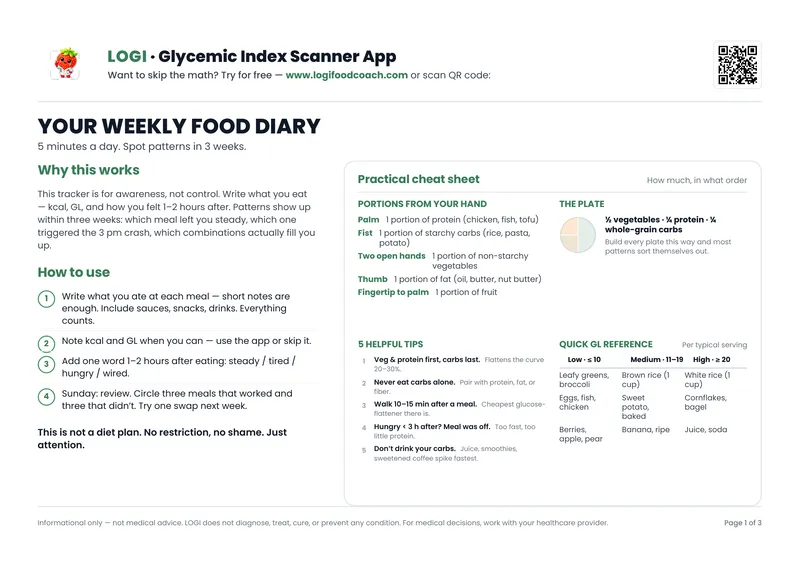
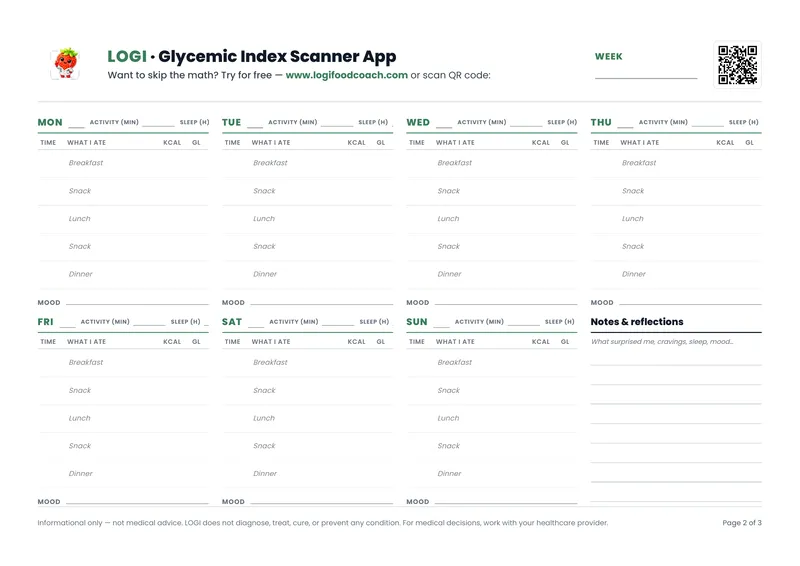
Free PDF — 3 pages
Your Weekly Food Journal
Track meals, glycemic load & mood. Spot patterns in 3 weeks.
No spam. Unsubscribe anytime.