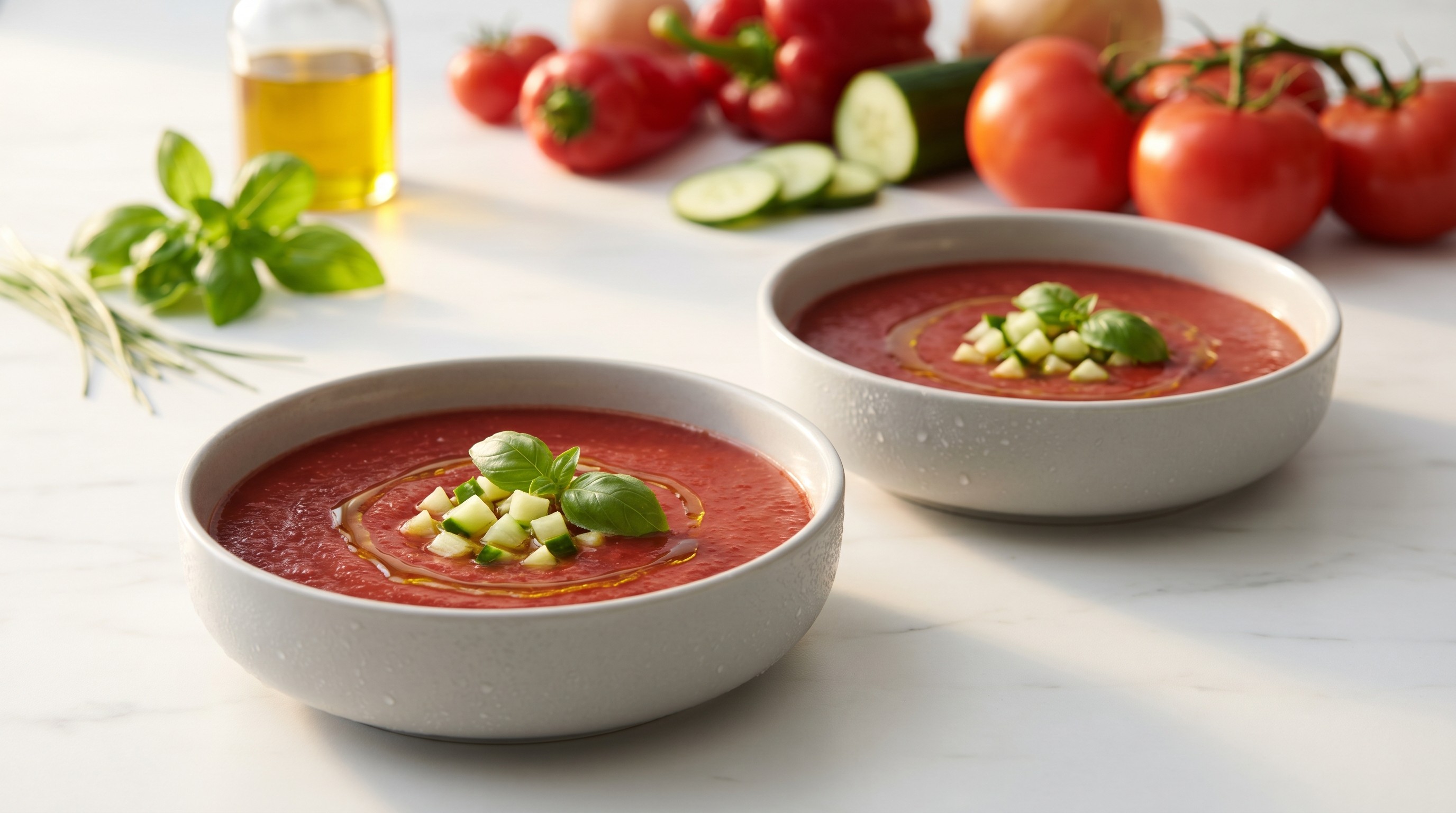
Gazpacho Andaluz (Classic Spanish Cold Tomato Soup)
A vibrant, no-cook Andalusian cold soup with an ultra-low glycemic load — raw vegetables and olive oil keep blood sugar perfectly steady.
Gazpacho Andaluz is one of the most naturally blood-sugar-friendly dishes in the Mediterranean canon. Every ingredient in this chilled soup sits firmly in the low-glycemic category: ripe tomatoes, cucumber, and red bell pepper deliver fiber, lycopene, and vitamin C without meaningful starch, while raw garlic contains allicin, a compound studied for its potential to improve insulin sensitivity. Because none of the vegetables are cooked, their cellular structure remains intact, which slows the release of natural sugars during digestion.
The generous pour of extra-virgin olive oil is more than a flavor choice — it is a glycemic strategy. Oleic acid and polyphenols in quality olive oil have been shown to reduce postprandial glucose spikes when consumed alongside carbohydrates. Sherry vinegar adds another layer of protection: acetic acid can lower the glycemic response of a meal by delaying gastric emptying. Together, the fat and acid create a buffer that makes this soup an ideal starter before any meal.
For the best results, prepare gazpacho at least two hours ahead or, better still, the night before. Chilling deepens the flavors and gives the fiber time to hydrate fully. Serve it as a first course before a protein-rich main — eating vegetables before protein and starch is a well-documented technique for flattening the overall glucose curve of a meal. At roughly 90 calories per bowl and virtually zero glycemic impact, this is summer eating at its smartest.
Blood Sugar Impact
Very minimal blood sugar impact expected. With a glycemic load of only 2.6 and an estimated GI of 24, this vegetable-based cold soup will produce a negligible glucose response, providing stable energy without any meaningful spike.
Blood Sugar Tips
- ✓ Serve with a side of whole-grain bread or a handful of nuts to add protein, healthy fat, and fiber for greater satiety without raising blood sugar significantly.
- ✓ Keep the soup chunky rather than fully blended—retaining vegetable texture slows gastric emptying and further flattens the already minimal glucose response.
- ✓ Enjoy as a starter before a main course; consuming this low-GI soup first primes digestion and can reduce the blood sugar impact of subsequent higher-carb foods.
🥗 Ingredients
- 700 g Tomato
- 1 pcs Red bell pepper
- 1 pcs Cucumber
- 1 pcs Garlic
- 2 tbsp Extra-virgin olive oil
- 1 tbsp Sherry vinegar
- 100 ml Water
- 1 tsp Salt
- 0.5 tsp Black pepper
- 1.5 lb Tomato
- 1 pcs Red bell pepper
- 1 pcs Cucumber
- 1 pcs Garlic
- 2 tbsp Extra-virgin olive oil
- 1 tbsp Sherry vinegar
- 7 tbsp Water
- 1 tsp Salt
- 0.5 tsp Black pepper
👨🍳 Instructions
- 1
Roughly chop the tomatoes, deseed and chop the red bell pepper, and peel and chop the cucumber. Set aside about 50g of cucumber, finely diced, for the garnish.
- 2
Add the tomatoes, red bell pepper, 100g of the chopped cucumber, the garlic clove, extra-virgin olive oil, sherry vinegar, and cold water to the jug of a high-speed blender.
- 3
Blend on high speed for 60 to 90 seconds until the mixture is completely smooth and uniformly coloured with no visible pieces remaining.
- 4
Season with salt and freshly ground black pepper. If the soup tastes too acidic, add a small pinch of extra salt to balance the acid — avoid adding sugar, which would raise the glycemic load unnecessarily.
- 5
For a silky-smooth restaurant-style finish, pour the soup through a fine-mesh sieve set over a bowl, pressing with the back of a spoon to extract all the liquid. For a more rustic, higher-fibre version that is even better for blood sugar, skip the straining entirely.
- 6
Transfer the gazpacho to a covered jug or airtight container and refrigerate for a minimum of two hours. For the deepest flavour, prepare it the evening before and let it rest overnight — the acidity mellows and the vegetables marry beautifully.
- 7
When ready to serve, give the soup a brief stir as it may have separated slightly. Ladle into chilled bowls for the best experience.
- 8
Garnish each bowl with the reserved diced cucumber, a thin drizzle of extra-virgin olive oil, and a crack of black pepper. Serve immediately as a starter before a protein-rich main course to help flatten the overall glucose curve of the meal.
📊 Nutrition Per Serving
| Per Serving | Whole Dish | |
|---|---|---|
| Calories | 110 | 441 |
| Carbs | 11g | 43g |
| Sugars | 7g | 26g |
| Natural Sugars | 7g | 26g |
| Protein | 2g | 9g |
| Fat | 7g | 29g |
| Saturated Fat | 1g | 4g |
| Unsaturated Fat | 6g | 25g |
| Fiber | 3g | 12g |
| Soluble Fiber | 1g | 3g |
| Insoluble Fiber | 2g | 6g |
| Sodium | 592mg | 2369mg |
Predicted Glucose Response
What if you...
Estimated model — individual responses vary. Not medical advice.
🔄 Lower GI Swaps
Green or less ripe tomatoes have a slightly lower sugar content and glycemic index than fully ripe red tomatoes, helping keep the already low GL even lower
Green bell peppers have less natural sugar and a lower glycemic index than red bell peppers, which are fully ripened and contain more glucose and fructose
All vinegars help blunt blood sugar response, but apple cider vinegar has demonstrated a particularly strong effect on slowing gastric emptying and improving post-meal glycemic control
While cucumber is already very low-GI, substituting part of it with zucchini or celery adds more fiber and slightly lowers the overall glycemic load of the soup
Increasing healthy fat content with extra virgin olive oil slows digestion and glucose absorption, further flattening the post-meal blood sugar curve and reducing effective glycemic load
🔬 The Science Behind This Recipe
Here's the science explainer section:
---
Why This Recipe Works for Blood Sugar
Gazpacho Andaluz is a naturally blood sugar-friendly dish, and the science behind it starts with its star ingredients. Tomatoes and red bell peppers are both low-glycemic vegetables packed with fiber, which slows the rate at which your body absorbs sugars. When you eat fiber-rich foods, they form a kind of gel in your digestive system that acts like a speed bump — glucose enters your bloodstream gradually instead of all at once. Cucumber adds volume and hydration with virtually no impact on blood sugar, making this soup wonderfully filling without the glucose spike you might get from a bread-based meal.
The olive oil in this recipe is doing more than adding flavor — it's a key player in blood sugar management. Healthy fats slow gastric emptying, meaning your stomach takes longer to process the meal. This gives your body more time to handle incoming glucose steadily and efficiently. When fat is paired with carbohydrates, even small amounts, it blunts the overall blood sugar response. Think of it as a built-in pairing strategy that this recipe already has baked in.
Here's where glycemic load really matters. While people often focus on a food's Glycemic Index (GI), what counts more is the glycemic load (GL), which factors in how much carbohydrate you're actually eating per serving. This gazpacho has a GL of just 2.6 and an estimated GI of 24 — both remarkably low. That means not only are the carbs in this dish slow to raise blood sugar, but there simply aren't many of them to begin with. For an extra edge, try enjoying a short 10-to-15-minute walk after your meal — research shows even light movement helps your muscles absorb glucose more effectively, keeping your levels smooth and steady.
Related recipes
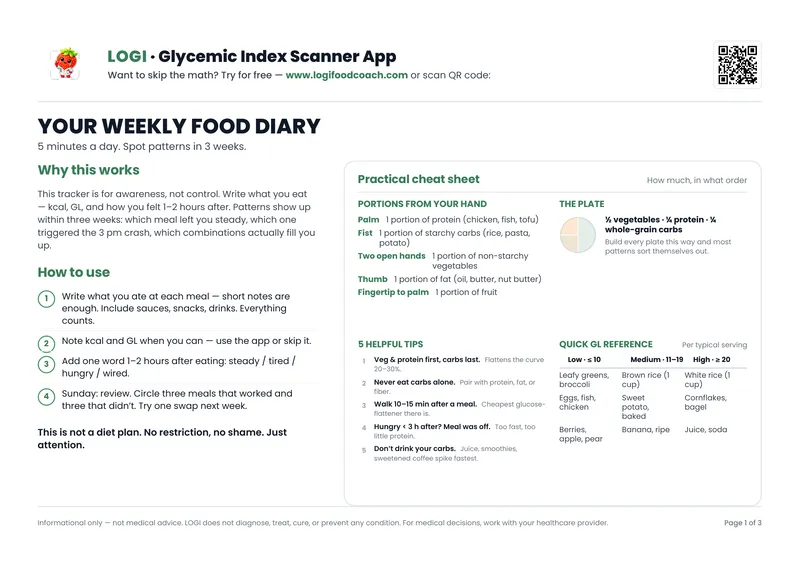
Free PDF — 3 pages
Your Weekly Food Journal
Track meals, glycemic load & mood. Spot patterns in 3 weeks.
No spam. Unsubscribe anytime.