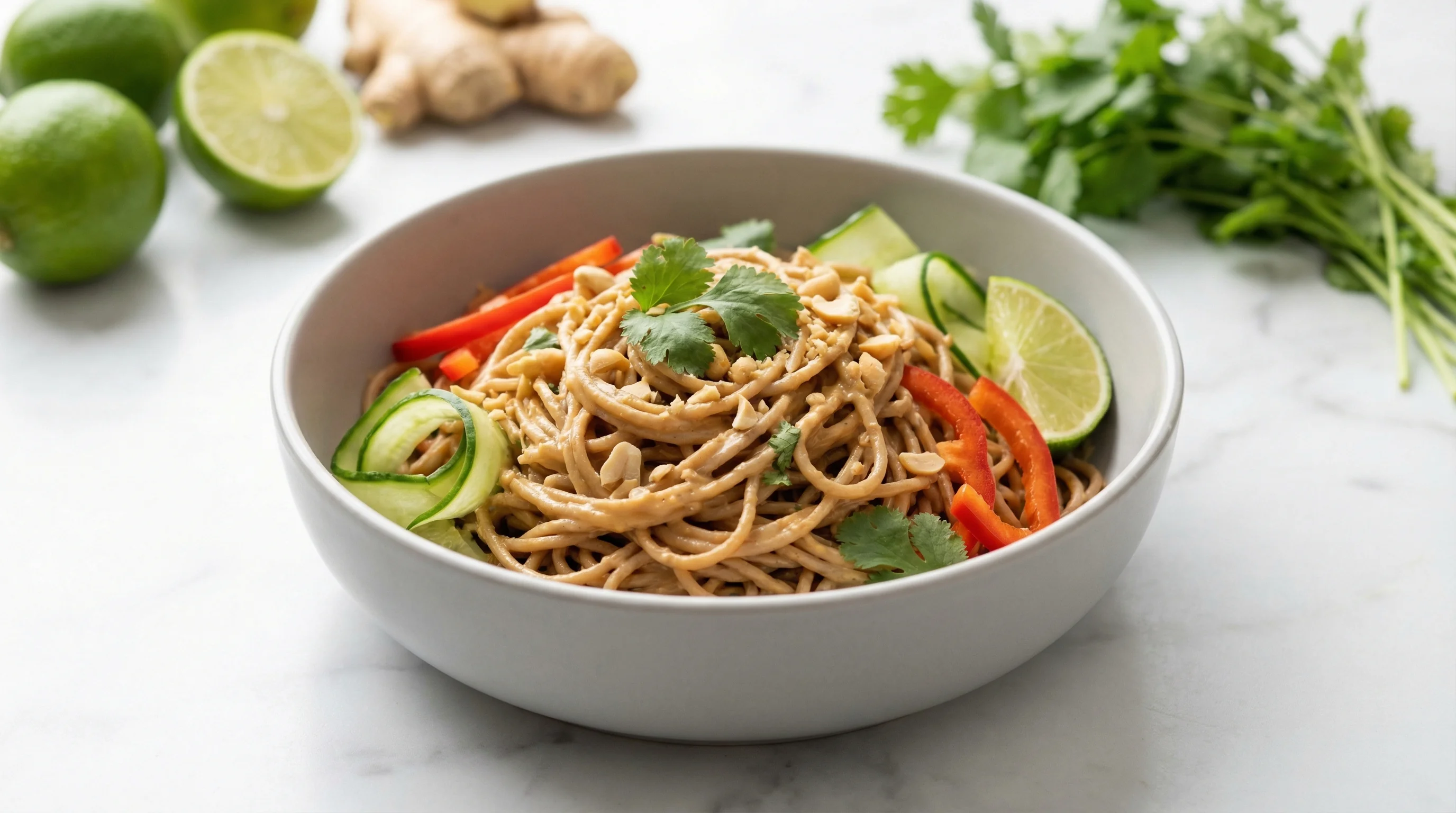
Low-Glycemic Cold Peanut Noodle Salad with Crunchy Vegetables
A blood sugar-friendly Asian-inspired noodle salad featuring whole wheat noodles, crisp vegetables, and a creamy peanut dressing—perfect for meal prep.
This vibrant cold noodle salad is specifically designed to support stable blood sugar levels while delivering bold, satisfying flavors. The whole wheat noodles provide complex carbohydrates with a lower glycemic impact than refined pasta, while the generous portions of red cabbage and carrots add fiber that slows glucose absorption. The star of this dish is the protein-rich powdered peanut butter dressing, which creates a creamy, indulgent sauce without excess fat, helping to moderate the glycemic response of the meal.
The combination of fresh ginger, garlic, and lime juice not only creates an authentic Asian flavor profile but also offers metabolic benefits—ginger has been shown to improve insulin sensitivity, while the acidity from lime juice can help lower the overall glycemic impact of the meal. Red cabbage is particularly valuable for blood sugar management, providing anthocyanins and fiber that support healthy glucose metabolism. This recipe is ideal for meal prep, staying fresh for 3-4 days in the refrigerator.
For optimal blood sugar control, consider eating the vegetables first before the noodles, and pair this salad with a lean protein source like grilled chicken, tofu, or edamame. The fiber-rich vegetables and protein from the peanut butter work together to create a satisfying meal that won't cause dramatic blood sugar spikes, making it perfect for lunch or a light dinner.
Blood Sugar Impact
This meal should have minimal blood sugar impact due to its low glycemic load of 8.7 and estimated GI of 30. The combination of whole wheat noodles, fiber-rich vegetables, and protein from peanut butter powder should provide steady energy for 3-4 hours without significant spikes.
Blood Sugar Tips
- ✓ Eat the crunchy vegetables (red cabbage and carrot) first to increase fiber intake and slow carbohydrate absorption
- ✓ Add extra protein like grilled chicken, tofu, or edamame to further stabilize blood sugar response
- ✓ Pair the meal with a 10-15 minute walk afterward to help muscles utilize glucose and prevent any minor elevation
🥗 Ingredients
- 2 tbsp soy sauce
- 1 pcs lime, juiced
- 1 pcs garlic clove, minced
- 1 tsp grated fresh ginger
- 4 tbsp powdered peanut butter
- 2 tbsp water
- 1 tbsp sugar-free maple syrup
- 200 g whole wheat noodles, cooked
- 0.5 pcs red cabbage, shredded
- 2 pcs carrots, cut into strips
- 4 tbsp spring onions and peanuts for garnish
- 2 tbsp soy sauce
- 1 pcs lime, juiced
- 1 pcs garlic clove, minced
- 1 tsp grated fresh ginger
- 4 tbsp powdered peanut butter
- 2 tbsp water
- 1 tbsp sugar-free maple syrup
- 7.1 oz whole wheat noodles, cooked
- 0.5 pcs red cabbage, shredded
- 2 pcs carrots, cut into strips
- 4 tbsp spring onions and peanuts for garnish
👨🍳 Instructions
- 1
Cook the whole wheat noodles according to package directions until al dente. Drain thoroughly and rinse under cold water to stop the cooking process and cool them down. Set aside to drain completely while you prepare the other components.
- 2
Prepare the peanut dressing by combining the soy sauce, freshly squeezed lime juice, minced garlic, and grated ginger in a small mixing bowl. Whisk together until well blended.
- 3
Add the powdered peanut butter and water to the soy sauce mixture. Whisk vigorously until the powder is fully incorporated and the dressing becomes smooth and creamy. Stir in the sugar-free maple syrup and mix until uniform. Divide the dressing evenly among 4 small containers with lids and set aside.
- 4
Wash and prepare the vegetables: finely shred the red cabbage using a sharp knife or mandoline, and cut the carrots into thin matchstick strips or julienne them for easy eating. Pat the vegetables dry if they're wet to prevent the salad from becoming watery.
- 5
In a large mixing bowl, combine the cooled whole wheat noodles, shredded red cabbage, and carrot strips. Use tongs or clean hands to toss everything together thoroughly, ensuring the vegetables are evenly distributed throughout the noodles.
- 6
Divide the noodle and vegetable mixture evenly among 4 meal prep containers. Pack each portion down gently to fit, leaving room for garnishes.
- 7
Chop the spring onions into thin slices and roughly chop the peanuts. Sprinkle each container with the spring onion and peanut garnish. Place one dressing container alongside each noodle salad. Seal all containers and refrigerate for up to 3-4 days. When ready to eat, pour the dressing over the noodles, toss well, and enjoy cold. For best blood sugar control, eat the vegetables first, then the noodles.
📊 Nutrition Per Serving
| Per Serving | Whole Dish | |
|---|---|---|
| Calories | 159 | 636 |
| Carbs | 30g | 122g |
| Sugars | 7g | 30g |
| Natural Sugars | 7g | 30g |
| Protein | 9g | 37g |
| Fat | 2g | 7g |
| Saturated Fat | 0g | 1g |
| Unsaturated Fat | 1g | 6g |
| Fiber | 7g | 26g |
| Soluble Fiber | 0g | 2g |
| Insoluble Fiber | 1g | 4g |
| Sodium | 511mg | 2043mg |
Predicted Glucose Response
What if you...
Estimated model — individual responses vary. Not medical advice.
🔄 Lower GI Swaps
These alternatives have virtually zero or significantly lower glycemic impact compared to whole wheat noodles. Shirataki noodles are made from konjac root with negligible carbs, while edamame and black bean noodles provide protein and fiber that dramatically slow glucose absorption.
Raw carrots have a moderate glycemic index (35-40), while cucumber, zucchini, and bell peppers are extremely low-glycemic vegetables (GI under 15) that add crunch without raising blood sugar.
While peanut butter powder is already low-glycemic, full-fat versions or alternatives like almond butter and tahini contain more healthy fats which further slow carbohydrate absorption and provide better blood sugar stability.
Pure monk fruit, stevia, or allulose have zero glycemic impact and don't trigger insulin response, whereas some sugar-free syrups may contain maltitol or other sugar alcohols that can still affect blood glucose levels.
🔬 The Science Behind This Recipe
Why This Recipe Works for Blood Sugar Balance
This cold noodle salad is a masterclass in blood sugar management, with a remarkably low glycemic load of just 8.7 and an estimated GI of 30. The secret lies in how its ingredients work together to slow glucose absorption. Peanut butter powder provides plant-based protein and healthy fats that create a "buffer" effect—when you eat protein and fat alongside carbohydrates, your body breaks down the carbs more slowly, preventing the rapid blood sugar spike you'd get from plain noodles. The fiber from crunchy vegetables like bell peppers, cabbage, and snap peas adds another layer of protection by physically slowing digestion and feeding beneficial gut bacteria that help regulate metabolism.
The Asian-inspired flavor base of ginger, garlic, and lime juice does more than taste amazing—these ingredients have been studied for their potential to improve insulin sensitivity. Ginger contains compounds called gingerols that may help muscles absorb glucose more efficiently, while the acidity from lime juice can slightly lower the glycemic response of a meal. The key here is the combination: no single ingredient is a magic bullet, but together they create a synergistic effect that keeps your blood sugar steady.
To maximize the benefits, try eating the crunchy vegetables first, then the protein-rich peanut sauce, and save the noodles for last. This "food sequencing" strategy has been shown to reduce post-meal glucose spikes by up to 73% in some studies. You're essentially giving your body a head start on fiber and protein before the carbs arrive. A 10-minute walk after enjoying this dish can further help your muscles absorb glucose, turning a delicious meal into an active tool for metabolic health.
Related recipes
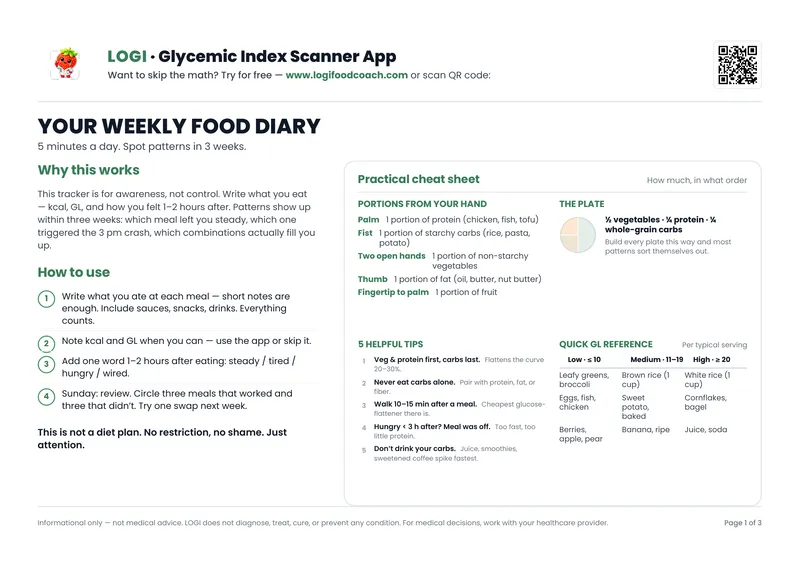
Free PDF — 3 pages
Your Weekly Food Journal
Track meals, glycemic load & mood. Spot patterns in 3 weeks.
No spam. Unsubscribe anytime.