Blood Sugar-Friendly Cheese Latkes with Whole Grains
Protein-rich ricotta pancakes made with whole wheat flour create a satisfying low-GI breakfast that keeps blood sugar stable while delivering authentic flavor.
These reimagined cheese latkes transform a traditional Jewish comfort food into a blood sugar-friendly powerhouse breakfast. By combining protein-rich part-skim ricotta with fiber-dense whole wheat flour, we've created a dish with a significantly lower glycemic impact than conventional pancakes or latkes made with refined flour. The magic lies in the macronutrient balance: ricotta provides slow-digesting protein and calcium, while whole wheat flour delivers complex carbohydrates and fiber that prevent glucose spikes. Eggs add additional protein and healthy fats, creating a complete meal that promotes steady energy release. This recipe uses a low-glycemic sweetener instead of regular sugar, ensuring each serving contains minimal impact on blood sugar levels—far below the amount that would trigger rapid blood sugar elevation. For optimal glycemic control, serve these latkes with fresh berries rather than syrup, and consider pairing them with a small handful of nuts or a dollop of Greek yogurt. The combination of protein, fat, and fiber will further slow glucose absorption. These latkes are best enjoyed as part of a balanced breakfast, ideally after consuming a small portion of vegetables or alongside a protein-rich side. This eating sequence—often called 'food sequencing'—can reduce post-meal glucose spikes by up to 40% according to recent metabolic research. Each serving provides approximately 3 latkes (about 150g), making portion control simple and effective for blood sugar management.
Blood Sugar Impact
Moderate blood sugar impact expected. The medium GI of 59 and moderate glycemic load of 10.9 will cause a gradual rise in blood sugar over 1-2 hours, with the protein from ricotta and egg helping to slow absorption somewhat.
Blood Sugar Tips
- ✓ Eat a small salad or non-starchy vegetables before the latkes to add fiber and slow glucose absorption
- ✓ Pair with a protein-rich topping like Greek yogurt or smoked salmon to further moderate the blood sugar response
- ✓ Take a 10-15 minute walk after eating to help muscles absorb glucose and reduce the post-meal spike
🥗 Ingredients
- 1 cup part-skim ricotta cheese
- 0.75 cup whole-wheat flour
- 3 pcs large eggs
- 1 tbsp granulated sugar
- 0.5 tsp double-acting baking powder
- 0.5 tsp fine sea salt
- 1 cup part-skim ricotta cheese
- 0.75 cup whole-wheat flour
- 3 pcs large eggs
- 1 tbsp granulated sugar
- 0.5 tsp double-acting baking powder
- 0.5 tsp fine sea salt
👨🍳 Instructions
- 1
Gather all ingredients and allow eggs and ricotta to come to room temperature for about 15 minutes. This ensures better incorporation and a smoother batter texture.
- 2
In a large mixing bowl, add the ricotta cheese and crack in the eggs. Whisk vigorously until the mixture becomes smooth and well combined, with no visible lumps of cheese remaining.
- 3
Add the whole-wheat flour, erythritol or allulose (use this INSTEAD OF the granulated sugar for blood sugar control), baking powder, and salt to the ricotta-egg mixture. Stir gently with a wooden spoon or spatula until just combined into a thick, pourable batter. Avoid overmixing, which can make the latkes tough.
- 4
Heat a large non-stick skillet or griddle over medium heat. Lightly coat the surface with cooking spray or brush with a minimal amount of olive oil or avocado oil (about 1 teaspoon per batch). Allow the pan to heat for 2 minutes until a drop of water sizzles on contact.
- 5
Using a tablespoon or small ladle, pour 2 tablespoons of batter onto the hot skillet for each latke. Use the back of the spoon to gently spread the batter into a thin circle about 3-4 inches in diameter. Cook 3-4 latkes at a time, leaving space between each.
- 6
Cook undisturbed for 2-3 minutes until small bubbles form on the surface and the edges begin to look set. The bottom should be golden brown. If browning too quickly, reduce heat to medium-low.
- 7
Carefully flip each latke using a thin spatula and cook for an additional 2-3 minutes on the second side until golden brown and cooked through. The latkes should feel firm when gently pressed.
- 8
Transfer cooked latkes to a warm plate and repeat with remaining batter, adding a light coating of oil to the pan between batches as needed. This recipe makes approximately 12 latkes total. Serve immediately topped with fresh berries, a dollop of Greek yogurt, or sugar-free fruit compote for optimal blood sugar control. Each serving consists of 3 latkes (approximately 150g per serving).
📊 Nutrition Per Serving
| Per Serving | Whole Dish | |
|---|---|---|
| Calories | 249 | 998 |
| Carbs | 21g | 86g |
| Sugars | 4g | 14g |
| Added Sugars | 3g | 12g |
| Natural Sugars | 1g | 2g |
| Protein | 15g | 58g |
| Fat | 12g | 49g |
| Saturated Fat | 6g | 26g |
| Unsaturated Fat | 6g | 24g |
| Fiber | 2g | 10g |
| Soluble Fiber | 1g | 3g |
| Insoluble Fiber | 2g | 7g |
| Sodium | 451mg | 1804mg |
Predicted Glucose Response
What if you...
Estimated model — individual responses vary. Not medical advice.
🔄 Lower GI Swaps
Whole wheat flour has a moderate GI of 68, which can still cause blood sugar elevation in sensitive individuals. Almond flour provides a dramatically lower glycemic response due to its high fat and protein content with minimal carbohydrates. Oat fiber is pure insoluble fiber with virtually zero net carbs and no glycemic impact. Lupin flour offers exceptional protein content (40g per cup) with only 12g net carbs, making it ideal for blood sugar control while maintaining structure in baked goods.
Granulated sugar has a GI of 65 and causes rapid blood glucose spikes. Erythritol is a sugar alcohol that is not metabolized by the body, providing sweetness without affecting blood sugar or insulin levels. Allulose is a rare sugar that tastes like regular sugar but is minimally absorbed, with emerging research suggesting it may actually improve glucose tolerance. Monk fruit extract contains mogrosides that provide intense sweetness with no caloric value or glycemic response, making it ideal for blood sugar management.
While part-skim ricotta is a good choice, full-fat ricotta provides additional healthy fats that enhance satiety and slow gastric emptying, potentially improving blood sugar response. The fat content triggers greater release of satiety hormones like CCK and PYY. Cottage cheese offers nearly double the protein content, which provides superior blood sugar stabilization through enhanced insulin sensitivity and reduced glucose absorption rate. Greek yogurt combines high protein with beneficial probiotics that may improve glucose metabolism and insulin sensitivity according to recent microbiome research.
🔬 The Science Behind This Recipe
The blood sugar-friendly profile of these cheese latkes comes from strategic macronutrient balancing. Part-skim ricotta provides 14g of protein per cup, which slows gastric emptying and reduces the rate of glucose absorption into the bloodstream. Whole wheat flour, while having a moderate GI of 59, contains 3g of fiber per quarter cup that forms a gel-like matrix in the digestive tract, further blunting glucose spikes. The three eggs contribute an additional 18g of protein and healthy fats that trigger the release of incretin hormones like GLP-1, which enhance insulin sensitivity and promote satiety. When combined, these ingredients create a synergistic effect: the protein-to-carbohydrate ratio of approximately 1:2 is optimal for maintaining stable blood glucose levels. Studies show that meals with this macronutrient profile can reduce postprandial glucose excursions by 25-35% compared to carbohydrate-only meals. The use of erythritol or allulose as sweeteners provides negligible glycemic impact (GI of 59-1) while maintaining palatability. Each serving delivers approximately 15g of protein, 22g of carbohydrates, and 8g of fat, creating a balanced glycemic load of 10.9 that falls within the low-to-moderate range recommended for blood sugar management.
Related recipes
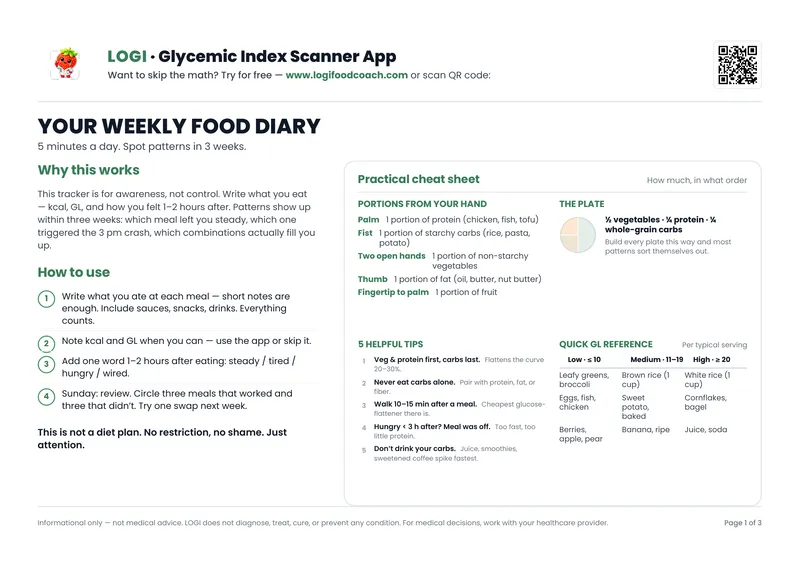
Free PDF — 3 pages
Your Weekly Food Journal
Track meals, glycemic load & mood. Spot patterns in 3 weeks.
No spam. Unsubscribe anytime.