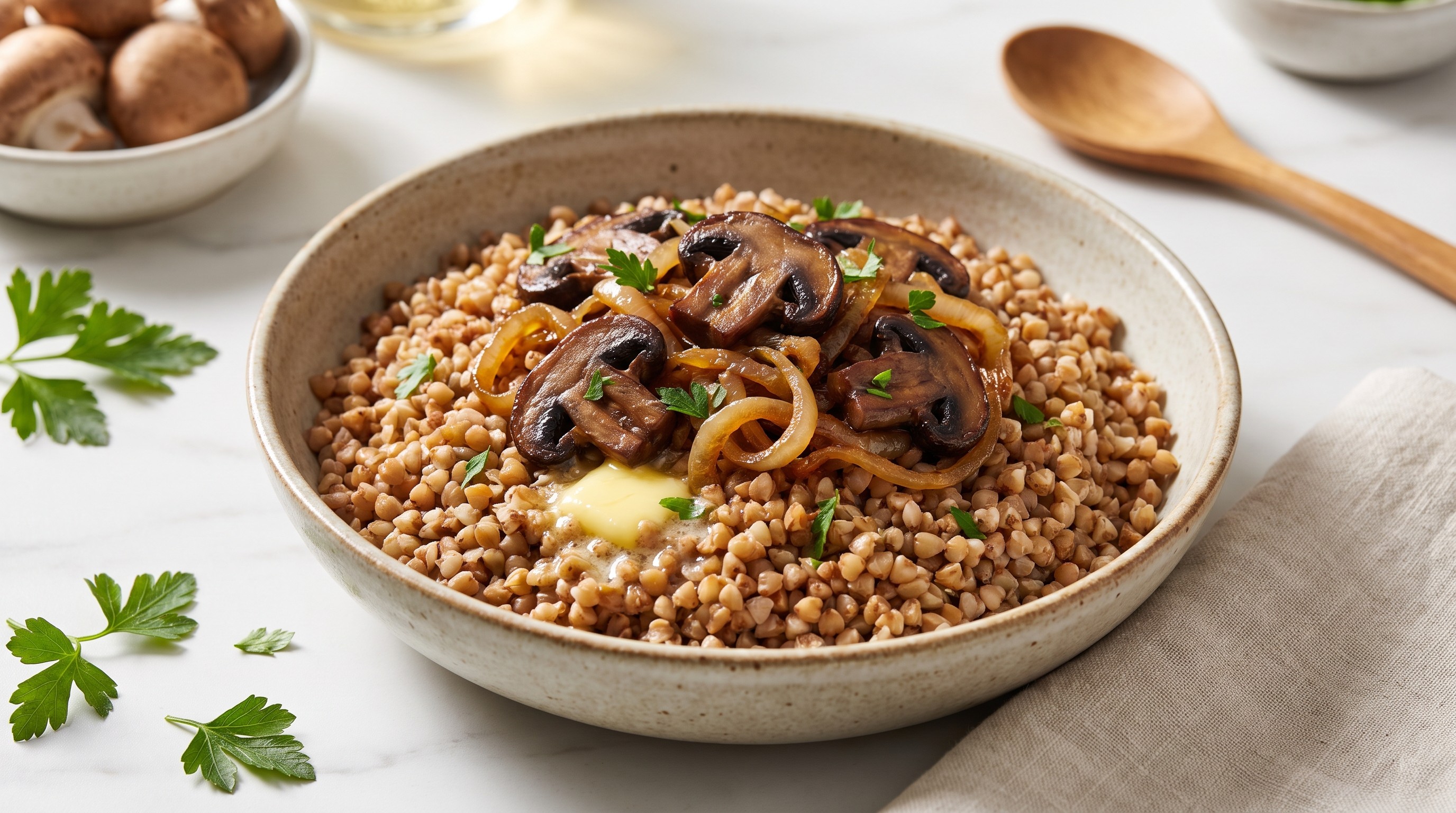
Buckwheat Groats with Mushrooms and Caramelized Onions
Nutty toasted buckwheat paired with umami mushrooms and sweet caramelized onions — a naturally low-GI Polish classic rich in fiber and protein.
Buckwheat is one of the most blood-sugar-friendly pseudo-grains available, with a glycemic index of just 54 and a robust protein profile that includes all essential amino acids. When toasted before simmering, the groats develop a deep nutty flavor while maintaining their firm texture — both qualities that slow digestion and promote a gentle, sustained glucose curve rather than a sharp spike.
The mushrooms bring potent umami without any glycemic load, while their soluble fiber (beta-glucans) has been shown to support healthy insulin sensitivity. Caramelized onions contribute natural sweetness through long, slow cooking that concentrates their natural sugars while retaining prebiotic fiber that supports metabolic health. Together, the fat from butter and olive oil further blunts any glucose response by slowing gastric emptying.
For optimal blood sugar management, consider eating a small side salad or raw vegetables five minutes before this dish. The vegetable fiber creates a protective gel layer in the intestine that reduces glucose absorption from the meal that follows. This hearty bowl works beautifully as a standalone lunch or as a satisfying side dish alongside grilled protein for dinner.
Blood Sugar Impact
Moderate blood sugar impact due to the medium glycemic load (21.1), though the low-medium GI of 45 means the rise will be gradual. The fiber from buckwheat, fat from butter and olive oil, and protein from mushrooms will help slow glucose absorption.
Blood Sugar Tips
- ✓ Add a side of non-starchy vegetables or a green salad and eat them before the buckwheat to create a fiber buffer that slows carbohydrate absorption.
- ✓ Include a protein source such as a poached egg or grilled chicken to further blunt the glucose response and increase satiety.
- ✓ Take a 10-15 minute walk after eating to help your muscles absorb blood glucose more efficiently.
🥗 Ingredients
- 100 g Buckwheat groats
- 250 ml Vegetable broth
- 200 g Button mushroom
- 150 g Yellow onion
- 15 g Butter
- 10 ml Olive oil
- 2 g Salt
- 1 g Black pepper
- 5 g Parsley
- 3.5 oz Buckwheat groats
- 1.1 cups Vegetable broth
- 7.1 oz Button mushroom
- 5.3 oz Yellow onion
- 0.5 oz Butter
- 2 tsp Olive oil
- 0.1 oz Salt
- 0.0 oz Black pepper
- 0.2 oz Parsley
👨🍳 Instructions
- 1
Place buckwheat groats in a dry skillet over medium heat. Stir continuously for about 3 minutes until the grains turn golden and release a toasty, nutty aroma. Toasting enhances flavor and helps the groats hold their shape during cooking.
- 2
Transfer the toasted groats to a saucepan and pour in the vegetable broth. Bring to a boil, then immediately lower the heat to the gentlest simmer. Cover tightly and cook undisturbed for 15 minutes until all liquid is absorbed and grains are tender but not mushy.
- 3
While the buckwheat simmers, warm the olive oil in a large skillet over medium-high heat until it shimmers. Add the sliced mushrooms in a single layer and cook without stirring for 2 minutes to develop a golden sear, then stir and continue cooking for another 4 minutes until all moisture has evaporated.
- 4
Push the mushrooms to one side of the skillet. Add the butter to the cleared space and let it melt and foam. Scatter the thinly sliced onions into the butter and reduce heat to medium-low.
- 5
Cook the onions slowly for 12 minutes, stirring every few minutes, until they turn deep amber and develop a jammy sweetness. If they begin to stick, add a splash of water to deglaze the pan.
- 6
Fluff the cooked buckwheat with a fork and add it to the skillet with the mushrooms and caramelized onions. Toss everything together gently until evenly combined.
- 7
Season with salt and freshly ground black pepper. Taste and adjust seasoning as needed — the broth may have contributed some saltiness already.
- 8
Divide between warmed bowls and scatter freshly chopped parsley over the top. Serve immediately while the groats are fluffy and the onions are still glossy.
📊 Nutrition Per Serving
| Per Serving | Whole Dish | |
|---|---|---|
| Calories | 331 | 663 |
| Carbs | 47g | 95g |
| Sugars | 6g | 13g |
| Natural Sugars | 6g | 13g |
| Protein | 10g | 20g |
| Fat | 13g | 25g |
| Saturated Fat | 5g | 10g |
| Unsaturated Fat | 8g | 16g |
| Fiber | 6g | 12g |
| Soluble Fiber | 2g | 4g |
| Insoluble Fiber | 4g | 9g |
| Sodium | 838mg | 1676mg |
Predicted Glucose Response
What if you...
Estimated model — individual responses vary. Not medical advice.
🔄 Lower GI Swaps
Both hulled barley and quinoa are low-GI whole grains that provide a similar hearty base. Barley offers an even lower glycemic index and is especially rich in beta-glucan fiber, while quinoa is a complete protein source with a comparable cook time to buckwheat.
Extra virgin olive oil adds anti-inflammatory polyphenols and heart-healthy monounsaturated fats. Ghee provides the same rich flavor as butter but is lactose-free, making it suitable for those with dairy sensitivity.
Water is the simplest zero-GI alternative, while bone broth adds protein that further slows glucose absorption and supports sustained energy.
🔬 The Science Behind This Recipe
Buckwheat groats have a glycemic index of around 54, making them one of the lowest-GI grain alternatives available. Unlike refined grains, whole buckwheat groats retain their fibrous hull structure, which physically slows enzymatic access to the starch granules inside. This means glucose is released gradually into your bloodstream rather than in a rapid surge.
Toasting the groats before cooking creates a Maillard reaction on the surface that forms a subtle crust around each grain. This additional barrier further slows starch digestion and helps the groats maintain their firm, individual texture — a structural quality directly linked to slower glucose absorption.
The mushrooms and butter in this dish contribute an important glycemic benefit through the "second meal effect" of fat and protein. Dietary fat slows gastric emptying — the rate at which food leaves your stomach — giving your intestines more time to process glucose in smaller, steadier amounts. The beta-glucan fiber found in mushrooms has been specifically studied for its ability to improve insulin sensitivity and reduce post-meal glucose peaks.
Pairing this dish with a side salad eaten five minutes beforehand leverages the "vegetable preload" strategy: the fiber from raw vegetables forms a viscous gel in the upper intestine that acts as a physical barrier, reducing the rate of glucose absorption from the buckwheat that follows.
Related recipes

Free PDF — 3 pages
Your Weekly Food Journal
Track meals, glycemic load & mood. Spot patterns in 3 weeks.
No spam. Unsubscribe anytime.