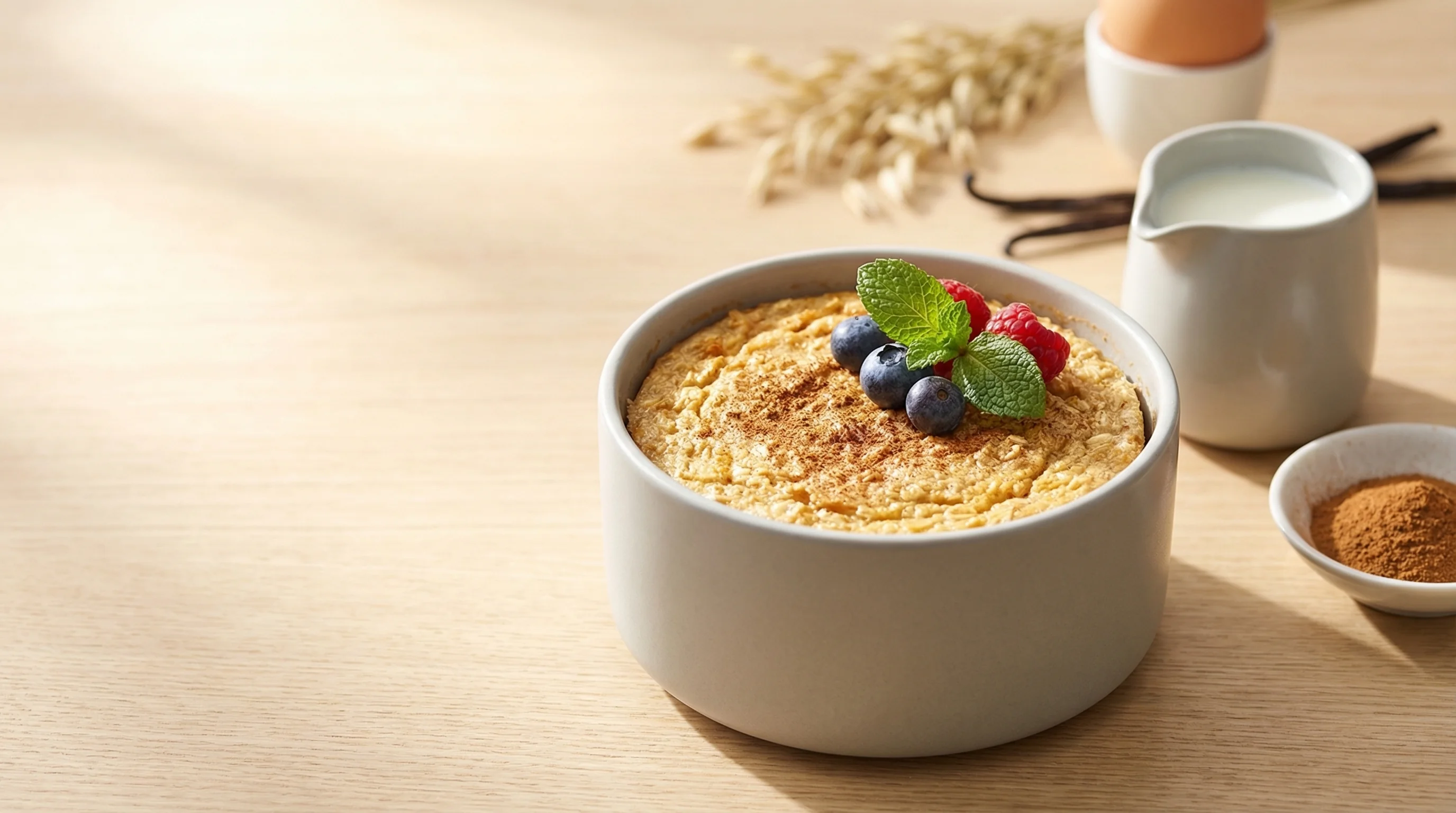
Low-Glycemic Baked Oats
A warm, protein-rich breakfast that keeps blood sugar stable. This baked oats recipe combines slow-release carbs with egg protein for sustained energy.
This comforting baked oats recipe is a blood sugar-friendly way to start your day. Unlike instant oatmeal or sweetened cereals that can spike glucose levels, this dish combines steel-cut or rolled oats with whole egg for a balanced macronutrient profile that promotes steady energy release.
The magic lies in the combination: oats provide soluble fiber (beta-glucan) that slows glucose absorption, while the egg adds protein to further moderate the glycemic response. Cinnamon isn't just for flavor—it contains compounds that may improve insulin sensitivity. The result is a satisfying breakfast with a low glycemic index that keeps you full for hours without the mid-morning crash.
For optimal blood sugar management, enjoy this baked oats dish as part of a complete breakfast. Consider pairing with a handful of nuts or seeds for healthy fats, or top with berries instead of high-sugar fruits. The warm, custard-like texture makes it feel indulgent while supporting your metabolic health goals.
Blood Sugar Impact
Moderate, sustained impact with gradual rise and fall in blood sugar. The combination of complex carbs from oats, protein from egg and milk, and fiber should provide steady energy for 3-4 hours without sharp spikes.
Blood Sugar Tips
- ✓ Add a tablespoon of nuts, seeds, or nut butter to increase healthy fats and protein, which will further slow glucose absorption
- ✓ Eat this meal after some light movement or pair with a 10-15 minute walk afterward to help muscles absorb glucose more efficiently
- ✓ Consider adding berries instead of sweeteners - their fiber and polyphenols can help moderate the glycemic response while adding natural sweetness
🥗 Ingredients
- 40 g plain porridge oats
- 45 ml skimmed milk
- 1 pcs egg, beaten
- 0.5 tsp vanilla extract
- 0.25 tsp ground cinnamon
- 1.4 oz plain porridge oats
- 3 tbsp skimmed milk
- 1 pcs egg, beaten
- 0.5 tsp vanilla extract
- 0.25 tsp ground cinnamon
👨🍳 Instructions
- 1
Position your oven rack in the center and preheat the oven to 180°C (fan-forced) or 200°C (conventional), which is gas mark 6.
- 2
Select a small, deep ovenproof ramekin or baking dish with at least 250ml capacity to allow the mixture to rise properly during baking.
- 3
Crack the egg into the baking dish and beat it thoroughly with a fork until the yolk and white are completely combined.
- 4
Add the porridge oats, skimmed milk, vanilla extract, and ground cinnamon to the beaten egg. Stir everything together until well combined and the oats are evenly distributed throughout the mixture.
- 5
Place the dish on the center rack of your preheated oven and bake for 20 to 25 minutes, until the top is golden brown and the center feels firm when gently pressed with your finger.
- 6
Remove the baked oats from the oven and let them rest for 3 minutes to set and cool slightly before eating.
- 7
For blood sugar management, top with protein-rich Greek yogurt or quark and low-GI berries like strawberries or blueberries. Avoid high-sugar toppings like honey or dried fruit. Eat slowly and consider having vegetables or nuts on the side to further moderate glucose response.
📊 Nutrition Per Serving
| Per Serving | Whole Dish | |
|---|---|---|
| Calories | 252 | 252 |
| Carbs | 30g | 30g |
| Sugars | 3g | 3g |
| Natural Sugars | 3g | 3g |
| Protein | 15g | 15g |
| Fat | 8g | 8g |
| Saturated Fat | 2g | 2g |
| Unsaturated Fat | 6g | 6g |
| Fiber | 5g | 5g |
| Soluble Fiber | 2g | 2g |
| Insoluble Fiber | 3g | 3g |
| Sodium | 92mg | 92mg |
Predicted Glucose Response
What if you...
Estimated model — individual responses vary. Not medical advice.
🔄 Lower GI Swaps
Steel-cut oats have a lower glycemic index (around 42-55) compared to rolled oats (around 55-79) due to less processing and slower digestion. Oat bran is even lower on the glycemic index and adds extra soluble fiber to further slow glucose absorption.
Plant-based milk alternatives contain virtually no natural sugars (lactose) and have a negligible glycemic impact, whereas skim milk has a GI of around 32 and contains 12g of lactose per cup that raises blood sugar.
While vanilla extract itself is neutral, doubling down on cinnamon (which has compounds that may improve insulin sensitivity) or using vanilla bean paste with no added sugars maintains flavor without any glycemic impact.
Using egg whites reduces the overall caloric density while flaxseed or chia seeds add soluble fiber and omega-3s that slow digestion and minimize blood sugar spikes, creating a lower overall glycemic load.
🔬 The Science Behind This Recipe
The Science Behind Low-Glycemic Baked Oats
This baked oats recipe demonstrates how smart ingredient combinations can transform a carbohydrate-rich breakfast into a blood sugar-friendly meal. With a glycemic load of 15.3 and an estimated GI of 52, this dish falls into the low-to-medium glycemic category, meaning it causes a gradual, sustained rise in blood glucose rather than a sharp spike. The secret lies in how the ingredients work synergistically to slow digestion and glucose absorption.
Rolled oats are the foundation here, and they're naturally rich in beta-glucan, a soluble fiber that forms a gel-like substance in your digestive tract. This gel slows the breakdown of starches into sugars, creating a steady energy release rather than a glucose rush. When you add an egg to the mix, you're incorporating high-quality protein that further delays stomach emptying and moderates the insulin response. The combination of protein and fiber is particularly powerful—studies show that eating protein with carbohydrates can reduce post-meal blood sugar spikes by up to 30%. The small amount of fat from the egg yolk also contributes to this slowing effect, as dietary fat takes longer to digest than carbohydrates alone.
To maximize the blood sugar benefits of this recipe, consider your eating strategy. While baked oats are already balanced, you could pair them with a handful of nuts or a dollop of Greek yogurt for additional protein and healthy fats. The cinnamon isn't just for flavor—research suggests it may improve insulin sensitivity, though the effect is modest. Remember that portion size matters significantly; even low-glycemic foods can raise blood sugar substantially if eaten in large quantities. This recipe's moderate glycemic load reflects a reasonable serving size that balances satisfaction with metabolic health.
Related recipes
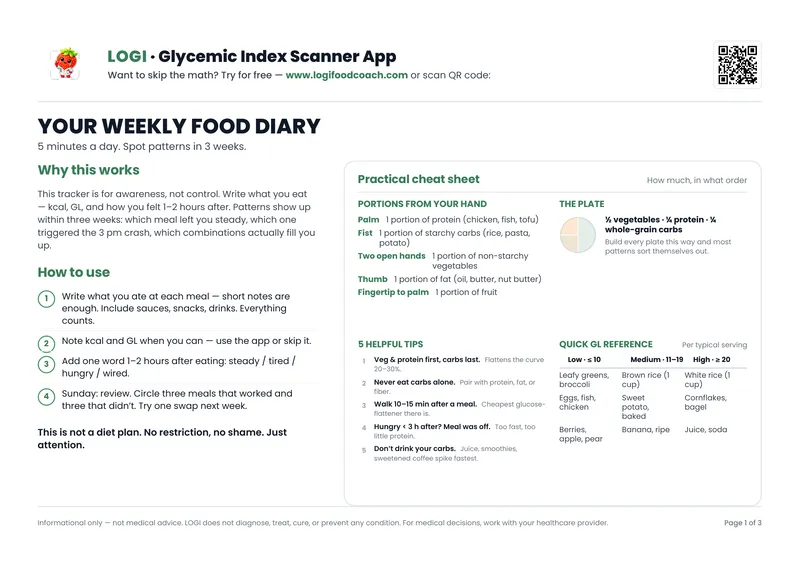
Free PDF — 3 pages
Your Weekly Food Journal
Track meals, glycemic load & mood. Spot patterns in 3 weeks.
No spam. Unsubscribe anytime.