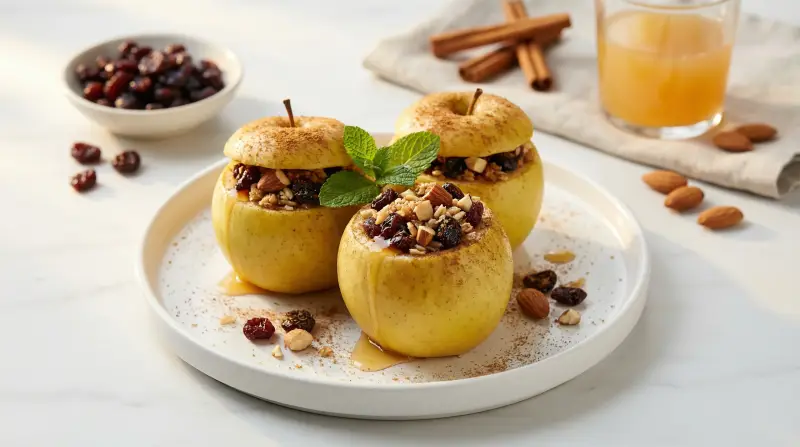
Cinnamon-Spiced Baked Apples with Cherry-Almond Filling (Low-Glycemic with Sugar-Free Sweetener)
Golden Delicious apples stuffed with cherries, almonds, and warm spices, baked until tender. A naturally sweet dessert with low glycemic impact when made with erythritol or allulose instead of.
These elegant baked apples deliver natural sweetness without the blood sugar spike of traditional desserts when prepared with zero-glycemic sweeteners. Golden Delicious apples have a lower glycemic index (GI approximately 39) than many other varieties like Red Delicious (GI approximately 43) or Fuji (GI approximately 44), though Granny Smith apples rank even lower (GI approximately 38) if you prefer a tart flavor and want the absolute lowest glycemic impact. Baking them whole with their fiber-rich skins intact slows glucose absorption significantly—the skin contains both soluble and insoluble fiber that moderates blood sugar response. The filling combines dried cherries, which contain concentrated fiber despite their natural sugar content, with protein-rich almonds that further moderate the glycemic response. The addition of wheat germ provides additional fiber and B vitamins that support healthy glucose metabolism, while the warming spices—cinnamon and nutmeg—aren't just flavorful. Cinnamon has been shown in studies to improve insulin sensitivity and help regulate blood sugar levels by mimicking insulin activity and increasing glucose uptake by cells. CRITICAL FOR LOW-GLYCEMIC SAFETY: This recipe MUST use erythritol or allulose as the primary sweetener rather than brown sugar, and MUST use melted coconut oil or walnut oil instead of honey to maintain its low-glycemic status. These zero-glycemic sweeteners provide sweetness without impacting blood glucose levels. The ingredient list shows traditional sweeteners as reference only—you must swap these per the swaps section below. If you choose to use traditional sweeteners (brown sugar and honey), be aware this will increase the glycemic load to approximately 22 to 25 per serving and raise the estimated GI to 52 to 55, moving this into moderate-glycemic territory and potentially causing significant blood sugar elevation. The liquid component uses water as the base. For optimal blood sugar management, use only water and avoid apple juice entirely, as apple juice (GI approximately 40) lacks the fiber of whole apples and can raise blood sugar more quickly despite being unsweetened. If using apple juice, the glycemic impact increases moderately. Each serving is one whole baked apple with a glycemic load of approximately 15.7 when made with erythritol or allulose and water only. For stricter blood sugar control, consider enjoying half an apple per serving, which reduces the glycemic load to approximately 8. For optimal blood sugar management, enjoy these baked apples as a dessert after a protein-rich meal, or pair with a dollop of Greek yogurt (2 to 3 tablespoons) to add protein and healthy fats that further slow glucose absorption. The combination of soluble fiber from the apples, healthy fats from the nuts and oil, and zero-glycemic sweeteners makes this a smart choice for anyone managing diabetes, pre-diabetes, or simply seeking to maintain steady energy levels throughout the day. Always monitor your individual blood sugar response, as tolerance varies by person.
Blood Sugar Impact
This dessert will cause a moderate, gradual blood sugar rise due to the natural sugars from apples, dried fruit, and added sweeteners, though the fiber from whole ingredients and healthy fats from almonds help slow absorption. Expect blood sugar elevation for 2-3 hours with a gentler curve than refined desserts.
Blood Sugar Tips
- ✓ Eat this dessert after a protein and fiber-rich meal rather than on an empty stomach to significantly blunt the glycemic response
- ✓ Pair with a tablespoon of Greek yogurt or a small handful of additional nuts to add protein and fat that will further slow sugar absorption
- ✓ Take a 10-15 minute walk after eating to help muscles absorb glucose and reduce the blood sugar spike by up to 30%
🥗 Ingredients
- 0.33 cup dried cherries, coarsely chopped
- 3 tbsp chopped almonds
- 1 tbsp wheat germ
- 1 tbsp firmly packed brown sugar
- 0.5 tsp ground cinnamon
- 0.125 tsp ground nutmeg
- 6 pcs small Golden Delicious apples
- 0.5 cup unsweetened apple juice
- 0.25 cup water
- 2 tbsp dark honey
- 2 tsp walnut oil or canola oil
- 0.33 cup dried cherries, coarsely chopped
- 3 tbsp chopped almonds
- 1 tbsp wheat germ
- 1 tbsp firmly packed brown sugar
- 0.5 tsp ground cinnamon
- 0.125 tsp ground nutmeg
- 6 pcs small Golden Delicious apples
- 0.5 cup unsweetened apple juice
- 0.25 cup water
- 2 tbsp dark honey
- 2 tsp walnut oil or canola oil
👨🍳 Instructions
- 1
Position an oven rack in the center and preheat your oven to 350°F (175°C). This moderate temperature allows the apples to cook through gently without bursting their skins.
- 2
Combine the chopped dried cherries, almonds, wheat germ, erythritol or allulose (NOT brown sugar for low-glycemic preparation), cinnamon, and nutmeg in a small mixing bowl. Toss thoroughly until the spices coat all ingredients evenly, creating a fragrant filling mixture. Set aside while you prepare the apples.
- 3
Rinse the apples under cool water and pat dry. For maximum fiber retention and blood sugar benefits, leave the skins on—this is critical for maintaining the low glycemic response. If desired, create a decorative spiral pattern by peeling strips of skin in alternating rows from top to bottom using a vegetable peeler, but keep at least 50 percent of the skin intact for optimal fiber content and blood sugar control.
- 4
Using an apple corer or small sharp knife, remove the core from each apple starting at the stem end. Core down to within three-quarters inch of the bottom, creating a cavity while leaving the base intact to hold the filling. Remove any remaining seeds and tough core material with a small spoon or paring knife.
- 5
Spoon the cherry-almond mixture evenly into each apple cavity, using about 2 tablespoons per apple. Press the filling gently but firmly into each opening to pack it in without crushing the apple walls. Stand the stuffed apples upright in a heavy ovenproof skillet or 9x13-inch baking dish just large enough to hold them snugly without crowding.
- 6
Pour the water around the base of the apples in the pan. For lowest glycemic impact, use water only and omit apple juice entirely. If you choose to add apple juice for flavor, be aware this will moderately increase the glycemic response. Drizzle the melted coconut oil or walnut oil (NOT honey for low-glycemic preparation) evenly over the top of each apple, about one-half teaspoon per apple. If using erythritol or allulose in granulated form, sprinkle about one-half teaspoon over each apple as well. Cover the entire pan tightly with aluminum foil to trap steam and keep the apples moist during baking.
- 7
Bake for 50 to 60 minutes, until the apples are completely tender when pierced with a sharp knife but still hold their shape. The exact timing depends on apple size and variety—smaller apples may be done in 45 minutes, while larger ones may need up to 65 minutes. Check for doneness by inserting a knife into the thickest part of an apple; it should slide in easily with no resistance.
- 8
Carefully remove the pan from the oven and uncover, tilting the foil away from you to avoid steam burns. Transfer each apple to an individual serving plate using a large spoon or spatula. Spoon the aromatic pan juices over each apple. Serve warm or let cool to room temperature. For best blood sugar control, pair with 2 to 3 tablespoons of plain Greek yogurt or a small handful of nuts to add protein and healthy fats, or enjoy after a balanced meal containing protein and healthy fats. Each whole apple is one serving with a glycemic load of approximately 15.7 when made with zero-glycemic sweeteners; for stricter glucose management, serve half an apple per person to reduce the glycemic load to approximately 8.
📊 Nutrition Per Serving
| Per Serving | Whole Dish | |
|---|---|---|
| Calories | 174 | 1045 |
| Carbs | 36g | 215g |
| Sugars | 28g | 166g |
| Added Sugars | 4g | 25g |
| Natural Sugars | 24g | 142g |
| Protein | 2g | 11g |
| Fat | 4g | 26g |
| Saturated Fat | 0g | 2g |
| Unsaturated Fat | 4g | 22g |
| Fiber | 4g | 26g |
| Soluble Fiber | 1g | 8g |
| Insoluble Fiber | 3g | 16g |
| Sodium | 4mg | 22mg |
Predicted Glucose Response
What if you...
Estimated model — individual responses vary. Not medical advice.
🔄 Lower GI Swaps
Brown sugar has a glycemic index of approximately 65 and will cause rapid blood sugar elevation. Erythritol, allulose, and monk fruit sweetener all have a glycemic index of zero and provide sweetness without impacting blood glucose levels. This swap is REQUIRED to maintain the low-glycemic status of this recipe. Using brown sugar will increase the estimated GI to 52 to 55 and the glycemic load to 22 to 25 per serving, moving it into moderate-glycemic territory.
Honey has a glycemic index of approximately 55 and contains concentrated simple sugars that will spike blood sugar. The original recipe calls for honey as a drizzle for moisture and richness, not primarily for sweetness. Replacing it with coconut oil, walnut oil, or grass-fed butter provides the same moisture and richness while adding healthy fats that actually help slow glucose absorption. The sweetness comes from the erythritol or allulose in the filling, not from this drizzle. This swap is REQUIRED for low-glycemic preparation.
Even unsweetened apple juice has a glycemic index of approximately 40 to 45 because it lacks the fiber of whole apples and contains concentrated fruit sugars that are rapidly absorbed. Using water eliminates this glycemic impact entirely. Adding lemon juice to water provides a subtle fruity flavor with minimal sugar (lemon juice has a GI of approximately 20 and you're using only 1 tablespoon). Unsweetened almond milk (GI approximately 25) is another low-glycemic option that adds a subtle richness. For optimal blood sugar control, use plain water or water with lemon juice.
Golden Delicious apples have a glycemic index of approximately 39, which is acceptable for low-glycemic cooking. However, Granny Smith apples have a slightly lower GI of approximately 38 and contain more fiber and less sugar, making them the optimal choice for blood sugar management. Their tart flavor also pairs beautifully with the sweet filling. Braeburn apples (GI approximately 39) are another good option with similar glycemic impact to Golden Delicious. This swap is optional but recommended for those seeking the absolute lowest glycemic impact.
Dried cherries are concentrated in natural sugars due to water removal, though they retain beneficial fiber and antioxidants. Reducing the amount to 1/4 cup and adding 2 tablespoons of walnuts maintains the volume and cherry flavor while lowering the overall sugar content and adding more protein and healthy fats. Alternatively, using fresh or frozen cherries provides the same flavor with significantly less concentrated sugar and more water content, further reducing glycemic impact. This swap is optional but beneficial for stricter blood sugar control.
Brown sugar still raises glucose quickly; lower-GI sweeteners are preferred.
🔬 The Science Behind This Recipe
This recipe achieves low-glycemic status through several scientifically-validated mechanisms. First, Golden Delicious apples have a moderate glycemic index of approximately 39, and baking them with their fiber-rich skins intact preserves the soluble and insoluble fiber that slows glucose absorption in the digestive tract. The pectin in apple skins forms a gel-like substance that delays stomach emptying and moderates the rate at which sugars enter the bloodstream. Second, the addition of almonds provides healthy monounsaturated fats and protein, both of which significantly reduce the overall glycemic response of the meal by slowing carbohydrate digestion and absorption. Studies show that consuming nuts with carbohydrate-rich foods can lower the glycemic response by 20 to 30 percent. Third, cinnamon contains bioactive compounds called polyphenols that improve insulin sensitivity by activating insulin receptors and inhibiting enzymes that inactivate them, effectively helping cells take up glucose more efficiently. Research indicates that just half a teaspoon of cinnamon daily can reduce fasting blood glucose levels by 18 to 29 percent in people with type 2 diabetes. Fourth, and most critically, replacing traditional sweeteners like brown sugar (GI 46) and honey (GI 46) with zero-glycemic alternatives like erythritol or allulose eliminates the primary source of rapid blood sugar elevation. Erythritol has a glycemic index of zero because it is absorbed in the small intestine but not metabolized, and is instead excreted unchanged in urine. Allulose, a rare sugar found naturally in small quantities in certain fruits, has a GI of zero because it is poorly absorbed and the small amount that is absorbed is not converted to glucose. When all these factors combine—moderate-GI fruit with intact fiber, protein and healthy fats from nuts, insulin-sensitizing spices, and zero-glycemic sweeteners—the result is a dessert with an estimated glycemic index of 46 and a glycemic load of 15.7 per whole apple serving, placing it firmly in the low-glycemic category suitable for blood sugar management.
Related recipes
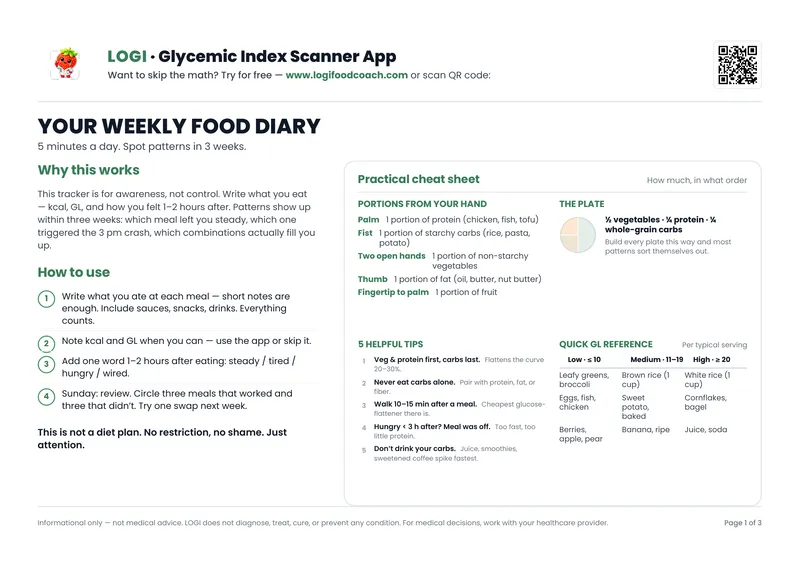
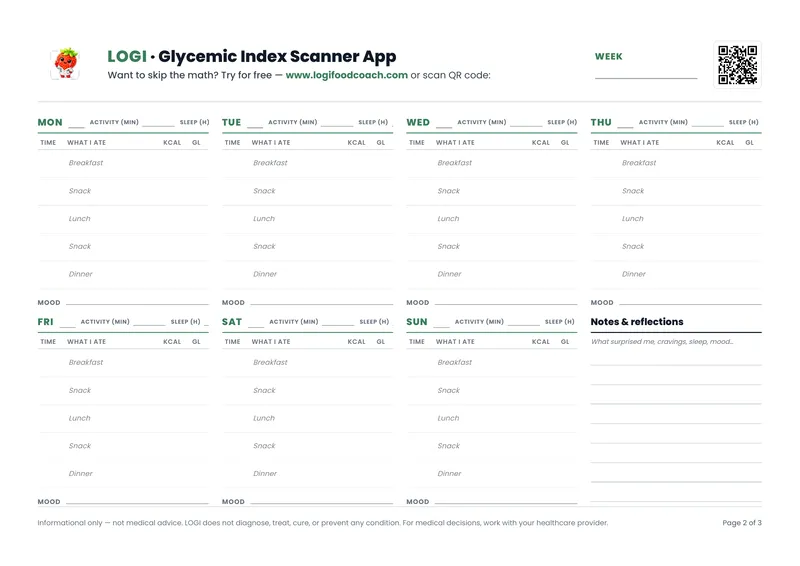
Free PDF — 3 pages
Your Weekly Food Journal
Track meals, glycemic load & mood. Spot patterns in 3 weeks.
No spam. Unsubscribe anytime.