Honey, Maple, Agave, Coconut Sugar — What "Natural" Actually Does to Blood Sugar
Honey, Maple, Agave, Coconut Sugar — What “Natural” Actually Does to Blood Sugar
If you have ever swapped white sugar for honey in your tea, or reached for maple syrup instead of table sugar on the pancake, or bought a bag of coconut sugar because the label said “low glycemic,” you are participating in one of the most successful marketing stories in food. Natural sweeteners are widely believed to be gentler on blood sugar than refined white sugar. In some small ways this is true. In the ways that actually matter, it is mostly not.
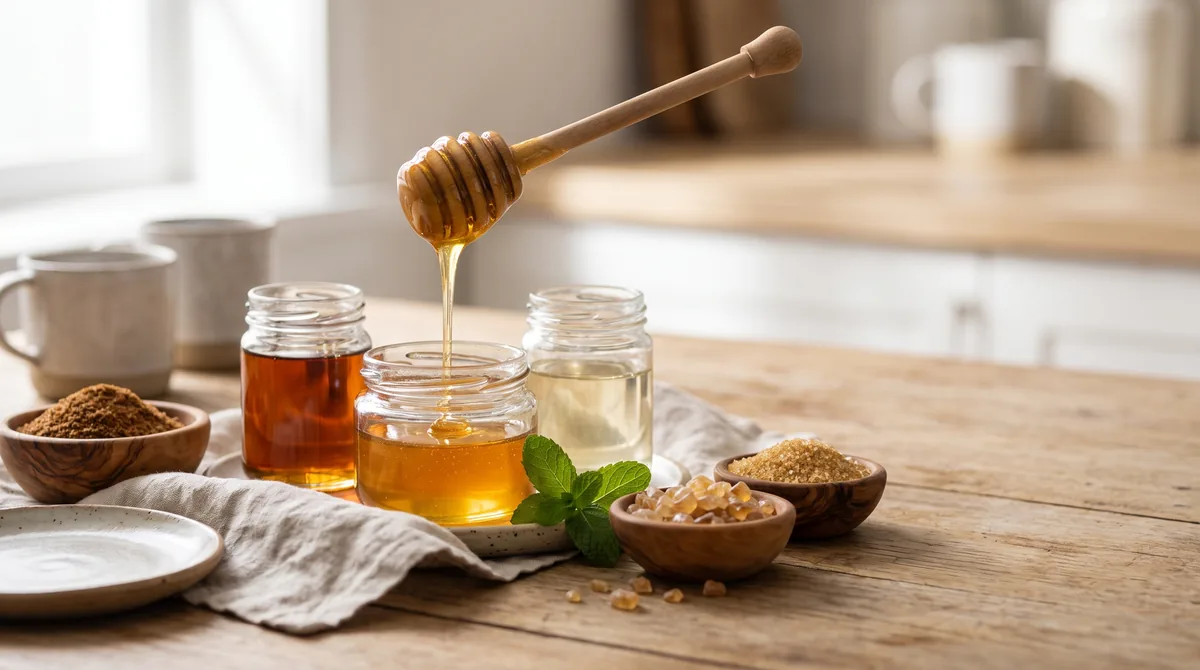
This piece walks through the sweeteners people actually use — honey, maple syrup, agave, coconut sugar, dates, brown sugar, and raw cane sugar — what each one does to blood glucose, where the differences are real, and where the “healthier sweetener” story falls apart.
The mechanism — sugars end up as glucose one way or another
Almost every “natural” sweetener is a mix of two simple sugars: glucose (which becomes blood glucose directly) and fructose (which goes to the liver first and does not raise blood glucose much acutely). The ratio of glucose to fructose is where most of the differences between sweeteners actually live.
Table sugar (sucrose) is 50/50 glucose and fructose. A tablespoon delivers roughly half a tablespoon of each once your body has split it.
Honey is about 30–40% glucose and 30–45% fructose, plus small amounts of water and trace compounds. It is slightly less concentrated than sugar (a spoon of honey is heavier and contains a bit more water), and its glucose-to-fructose ratio varies by floral source.
High-fructose corn syrup (in many sodas and packaged foods) is around 45–55% glucose and 45–55% fructose depending on the version — close to table sugar in ratio.
Maple syrup is largely sucrose (like table sugar), so it splits into roughly equal glucose and fructose after digestion, plus a small amount of pre-split glucose and fructose already present.
Agave nectar is unusual — it is 75–90% fructose. Because the acute blood glucose response is mostly driven by the glucose portion, agave produces a smaller glucose spike than any of the others on this list. This is the origin of agave’s “low glycemic index” marketing.
Coconut sugar is largely sucrose, similar to table sugar in composition, with a small amount of inulin fiber that modestly slows absorption. It also tests as slightly lower glycemic index than white sugar in some studies, but the effect is small and the total sugar delivered is the same.
Dates and date syrup are dense mixtures of glucose and fructose (roughly 50/50), packaged with fiber in the whole-date form.
Brown sugar and raw cane sugar are white sugar with molasses left in. Glycemically they behave the same as white sugar. The color is not doing anything for your glucose.
Two things follow from this. First, the acute blood glucose response to any of these is roughly proportional to their glucose content — so agave produces the smallest glucose spike, honey and coconut sugar and maple syrup and white sugar produce broadly similar ones. Second, the fructose portion does not raise blood glucose acutely but has its own metabolic story: heavy chronic fructose intake goes to the liver and, at high enough doses, contributes to fatty liver and insulin resistance over time. Trading white sugar for agave lowers the immediate glucose bump but delivers more fructose to the liver per gram. That is a trade, not an unambiguous improvement.
Honey — a gentler bump than sugar, but not a health food
Honey does produce a slightly smaller glucose response than the same amount of table sugar in most tests — a few points lower on the glycemic index, mostly because of the mix and a small contribution from bioactive compounds. The difference is real but small.
Raw, unprocessed honey carries trace amounts of antioxidants and enzymes that heat-treated honey loses. Whether that matters at teaspoon-scale intake is genuinely uncertain. What is clear is that honey remains a concentrated sugar. Two tablespoons of honey and two tablespoons of sugar are both a real glycemic event, and the honey version is only marginally kinder to your curve.
Practical read: if you enjoy honey, keep enjoying it. But use it the way you would use sugar — a small amount for flavor — not as a “healthy sweetener” you can add freely. Adding it to already-sweetened foods (granola, yogurt with fruit) is where honey quietly drives up total daily sugar without feeling like a change.
Maple syrup — table sugar with a nicer flavor
Real maple syrup is mostly sucrose plus small amounts of minerals and antioxidants that are largely absent from refined sugar. Glycemically it behaves almost identically to table sugar in liquid form. It is a real food with real character, but it is not a lower-glucose alternative to sugar; it is a differently-flavored version of it.
The mineral content (some manganese, small amounts of zinc) is genuinely present but not at meaningful daily-nutrition levels — you would not eat maple syrup for the manganese. Enjoy it as a flavor. Do not swap it for sugar expecting a glucose benefit.
Agave — the “low glycemic index” story is technically true, and mostly misleading
Agave nectar is the most misunderstood sweetener on this list. Because it is mostly fructose, the acute glucose response is genuinely small — often less than half of what you would get from the same amount of table sugar. If your only goal is a lower reading on a glucose monitor in the two hours after a spoonful, agave delivers.
But the total sugar is still there; it is mostly going to the liver as fructose instead of into your blood as glucose. Heavy fructose intake is more clearly linked to fatty liver, elevated triglycerides, and long-term insulin resistance than glucose is. Trading table sugar for agave to “protect blood sugar” is trading a visible short-term spike for a less-visible long-term burden on liver metabolism.
For someone with prediabetes or insulin resistance specifically watching their glucose numbers, this is a trade with genuinely mixed value. For someone hoping “natural = healthy,” it is a case where the marketing has outrun the biology.
Coconut sugar — table sugar with a small asterisk
Coconut sugar (also sold as coconut palm sugar) is mostly sucrose, so it behaves close to table sugar. It contains a small amount of inulin fiber, which modestly slows absorption and gives it a slightly lower measured glycemic index. Some marketing extrapolates this into “diabetes-friendly,” which the difference does not support.
Coconut sugar is fine as a sugar substitute if you like the flavor. It is not a meaningful step down from white sugar for glucose, and using more of it because it is “healthier” ends up in the same place as more white sugar.
Dates and date syrup — sugar packaged with fiber
Whole dates are the outlier on this list. A date contains roughly the sugar of a small candy, but it is packaged with real fiber, and the intact fruit structure slows absorption further. Two or three dates as a snack produces a smaller glucose response than the equivalent amount of loose sugar, and dates carry potassium and small amounts of other minerals that a spoon of honey does not.
Date syrup — cooked-down date juice — loses most of the fiber advantage. Glycemically it is closer to honey and maple syrup than to a whole date.
For someone looking to reduce added sugars in baking, using pitted dates as a paste in place of some of the sugar keeps some of the fiber advantage. In a drink or drizzled on top of food, date syrup and honey behave broadly alike.
Brown sugar, raw cane sugar, turbinado — refined sugar wearing a costume
These are all white sugar with varying amounts of molasses left in for color, flavor, and mouthfeel. Glycemically they behave essentially the same as white sugar. The trace minerals in molasses are real but present in amounts that do not matter at typical use.
The mistake is thinking any of these is a healthier substitute. They are not — they are the same sugar, differently packaged.
What actually helps if you want to sweeten with less glucose impact
Two categories genuinely reduce the glucose response of a sweetened food.
Non-nutritive sweeteners (stevia, monk fruit, erythritol, allulose, and the older synthetic sweeteners like sucralose and aspartame) provide sweetness without significant carbohydrate. The acute glucose response is close to zero. Their longer-term effects on gut microbiome and appetite are an active research area with mixed findings, but for the specific goal of reducing the glucose event from a sweetened drink or dessert, they work as advertised. Erythritol and allulose in particular have the most favorable data at typical intakes.
Sweetening less, and adding sweetness alongside protein or fat. Reducing the amount of sweetener in coffee, tea, yogurt, or oatmeal by a third — a change most people stop noticing within a week — is a larger glycemic improvement than any of the sugar-for-sugar swaps discussed above. Adding sweetness in the context of a fuller meal (dessert after protein-and-vegetable dinner) rather than on an empty stomach also flattens the response.
Practical patterns
- Do not swap sugar for honey, maple syrup, coconut sugar, or brown sugar expecting a glucose benefit. The differences are small; use these for flavor, not glycemic strategy.
- Agave lowers the acute glucose bump but delivers more fructose to the liver. For metabolic health overall, this is a trade, not an improvement.
- Whole dates, in small numbers, are the one “natural sweetener” with a real edge — they are sugar plus fiber plus micronutrients in an intact food.
- The biggest single lever is reducing the amount, not substituting the source. A teaspoon of any sweetener is a small glucose event; three teaspoons of any sweetener is a real one.
- Non-nutritive sweeteners largely remove the glucose event. For sweetened drinks and desserts specifically, they are the most effective tool if the goal is glycemic control. Their other tradeoffs are a separate discussion.
- Never eat concentrated sweetener on an empty stomach. Sugary drinks between meals are the classic version; the same sugar inside a mixed meal lands much more gently.
The bigger picture
The “natural sweetener” story is one of the clearest cases of health marketing outpacing biology. The differences between honey, maple syrup, coconut sugar, and refined white sugar are real but small — a few points of glycemic index, some trace nutrients, a slightly better story on the label. The differences are not big enough to make a meaningful change to blood sugar or long-term metabolic health at typical use.
What actually matters is total added sugar over a day and a week. Someone using less sweetener overall — of whatever kind — is doing far more for their glucose curve than someone who has switched from sugar to honey while keeping the amount the same. The version of “healthy sweetening” that works is not the swap; it is the smaller spoon.
Wondering how your morning coffee, yogurt, or dessert stacks up when you count the sweetener honestly? With Logi you photograph the plate or cup and see the estimated glycemic load in about sixty seconds. Two weeks free. Download Logi.
This article is general nutrition education, not medical advice. If you are managing diabetes, insulin resistance, or another condition, discuss dietary changes with your doctor or a registered dietitian.
Take control of your blood sugar
Scan your meals, track glycemic load, and see your patterns — all in one app.
ابدأ التجربة المجانية →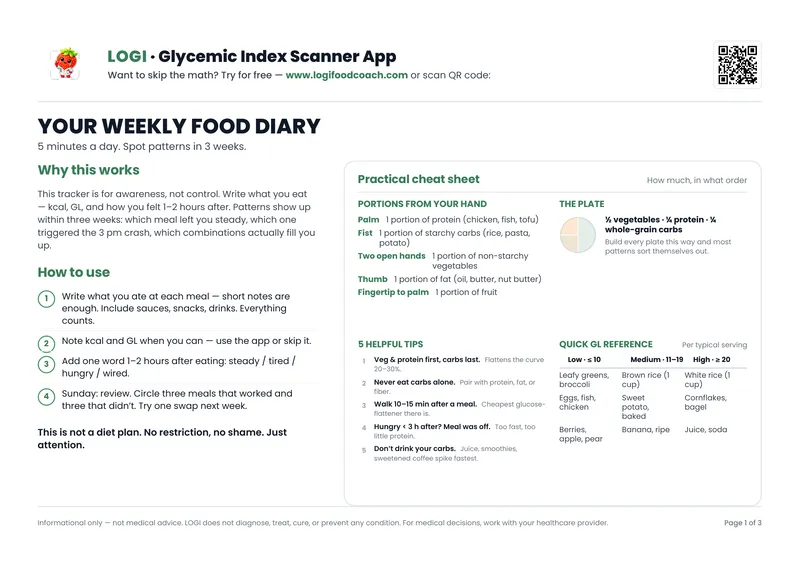
PDF مجاني — 3 صفحات
مفكّرة طعامك الأسبوعية
سجّل وجباتك والحمل السكري والمزاج. اكتشف الأنماط خلال 3 أسابيع.
بدون رسائل مزعجة. إلغاء الاشتراك في أي وقت.