Breakfast Cereal and Blood Sugar — Which Boxes Spike, Which Stay Flat
Breakfast Cereal and Blood Sugar — Which Boxes Spike, Which Stay Flat
Breakfast cereal is one of the most heavily marketed food categories in the world. It is also one of the most misunderstood when it comes to blood sugar. Many people start their day with a bowl of something that looks healthy on the box — whole grain, high fiber, fortified with vitamins — and finish breakfast on a glucose curve sharper than if they had eaten a slice of birthday cake.
The reason is structural, not nutritional, and the marketing rarely explains it. Cereals are dry, finely processed, and engineered to dissolve quickly in milk. Almost everything about how they are made pushes glucose into the bloodstream fast.
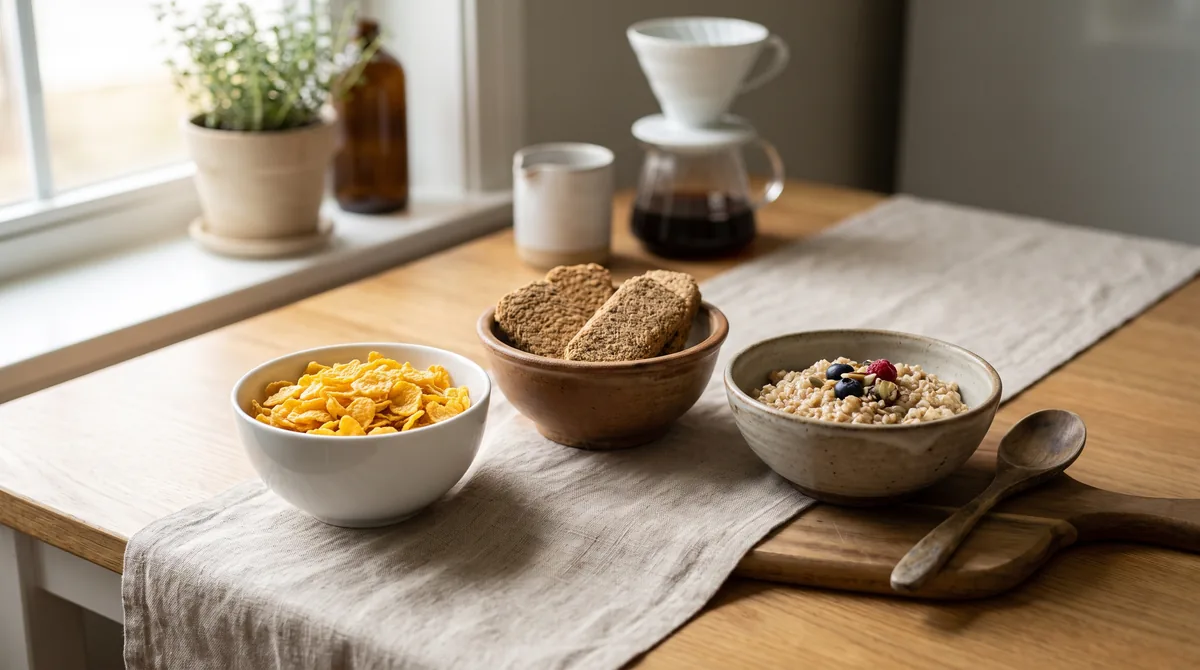
This piece walks through six common cereal types — cornflakes, Weet-Bix and similar wheat biscuits, granola, supermarket muesli, instant oats, and steel-cut oats — what each one does to blood sugar and why, and what to choose if you want a breakfast that does not leave you crashing at 10:30.
The mechanism — why cereal hits the bloodstream so fast
Boxed breakfast cereal is mostly starch in a form designed for fast digestion. Five factors drive the glucose response:
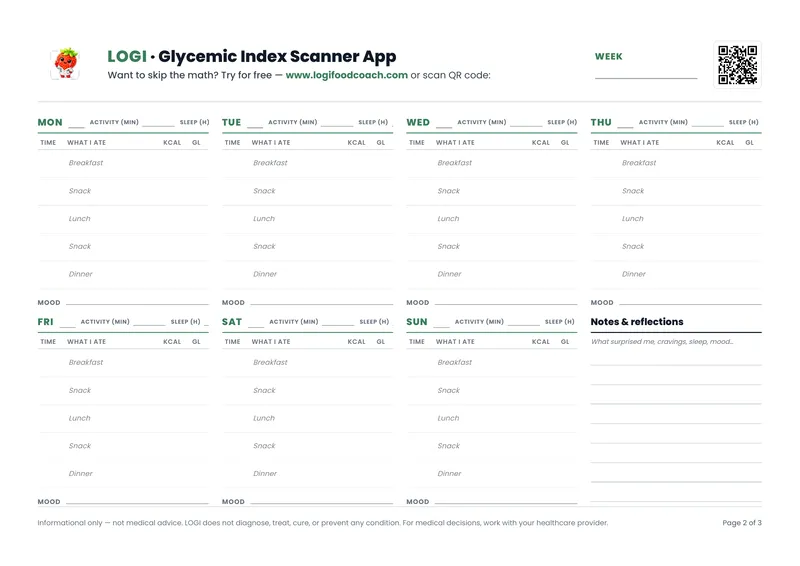
Particle size and porosity. Cereals are flaked, puffed, extruded, or shredded. All of these processes break starch granules open and increase surface area. Cornflakes are toasted slices of milled corn — almost no intact structure left. Puffed rice and puffed wheat have had their starch literally exploded by steam. The smaller and more porous the piece, the faster the enzymes reach the starch.
Cooking method during manufacture. Most cereals are cooked under high heat and pressure before they reach the box. Cooked starch (gelatinized starch) is digested much faster than raw starch. By the time you pour milk on cornflakes, the work that would normally happen in your stomach is already half done.
Fiber content and type. Soluble fiber slows digestion significantly. Insoluble fiber helps less. A high-fiber cereal where most of the fiber is wheat bran (insoluble) behaves differently from one where the fiber is oat beta-glucan (soluble). Beta-glucan is one of the most effective natural moderators of glucose response — half the bowl of steel-cut oats does what a whole bowl of “high fiber” cornflakes cannot.
Added sugar. Most flavored cereals — anything coated, honey-roasted, frosted, or marketed at children — are 25-40% sugar by weight. Even cereals marketed as healthy (granolas, fruit-and-nut mueslis) often contain 20-30% added sugar. This sits on top of the starch spike.
What you eat it with. Milk has some protein and fat, which helps a little. Eating cereal with just water or alone produces a larger curve than with full-fat milk or unsweetened Greek yogurt. Adding nuts, seeds, or a spoon of nut butter changes the curve substantially.
With these five factors in mind, the variation between cereals becomes predictable.
Cornflakes and other flake cereals
The default breakfast cereal in much of the world. Made from milled corn (or wheat, or rice), pressed into thin flakes, toasted at high heat. Almost no fiber (1g per serving typical). No fat or protein worth mentioning. Often with added sugar, even in the “plain” version.
Glycemic profile: glycemic index typically 80-93 — one of the highest of any common food. Glycemic load around 20-25 per typical bowl. The flakes dissolve almost instantly in milk; the starch is fully gelatinized; digestive enzymes work on it in seconds.
A bowl of cornflakes with skim milk produces a glucose curve comparable to drinking a small glass of regular soda. The sharpness of the spike often triggers a reactive insulin response that drops blood sugar below baseline 90-120 minutes later — the source of the mid-morning hunger and energy crash many cereal eaters describe.
What to do: if you have other options, take them. If cornflakes are unavoidable, eat a smaller portion, pair with full-fat Greek yogurt instead of skim milk, and add a tablespoon of almond butter or chia seeds. The portion change matters more than the topping change.
Weet-Bix, Weetabix, and similar wheat biscuits
Pressed wheat biscuits are the default cereal in Australia, New Zealand, the UK, South Africa, parts of Asia, and increasingly Korea. Higher fiber than cornflakes (3-4g per two biscuits). No added sugar in the plain version. Made from compressed whole-wheat flakes, baked dry.
Glycemic profile: glycemic index 70-75, glycemic load around 12-15 per two-biscuit serving. Lower than cornflakes mainly because of the higher fiber and the relatively coarse structure of the wheat flakes — but still high. The compression and baking gelatinize most of the starch, so the fiber slows digestion only partially.
Plain Weet-Bix with milk is a meaningfully better choice than cornflakes, and the standard Australian breakfast pattern (two biscuits, milk, sliced banana) is what most people grew up with. But it is still a high-carb, fast-digesting breakfast. Pairing matters: adding a hard-boiled egg, a spoon of peanut butter, or full-fat yogurt to a Weet-Bix bowl reduces the glucose peak by 25-40% in most people.
Honey-roasted, fruit-flavored, or chocolate variants undo most of the fiber benefit. Read the label — added sugar over 10g per serving puts the bowl back into cornflake territory.
Granola
Marketed as the healthy choice, granola is usually the most concentrated source of glucose-spiking calories in the cereal aisle. The base — oats — is fine on its own. The problem is everything added to bind and sweeten it: honey, maple syrup, brown sugar, agave, oil, dried fruit.
Glycemic profile: variable. A high-sugar commercial granola has a glycemic index around 60 (moderate) but a glycemic load around 18-25 per half-cup serving — and half a cup is much less than most people pour. A typical 1-cup bowl of supermarket granola contains 50-65g of carbohydrate, much of it added sugar.
The slower glycemic index is misleading. The total carbohydrate load is so high that even at moderate GI, the absolute glucose dose is large. People who switch from cornflakes to commercial granola often see worse blood sugar profiles, not better, because the portion they pour is much higher in calories and total carbs.
What to do: read the per-100g sugar number, not the per-serving claim. Under 8g sugar per 100g is reasonable. Over 20g is dessert. Or make your own — toasted plain oats with nuts, seeds, and cinnamon, no added syrups — which gives you the texture without the spike.
Supermarket muesli
Muesli sits between granola and plain oats. The base is raw rolled oats; the additions are usually nuts, seeds, dried fruit, and sometimes a small amount of sweetener. Less processed than granola, no baking with oil and syrup.
Glycemic profile: glycemic index 55-65, glycemic load 12-18 per typical serving. The raw oats have not been gelatinized, so digestion is meaningfully slower than flakes or puffed cereals. The dried fruit is the main glucose contributor — raisins, dried cranberries, and dried mango are all concentrated sugar by the time they reach the bowl.
A muesli with a high nut and seed ratio, and limited dried fruit, is one of the better cold cereal choices for a flat curve. Soaking it overnight in milk or yogurt (Bircher-style) slows the response further.
What to do: choose a muesli where nuts and seeds are at least a third of the box, and dried fruit is less than 15%. Or build your own — plain oats, almonds, pumpkin seeds, a few walnuts, a small handful of fresh berries instead of dried fruit.
Instant oatmeal
Instant oats are pre-cooked, dried, and rolled thin so they hydrate in a minute with hot water. The pre-cooking gelatinizes the starch fully; the thin rolling exposes maximum surface area. Most flavored sachets also contain added sugar.
Glycemic profile: glycemic index 75-85, glycemic load 12-16 per typical sachet. Closer to cornflakes than to whole oats. The “healthy” marketing is misleading — instant oatmeal behaves more like a fast-digesting refined carb than like the slow-burn oatmeal most people imagine.
The flavored sachets (apple-cinnamon, maple-brown-sugar, peach) add 8-12g of sugar on top, taking glycemic load past 20 — well above the threshold for what would be considered a steep curve.
What to do: skip the sachets. The 60 seconds you save versus rolled oats is not worth the curve difference.
Steel-cut oats and rolled oats
Steel-cut oats are whole oat groats chopped into pieces — minimal processing, no flattening, no precooking. Rolled oats are steamed and flattened, but the kernel structure stays largely intact compared to instant. Both contain significant beta-glucan, the soluble fiber that meaningfully slows digestion.
Glycemic profile: glycemic index 50-55 for steel-cut, 55-60 for old-fashioned rolled. Glycemic load 10-13 per cooked half-cup serving. The combination of intact kernel structure and beta-glucan produces the flattest curve of any common breakfast grain.
Steel-cut oats cooked overnight in a slow cooker, or rolled oats simmered for 5 minutes with a pinch of salt, finished with full-fat Greek yogurt, walnuts, cinnamon, and a small handful of berries — this is one of the lowest-glucose breakfast patterns you can build from a supermarket shelf. The same calories, eaten as cornflakes with skim milk and banana, will produce a curve two to three times higher.
A pattern by curve, low to high
Steel-cut oats with yogurt and nuts → unsweetened muesli with yogurt → plain Weet-Bix with full-fat milk and egg on the side → plain rolled oats with milk → supermarket muesli with milk → granola → instant oatmeal with milk → Weet-Bix with banana and skim milk → cornflakes with skim milk → frosted or honey-coated cereals.
The pattern is consistent across studies. Less processing, more soluble fiber, more added fat or protein on the side — flatter curve. More processing, more added sugar, eaten alone with skim milk — sharper curve.
How to read the box in 20 seconds
Per-100g label, not per-serving (serving sizes are almost always smaller than what people pour):
- Sugar under 5g per 100g: low. Acceptable for any cereal.
- 5-10g per 100g: moderate. Usually fine if fiber is high and you eat a normal portion.
- Over 15g per 100g: dessert-level. Treat as such.
- Fiber over 8g per 100g: meaningful.
- Protein over 10g per 100g: helpful.
- Whole-food first ingredient (oats, wheat, corn) rather than “wheat flour” or “rice flour” indicates more intact structure.
The “high fiber” claim on the front of the box is meaningless without looking at the sugar number and the ingredient order.
A flatter-curve breakfast in five minutes
If you want to swap out a high-curve cereal habit without giving up the speed and convenience:
- Half cup of rolled oats, microwaved with water for 90 seconds.
- Stir in two tablespoons of full-fat Greek yogurt, a tablespoon of almond butter or chopped walnuts, and a small handful of fresh or frozen berries.
- Cinnamon on top.
Total time, five minutes. Glycemic load roughly 8-10. Protein and fat slow the curve into a long, low rise rather than a spike. Most people who switch from cornflakes or instant oatmeal to this report less mid-morning hunger within a week.
A note on context
Cereal is a frequent breakfast across many cultures, and switching is not always practical — kids who only eat cornflakes, mornings when there is no time, travel and hotel breakfasts. The point of this piece is not to villainize the category. It is to make the structure visible, so the choice in the supermarket aisle becomes more deliberate.
If you eat boxed cereal occasionally, the curve from one bowl will not change your long-term blood sugar trajectory. If you eat it daily, the curve does compound — the morning insulin response, the mid-morning crash, the hunger pattern that follows. Small changes in the bowl tend to show up in the trend.
This piece is general nutrition education, not medical advice. If you are managing diabetes or insulin resistance, work with a clinician or registered dietitian on the specifics of your meal plan. The Logi app helps you see how your own body responds to specific foods — including any cereal you regularly eat — so you can choose based on your data, not generic averages.
Take control of your blood sugar
Scan your meals, track glycemic load, and see your patterns — all in one app.
Mula Percubaan Percuma →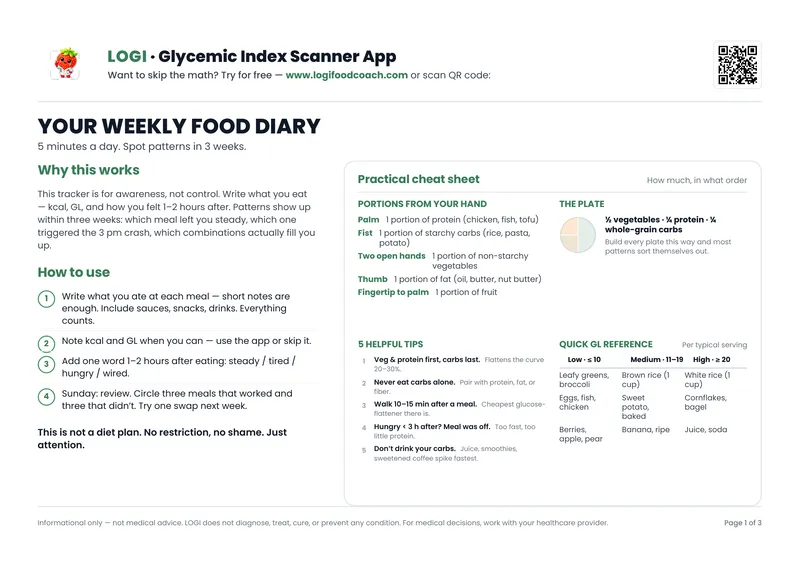
PDF percuma — 3 halaman
Jurnal makanan mingguan anda
Rekod makanan, beban glisemik & mood. Kenal pasti corak dalam 3 minggu.
Tiada spam. Nyahlanggan bila-bila masa.