Ribollita (Tuscan White Bean and Kale Soup)
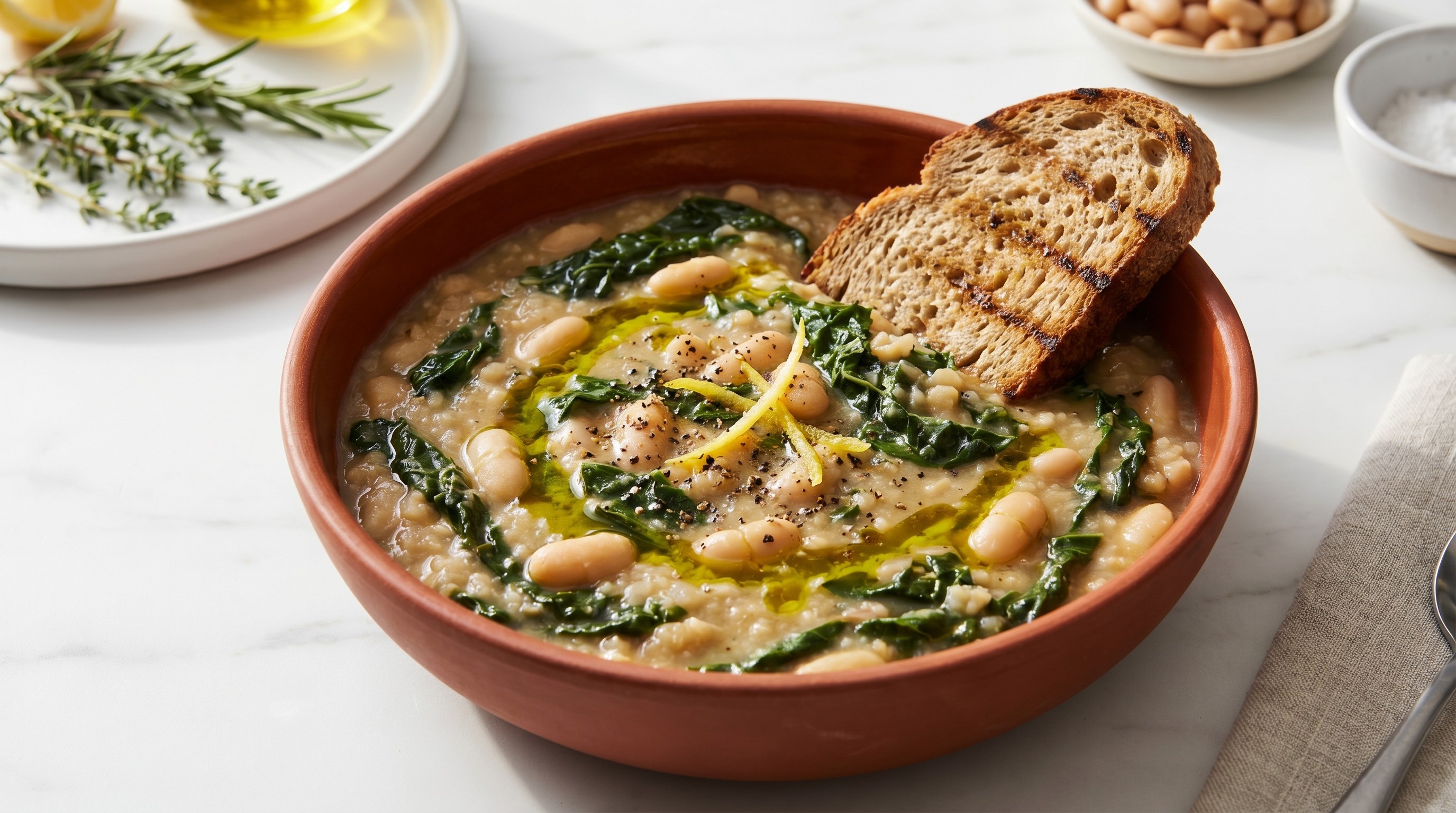
A thick Tuscan peasant soup with cannellini beans (GI ~31) and kale, thickened with whole-grain bread for a deeply satisfying, blood-sugar-friendly bowl.
'다시 끓였다'는 뜻을 가진 리볼리타(Ribollita)는 토스카나의 가장 대표적인 전통 서민 요리 중 하나입니다. 걸쭉하고 속을 따뜻하게 데워주는 수프로, 다음 날 다시 데워 먹으면 오히려 맛이 더 좋아집니다. 이 레시피는 핵심 재료인 칸넬리니 빈(흰 강낭콩) 덕분에 혈당 관리에도 아주 좋습니다. 혈당 지수(GI)가 31 정도로 낮고 저항성 전분이 풍부한 이 부드러운 흰 콩은 혈당을 급격하게 올리는 대신 천천히 안정적으로 오르게 해줍니다. 냄비에 끓이기 전에 콩의 절반을 으깨서 넣으면, 크림이나 전분 가루를 따로 넣지 않아도 국물이 아주 부드럽고 걸쭉해집니다.
라치나토 케일(카볼로 네로)은 풍부한 미네랄과 다량의 식이섬유를 더해 탄수화물 흡수를 한 번 더 늦춰줍니다. 마지막에 하루 지나 살짝 굳은 통밀빵을 조금 넣어 섞는 것은 이탈리아의 전통적인 방식인데, 이렇게 하면 1인분당 혈당 부하 지수(GL)를 8에서 10 정도로 낮게 유지하면서도 리볼리타 특유의 죽 같은 걸쭉함을 살릴 수 있습니다. 요리할 때와 마지막에 한 바퀴 둘러서 뿌려 먹는 엑스트라 버진 올리브 오일은 식후 혈당 조절을 돕는 건강한 단일 불포화 지방을 제공합니다.
혈당 관리를 제대로 하려면 이 리볼리타를 에피타이저보다는 메인 요리로 드시고, 포만감을 충분히 느낄 수 있도록 천천히 드세요. 콩에 단백질과 식이섬유가 풍부하게 들어 있어 몇 시간 동안 속이 든든할 거예요. 신선한 레몬 제스트에 크러쉬드 레드페퍼를 약간 곁들여 보세요. 재료 본연의 묵직하고 구수한 풍미가 기분 좋게 살아납니다. 한 번 만들 때 넉넉하게 두 배 분량으로 만들어 보세요. 다음 날 먹으면 훨씬 더 맛있으니까요.
혈당 영향
Low impact — the combination of high-fiber cannellini beans, kale, and whole grain bread produces a slow, gentle rise in blood sugar. With a GI of 29 and moderate glycemic load of 13.4, expect stable energy for 3-4 hours.
혈당 팁
- ✓ Ensure the bread is truly whole grain and use it sparingly as a topping rather than soaking large amounts into the soup, since bread is the highest-GI ingredient in this dish.
- ✓ Drizzle extra virgin olive oil generously — the healthy fats slow gastric emptying and further blunt any glucose response from the beans and bread.
- ✓ Take a 10-15 minute walk after eating to enhance glucose uptake by muscles and keep blood sugar even flatter.
🥗 재료
- 480 g Cannellini bean
- 200 g Lacinato kale
- 1 pcs Onion
- 2 pcs Celery stalk
- 2 pcs Carrot
- 4 pcs Garlic clove
- 400 g Whole peeled tomato
- 1200 ml Vegetable broth
- 80 g Whole-grain bread
- 3 tbsp Extra-virgin olive oil
- 1 pcs Rosemary
- 1 tsp Dried thyme
- 1 tsp Salt
- 1 tsp Lemon zest
- 1.1 lb Cannellini bean
- 7.1 oz Lacinato kale
- 1 pcs Onion
- 2 pcs Celery stalk
- 2 pcs Carrot
- 4 pcs Garlic clove
- 14.1 oz Whole peeled tomato
- 5.1 cups Vegetable broth
- 2.8 oz Whole-grain bread
- 3 tbsp Extra-virgin olive oil
- 1 pcs Rosemary
- 1 tsp Dried thyme
- 1 tsp Salt
- 1 tsp Lemon zest
👨🍳 조리법
- 1
Warm three tablespoons of extra-virgin olive oil in a large, heavy-bottomed pot set over medium heat. Tip in the diced onion, celery, and carrot. Stir occasionally and cook for 8 to 10 minutes until the vegetables have softened and taken on a light golden colour. This aromatic base, known as soffritto, forms the flavour foundation of the soup.
- 2
Scatter in the sliced garlic and drop in the rosemary sprig. Cook for about 2 minutes, stirring frequently, until the garlic is fragrant but not browned.
- 3
Pour in the hand-crushed tomatoes and sprinkle in the dried thyme. Stir everything together and let the mixture cook for 5 minutes, allowing the tomatoes to deepen in colour and reduce slightly into a thick, jammy base.
- 4
Spoon roughly half of the drained cannellini beans into a separate bowl and crush them coarsely with the back of a fork — they don't need to be perfectly smooth. Add both the mashed and whole beans to the pot and stir well. The crushed beans will act as a natural thickener, giving the soup body without any refined starch.
- 5
Pour in the vegetable broth and add the torn kale leaves. Raise the heat to bring the soup to a gentle boil, then lower it to a steady simmer. Cook uncovered for 20 minutes, stirring from time to time, until the kale is completely tender and the broth has thickened noticeably.
- 6
Stir in the torn pieces of day-old whole-grain bread. The bread will break down and dissolve into the soup over the next 5 minutes, creating ribollita's characteristic thick, almost porridge-like texture. Remove and discard the rosemary sprig.
- 7
Season the soup generously with salt, freshly cracked black pepper, and a pinch of chilli flakes. Taste and adjust — the flavours should be bold and well balanced. Let it rest off the heat for a few minutes if time allows; ribollita thickens further as it sits.
- 8
Ladle the ribollita into warmed bowls. Finish each serving with a generous drizzle of extra-virgin olive oil, a strip of fresh lemon zest, and an extra crack of black pepper. Serve immediately, or refrigerate and reheat the next day for even deeper flavour.
📊 1인분 영양 정보
| 1인분당 | 전체 요리 | |
|---|---|---|
| 칼로리 | 336 | 1342 |
| 탄수화물 | 47g | 186g |
| 당류 | 11g | 45g |
| 천연 당류 | 11g | 45g |
| 단백질 | 14g | 55g |
| 지방 | 12g | 49g |
| 포화 지방 | 2g | 7g |
| 불포화 지방 | 10g | 41g |
| 식이섬유 | 13g | 54g |
| 수용성 식이섬유 | 1g | 5g |
| 불용성 식이섬유 | 3g | 11g |
| 나트륨 | 1930mg | 7719mg |
예측 혈당 반응
만약 당신이...
추정 모델 — 개인차가 있습니다. 의학적 조언이 아닙니다.
🔄 낮은 GI 대체품
Whole grain bread has a moderate-to-high GI (around 65-74). Sourdough rye bread (GI ~48) benefits from lactic acid fermentation which slows starch digestion. Almond and lupin flour breads are very low GI (<30) due to minimal starch and high protein/fiber content.
Cannellini beans have a moderate GI (~31-38). Black soybeans have one of the lowest GIs of all legumes (GI ~16) with very low net carbs. Green lentils (GI ~22) and chickpeas (GI ~28) also offer lower glycemic impact per serving.
Cooked carrots have a moderate GI (~39-49) that rises with prolonged cooking in soups. Turnip (GI ~30), daikon radish, and zucchini (GI ~15) all have significantly lower glycemic impact while providing similar bulk and texture in the soup.
Canned tomatoes sometimes contain added sugars that raise glycemic load. Using fresh tomatoes or verified no-sugar-added varieties keeps the GL lower. Fresh tomatoes have a very low GI (~15) and minimal impact on blood sugar.
🔬 이 레시피의 과학
Here's the science explainer section:
---
Why This Soup Loves Your Blood Sugar
Ribollita is a beautiful example of how traditional cooking often gets the science right without even trying. The star here is cannellini beans, which are packed with both soluble fiber and plant-based protein — a powerful one-two punch for steady blood sugar. Soluble fiber forms a gel-like consistency in your digestive tract, which physically slows down the rate at which sugars are absorbed into your bloodstream. Meanwhile, the protein in the beans signals your body to release less insulin at once, creating a gentler, more gradual energy curve rather than the sharp spike-and-crash you'd get from refined carbohydrates. With an estimated GI of just 29, this dish sits firmly in the low-glycemic category.
Lacinato kale adds another layer of protection. Dark leafy greens are rich in insoluble fiber, which adds bulk and further slows digestion, but they also contain almost no digestible carbohydrates themselves. The aromatic base of onion, celery, and carrot — the classic Italian "soffritto" — contributes additional fiber and a modest amount of natural sugars that are well-buffered by everything else in the bowl. When all these ingredients simmer together, the result is a meal where carbohydrates are essentially "wrapped" in fiber and protein, making them much harder for your body to absorb quickly.
Here's an important concept: glycemic load. While glycemic index tells you how fast a food raises blood sugar, glycemic load factors in how much carbohydrate you're actually eating. This recipe's GL of 13.4 per serving is considered moderate-to-low, meaning a normal portion won't overwhelm your system. To get the most benefit, try having a handful of the kale and vegetables first before diving into the bean-rich broth, and consider a short 10-15 minute walk after your meal — research shows even gentle movement helps your muscles absorb glucose more efficiently, keeping your energy steady all afternoon.
관련 레시피
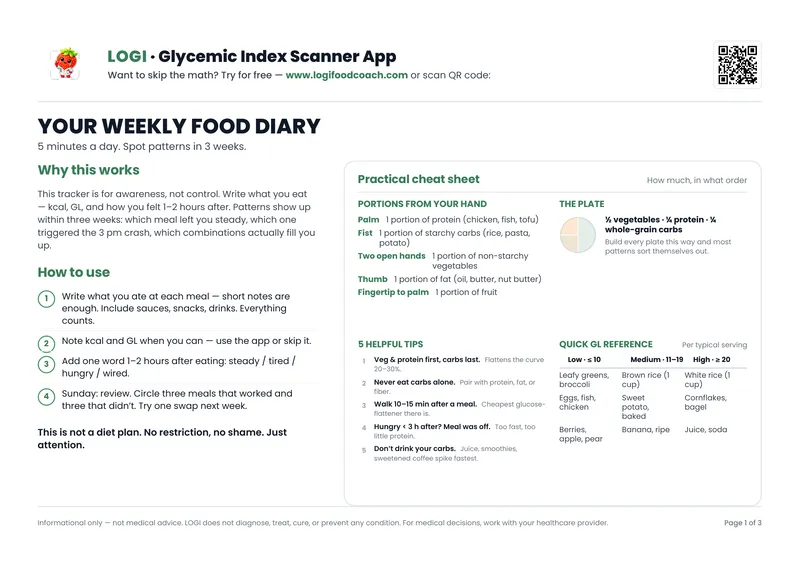
무료 PDF — 3페이지
주간 식단 일지
식사, 혈당 부하, 기분을 기록하세요. 3주 만에 패턴이 보입니다.
스팸 없음. 언제든 구독 취소.