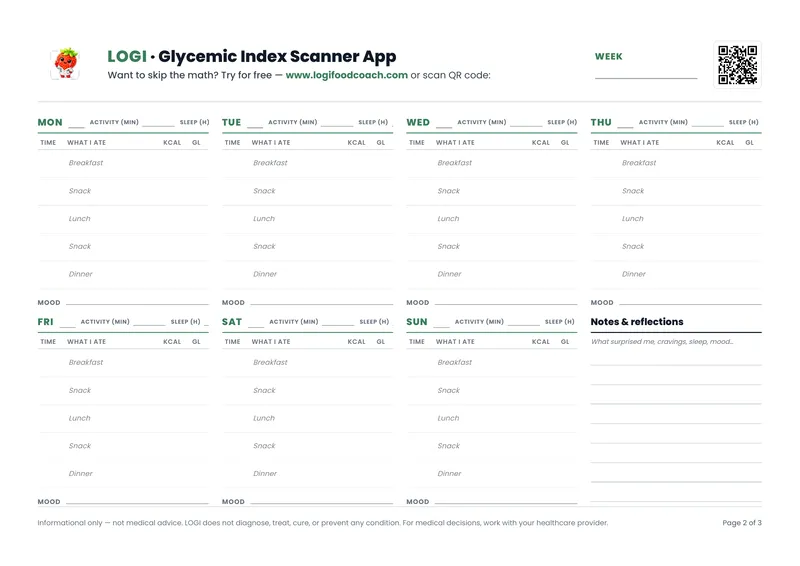
Rice and Blood Sugar — Jasmine, Basmati, Brown, Sushi: What Each One Does
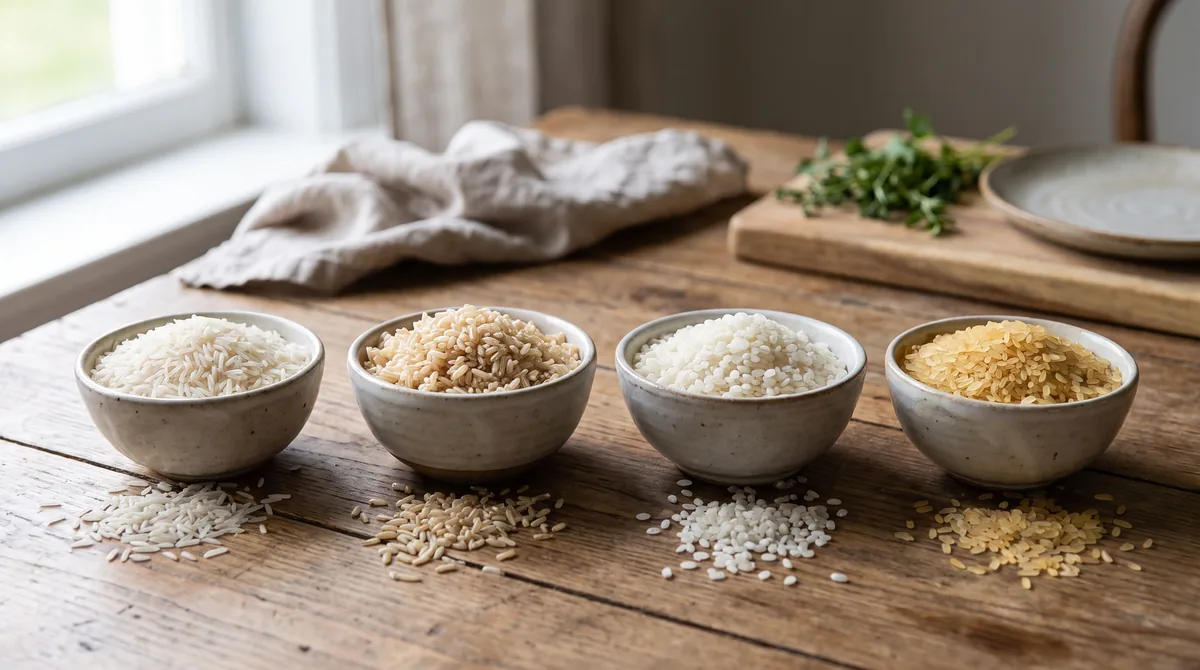
Rice and Blood Sugar — Jasmine, Basmati, Brown, Sushi: What Each One Does
Rice feeds more than half the world. It is also one of the most varied carbohydrates on the planet — and the difference between two bowls of rice can be the difference between a flat glucose curve and a sharp spike. Two cups of jasmine rice will hit your blood sugar harder than a baked potato. Two cups of parboiled basmati, eaten with dal and ghee, may barely move it.
The marketing rarely catches this. “Rice” is sold as one thing. In practice it is at least seven foods, each with its own structure, starch composition, cooking behavior, and glycemic profile.
This piece walks through the rice types most commonly eaten across the world — white jasmine, basmati, brown, sushi short-grain, glutinous (sticky), arborio, and parboiled — what each one does to blood sugar and why, and how to choose if you have insulin resistance, prediabetes, PCOS, or simply want to eat rice without crashing two hours later.
The mechanism — why rice is not just “rice”
Four factors decide how a bowl of rice hits the bloodstream:
Amylose vs amylopectin ratio. Rice starch is a mix of two molecules. Amylose is a long, straight chain that digests slowly. Amylopectin is branched and digests fast. The higher the amylose content, the flatter the curve. Basmati and parboiled rice are around 25-28% amylose. Jasmine rice is 12-18%. Sushi short-grain and glutinous rice are under 5% — almost all amylopectin. This single ratio explains most of the variation between rice varieties.
Cooking and post-cooking treatment. Cooked starch is digested faster than raw. But cooked-and-cooled starch develops what is called resistant starch — a portion of the starch literally refolds during cooling and resists digestion. Cold rice that has been refrigerated for at least 8 hours and then reheated has 10-15% lower glycemic load than the same rice eaten hot off the stove. Sushi (eaten cold) benefits from this. Reheated leftover rice does too.
Particle integrity. Whole grain rice (brown, red, black) keeps the bran layer intact. The bran is a physical barrier to digestive enzymes and adds fiber. White rice has had this layer milled off. Parboiled rice is interesting — the milling is done after a steam-pressure treatment that pushes nutrients from the bran into the grain, then the bran is removed. The structure is denser than regular white rice.
What you eat it with. Rice alone produces a much sharper curve than rice with protein, fat, fiber, or acid. Indian dal with ghee, Japanese rice with grilled fish and pickled vegetables, Italian risotto with parmesan and olive oil — these traditional pairings emerged in part because they slow digestion. A plate of plain white rice with sweet sauce is the modern outlier, not the historical norm.
With these four factors in mind, the variation between rice varieties becomes predictable.
White jasmine rice
The default rice across Thailand, Cambodia, Laos, southern Vietnam, southern China, and increasingly Western Asian restaurants. Soft, sticky-ish, with a floral aroma. Low amylose (12-18%) — most of the starch is amylopectin. Heavily milled, fast cooking.
Glycemic profile: glycemic index typically 89-109 (highest among common rice varieties), glycemic load around 25-30 per typical 1-cup cooked serving. A bowl of jasmine rice eaten alone produces a curve close to white bread or cornflakes. The aroma and texture come from the low-amylose structure — which is the same property driving the high GI.
What to do: jasmine is rarely eaten alone in its traditional context. A traditional Thai meal has stir-fried protein, fish sauce, vegetables, herbs, often coconut fat. These reduce the curve substantially. The problem is portion drift — modern Thai-American restaurant portions of jasmine rice are 2-3× larger than home portions in Bangkok. If you watch glucose: half the rice, double the protein and vegetables, add lime or vinegar somewhere on the plate.
Basmati rice (white)
The default rice across India, Pakistan, Iran, and most of South Asia. Long-grain, separate grains when cooked, nutty aroma. High amylose (22-28%). Even white basmati has a meaningfully lower glycemic index than jasmine because of the amylose content.
Glycemic profile: glycemic index 50-65 (low to medium), glycemic load around 15-20 per cup cooked. The lowest-GI white rice commonly eaten. Aged basmati (the rice is stored 6-24 months before milling) digests even more slowly — the starch crystallizes during storage in a way similar to retrogradation, lowering GI by another 5-10 points.
What to do: basmati is the rice of choice for most people watching glucose, including in cuisines where it is not traditional. Eat with dal, raita, ghee, or paneer to flatten the curve further. Indian dal-rice with ghee at body temperature produces a smaller glucose response than white pasta with tomato sauce in most people.
Brown rice (whole grain)
White rice with the bran layer intact. Most commonly eaten as long-grain brown, but also brown jasmine, brown basmati, brown short-grain (sushi-style), red rice (Bhutanese, Camargue), black rice (forbidden rice). The bran adds fiber (around 3-4g per cup vs <1g for white) and slows digestion.
Glycemic profile: glycemic index 50-68 depending on variety, glycemic load around 15-18 per cup cooked. Lower than white jasmine by 30-40%. Brown basmati is among the best — both the amylose content and the bran layer work together.
The texture takes adjustment. Most people who grew up on white rice find brown rice chewy and stronger-flavored. Soaking brown rice overnight before cooking, or cooking with a small amount of olive oil or coconut oil in the water, makes the texture closer to white rice. The grain absorbs the fat, which further slows digestion.
What to do: brown rice is the best everyday rice for someone watching glucose. Brown basmati specifically is the strongest combination. Adjust portion (3/4 cup cooked is satisfying once the brown bran flavor is familiar) and pair with protein and fat.
Sushi rice (short-grain, white)
The default rice in Japanese cuisine, also used in Korean and parts of northern Chinese cooking. Very low amylose (5-15%) — sticky, plump, soft. Cooked with rice vinegar, sugar, and salt for sushi-style, plain for donburi or bento.
Glycemic profile (plain hot): glycemic index 70-85, glycemic load around 22-28 per cup. High when eaten hot and plain.
The sushi-specific exception: sushi rice eaten cold (as it normally is — at the sushi bar or in maki) has a noticeably lower glucose response than the same rice eaten hot. Two reasons. First, the cold rice has retrograded — some of the starch became resistant during cooling. Second, sushi rice is dressed with rice vinegar, and the acetic acid in vinegar slows starch digestion by 15-25% on its own. A piece of nigiri also brings fat from the fish, protein, and the small amount of soy sauce contributes minerals and umami without adding fast carbs.
What to do: cold sushi (nigiri, maki, chirashi) produces a notably flatter curve than the same rice would predict. Hot sushi-rice bowls (donburi, bibimbap with sushi rice) hit harder. If you eat Japanese food and watch glucose, the cold preparation is your friend.
Glutinous rice (sticky rice, mochi rice)
The default rice in Laos, parts of northern Thailand, the Philippines (some dishes), and used widely across East Asia in desserts and street food. Almost zero amylose — pure amylopectin. The stickiness is structural: amylopectin chains tangle when cooked.
Glycemic profile: glycemic index 90-105, glycemic load around 28-35 per cup. Among the highest of any common food. Mochi (pounded glutinous rice cake) is even faster than rice because the pounding breaks down whatever starch structure remained.
What to do: glutinous rice is best treated as a special-occasion food rather than a daily staple. In its traditional Laotian setting, it is eaten by hand in small portions with grilled meats, raw vegetables, fermented fish sauce, and chili paste — which slow it considerably. Modern restaurant portions and mochi-as-snack are different categories. If you eat glutinous rice, keep portions small and pair aggressively with protein and fat.
Arborio rice (and risotto)
The default rice for Italian risotto. Short-grain, high in amylopectin (around 18-20% amylose), but with the unique property of releasing starch slowly during stirring. The result is the creamy texture without added cream.
Glycemic profile: glycemic index 65-75, glycemic load varies wildly with preparation. Plain boiled arborio is high. Risotto cooked traditionally — slowly with broth, finished with butter and parmesan — has a meaningfully lower glycemic response because the rice is cooked in a fat-and-protein bath the entire time. The fat coats the starch granules and slows digestion.
A serving of risotto al parmigiano hits blood sugar less than a same-weight serving of jasmine rice. The risotto includes the slowing factors built in. The problem with risotto is portion drift — restaurant portions are often 2-3× home portions.
What to do: risotto traditionally cooked is a reasonable occasional choice if portion-controlled. Cook with bone broth, use plenty of butter and parmesan, and serve as a primo (first course, 60-80g dry rice) rather than a main.
Parboiled rice (converted rice)
A processing method, not a variety. Rice is steamed under pressure with the bran on, then dried, then milled to white. The steaming drives B vitamins and minerals from the bran into the grain, and changes the starch structure — some of the amylopectin re-arranges into a denser form that digests more slowly.
Glycemic profile: glycemic index 38-55 (lowest of common white rices), glycemic load around 13-18 per cup. Parboiled basmati is among the lowest-GI white rices commonly eaten. The grain is also more separate, less sticky, and has a slightly nutty taste.
Parboiled is the default rice in much of West Africa, parts of South America (arroz parbolizado is widely sold in Brazil), and across Bangladesh. It is sold in most Western supermarkets as “converted rice” or labeled parboiled. Underused given how friendly it is to glucose.
What to do: switching from regular white rice to parboiled is one of the simplest single changes someone watching glucose can make. The cooking, taste, and texture are similar enough that family meals don’t need to change. Parboiled basmati is the strongest combination.
Quick comparison
| Rice type | Amylose | Typical GI | GL per cup cooked | Best pairing |
|---|---|---|---|---|
| Glutinous (sticky) | <5% | 90-105 | 28-35 | Grilled protein + acid + small portion |
| Jasmine (white) | 12-18% | 89-109 | 25-30 | Stir-fried protein + vegetables + lime |
| Sushi (short-grain, hot) | 5-15% | 70-85 | 22-28 | Fish + soy + vinegar |
| Sushi (cold, vinegared) | 5-15% | 50-65 | 15-20 | Naturally paired in sushi format |
| Arborio (risotto) | 18-20% | 65-75 | 18-25 | Butter + parmesan + bone broth (traditional cook) |
| Brown rice (long-grain) | 22-28% | 55-68 | 15-18 | Beans + vegetables + olive oil |
| Brown basmati | 22-28% | 50-58 | 14-17 | Dal + ghee + vegetables |
| White basmati | 22-28% | 50-65 | 15-20 | Dal + raita + ghee |
| Parboiled basmati | 25-28% | 38-50 | 13-16 | Any savory pairing |
How to choose, if you watch glucose
For most people, the answer is straightforward:
- Default: parboiled basmati, brown basmati, or white basmati — in roughly that order. Easy substitution in most recipes.
- For Italian food: traditional risotto in controlled portions is reasonable.
- For Japanese: cold sushi-style is fine. Hot donburi watch portion.
- For Thai / southern Chinese: keep jasmine rice portions small (half what most restaurants serve), pair aggressively with protein and vegetables.
- For South Asian: basmati works in any preparation, parboiled is the upgrade.
- For special occasions (glutinous rice, mochi, sticky rice desserts): small portion, paired, treated as a treat.
The biggest mistake in modern rice eating is portion size, not variety choice. Two cups of brown basmati eats more glucose-friendly than half a cup of jasmine — and half a cup of jasmine in a traditional Thai meal is fine. Portion matters more than purity.
A practical week — rice and blood sugar
Three small changes that compound for someone watching glucose:
-
Swap white jasmine or generic white rice with parboiled basmati or brown basmati at home. Half the work, half the spike. Cook a batch of brown basmati on Sunday, refrigerate, and reheat — the resistant starch from cooling adds another small benefit.
-
At restaurants, halve the rice portion and double the protein and vegetables. No rice variety is so good that a 2-cup portion will be glucose-friendly.
-
Eat cold sushi without guilt. The combination of low amylose + cold retrogradation + vinegar + protein-fat pairing makes sushi one of the most glucose-friendly common restaurant meals — far flatter than the same calories as ramen, donburi, or fried rice.
Eating rice while watching glucose is mostly about choosing the variety that fits your cuisine, eating it in the portion that fits your hand (not the bowl), and pairing it with what naturally goes with it. The traditional pairings of every rice-eating culture exist for reasons that long predate glycemic-index science. They were almost always correct.
This article is general nutrition education, not medical advice. If you have diabetes, prediabetes, or another medical condition, discuss specific dietary changes with your doctor or registered dietitian.
Take control of your blood sugar
Scan your meals, track glycemic load, and see your patterns — all in one app.
Mulai Uji Coba Gratis →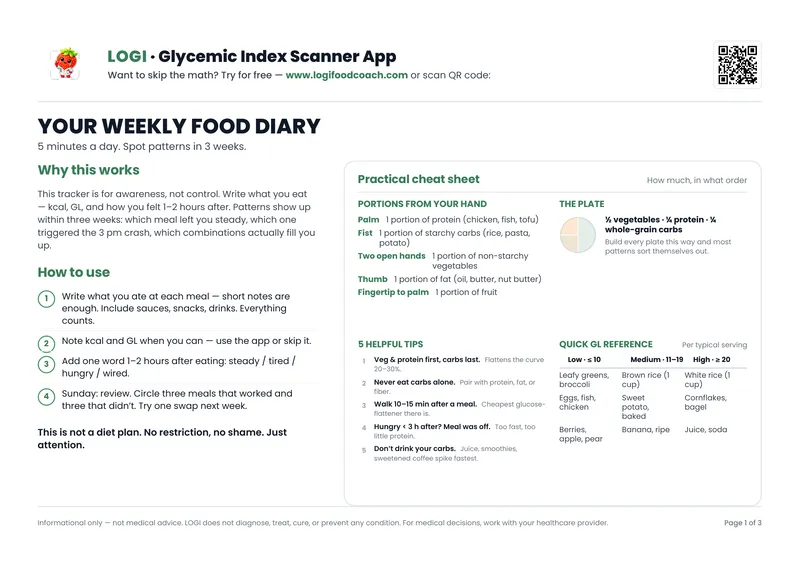
PDF gratis — 3 halaman
Jurnal makanan mingguan
Catat makanan, beban glikemik & suasana hati. Temukan pola dalam 3 minggu.
Tanpa spam. Berhenti kapan saja.