Why Am I Tired After Eating? The Blood Sugar Explanation Nobody Told You
You eat lunch. Forty minutes later you can barely keep your eyes open. Your brain feels heavy, your focus drops, and the idea of going back to work makes you want to lie down instead. By 4 p.m. you are reaching for coffee or something sweet just to feel human again.
This is called postprandial fatigue. Most people accept it as a normal “food coma” and move on. It is not normal. In most cases it is a signal that your blood sugar is spiking and crashing, and that your body is working hard to keep up. Understanding what is happening is the first step to stopping it.
The short answer
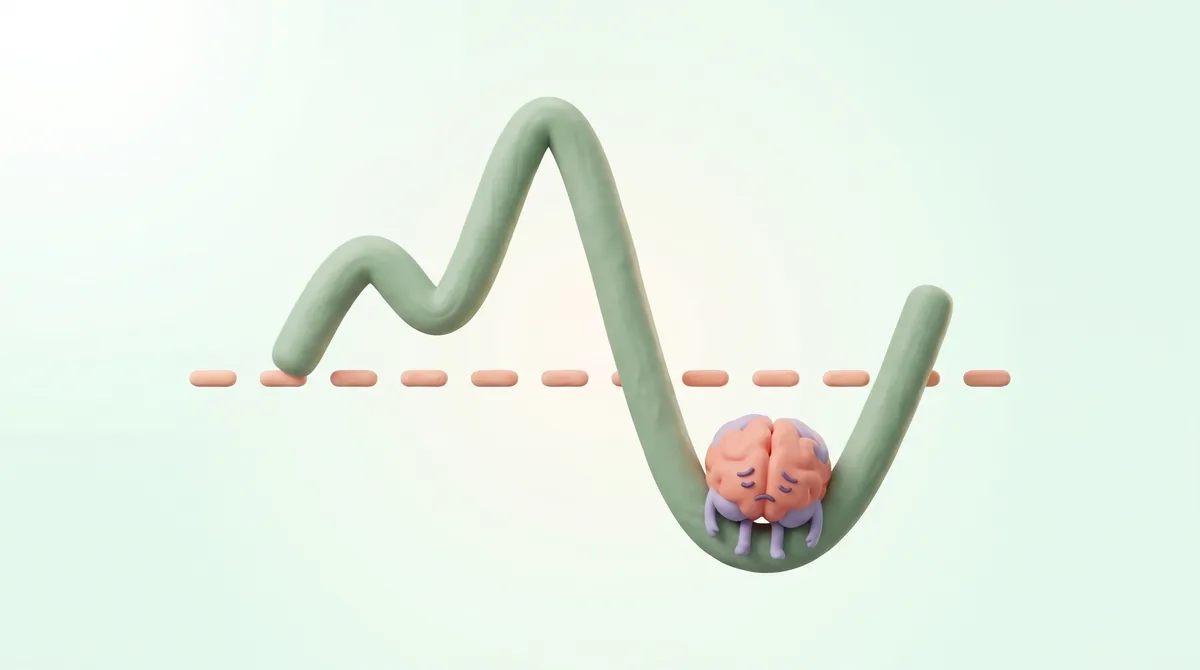
When you eat, your blood sugar rises. The bigger and faster the rise, the bigger the insulin response your pancreas has to send out to bring it back down. When insulin overshoots, blood sugar drops below baseline, which is called reactive hypoglycemia. Your brain, which runs almost entirely on glucose, notices immediately. The result feels like exhaustion, brain fog, irritability, and often cravings for more sugar or carbs to fix the low.
It is not the amount of food. It is the shape of the blood sugar curve the food produced.
What is actually happening in your body
A meal goes through four stages that determine how you feel two hours later:
Stage 1 — Digestion and absorption. Carbohydrates break down into glucose and enter your bloodstream. Simple carbs like bread, rice, pasta, sugar, and juice hit fast. Fat, fiber, and protein slow this down.
Stage 2 — Insulin response. Your pancreas reads the glucose rise and releases insulin, the hormone that moves glucose into your cells. The faster the rise, the sharper the insulin pulse.
Stage 3 — The drop. If the insulin pulse was oversized, blood sugar falls quickly. In a healthy metabolic response, it settles at baseline. In a dysregulated one, it undershoots baseline. That dip is the fatigue you feel.
Stage 4 — Counter-regulation. Your body notices the low and releases stress hormones like cortisol and adrenaline to push glucose back up. These hormones explain the shakiness, anxiety, and craving that often come with postprandial fatigue.
This cycle can happen after every meal, several times a day, without anyone ever calling it what it is.
Why it matters more than the food-coma joke
Occasional fatigue after a heavy Thanksgiving-style meal is different from feeling wrecked after a normal lunch. Chronic postprandial fatigue is one of the earliest and most ignored signs of insulin resistance, the underlying condition behind type 2 diabetes, many cases of PCOS, and a lot of stubborn belly fat.
Here is the sequence most people miss:
- Your cells become slightly less responsive to insulin (early insulin resistance).
- Your pancreas compensates by releasing more insulin.
- More insulin means stronger post-meal crashes.
- Stronger crashes mean more fatigue, cravings, and snacking.
- More snacking means more insulin, which deepens the problem.
You can sit in this loop for years before a fasting glucose test flags anything. HbA1c and fasting glucose often stay in the “normal” range long after post-meal blood sugar swings have become severe. That is why many people feel tired every afternoon for a decade before anyone names the cause.
Beyond blood sugar: the other reasons you feel sleepy after meals
Blood sugar is the main driver, but it is not the only one. A full picture:
- Parasympathetic shift. After eating, blood flow increases toward the digestive tract. The nervous system shifts from “go” to “rest and digest.” This alone produces a mild drop in alertness.
- Tryptophan and serotonin. High-carb meals increase tryptophan uptake in the brain, which converts to serotonin and then melatonin. This is real, but smaller than the glucose-insulin effect for most people.
- Large meal volume. Stretching the stomach triggers a signal that promotes rest. Portion size matters.
- Dehydration. Mild dehydration reads as fatigue. Many people eat lunch without drinking water all morning.
- Poor sleep the night before. A short night stacks with any blood sugar dip to make the afternoon feel impossible.
For most people with regular daily post-meal crashes, blood sugar is doing the heavy lifting. The other factors modulate it.
Which foods are the worst offenders
You can usually guess the foods that cause your biggest crash by asking one question: how fast does this turn into pure glucose in my blood? The faster, the bigger the insulin pulse, the bigger the crash.
Typical high-crash foods:
- White bread, white rice, most pasta
- Breakfast cereals, granola, instant oatmeal
- Sugary drinks, fruit juice, sweetened coffee drinks
- Pastries, cookies, cakes, most packaged snacks
- Potatoes (especially mashed or fries)
- Sushi rolls with white rice and sweet sauces
- Dried fruit and fruit smoothies without protein or fat
- Sweetened yogurt, flavored milks
Typical low-crash foods:
- Eggs, fish, poultry, meat, tofu, tempeh
- Full-fat dairy, cottage cheese, Greek yogurt
- Vegetables (non-starchy)
- Berries, pears, apples with skin
- Nuts, seeds, nut butters
- Legumes (lentils, chickpeas, beans)
- Avocado, olives, olive oil
- Whole intact grains like steel-cut oats, barley, buckwheat, quinoa
Two meals with the same calories can produce completely different post-meal curves. A bagel with jam and a cup of coffee will crash most people. Two eggs with spinach and a slice of whole-grain bread with butter will not.
How to tell if yours is “normal” or a real signal
Use this simple self-check over one week:
- Frequency. Feeling tired after one specific big meal is normal. Feeling tired after most lunches and dinners is a pattern worth paying attention to.
- Timing. A crash 30 to 90 minutes after eating, especially with brain fog, shakiness, irritability, or cravings, points strongly to blood sugar.
- What fixes it. If a cup of coffee, a sweet snack, or another small meal suddenly makes you feel alert again, that is further evidence of a glucose-insulin pattern.
- Connected symptoms. Chronic afternoon fatigue often travels with: belly fat that is hard to lose, dark skin patches around the neck or armpits (acanthosis nigricans), skin tags, PCOS symptoms, sugar cravings, and trouble losing weight even when eating less.
If several of these fit, it is worth getting tested.
Tests to ask your doctor for
Standard fasting glucose is not enough. The three tests that actually pick up early insulin resistance are:
- HbA1c. Average blood sugar over about three months. Useful for trends, but can stay normal in early insulin resistance.
- Fasting insulin. Often the first test to show a problem. Normal ranges published on most lab reports are wider than what most metabolic health researchers consider optimal. A fasting insulin above about 8 to 10 mIU/L suggests the pancreas is already working harder than it should.
- HOMA-IR. A calculation from fasting glucose and fasting insulin. Above about 2.0 is a warning sign. Above 2.5 is active insulin resistance for most clinicians.
If your doctor will not order fasting insulin, many labs in most countries allow you to order it privately. It is inexpensive and, combined with HbA1c, gives a much clearer picture than glucose alone.
How to stop the crashes
The good news is that post-meal fatigue responds to diet changes faster than almost any other metabolic symptom. Most people feel a difference within one to two weeks. A short list of what works:
1. Lead with protein and fiber at every meal. Aim for a palm-sized portion of protein and a fist-sized portion of non-starchy vegetables before you touch the starch. This alone flattens the glucose curve.
2. Prefer whole over refined carbs. Steel-cut oats over instant oatmeal. Whole-grain sourdough over white bread. Barley or wild rice over white rice. Apples over apple juice. Intact structure matters more than “brown” or “whole grain” on the label.
3. Add fat. Butter, olive oil, avocado, nuts, cheese. Fat slows gastric emptying and lowers the insulin pulse. This is the opposite of what low-fat diets taught a generation, and it is the part most people resist longest.
4. Walk for 10 to 15 minutes after meals. A short walk within 30 minutes of eating moves glucose into muscle without needing extra insulin. This single habit has some of the strongest evidence of any lifestyle intervention for post-meal glucose.
5. Watch liquid carbs. Juice, soda, sweetened coffee drinks, and smoothies without protein hit harder than almost anything you can chew. Treat them as dessert, not beverages.
6. Stop snacking between meals for a few days. Constant low-level grazing keeps insulin elevated all day. Eating three structured meals with nothing in between gives your system time to reset and often removes the cravings that drove the snacking in the first place.
7. Sleep matters. One short night raises next-day insulin resistance measurably. Sleep is not optional for blood sugar control.
You do not need to change everything at once. Start with meal structure (protein + fiber first) and a post-meal walk. Most people see the afternoon crash soften within days.
How tracking accelerates the process
The hardest part of changing post-meal patterns is that you cannot see your blood sugar curve with your eyes. Two meals that look similar on a plate can behave very differently in your body. Without data, you guess.
A food scanner that calculates glycemic load (not just glycemic index) and estimates the post-meal curve gives you the feedback loop you need. You see which breakfast keeps you steady until lunch and which one sets up a 2 p.m. crash. You learn which swaps actually work for your meals, not abstract recommendations.
LOGI is built around this. You photograph or describe your meal, the app calculates glycemic load, estimates the three-hour glucose curve, and suggests lower-load swaps specific to that meal. Over time, you build a personal library of foods that keep you steady and foods that do not. Most users notice the pattern within the first two weeks of tracking. The afternoon fatigue follows the data.
When to see a doctor
If your post-meal fatigue is severe, you experience shakiness or faintness that feels scary, you have a family history of type 2 diabetes, or you have other symptoms of PCOS or metabolic syndrome, this is not something to wait out. Ask your doctor for HbA1c, fasting glucose, and fasting insulin, and bring up the HOMA-IR calculation.
If you feel consistently unwell and your labs come back “normal,” it is worth getting a second opinion from a doctor who treats insulin resistance and metabolic health specifically. Reference ranges on standard panels are wide, and many cases of early insulin resistance are dismissed simply because glucose has not risen enough yet.
The bottom line
Feeling tired after eating is not a personality trait and it is not a sign that you should drink more coffee. It is a signal that your blood sugar is moving in a shape your body does not like. The pattern is reversible, the fixes are well-studied, and most of them are free.
Start with the next meal. Protein first, fiber second, refined carbs last. Walk for ten minutes after you finish. Pay attention to how you feel ninety minutes later. That single experiment tells you more about your metabolism than most blood tests.
Take control of your blood sugar
Scan your meals, track glycemic load, and see your patterns — all in one app.
Simulan ang Libreng Trial →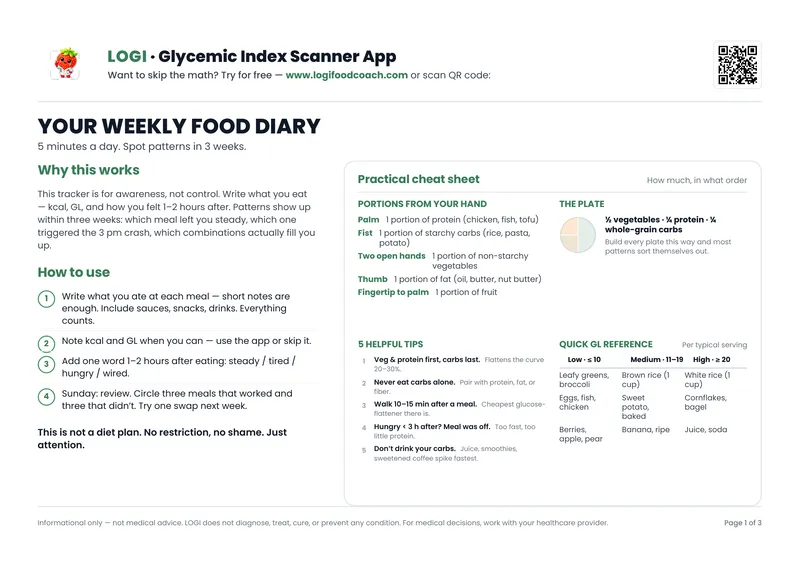
Libreng PDF — 3 pahina
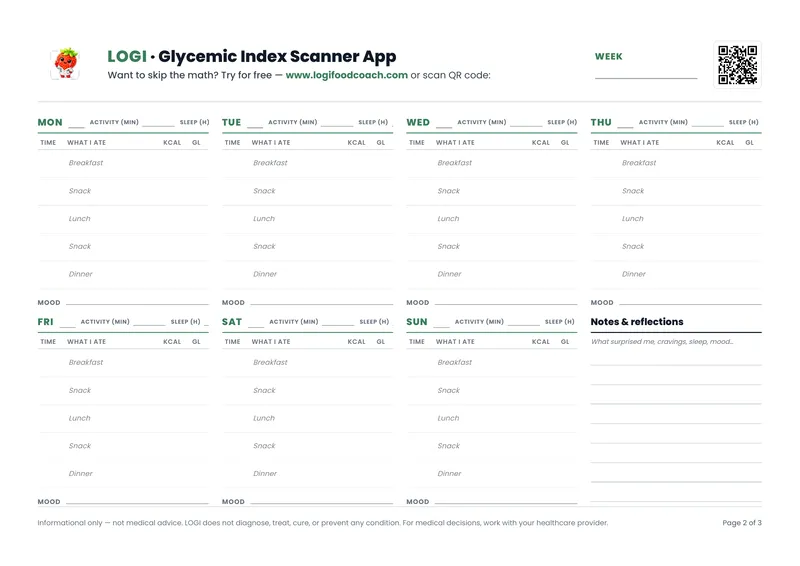
Weekly food journal mo
I-track ang pagkain, glycemic load at mood. Makikita ang pattern sa 3 linggo.
Walang spam. Mag-unsubscribe kahit kailan.