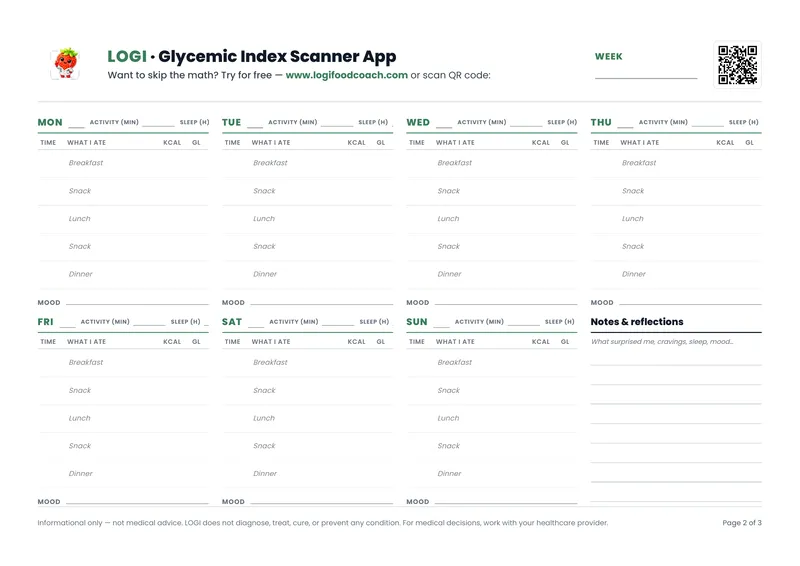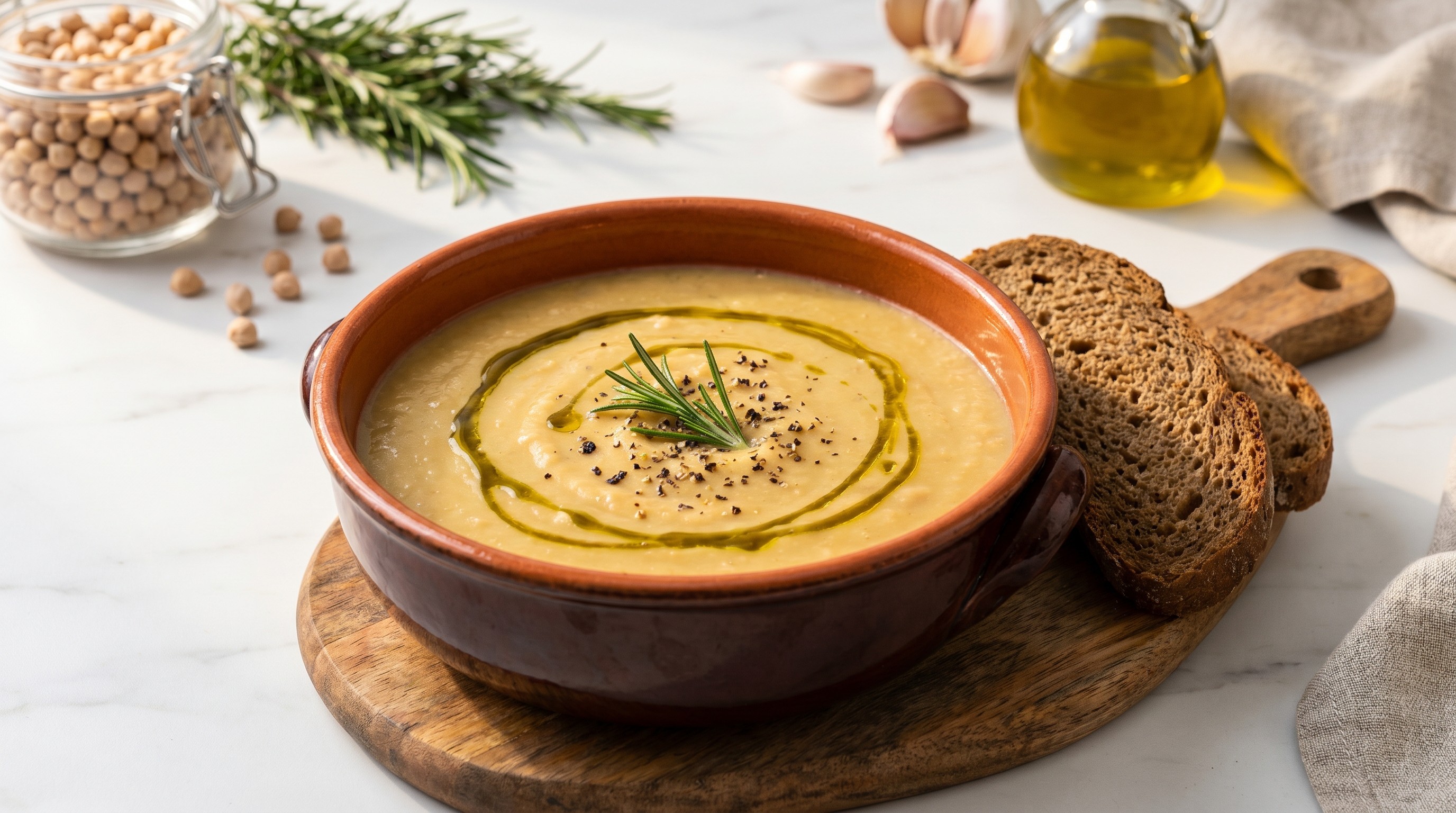
Zuppa di Ceci con Rosmarino (Italian Chickpea Soup with Rosemary)
A rustic Roman chickpea soup — naturally low-GI, rich in fiber and plant protein — simmered with rosemary and olive oil for a creamy, blood-sugar-friendly bowl.
This traditional Roman chickpea soup is one of those rare dishes that is already almost perfectly suited to a low-glycemic lifestyle. Chickpeas are among the lowest-GI legumes (GI ~28), packed with soluble fiber that slows glucose absorption and keeps blood sugar remarkably stable. Combined with heart-healthy extra-virgin olive oil — whose monounsaturated fats further blunt any postprandial glucose spike — this soup is as metabolically smart as it is deeply satisfying.
The technique here is what elevates it: half the chickpeas are blended back into the broth, creating a velvety, starch-thickened base without a single grain of flour or added thickener. Rosemary does more than perfume the pot — emerging research suggests its polyphenols may support insulin sensitivity. Garlic, simmered low and slow until pale gold, adds a mellow sweetness that rounds out the tomato's acidity.
For optimal blood sugar management, serve this soup as a standalone first course or pair it with a small slice of dense sourdough bread (GI ~54, significantly lower than white bread). Eating the protein- and fiber-rich soup before any bread further flattens the glucose curve. This is comfort food that genuinely works for you — and like all great Italian soups, it tastes even better the next day.
Blood Sugar Impact
Very low blood sugar impact expected. Chickpeas are rich in fiber and protein, resulting in a slow, gentle glucose rise with stable energy for 3-4 hours.
Blood Sugar Tips
- ✓ Enjoy the soup with a slice of whole-grain sourdough bread to add extra fiber and keep the overall glycemic load low.
- ✓ Add a drizzle of extra virgin olive oil on top before eating — the healthy fats further slow gastric emptying and glucose absorption.
- ✓ Take a gentle 10-15 minute walk after your meal to enhance glucose uptake by muscles and blunt any minor post-meal rise.
🥗 Ingredients
- 480 g Chickpea
- 3 tbsp Extra-virgin olive oil
- 4 pcs Garlic
- 2 pcs Rosemary
- 400 g Whole peeled tomato
- 750 ml Vegetable broth
- 0.5 tsp Chilli flakes
- 1 tsp Salt
- 1.1 lb Chickpea
- 3 tbsp Extra-virgin olive oil
- 4 pcs Garlic
- 2 pcs Rosemary
- 14.1 oz Whole peeled tomato
- 3.2 cups Vegetable broth
- 0.5 tsp Chilli flakes
- 1 tsp Salt
👨🍳 Instructions
- 1
Place a large heavy-bottomed pot over medium-low heat and pour in the extra-virgin olive oil. Once the oil shimmers gently, scatter in the sliced garlic and the stripped rosemary leaves. Stir frequently and cook for 3 to 4 minutes until the garlic turns a soft pale gold and the rosemary becomes fragrant. Keep the heat low — browning the garlic will introduce bitterness.
- 2
Add the chilli flakes (if using) and stir for 15 seconds to bloom their heat in the oil. Then add the hand-crushed tomatoes, scraping them into the pot along with their juices. Let the tomato mixture cook for about 5 minutes, stirring occasionally, until it deepens in colour and you notice the oil beginning to separate at the edges of the sauce.
- 3
Tip the drained chickpeas into the pot and pour in the vegetable broth. Stir everything together, raise the heat slightly, and bring to a gentle simmer. Let the soup cook uncovered for 15 minutes, stirring from time to time so nothing catches on the bottom.
- 4
Transfer roughly one-third of the soup — chickpeas and broth together — into a blender or a tall jug suitable for an immersion blender. Blend until completely smooth and creamy. This puréed portion is what gives the soup its luxuriously thick body without any added flour or starch.
- 5
Pour the blended mixture back into the pot and stir thoroughly to combine. You should see the broth transform into a rich, creamy base while whole chickpeas still provide satisfying texture throughout.
- 6
Continue to simmer the soup gently for another 5 minutes to let the flavours meld. If the consistency is thicker than you prefer, add a small splash of water or broth to loosen it — the soup should be thick but still pourable.
- 7
Taste and season generously with salt and freshly cracked black pepper. The chickpeas absorb a good deal of seasoning, so don't be shy — adjust until the earthy, herbal flavours come alive.
- 8
Ladle the soup into warm bowls. Finish each serving with a generous drizzle of raw extra-virgin olive oil, a fresh rosemary sprig, and another crack of black pepper. For a complete low-glycemic meal, serve alongside a small slice of dense sourdough bread (GI ~54) — and eat the soup first before the bread to further minimise any blood sugar rise.
📊 Nutrition Per Serving
| Per Serving | Whole Dish | |
|---|---|---|
| Calories | 329 | 1317 |
| Carbs | 42g | 168g |
| Sugars | 10g | 39g |
| Natural Sugars | 10g | 39g |
| Protein | 13g | 50g |
| Fat | 14g | 54g |
| Saturated Fat | 2g | 7g |
| Unsaturated Fat | 12g | 47g |
| Fiber | 11g | 45g |
| Soluble Fiber | 3g | 11g |
| Insoluble Fiber | 7g | 27g |
| Sodium | 1388mg | 5551mg |
Predicted Glucose Response
What if you...
Estimated model — individual responses vary. Not medical advice.
🔄 Lower GI Swaps
Chickpeas have a moderate GI (around 28-33). Black soybeans have a very low GI (approximately 16) and significantly lower carbohydrate content, resulting in a much lower glycemic load. Green lentils (GI ~22) and lupini beans (GI ~15) also produce a smaller blood sugar response per serving.
Canned tomatoes can have a slightly higher GI than fresh tomatoes due to processing. Fresh tomatoes have a very low GI (around 15) and their higher fiber content when unprocessed helps slow glucose absorption further.
Commercial vegetable broths often contain added sugars or maltodextrin that can raise glycemic load. Bone broth or homemade broth without added sugars has virtually zero glycemic impact and adds protein, which helps moderate the overall blood sugar response of the meal.
🔬 The Science Behind This Recipe
Here's the science explainer section:
---
Why This Soup Loves Your Blood Sugar
Chickpeas are one of nature's best blood sugar–friendly foods, and they're the star of this soup for good reason. With a estimated glycemic index of just 29 and a glycemic load of 12 per serving, this recipe lands comfortably in the "low" category on both scales. But what do those numbers actually mean? The glycemic index tells you how quickly a food raises blood sugar compared to pure glucose, while glycemic load factors in the *amount* you're actually eating — and that's the number that matters most in real life. A generous bowl of this soup delivers steady, slow-burning energy rather than a sharp spike and crash.
The magic lies in how the ingredients work together. Chickpeas are packed with both soluble fiber and plant-based protein, which form a one-two punch against glucose spikes. The soluble fiber creates a gel-like substance in your digestive tract that physically slows the absorption of sugars, while the protein helps moderate your insulin response. Then there's the extra virgin olive oil — its healthy fats slow gastric emptying, meaning your stomach takes longer to pass food along, giving your body more time to process glucose gradually. Even the canned tomatoes contribute: their natural acidity has been shown to help lower the glycemic response of a meal.
Want to maximize the benefits? Try eating a small salad or some vegetables before ladling up your soup — research suggests that eating fiber-rich foods first can reduce post-meal glucose spikes by up to 30%. A short 10–15 minute walk after your meal can also help your muscles soak up circulating blood sugar. And if you're serving this with bread, dip it in the olive oil–rich broth rather than eating it on its own — pairing carbohydrates with fat and protein is one of the simplest strategies for keeping your blood sugar on an even keel.
Related recipes
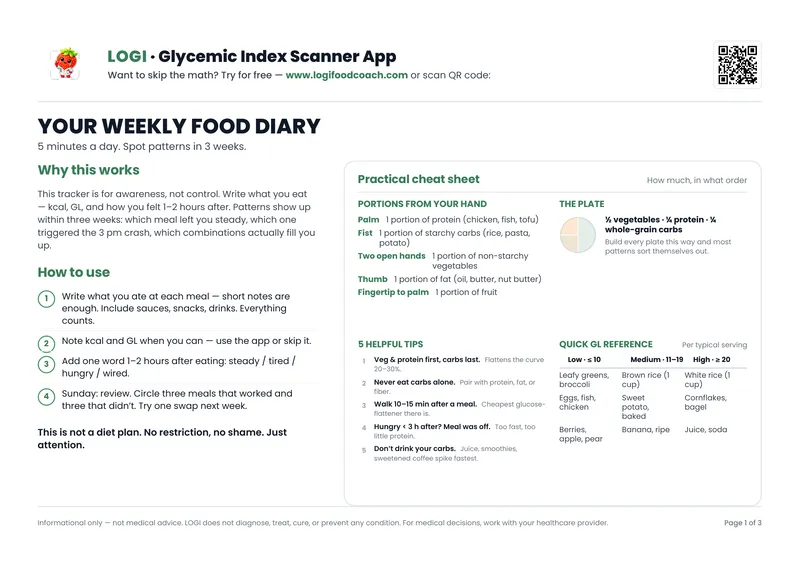
Free PDF — 3 pages
Your Weekly Food Journal
Track meals, glycemic load & mood. Spot patterns in 3 weeks.
No spam. Unsubscribe anytime.