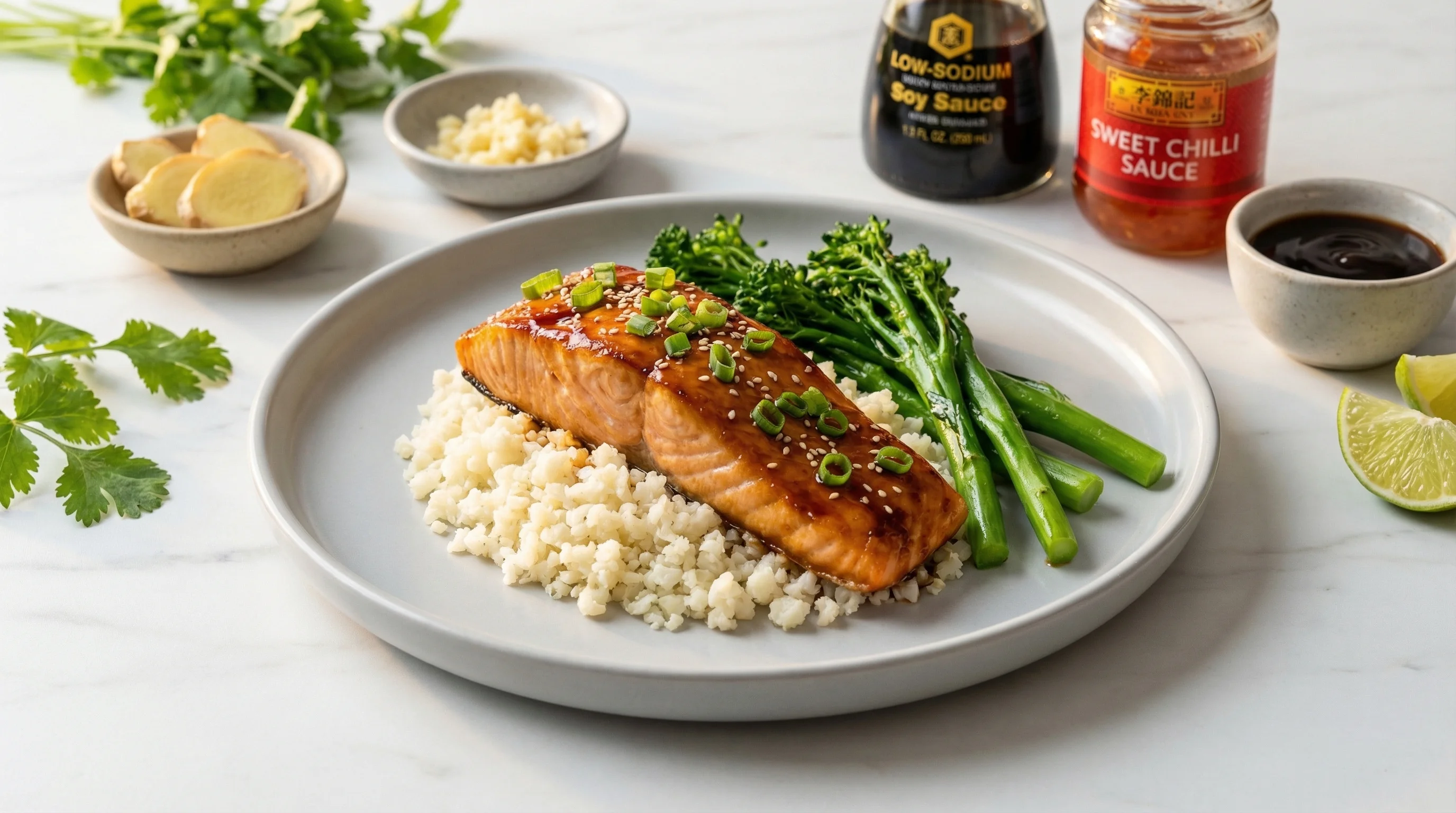
Sweet Chilli Glazed Salmon with Cauliflower Rice
Succulent salmon with Asian-inspired glaze served over cauliflower rice - a blood sugar-friendly twist on a weeknight favorite that's ready in 45 minutes.
This Sweet Chilli Glazed Salmon transforms a classic Asian-inspired dish into a low-glycemic powerhouse meal that won't spike your blood sugar. The star of this recipe is the perfectly caramelized salmon fillet, marinated in a balanced blend of ginger, garlic, and umami-rich sauces that create a glossy, restaurant-quality glaze. We've made a crucial swap by replacing traditional basmati rice with cauliflower rice, dropping the glycemic load significantly while maintaining the satisfying texture you crave.
The marinade combines fresh ginger and garlic - both known for their blood sugar-regulating properties - with soy sauce and oyster sauce for depth. While sweet chilli sauce does contain sugar, using it sparingly in the glaze allows you to enjoy the flavor without overwhelming your glucose response. The key is pairing it with protein-rich salmon, which is loaded with omega-3 fatty acids that support insulin sensitivity and reduce inflammation.
This meal follows optimal eating strategies for glycemic control: the tenderstem broccoli provides fiber and should be eaten first to slow glucose absorption, followed by the protein-rich salmon, and finally the cauliflower rice. The entire plate delivers sustained energy without the blood sugar roller coaster, making it perfect for anyone managing diabetes, prediabetes, or simply seeking stable energy levels throughout the day.
Blood Sugar Impact
This meal will have a low to minimal impact on blood sugar levels, providing stable energy for 3-4 hours. The combination of protein-rich salmon, high-fiber cauliflower rice, and low-carb vegetables creates a well-balanced plate that promotes gradual glucose absorption.
Blood Sugar Tips
- ✓ Eat the broccoli and cauliflower rice first before the salmon to maximize the fiber's blood sugar buffering effect
- ✓ The sweet chili sauce contains added sugars, so use it sparingly or dilute with extra soy sauce and vinegar
- ✓ Take a 10-15 minute walk after eating to help muscles absorb glucose and further flatten the blood sugar curve
🥗 Ingredients
- 2 pcs salmon fillets, skinless
- 1 tsp fresh ginger, minced
- 1 pcs garlic clove, minced
- 1 tbsp soy sauce (low-sodium preferred)
- 2 tbsp oyster sauce
- 2 tbsp sweet chilli sauce
- 300 g cauliflower rice
- 100 g tenderstem broccoli
- 2 pcs spring onions, chopped
- 1 tsp sesame seeds for garnish
- 2 pcs salmon fillets, skinless
- 1 tsp fresh ginger, minced
- 1 pcs garlic clove, minced
- 1 tbsp soy sauce (low-sodium preferred)
- 2 tbsp oyster sauce
- 2 tbsp sweet chilli sauce
- 10.6 oz cauliflower rice
- 3.5 oz tenderstem broccoli
- 2 pcs spring onions, chopped
- 1 tsp sesame seeds for garnish
👨🍳 Instructions
- 1
Prepare the marinade by combining minced fresh ginger, minced garlic, soy sauce, oyster sauce, and sweet chilli sauce in a medium bowl. Whisk thoroughly until all ingredients are well incorporated and the mixture is smooth.
- 2
Place the salmon fillets in the marinade, turning them several times to ensure complete coverage on all sides. Cover the bowl with plastic wrap or a lid and refrigerate for 30 minutes to allow the flavors to penetrate the fish. This marinating step enhances taste and helps create the signature glaze.
- 3
While the salmon marinates, preheat your oven grill to 200°C (400°F). Line a baking tray with parchment paper or aluminum foil for easy cleanup and to prevent sticking.
- 4
Remove the salmon from the marinade and place the fillets on the prepared baking tray. Spoon any remaining marinade over the top of each fillet to maximize the glaze effect during cooking.
- 5
Grill the salmon for 7-10 minutes, depending on thickness, until the top develops a beautiful caramelized glaze and the fish flakes easily with a fork. The internal temperature should reach 63°C (145°F). Avoid overcooking to maintain moisture and omega-3 content.
- 6
While the salmon cooks, prepare the cauliflower rice according to package directions or sauté fresh cauliflower rice in a non-stick pan with a small amount of oil for 5-6 minutes until tender. Steam the tenderstem broccoli for 4-5 minutes until bright green and crisp-tender.
- 7
To serve using the optimal eating sequence for blood sugar control, plate the tenderstem broccoli first and eat it before the other components. This fiber-rich vegetable will slow glucose absorption from the rest of the meal.
- 8
Arrange the glazed salmon fillets alongside the cauliflower rice and remaining broccoli. Garnish with freshly chopped spring onions and a sprinkle of sesame seeds. Serve immediately while the salmon is hot and the glaze is glossy.
📊 Nutrition Per Serving
| Per Serving | Whole Dish | |
|---|---|---|
| Calories | 431 | 863 |
| Carbs | 24g | 47g |
| Sugars | 12g | 25g |
| Added Sugars | 8g | 16g |
| Natural Sugars | 5g | 9g |
| Protein | 39g | 78g |
| Fat | 22g | 43g |
| Saturated Fat | 5g | 10g |
| Unsaturated Fat | 17g | 33g |
| Fiber | 5g | 10g |
| Soluble Fiber | 2g | 3g |
| Insoluble Fiber | 4g | 7g |
| Sodium | 1120mg | 2240mg |
Predicted Glucose Response
What if you...
Estimated model — individual responses vary. Not medical advice.
🔄 Lower GI Swaps
Commercial sweet chili sauce contains high amounts of added sugar that rapidly spikes blood glucose. Sugar-free alternatives or hot sauce blends eliminate the glycemic load while maintaining flavor.
Oyster sauce typically contains added sugars and cornstarch that increase glycemic impact. Coconut aminos and tamari provide umami flavor without the sugar content, keeping blood sugar more stable.
While cauliflower rice is already low-glycemic, shirataki rice has virtually zero glycemic load and adds variety. Mixing both provides texture while maintaining near-zero carbohydrate impact on blood sugar.
Regular soy sauce may contain wheat and added sugars that contribute to glycemic load. Tamari and coconut aminos are typically sugar-free alternatives that provide the same savory depth without affecting blood glucose levels.
🔬 The Science Behind This Recipe
Why This Recipe Supports Stable Blood Sugar
This Sweet Chilli Glazed Salmon with Cauliflower Rice is a masterclass in blood sugar-friendly eating, with a remarkably low glycemic load of just 8.6 and a GI of 36. The star ingredient, salmon, provides high-quality protein and omega-3 fatty acids that actively slow down digestion and glucose absorption. When you eat protein alongside any carbohydrates, it triggers a more gradual insulin response, preventing the sharp blood sugar spikes that lead to energy crashes and increased hunger. The healthy fats in salmon also enhance satiety, meaning you'll feel satisfied longer without needing to reach for snacks that might derail your glucose levels.
The cauliflower rice is the secret weapon here, replacing traditional white rice (which has a GI of around 73) with a vegetable that's almost entirely fiber and water. This substitution dramatically reduces the overall carbohydrate load of the meal while adding volume, nutrients, and that satisfying "rice-like" texture. Fiber is crucial for blood sugar management because it slows the movement of food through your digestive tract, creating a steady trickle of glucose into your bloodstream rather than a flood. The aromatic additions of ginger and garlic aren't just flavor enhancers—they contain compounds that may improve insulin sensitivity and support healthy glucose metabolism.
To maximize the blood sugar benefits of this meal, try eating your salmon and vegetables first, saving any higher-carb elements for last. This eating order has been shown to reduce post-meal glucose spikes by up to 73% in some studies. A 10-15 minute walk after enjoying this dish can further help your muscles absorb glucose, keeping your blood sugar in that stable, comfortable zone.
Related recipes
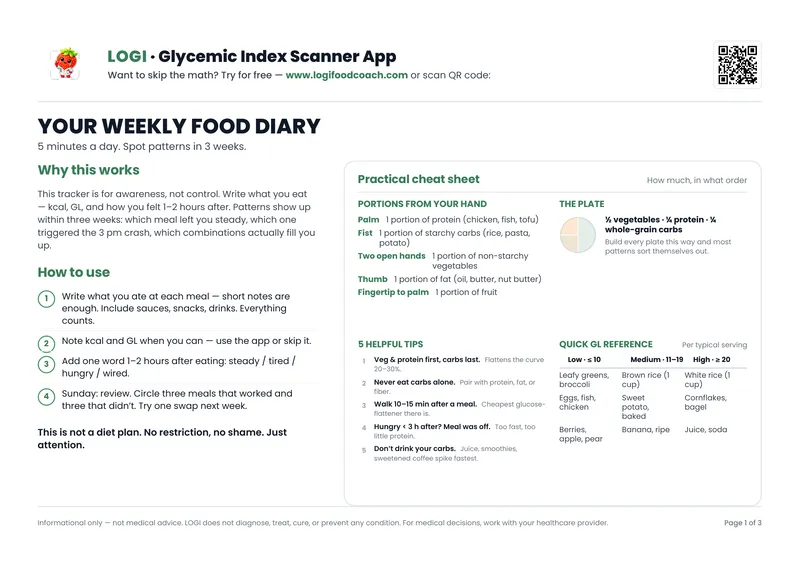
Free PDF — 3 pages
Your Weekly Food Journal
Track meals, glycemic load & mood. Spot patterns in 3 weeks.
No spam. Unsubscribe anytime.