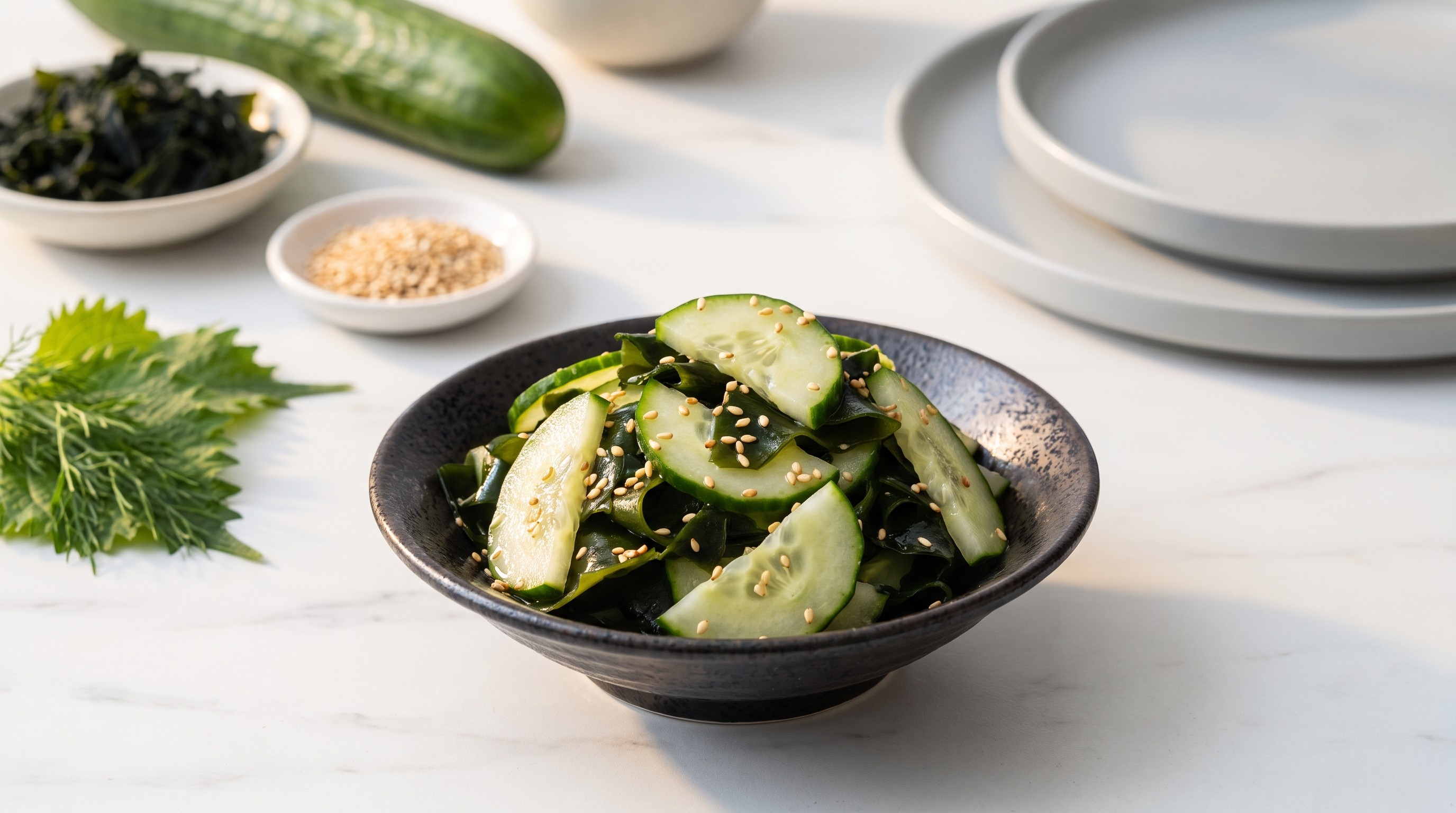
Sunomono (Cucumber & Wakame Vinegar Salad)
A crisp Japanese vinegared cucumber salad with mineral-rich wakame — nearly zero-carb, and the acetic acid in the dressing actively blunts blood sugar spikes.
Sunomono is one of Japan's most elegant side dishes: paper-thin cucumber half-moons and silky rehydrated wakame dressed in a bright, tangy vinaigrette with just a whisper of sweetness. This low-glycemic version keeps sugar to a single teaspoon across two servings — roughly two grams per bowl — so the net carb impact is negligible. The real magic, though, is the rice vinegar itself: acetic acid has been shown in clinical studies to slow gastric emptying and improve insulin sensitivity, meaning this salad doesn't just avoid spiking your blood sugar — it actively helps manage it.
Cucumber is one of the lowest-glycemic vegetables you can eat, with a GI well under 15 and almost no digestible carbohydrate. Wakame seaweed adds iodine, magnesium, and soluble fibre (alginate), which further slows glucose absorption in the gut. Together with heart-healthy sesame oil and protein-rich sesame seeds, the dish delivers a surprising nutritional punch for something so light and refreshing.
For optimal blood sugar management, serve sunomono at the start of your meal — eating vegetables and vinegar-based dishes before carbohydrates has been shown to reduce post-meal glucose by up to 30 percent. It pairs beautifully alongside grilled fish, tofu, or any protein-forward main. The salad comes together in just fifteen minutes with zero cooking, making it one of the simplest blood-sugar-friendly sides in your repertoire.
Blood Sugar Impact
Very low blood sugar impact expected. With a glycemic load of only 2.9 and an estimated GI of 31, this cucumber and seaweed salad will cause minimal glucose elevation, providing stable energy without any significant spike.
Blood Sugar Tips
- ✓ Enjoy this salad as a starter before higher-carb dishes to slow gastric emptying and blunt the glucose response of the overall meal.
- ✓ Use the small amount of sugar called for sparingly — or substitute with a pinch of erythritol or rice vinegar alone — to keep the already-low glycemic load even lower.
- ✓ Pair with a protein source like grilled fish or tofu to increase satiety and further moderate any post-meal blood sugar rise.
🥗 Ingredients
- 300 g Persian cucumber
- 0.5 tsp Salt
- 5 g Wakame seaweed
- 3 tbsp Rice vinegar
- 1 tbsp Soy sauce
- 1 tsp Sugar
- 1 tsp Sesame oil
- 2 tsp Sesame seeds
- 10.6 oz Persian cucumber
- 0.5 tsp Salt
- 0.2 oz Wakame seaweed
- 3 tbsp Rice vinegar
- 1 tbsp Soy sauce
- 1 tsp Sugar
- 1 tsp Sesame oil
- 2 tsp Sesame seeds
👨🍳 Instructions
- 1
Cut each cucumber in half lengthwise, then slice crosswise into very thin half-moons, about 2 mm thick. Uniformly thin slices absorb the dressing more evenly and create a pleasantly delicate texture.
- 2
Transfer the cucumber slices to a mixing bowl, sprinkle with the fine salt, and toss gently to coat. Set aside for 10 minutes — the salt draws out excess moisture, concentrating flavour and ensuring the dressing won't become watery.
- 3
While the cucumbers rest, place the dried wakame in a small bowl of cold water. Let it soak for 5 minutes until the seaweed is soft, pliable, and fully expanded. Drain thoroughly and squeeze out any remaining water, then roughly chop any large pieces into bite-sized strips.
- 4
Take the salted cucumbers by the handful and squeeze firmly over the sink, wringing out as much liquid as possible. You should extract at least 3 tablespoons of water. This step is essential — insufficiently drained cucumbers will dilute the dressing and mute the bright vinegar flavour.
- 5
Prepare the dressing by combining the rice vinegar, soy sauce, sugar, and toasted sesame oil in a small bowl. Whisk briskly until the sugar is completely dissolved and the mixture is smooth. The acetic acid in the vinegar is the star here — it helps slow glucose absorption when eaten alongside other foods.
- 6
Add the squeezed cucumbers and chopped wakame to the bowl of dressing. Toss everything together gently but thoroughly, making sure each piece is well coated in the vinaigrette.
- 7
Divide the dressed salad evenly between two serving bowls, spooning any remaining dressing from the bottom of the mixing bowl over the top.
- 8
Scatter a teaspoon of toasted sesame seeds over each bowl and serve immediately. For the best blood sugar benefit, eat this salad as a starter before your main course — the vinegar and fibre prime your digestive system for a gentler glucose response to whatever follows.
📊 Nutrition Per Serving
| Per Serving | Whole Dish | |
|---|---|---|
| Calories | 79 | 158 |
| Carbs | 10g | 19g |
| Sugars | 5g | 9g |
| Added Sugars | 2g | 4g |
| Natural Sugars | 3g | 5g |
| Protein | 2g | 5g |
| Fat | 4g | 8g |
| Saturated Fat | 1g | 1g |
| Unsaturated Fat | 4g | 7g |
| Fiber | 1g | 2g |
| Soluble Fiber | 0g | 1g |
| Insoluble Fiber | 1g | 1g |
| Sodium | 1053mg | 2105mg |
Predicted Glucose Response
What if you...
Estimated model — individual responses vary. Not medical advice.
🔄 Lower GI Swaps
Sugar has a GI of ~65 and is the only notable glycemic contributor in this recipe. Monk fruit sweetener, erythritol, and stevia all have a GI of 0, effectively reducing the already low GL even further toward zero.
Some rice vinegars contain residual sugars that contribute to glycemic load. Apple cider vinegar (GI 0) has been shown in studies to improve post-meal insulin sensitivity and slow gastric emptying, offering an active blood-sugar-lowering benefit beyond just being low-GI itself.
While sesame seeds are already low-GI, hemp seeds, chia seeds, and flaxseed deliver higher amounts of soluble fiber and a stronger protein-to-carb ratio, which further blunts any glucose response from the dressing and lowers the overall glycemic load of the meal.
🔬 The Science Behind This Recipe
Why This Salad Is a Blood Sugar Winner
With a glycemic load of just 2.9 and an estimated GI of 31, this traditional Japanese salad is one of the most blood-sugar-friendly dishes you can enjoy. But what makes it so gentle on your glucose levels? It comes down to the beautiful simplicity of its ingredients.
Cucumber is the star here, and it's nearly all water and fiber with very few digestible carbohydrates. Because there's so little sugar-raising material in cucumber to begin with, your body barely registers it on the glucose front. This is a perfect example of why glycemic load matters more than glycI alone — even if a food had a moderate GI score, eating a portion that contains almost no carbohydrates means the actual impact on your blood sugar is minimal. Think of glycemic load as the "real-world dose" rather than a laboratory ranking.
Wakame seaweed adds another layer of protection. Sea vegetables are rich in soluble fiber, which forms a gel-like barrier in your digestive tract that slows the absorption of any sugars present in the meal. Meanwhile, the rice vinegar dressing isn't just for flavor — research consistently shows that acetic acid (the active compound in vinegar) can improve your body's insulin response and slow gastric emptying, meaning nutrients enter your bloodstream more gradually rather than in a sudden rush.
To get even more from this dish, try eating it at the beginning of your meal before any starchy sides. Starting with vegetables and vinegar-based foods first helps create a buffer that softens the glucose impact of whatever comes next. Pair it alongside protein-rich dishes like grilled fish, and consider a short walk after eating — even ten minutes can help your muscles absorb circulating glucose more efficiently.
Related recipes
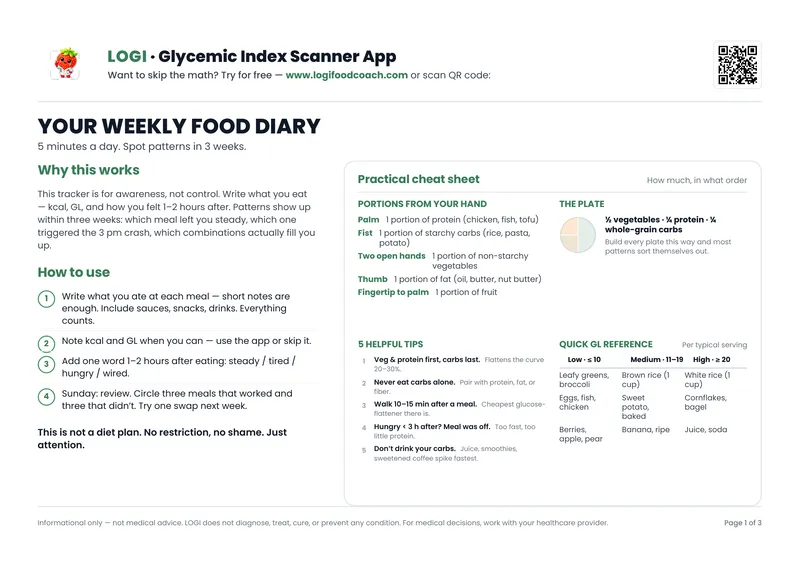
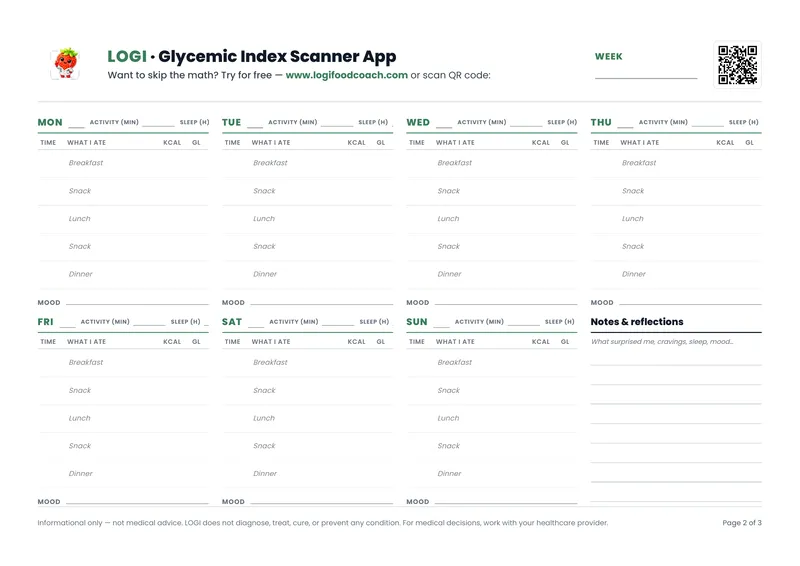
Free PDF — 3 pages
Your Weekly Food Journal
Track meals, glycemic load & mood. Spot patterns in 3 weeks.
No spam. Unsubscribe anytime.