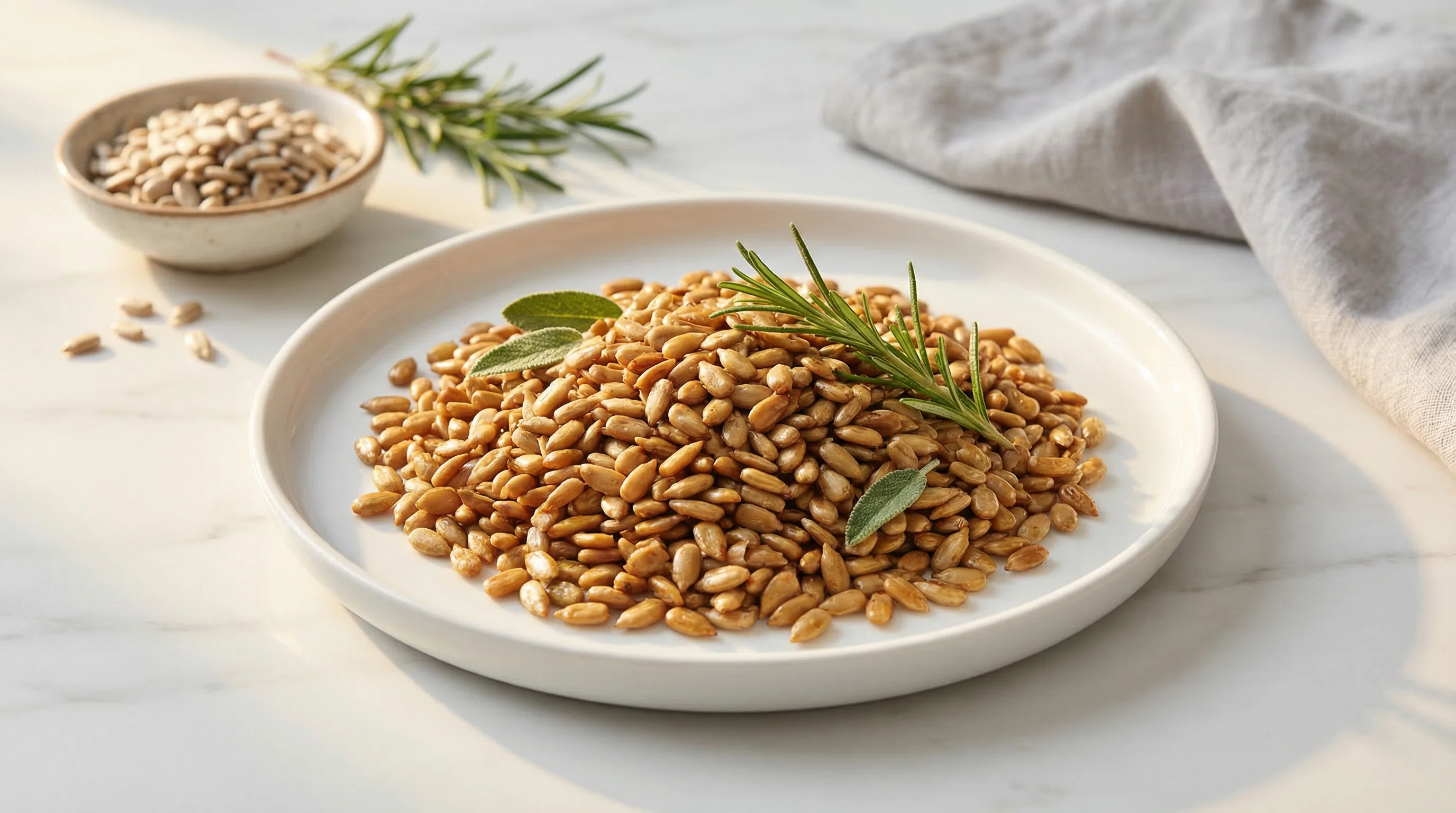
Roasted Sunflower Seeds
A perfectly portioned, nutrient-dense snack that delivers healthy fats, protein, and fiber without spiking blood sugar—ideal for steady energy throughout the day.
Sunflower seeds are a powerhouse snack for anyone managing blood sugar levels. With a glycemic index of just 20, these tiny seeds provide sustained energy without causing glucose spikes. Rich in healthy monounsaturated and polyunsaturated fats, they slow digestion and promote stable blood sugar response. Each serving delivers protein, fiber, magnesium, and vitamin E—nutrients that support metabolic health and insulin sensitivity.
This simple preparation method brings out the natural nutty flavor while maintaining all the nutritional benefits. The healthy fats in sunflower seeds help you feel satisfied longer, making them an excellent choice between meals or as part of a balanced snack. The magnesium content is particularly valuable for blood sugar regulation, as this mineral plays a crucial role in glucose metabolism and insulin function.
For optimal glycemic control, enjoy sunflower seeds as a mid-morning or afternoon snack paired with a small piece of fruit or raw vegetables. The combination of protein, fiber, and healthy fats creates a perfectly balanced snack that keeps blood sugar stable for hours. Store in an airtight container to maintain freshness and have this convenient, diabetes-friendly option ready whenever hunger strikes.
Blood Sugar Impact
Minimal blood sugar impact due to extremely low glycemic load (0.6) and GI (10). The high fat and protein content in sunflower seeds will provide stable, sustained energy for 3-4 hours with virtually no glucose spike.
Blood Sugar Tips
- ✓ Enjoy as a mid-morning or afternoon snack to maintain steady blood sugar between meals
- ✓ Pair with a small piece of fruit if desired - the healthy fats will slow down any sugar absorption
- ✓ Keep portion sizes moderate (1-2 ounces) as sunflower seeds are calorie-dense, though they won't spike blood sugar
🥗 Ingredients
- 30 g roasted sunflower seeds, unsalted
- 1.1 oz roasted sunflower seeds, unsalted
👨🍳 Instructions
- 1
Measure out 30 grams (approximately 3 tablespoons) of roasted sunflower seeds into a small bowl or container.
- 2
Check that the seeds are dry-roasted and unsalted, or lightly salted if preferred, avoiding any varieties with added sugars or honey coatings.
- 3
If desired, pair the sunflower seeds with 5-6 raw almonds or a few walnut halves to create an even more balanced fat and protein profile.
- 4
For enhanced blood sugar stability, consider eating the seeds alongside fresh cucumber slices, cherry tomatoes, or celery sticks.
- 5
Consume slowly, chewing thoroughly to aid digestion and allow satiety signals to register, which helps prevent overeating.
- 6
Enjoy this snack between meals, ideally 2-3 hours after your last meal, to maintain steady energy levels without glucose spikes.
- 7
Store any remaining sunflower seeds in an airtight container in a cool, dark place to preserve freshness and prevent the healthy oils from becoming rancid.
📊 Nutrition Per Serving
| Per Serving | Whole Dish | |
|---|---|---|
| Calories | 175 | 175 |
| Carbs | 6g | 6g |
| Sugars | 1g | 1g |
| Natural Sugars | 1g | 1g |
| Protein | 6g | 6g |
| Fat | 15g | 15g |
| Saturated Fat | 1g | 1g |
| Unsaturated Fat | 13g | 13g |
| Fiber | 3g | 3g |
| Sodium | 1mg | 1mg |
Predicted Glucose Response
What if you...
Estimated model — individual responses vary. Not medical advice.
🔄 Lower GI Swaps
These alternatives have similar or lower glycemic impact while providing more fiber and protein per serving, which helps slow glucose absorption and maintain stable blood sugar levels throughout the day.
🔬 The Science Behind This Recipe
# The Science Behind Roasted Sunflower Seeds
Roasted sunflower seeds are a blood sugar superstar, and the science explains why. With an exceptionally low glycemic index of 10 and a glycemic load of just 0.6 per serving, these tiny seeds have virtually no impact on your glucose levels. The secret lies in their macronutrient composition: sunflower seeds are packed with healthy fats (about 14 grams per ounce), protein (nearly 6 grams), and fiber (3 grams), while containing minimal digestible carbohydrates. This powerful trio works together to slow digestion dramatically, meaning any small amount of carbohydrate present is absorbed gradually into your bloodstream rather than causing a spike.
The high fat content in sunflower seeds is particularly beneficial for blood sugar management. When you eat fats alongside any carbohydrates, they slow gastric emptying—the rate at which food leaves your stomach. This creates a steady, controlled release of glucose rather than a rapid surge. Additionally, the protein content triggers the release of hormones that help regulate insulin response, while the fiber adds bulk that further slows digestion. This makes sunflower seeds an ideal snack between meals or a smart addition to higher-carb foods to moderate their glycemic impact.
Here's a practical tip: sprinkle sunflower seeds over salads, yogurt, or even add them to oatmeal to lower the overall glycemic load of your meal. The healthy fats also help you absorb fat-soluble vitamins from vegetables. Remember, with such a low glycemic load, portion size is flexible—you can enjoy a satisfying serving without worrying about blood sugar fluctuations. Sunflower seeds prove that managing glucose doesn't mean sacrificing flavor or satisfaction.
Related recipes

Free PDF — 3 pages
Your Weekly Food Journal
Track meals, glycemic load & mood. Spot patterns in 3 weeks.
No spam. Unsubscribe anytime.
