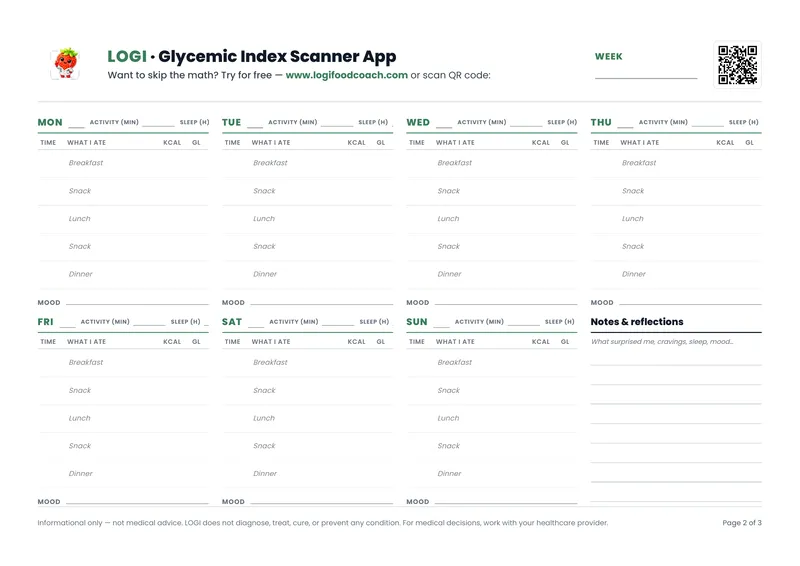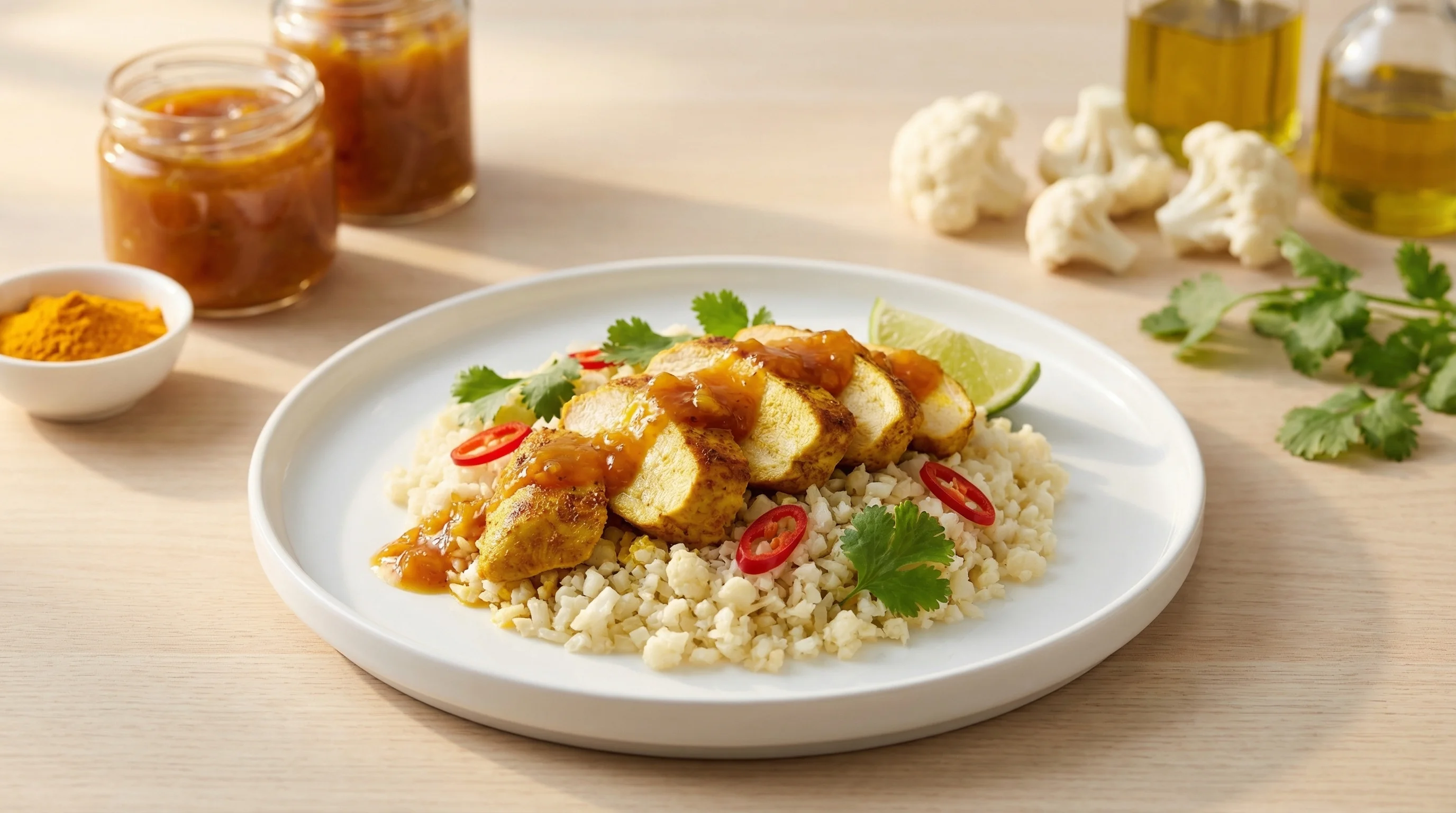
Spicy Chicken with Cauliflower Rice
Transform your meal prep with this vibrant, blood-sugar-friendly spiced chicken served over cauliflower rice instead of high-GI couscous.
This Indian-inspired dish delivers all the bold flavors you crave while keeping your blood sugar stable throughout the day. We've swapped traditional couscous (GI 65) for cauliflower rice (GI <15), dramatically reducing the glycemic load while adding fiber and nutrients. The aromatic marinade of curry paste, turmeric, and mango chutney creates a flavor-packed coating that caramelizes beautifully on the grill.
The combination of lean protein from chicken breast and the low-carb cauliflower base makes this an ideal meal prep option for blood sugar management. Turmeric provides anti-inflammatory benefits that support metabolic health, while the olive oil helps slow glucose absorption. For optimal glycemic control, eat the chicken and any vegetable garnishes first, then finish with the cauliflower rice—this eating sequence can reduce post-meal blood sugar spikes by up to 40%.
Pomegranate seeds add antioxidants and a burst of sweetness without significantly impacting blood sugar, while fresh coriander provides additional flavor and digestive support. This recipe proves that eating for stable blood sugar doesn't mean sacrificing taste or convenience—perfect for Sunday meal prep to keep you energized all week.
Blood Sugar Impact
This meal will have minimal blood sugar impact due to its very low glycemic load of 5 and GI of 30. Expect stable, sustained energy for 3-4 hours with no significant spike, thanks to the protein-rich chicken and low-carb cauliflower rice base.
Blood Sugar Tips
- ✓ Eat the cauliflower rice and chicken first before any higher-carb accompaniments to maximize protein and fiber intake upfront
- ✓ Consider taking a 10-15 minute walk after eating to enhance insulin sensitivity and glucose uptake
- ✓ Add extra olive oil or avocado to further slow digestion and create an even more gradual blood sugar response
🥗 Ingredients
- 1 tbsp curry paste
- 1 tbsp mango chutney
- 0.5 tsp ground turmeric
- 0.25 tsp salt
- 50 ml extra virgin olive oil
- 4 pcs boneless skinless chicken breasts
- 600 g cauliflower rice, fresh or frozen
- 350 ml vegetable stock, low-sodium
- 100 g pomegranate seeds
- 30 g fresh coriander leaves
- 1 tbsp curry paste
- 1 tbsp mango chutney
- 0.5 tsp ground turmeric
- 0.25 tsp salt
- 3 tbsp extra virgin olive oil
- 4 pcs boneless skinless chicken breasts
- 1.3 lb cauliflower rice, fresh or frozen
- 1.5 cups vegetable stock, low-sodium
- 3.5 oz pomegranate seeds
- 1.1 oz fresh coriander leaves
👨🍳 Instructions
- 1
In a medium mixing bowl, combine the curry paste, mango chutney, ground turmeric, salt, and olive oil. Whisk together until the marinade is smooth and well blended.
- 2
Slice each chicken breast horizontally to create 8 thinner cutlets of equal thickness. This ensures faster, more even cooking and better marinade absorption. Add the chicken pieces to the bowl and turn to coat thoroughly with the spiced marinade. Cover and refrigerate for at least 20 minutes, or preferably overnight for maximum flavor development.
- 3
When ready to cook, preheat a grill pan or cast-iron skillet over medium-high heat. Remove the marinated chicken from the refrigerator and let it sit at room temperature for 5 minutes while the pan heats.
- 4
Place the chicken pieces on the hot grill pan without overcrowding. Cook for 5-6 minutes on the first side until golden brown with attractive char marks, then flip and cook for another 5-6 minutes until the internal temperature reaches 165°F (74°C) and juices run clear. Transfer to a plate and tent loosely with foil to rest.
- 5
While the chicken cooks, prepare the cauliflower rice. In a large skillet or saucepan, bring the vegetable stock to a simmer over medium heat. Add the cauliflower rice, stir well, and cover. Cook for 5-7 minutes until tender but not mushy, stirring occasionally. If using frozen cauliflower rice, you may need an extra 2-3 minutes. Drain any excess liquid.
- 6
Fluff the cooked cauliflower rice with a fork to separate the grains and create a light, fluffy texture similar to traditional couscous. Taste and adjust seasoning with a pinch of salt if needed.
- 7
Divide the cauliflower rice evenly among 4 meal prep containers or serving plates. Top each portion with 2 pieces of the grilled spiced chicken.
- 8
Garnish each serving with a generous sprinkle of pomegranate seeds for a pop of color and antioxidants, and finish with fresh coriander leaves. For optimal blood sugar control, eat the chicken first, then the garnishes, and finish with the cauliflower rice. Store sealed containers in the refrigerator for up to 4 days.
📊 Nutrition Per Serving
| Per Serving | Whole Dish | |
|---|---|---|
| Calories | 382 | 1526 |
| Carbs | 17g | 68g |
| Sugars | 9g | 38g |
| Added Sugars | 2g | 8g |
| Natural Sugars | 8g | 30g |
| Protein | 43g | 172g |
| Fat | 16g | 65g |
| Saturated Fat | 3g | 11g |
| Unsaturated Fat | 14g | 54g |
| Fiber | 5g | 19g |
| Soluble Fiber | 1g | 5g |
| Insoluble Fiber | 3g | 12g |
| Sodium | 672mg | 2687mg |
Predicted Glucose Response
What if you...
Estimated model — individual responses vary. Not medical advice.
🔄 Lower GI Swaps
Mango chutney contains high amounts of sugar and dried fruit, causing rapid blood sugar spikes. These alternatives provide tangy flavor without the glycemic load.
While pomegranate seeds have moderate sugar content, these crunchy vegetable alternatives add texture and freshness with virtually zero glycemic impact.
Many commercial vegetable stocks contain hidden sugars, maltodextrin, or corn syrup solids that raise blood sugar. These options provide flavor without glucose-spiking additives.
Some commercial curry pastes contain added sugars or glucose syrup. Making your own or selecting sugar-free versions eliminates unnecessary glycemic load while maintaining authentic flavor.
🔬 The Science Behind This Recipe
Why This Recipe Works for Blood Sugar
This Spicy Chicken with Cauliflower Rice is a masterclass in blood sugar management, with a remarkably low glycemic load of just 5.0 per serving. The star here is cauliflower rice, which replaces traditional white rice and transforms this dish from a potential glucose spike into a steady-energy meal. Cauliflower contains only about 5 grams of carbohydrates per cup compared to white rice's 45 grams, but more importantly, it's packed with fiber that slows digestion and prevents rapid blood sugar rises. The chicken provides high-quality protein, which further stabilizes glucose levels by slowing carbohydrate absorption and promoting satiety.
The supporting ingredients work synergistically to enhance metabolic benefits. Turmeric contains curcumin, a compound shown in research to improve insulin sensitivity and reduce inflammation associated with blood sugar dysregulation. Olive oil adds healthy monounsaturated fats that not only slow gastric emptying (keeping you fuller longer) but also improve your body's insulin response. Even the small amount of mango chutney is buffered by the protein and fat in this meal, preventing the quick sugar rush you'd experience eating it alone—this demonstrates the power of food pairing.
Here's a practical tip to maximize blood sugar stability: eat your cauliflower rice first, then the chicken, saving any higher-carb sides for last. This "food sequencing" strategy can reduce post-meal glucose spikes by up to 73% according to recent studies. Consider taking a 10-15 minute walk after eating to help your muscles absorb glucose without requiring extra insulin. Remember, glycemic load accounts for both the quality and quantity of carbohydrates, which is why this generous, satisfying portion still ranks so favorably for blood sugar management.
Related recipes
Free PDF — 3 pages
Your Weekly Food Journal
Track meals, glycemic load & mood. Spot patterns in 3 weeks.
No spam. Unsubscribe anytime.